Key Takeaways
- Tampa Bay sits on "Sinkhole Alley": Hillsborough, Pinellas, and Pasco counties are built on limestone karst geology that makes sinkholes a persistent reality
- Florida requires full disclosure: You must disclose all known sinkhole activity, prior claims, testing results, and remediation history to any buyer
- Remediation costs $15K-$100K+: Grouting, underpinning, and engineering reports add up fast — with no guarantee of future stability
- Traditional sales are nearly impossible: Lenders will not approve mortgages, insurers flag prior claims, and buyers walk after inspections
- Cash investors specialize in sinkhole properties: Experienced buyers know how to evaluate geological risk and price these homes accurately
- Marketplace competition gets better prices: Selling through Propcash's network of a national network of investors means multiple cash offers instead of one lowball number
- Sinkhole stigma reduces value 20-40%: Even after full remediation, traditional market buyers discount sinkhole homes heavily — cash investors price on actual risk
If you own a home in Tampa Bay with sinkhole damage — or even just a sinkhole claim on its history — you already know the problem. The phone stops ringing. Agents hesitate to take your listing. Buyers who show interest disappear the moment they learn about the sinkhole. And every month you hold the property, you are paying a mortgage, insurance, and taxes on a home that feels impossible to sell.
Tampa Bay's limestone karst geology makes sinkholes a fact of life in this region. Hillsborough County alone accounts for a disproportionate share of Florida's sinkhole insurance claims. The geology is not changing. But your options for selling are better than you think — if you understand the right approach.
This guide covers exactly what you are dealing with, what it costs to fix, what you are required to disclose, and the four realistic paths to selling a sinkhole property in the Tampa Bay area.
Tampa's Sinkhole Problem
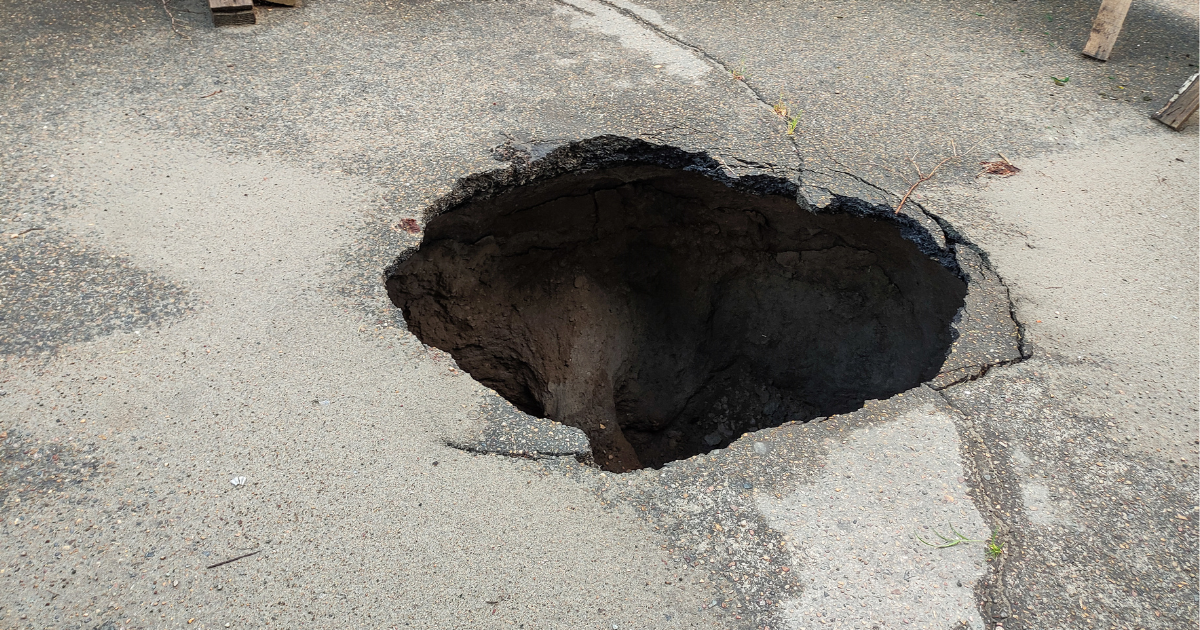
Florida leads the nation in sinkhole activity, and Tampa Bay is the epicenter. The region sits on a foundation of limestone karst — a porous, soluble rock that dissolves over thousands of years as slightly acidic groundwater moves through it. When enough limestone dissolves, the surface soil and everything built on top of it can shift, crack, or collapse entirely.
The area stretching from Hernando County south through Pasco, Hillsborough, and into Pinellas County is so prone to sinkhole activity that geologists and insurance professionals refer to it as "Sinkhole Alley." This is not marketing hyperbole. It is a geological designation based on decades of data showing that this corridor produces more sinkhole insurance claims than any comparable area in the United States.
Types of Sinkholes in Tampa Bay
Not all sinkholes are created equal, and understanding the type affecting your property matters for both remediation and sale:
- Cover-subsidence sinkholes: The most common type in Tampa Bay. Sandy soils gradually filter into dissolved limestone cavities below, causing slow, progressive settling. You may notice cracks in walls, uneven floors, or doors that no longer close properly. These develop over months or years.
- Cover-collapse sinkholes: The dramatic, sudden sinkholes that make the news. A clay layer above the limestone spans a growing cavity until it can no longer support the weight above, then collapses abruptly. These are less common but far more destructive — and far more frightening to potential buyers.
- Solution sinkholes: Occur where limestone is exposed at or near the surface and dissolves directly from rainfall and surface water. Less common in developed Tampa Bay neighborhoods but present in some areas.
For homeowners trying to sell, the type matters less than the fact that any sinkhole activity — regardless of type or severity — triggers Florida's mandatory disclosure requirements and fundamentally changes how the property is perceived by buyers, lenders, and insurers.
Why Sinkhole Houses Are Hard to Sell Traditionally
Selling a sinkhole-affected home through a traditional real estate listing is not just difficult. In many cases, it is functionally impossible. Here is why every piece of the traditional sale process works against you.
Florida Disclosure Law Stops You from Hiding It
Under Florida law, sellers must disclose all known sinkhole activity, including prior claims, testing results, and any remediation performed. Florida Statute 627.7073 and related statutes govern sinkhole claims and disclosure. There is no gray area — if you know about sinkhole activity, you must tell the buyer. Failure to disclose can result in lawsuits, contract rescission, and significant financial liability.
Buyer Financing Gets Killed
Most traditional homebuyers need a mortgage. Mortgage lenders require clear title, adequate insurance, and an appraisal that supports the loan amount. A sinkhole history creates problems with all three. Lenders routinely decline to finance properties with unresolved sinkhole damage. Even properties with completed remediation face intense scrutiny — many lenders require additional engineering certifications and specialized insurance that the buyer may not be able to obtain.
Insurance Complications
A property with a prior sinkhole claim becomes extremely difficult to insure at reasonable rates. Some carriers refuse coverage entirely. Others offer policies with sinkhole exclusions, which then fails to meet lender requirements. The result is a cascading problem: no affordable insurance means no mortgage approval, which means no traditional buyer can close.
Inspection Fear and Buyer Walk-Aways
Even cash-ready traditional buyers get cold feet. The home inspection reveals the sinkhole history. The buyer's agent advises caution. The buyer requests a geological report, sees the complexity, and walks away. This cycle repeats with buyer after buyer, each one consuming weeks of your time and emotional energy.
Stigma-Driven Price Reductions
Properties with sinkhole history typically sell for 20-40% below comparable homes without sinkhole issues — and that is after full remediation. The stigma is persistent and irrational from an engineering perspective, but it is real. Appraisers factor it in. Agents factor it in. Buyers use it as leverage to push prices down further. Even in a strong Tampa Bay market, sinkhole stigma can erase six figures of value.
Sinkhole Remediation: Costs and Reality
Before you can evaluate your selling options, you need to understand what remediation actually involves and what it costs. Many homeowners assume they must remediate before selling. That is not true — but understanding the numbers helps you evaluate whether it makes financial sense.
| Remediation Method | Typical Cost | Timeline | What It Does |
|---|---|---|---|
| Compaction Grouting | $15,000 - $50,000 | 1 - 3 weeks | Pumps low-slump grout into soil voids to compact loose material and fill cavities |
| Chemical Grouting | $20,000 - $60,000 | 1 - 4 weeks | Injects polyurethane or resin into soil to seal voids and stabilize loose material |
| Underpinning (Steel Piers) | $30,000 - $100,000+ | 2 - 8 weeks | Drives steel piers through unstable soil to bedrock, transferring the foundation load |
| Combination (Grouting + Underpinning) | $50,000 - $150,000+ | 4 - 12 weeks | Addresses both soil stabilization and foundation support for severe cases |
| Engineering Report | $5,000 - $15,000 | 2 - 6 weeks | Geological testing, ground-penetrating radar, and professional assessment required before and after remediation |
Even after spending $50,000-$100,000+ on remediation, there is no guarantee of future stability. Geological conditions can change. New voids can develop. And the sinkhole history remains permanently attached to the property record. You may spend six figures on repairs and still face the same 20-40% stigma discount when you sell. This is why many Tampa Bay homeowners choose to sell as-is to cash investors who price the risk directly.
Your 4 Options for Selling
If you own a sinkhole-affected property in Tampa Bay, these are your realistic paths forward. Each has trade-offs in terms of price, speed, and certainty.
Option A: Remediate, Then List Traditionally
Invest in full remediation, obtain engineering certification, then list with a real estate agent on the MLS. This maximizes your potential sale price but requires significant upfront capital, months of time, and carries the risk that the remediation cost exceeds any price improvement. Even after remediation, you will still face the stigma discount.
Option B: List As-Is with an Agent
Find an agent willing to list your sinkhole property as-is at a steep discount. Expect 30-40% below market value for comparable non-sinkhole homes. The challenge is finding an agent who will take the listing — many decline because sinkhole properties take much longer to sell and have high fall-through rates. Your buyer pool is limited to cash buyers who happen to be browsing the MLS.
Option C: Sell to a Single Cash Buyer
Contact a "we buy houses" company directly. You will get a fast offer and a quick closing, but with only one buyer at the table, you have zero leverage. Single cash buyers know they are your only option and price accordingly — typically at the lowest possible number they think you will accept.
Option D: Sell Through the Propcash Marketplace
List your property on Propcash's marketplace where our network of cash investors — including specialists who focus specifically on sinkhole properties — can see your home and make offers. Multiple buyers bidding on the same property creates upward price pressure. Investors who understand sinkhole remediation costs and geological risk can price more accurately (and more generously) than generalist buyers who simply discount for uncertainty.
| Factor | Remediate + List | List As-Is | Single Cash Buyer | Propcash Marketplace |
|---|---|---|---|---|
| Upfront Cost | $15K - $150K+ | $0 | $0 | $0 |
| Timeline to Close | 3 - 12 months | 6+ months (if ever) | 7 - 14 days | 7 - 14 days |
| Expected Price | 60-80% of market (minus repair costs) | 60-70% of market | 50-65% of market | 60-75% of market |
| Certainty of Closing | Low | Very Low | High | High |
| Number of Offers | Uncertain | Few to none | 1 | Multiple cash |
| Agent Commission | 5-6% | 5-6% | $0 | $0 |
How Cash Investors Evaluate Sinkhole Properties
Understanding how experienced cash investors assess sinkhole properties helps explain why competition between them benefits you as the seller.
What Investors Look At
- Geological report: Ground-penetrating radar (GPR) results, boring logs, and professional geological assessments tell investors exactly what is happening beneath the surface. Experienced sinkhole investors can read these reports and price risk accurately.
- Remediation history: What work was done, by whom, and what engineering certifications exist. A property with professional remediation and a clean post-repair report is worth significantly more than one with unaddressed damage.
- Structural engineer assessment: The current condition of the foundation, walls, and overall structure. Cosmetic cracking is far less expensive to address than structural compromise.
- Comparable remediated sales: What have similar sinkhole properties sold for in the same area after remediation? Investors with Tampa Bay experience have this data and use it to make competitive offers.
Why Competition Between Investors Benefits Sellers
When a single "we buy houses" company makes you an offer, they are pricing at the absolute floor — the lowest number they think you will accept. There is no incentive to offer more.
When your home is in front of multiple investors through a marketplace, the dynamic changes entirely. An investor who offers too low loses the deal to a competitor. Investors who specialize in sinkhole properties — who know the actual remediation costs and can accurately assess geological risk — will offer more than generalists who simply apply a blanket discount for uncertainty. The competition reveals the property's true cash market value rather than one buyer's opportunistic floor.
The Insurance Claim Dilemma
If you have discovered sinkhole damage, one of your first decisions is whether to file an insurance claim. This choice has significant implications for selling.
Filing a Claim: The Process
Florida law requires property insurers to cover "catastrophic ground cover collapse" — defined as geological activity that results in the property being condemned or uninhabitable, visible depression, and structural damage. Standard sinkhole coverage beyond catastrophic collapse is optional and has been excluded from many Florida policies since legislative changes in 2011.
If you do have sinkhole coverage and file a claim, expect the following:
- Timeline: The claims process typically takes 6 months to over 2 years. Insurers hire their own geologists and engineers, whose findings often conflict with yours.
- Denial rates: A significant percentage of sinkhole claims are denied or disputed, particularly by Citizens Property Insurance, which has historically contested sinkhole claims aggressively in the Tampa Bay area.
- Managed repair: Under Florida law (Statute 627.707), if the insurer accepts the claim, they can opt for "managed repair" — meaning they choose the contractor and control the remediation process.
When to File vs. When to Sell As-Is
Consider filing a claim if: You have active sinkhole coverage (not just catastrophic collapse), the damage is severe, and you can afford to wait 6-24 months for resolution while continuing to pay your mortgage and other carrying costs.
Consider selling as-is if: Your policy only covers catastrophic collapse, you cannot afford to wait, you have already been denied, or the carrying costs of holding the property during a lengthy claims process exceed the potential insurance payout.
Once you file a sinkhole claim — regardless of whether it is approved or denied — that claim becomes part of the property's permanent record and must be disclosed to all future buyers. This is true even if the claim is denied. Filing a claim you do not intend to pursue to completion can actually make the property harder to sell without providing any remediation benefit.
Tampa Neighborhoods Most Affected
Sinkhole activity is not evenly distributed across Tampa Bay. Some areas are significantly more prone than others due to variations in the underlying limestone depth, soil composition, and groundwater levels.
Highest Risk Areas
- Spring Hill (Hernando County): One of the highest concentrations of sinkhole claims in all of Florida. The shallow limestone here makes sinkhole formation particularly common and unpredictable.
- Seffner (Hillsborough County): Made national headlines with fatal sinkhole events. The geology in eastern Hillsborough is especially susceptible to cover-collapse sinkholes.
- Plant City (Hillsborough County): Agricultural irrigation and phosphate mining history have contributed to groundwater fluctuations that accelerate sinkhole development.
- Holiday, Hudson, and New Port Richey (Pasco County): Western Pasco County sits on some of the most sinkhole-prone terrain in the state, with high claim frequencies and well-documented geological instability.
Moderate Risk Areas
Even neighborhoods that Tampa Bay residents consider "safe" have recorded sinkhole incidents:
- South Tampa: Despite its premium real estate values, South Tampa's proximity to the bay and underlying geology mean sinkholes do occur — often shocking homeowners who assumed their neighborhood was immune.
- Carrollwood: Scattered sinkhole claims have been filed in both Carrollwood and Northdale, reminding residents that the karst geology extends throughout the metro area.
- Brandon and Riverview: Eastern Hillsborough communities have seen increasing sinkhole activity as development expands into previously undeveloped karst terrain.
- Pinellas County: While generally lower risk than Hillsborough and Pasco, Pinellas is not immune. Areas near the county's limestone outcroppings have reported sinkhole events.
Florida Disclosure Requirements
Florida's sinkhole disclosure requirements are among the most stringent in the nation. Understanding exactly what you must disclose — and the consequences of failing to do so — is essential before selling.
What You Must Disclose
- All known sinkhole activity on the property, regardless of when it occurred
- Any sinkhole insurance claims filed, whether approved, denied, or pending
- Results of any geological testing or ground-penetrating radar surveys
- All remediation work performed, including contractor details, engineering reports, and certifications
- Any notice from the property insurer regarding sinkhole-related findings
What Happens If You Do Not Disclose
Failing to disclose known sinkhole activity exposes you to serious legal consequences:
- Contract rescission: The buyer can void the sale and demand return of all funds
- Fraud lawsuits: You can be sued for damages, including the cost of remediation, diminished property value, and the buyer's legal fees
- Criminal liability: In extreme cases, deliberate concealment of known structural hazards can trigger criminal fraud charges
Why Cash Buyers Expect and Handle Disclosure
Here is the good news: cash investors who specialize in sinkhole properties do not view disclosure as a deal-killer. They expect it. They have seen hundreds of sinkhole disclosure forms. They evaluate the actual data — geological reports, remediation records, engineering assessments — rather than reacting with the fear and uncertainty that drives traditional buyers away. Full disclosure to an experienced sinkhole investor is simply the starting point for accurate pricing, not a reason to walk.
Case Study: South Tampa Sinkhole Sale
The reality of selling a sinkhole property is best illustrated by a real outcome. Carlos M. in South Tampa (33609) faced a situation that many Tampa Bay homeowners will recognize.
Carlos had a sinkhole claim on his South Tampa house. The claim had made the property effectively unsellable through traditional channels. Real estate agents would not take the listing because they knew the home would sit on the market indefinitely, consuming their time and marketing budget with no realistic chance of a commission. The few buyers who expressed interest online disappeared after reviewing the disclosure documents.
"Sinkhole claim on our South Tampa house made it unsellable traditionally. Agents wouldn't even take the listing. Propcash got us 4 cash offers in 2 days. Closed in 11 days."
— Carlos M., South Tampa (33609)
Carlos submitted his property through Propcash. Within 48 hours, four cash investors — including two who specifically focus on sinkhole-affected properties in the Tampa Bay area — submitted multiple offers. The competition between these investors meant Carlos received a price that reflected the property's actual value to experienced buyers, not the fear-driven discount the traditional market would have imposed. He closed in 11 days with no repairs, no remediation, and no uncertainty.
Frequently Asked Questions
Do I have to fix a sinkhole before selling my Tampa house?
No, you can sell as-is to cash buyers. Remediation is optional but traditional buyers and their lenders typically require it before they will close on a purchase. Cash investors who specialize in sinkhole properties evaluate the damage directly and factor remediation costs into their offers, allowing you to skip the expensive repair process entirely.
How much does sinkhole damage reduce home value?
Sinkhole damage or history typically reduces a home's value by 20-40%, even after full remediation has been completed. The stigma associated with sinkhole activity persists in the traditional market. Cash investors who specialize in these properties price based on actual geological risk and remediation costs rather than stigma, which often results in stronger offers.
Will anyone buy a house with sinkhole history in Tampa?
Yes. Cash investors in Propcash's network include specialists who routinely purchase sinkhole properties in Tampa Bay. These investors understand geological reports, remediation methods, and the true cost of stabilization. Because your home is in front of our network of cash investors, sellers receive better prices than they would from a single buyer.
Does insurance cover sinkhole damage in Tampa Bay?
Florida law requires insurers to cover "catastrophic ground cover collapse" but standard sinkhole coverage is optional and many policies exclude it. Even when coverage exists, the claims process can take months to years, and many claims are denied or underpaid. Citizens Property Insurance and private carriers each have different processes and coverage thresholds.
Can I get a mortgage on a house with sinkhole history?
It is extremely difficult. Most mortgage lenders require full remediation with engineering certification, a clean geological report showing stability, and specialized sinkhole insurance — which can be impossible or prohibitively expensive to obtain. This is why sinkhole properties are overwhelmingly sold to cash buyers.
How fast can I sell a sinkhole house in Tampa?
Through Propcash's marketplace, sinkhole properties typically receive multiple cash offers within 24-48 hours and can close in 7-14 days. Traditional sales of sinkhole properties can take 6+ months or never close at all because traditional buyers cannot secure financing or insurance.
Get Cash Offers for Your Sinkhole Property
Propcash's marketplace connects you with a national network of investors, including specialists who focus on sinkhole-affected properties in Tampa Bay. Get offers from multiple buyers within 24 hours. No repairs, no remediation, no obligation.
Get My Cash OffersOr visit our Tampa Bay landing page for neighborhood information.
Data Sources: This analysis draws from Florida Geological Survey sinkhole data, Florida Department of Environmental Protection karst mapping, Florida Office of Insurance Regulation sinkhole claims data, Hillsborough County property records, Florida Statute 627.7073 and related sinkhole legislation, USGS karst and sinkhole research, and professional geological engineering sources. Data as of February 2026.