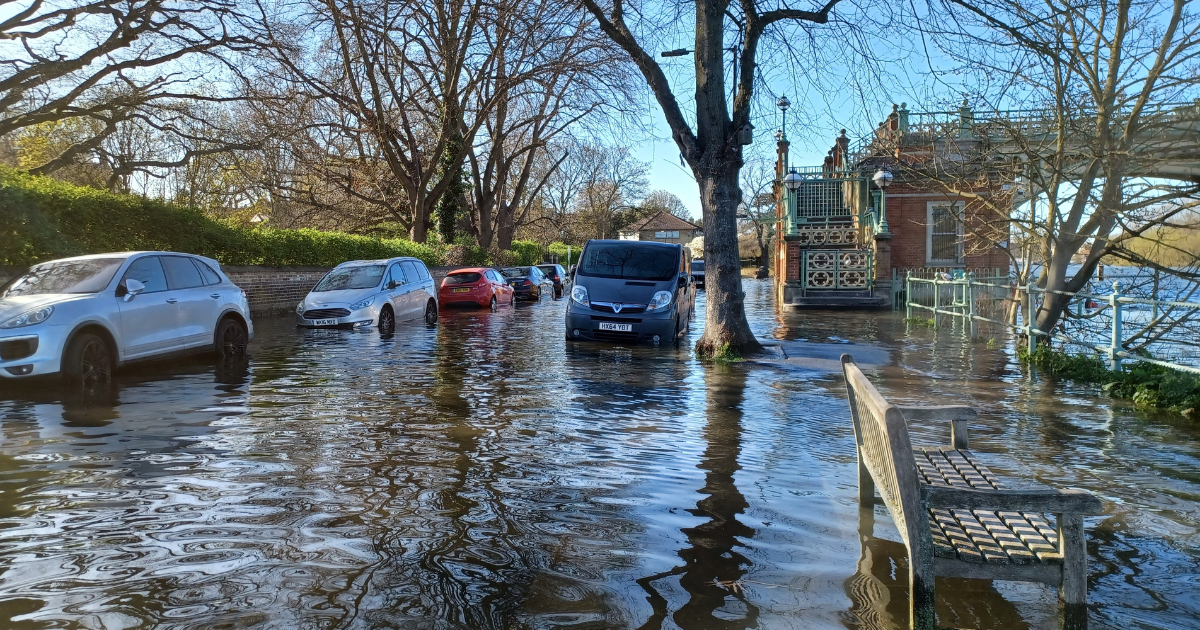
Key Takeaways
- Houston is America's most flood-prone major city — Harvey alone caused $125 billion in damage and flooded 300,000+ structures
- SB 339 (2019) requires sellers to disclose: 500-year floodplain location, prior flooding history, and any FEMA/SBA assistance received
- Flood repairs cost $10,000-$50,000+ and take 12-18 months; mold grows within 24-48 hours in Houston's subtropical climate
- Insurance premiums surged 60.8% since 2015; Texas FAIR Plan enrollment hit 100,000+ homeowners as insurers flee flood zones
- A cash buyer marketplace gets 8-15% more than a single buyer for flood-damaged homes — investors compete with different strategies
Houston floods more often, more severely, and across more of its footprint than any other major American city. If you own a home that's been through one of Houston's storms, you already know this. What you may not know is how to sell it without giving it away.
Traditional buyers walk away at the first sign of flood history. Lenders refuse to finance water-damaged properties. Insurance companies are fleeing flood zones. And every month you hold a damaged home, mold spreads, damage worsens, and carrying costs drain your savings. This guide covers what you must disclose, what repairs cost, why the insurance crisis makes traditional sales nearly impossible, and how cash offers from multiple investors get you thousands more.
Houston's Flood Reality: Why So Many Homes Are Affected
Houston is built on a coastal plain barely above sea level, covered in impermeable clay soil, crisscrossed by 2,500 miles of bayous, and located squarely in the path of Gulf tropical systems. Decades of development have paved over the prairies and wetlands that once absorbed stormwater. The result is a city that floods catastrophically on a near-annual cycle.
The Storm Record
Hurricane Harvey (August 2017) dropped over 60 inches of rain in four days, caused $125 billion in damage, flooded 300,000+ structures, and displaced over a million residents. Harvey overwhelmed the drainage system and forced the Army Corps of Engineers to release water from the Addicks and Barker reservoirs directly into residential areas.
Tropical Storm Imelda (September 2019) dumped 43 inches on northeast Houston. Kingwood and Huffman were devastated — many homeowners who had just finished Harvey repairs were flooded again. The Tax Day Flood (April 2016) dropped 17 inches in 12 hours, flooding 7,000 homes along Brays and Greens Bayou. The Memorial Day Flood (May 2015) killed eight people and flooded Meyerland months before the Tax Day event hit the same neighborhoods again.
Why Houston Keeps Flooding
- Flat topography: Just 50 feet above sea level with virtually no drainage gradient
- Clay soil: Houston's Beaumont clay is nearly impermeable — water runs off instead of soaking in
- Bayou system: Designed for a smaller city; can't handle modern runoff volumes
- Development: Over 25,000 acres of impervious surface added since 2000
- Climate change: Warmer Gulf waters produce more intense rainfall; Harvey-scale storms are becoming more frequent
An estimated 20% of post-Harvey new construction went up inside mapped flood plains. The building continues, and so does the flooding.
What You Must Disclose: Texas SB 339 Explained
After Harvey exposed widespread problems with buyers purchasing flood-prone homes unknowingly, the Texas Legislature passed Senate Bill 339, effective September 1, 2019. It significantly expanded seller disclosure obligations.
Required Disclosures Under SB 339
On the TREC Seller's Disclosure Notice, Houston sellers must now disclose:
- Floodplain location: Whether the property is in a 100-year or 500-year floodplain (previously only 100-year was required)
- Prior flooding: Whether the property has previously flooded, regardless of when or under whose ownership
- FEMA/SBA assistance: Whether the seller received any FEMA disaster assistance or SBA disaster loans
- Flood insurance claims: Any previous flood insurance claims filed on the property
"As-Is" Does Not Exempt You
Selling "as-is" does not exempt you from SB 339 flood disclosure. As-is clauses protect sellers from liability for unknown conditions, but they do not override the statutory obligation to disclose known flood history. If you know your home has flooded, you must disclose it regardless of sale structure.
Penalties for Non-Disclosure
- Rescission: A buyer can seek to unwind the entire sale
- Damages: Lawsuit for flood damage costs, repairs, and diminished value
- DTPA claims: Deceptive Trade Practices Act violations can result in treble (3x) damages plus attorney fees
Why Cash Investors Handle Disclosures Differently
Cash investors expect flood disclosures and price flood history into their offers from the start. Because they go in with full knowledge, they almost never litigate over disclosed conditions after closing — unlike retail buyers who discover undisclosed history years later and hire lawyers. Full disclosure protects you, and cash investors make the process easier.
Flood Repair Costs: The Numbers That Drive Sellers to Cash
Flood damage is uniquely expensive because water touches everything — walls, floors, electrical, plumbing, HVAC, appliances, and foundation. In Houston's subtropical humidity, mold colonization begins within 24-48 hours.
Minor Flood Damage: $10,000 - $25,000
Homes with 1-3 feet of water that were dried quickly. Repairs include drywall replacement (lower 4 feet), flooring replacement, electrical outlets below the flood line, baseboards and trim, and lower cabinet repair or replacement.
Major Flood Damage: $25,000 - $50,000+
Homes with 3+ feet, extended standing water, or multiple flood events face full gut renovation, structural repairs (subfloor, joists, foundation shifting), complete HVAC replacement, electrical rewiring, plumbing repair, and appliance replacement.
Mold Remediation: $5,000 - $15,000 Additional
In Houston's 75%+ humidity, mold colonizes damp materials within 24-48 hours. After Harvey, most homes sat in water for days — mold is virtually guaranteed. Professional remediation (containment, removal, HEPA filtration, antimicrobial treatment, clearance testing) adds $5,000-$15,000 to the repair bill.
The Timeline Problem
Full restoration takes 12-18 months including contractor availability, permitting, repairs, and inspections. During that period, you carry the mortgage, insurance, taxes, and maintenance on a property you can't inhabit or rent. Many Houston homes have flooded multiple times — each event compounds the damage and restarts the clock.
Each flood weakens the home further. A home that cost $15,000 to repair after its first flood may cost $40,000+ after its second and $50,000+ after its third. The math gets worse every time.
Houston's Insurance Crisis and What It Means for Sellers
Houston's flood insurance market is in crisis, directly affecting homeowners' ability to sell traditionally.
The Numbers
- Average Houston homeowner premium: approximately $6,610 per year
- Premium increase since 2015: 60.8%
- Texas FAIR Plan enrollment: 100,000+ homeowners (insurer of last resort)
NFIP Risk Rating 2.0
FEMA's Risk Rating 2.0 fundamentally changed flood insurance pricing. Instead of relying primarily on zone maps, it factors in distance to water, elevation, building type, replacement cost, and historical flood frequency. For homeowners in Meyerland, Kingwood, and the Brays Bayou corridor, Risk Rating 2.0 doubled or tripled premiums. Some Houston properties now exceed $10,000 per year in NFIP premiums alone.
Private Insurers Are Leaving
Multiple private insurers have stopped writing policies in Houston flood zones or non-renewed existing coverage. Homeowners pushed to the Texas FAIR Plan face limited coverage at high premiums.
What This Means for Sellers
Traditional sales depend on buyers obtaining insurance. No affordable insurance means no mortgage, which means no buyer. The insurance crisis has eliminated the traditional buyer pool for thousands of Houston flood zone homes. Cash buyers don't face this problem — they self-insure, carry specialized policies, or build insurance into renovation budgets.
Houston Neighborhoods Most Affected by Flooding
While flooding can affect virtually any Houston neighborhood during a major storm, some areas face chronic, repeated flooding that significantly impacts property values and saleability.
Meyerland
Houston's most dramatic example of repetitive flooding. This southwest Houston neighborhood along Brays Bayou flooded in 2015, 2016, and 2017 — some homes three times in three years. Despite elevations and rebuilds, the area remains high-risk and property values have struggled to recover.
Kingwood
Northeast Houston's Kingwood sits at the confluence of the San Jacinto River and Lake Houston. Imelda (2019) devastated thousands of homes — many just repaired from Harvey. The community faces ongoing riverine and rainfall flood risk.
Spring Branch
West-central Houston, downstream of the Addicks and Barker reservoirs. During Harvey, deliberate reservoir releases flooded thousands of homes outside any mapped flood zone. The area remains at risk whenever the reservoirs reach capacity.
Greenspoint
North Houston along Greens Bayou faces chronic flooding compounded by economic distress. Aging housing stock floods regularly, and depressed property values make recovery even harder.
Brays Bayou Corridor (Bellaire / Medical Center Area)
Brays Bayou runs through valuable neighborhoods including Bellaire and the Medical Center area. The bayou has exceeded capacity in multiple storms, and the Project Brays widening effort is years from completion.
Clear Lake / League City
Near Galveston Bay, these communities face both inland rainfall flooding and Gulf hurricane storm surge. This dual risk makes insurance particularly expensive.
Bear Creek (West Houston)
Within the Addicks Reservoir zone. Like Spring Branch, Bear Creek was inundated during Harvey's reservoir release. Homes may not appear on flood maps but face real risk during heavy rain events.
Understanding Flood Zone Designations
| Zone | Risk Level | Insurance Required? |
|---|---|---|
| Zone A / AE | High risk (100-year floodplain) | Yes, if mortgaged |
| Zone X (shaded) | Moderate risk (500-year floodplain) | Not required, but recommended |
| Zone X (unshaded) | Low risk (outside 500-year floodplain) | Not required |
Keep in mind that Harvey flooded tens of thousands of homes outside of any mapped flood zone. In Houston, the map is a starting point, not a guarantee.
FEMA Buyout vs. Cash Sale: Which Is Better?
After major floods, FEMA offers buyout programs for the hardest-hit properties. Understanding how these compare to a cash sale helps you decide.
FEMA Hazard Mitigation Grant Program (HMGP) Buyout
The government purchases properties at pre-flood fair market value, demolishes the home, and converts the land to permanent green space.
Pros: Purchase at pre-flood value, no repairs required, permanently removes flood risk.
Cons: Takes 3-5 years from application to closing (some Harvey applicants didn't close until 2022+), not available in all areas, requires FEMA/state/local approval, and you carry mortgage, taxes, and maintenance the entire time.
SBA Disaster Loans
The SBA offers low-interest disaster loans (up to $500,000 for real estate, $100,000 for personal property), but these must be repaid. Taking on more debt for a home that may flood again is a difficult proposition.
Cash Marketplace Sale
Multiple offers within 24-48 hours, closing in 7-14 days. No repairs, no FEMA application, no government timeline. A FEMA buyout may pay pre-flood value but takes years. A cash marketplace puts money in your hand within two weeks. Unless you can carry the property for years, the marketplace is typically faster and financially smarter.
How Cash Investors Price Flood-Damaged Homes
Every cash investor uses the same basic formula, but how they apply it varies based on strategy.
The ARV Formula
ARV - Flood Repair Costs - Holding Costs - Profit Margin = Offer
ARV (After-Repair Value) is the home's worth if fully restored. The repair cost estimate is where real variation happens among investor types.
Flip investors plan to renovate and resell, estimating repairs aggressively with 15-25% profit margins. Their offers tend to be conservative. Rental investors may flood-proof and hold long-term, with smaller repair scopes and no resale profit needed — so they can sometimes offer more. Wholesale investors assign contracts to other buyers, and their offers tend to be the lowest due to layered profit margins.
The Single Buyer Problem
A single cash buyer has no competition. They estimate repairs high, pad their margins wide, and present a take-it-or-leave-it number. Without multiple offers, there's no incentive to sharpen their offer. You either accept the lowball or keep holding a flood-damaged property.
Our national network of investors are ready to make offers on your property — including specialists who renovate flood-damaged homes every day.
See What Cash Buyers Will OfferWhy a Marketplace Gets You More for a Flood-Damaged Home
Flood-damaged homes are exactly the type of property where a competing marketplace makes the biggest difference.
Different Strategies Mean Different Valuations
Among a national network of investors on Propcash, buyers approach flood-damaged homes with different strategies. A flip investor might offer $155,000 seeing a $40,000 gut renovation. A rental investor might offer $175,000 planning to flood-proof and rent at $1,800/month. A buy-and-hold investor might offer $188,000 because they own five properties on the same street. Different strategies produce different numbers — and you choose the highest.
Flood Repair Specialists Bid More
Some marketplace investors specialize in flood-damaged properties with dedicated restoration crews, bulk material pricing, and established mold remediation relationships. A repair costing $40,000 retail might cost them $25,000 — and that $15,000 advantage flows to you as a higher offer.
Competition Eliminates Lowball Offers
When 3-5 investors bid on the same property, inflated repair estimates and excessive margins lose deals to sharper competitors. The marketplace forces genuine multiple offers, not negotiation starting points.
How the Process Works
- Submit your property details — about 2 minutes, including flood history and damage notes
- Property broadcast to a national network of investors — including flood specialists
- Receive multiple offers — typically within 24-48 hours
- Compare and choose — or decline all offers with zero obligation
- Close in as few as 7-14 days — through a licensed Texas title company
Frequently Asked Questions
Can I sell a house that has been flooded in Houston?
Yes. Cash investors buy flood-damaged homes in Houston every day. Flood damage makes traditional sales difficult because most lenders will not finance homes with unresolved water damage or active mold, but cash buyers purchase as-is with no financing contingencies. A marketplace with our network of investors gets you 8-15% more than a single cash buyer.
Do I have to disclose flooding history when selling in Houston?
Yes. Texas SB 339 (effective September 2019) requires sellers to disclose on the TREC Seller's Disclosure Notice whether the property is located in a 100-year or 500-year floodplain, whether the property has previously flooded, whether the seller received FEMA or SBA disaster assistance, and any previous flood insurance claims. Selling "as-is" does not exempt you from these disclosure requirements.
How much do flood-damaged homes sell for in Houston?
It depends on the severity of damage and the location. A single cash buyer typically offers 40-60% of the pre-flood fair market value. A competing marketplace with multiple investors typically generates offers in the 55-75% range. Homes with minor damage in desirable neighborhoods like Meyerland or Bellaire can command higher percentages because investors see strong post-repair resale potential.
What if my Houston home is in a flood zone but hasn't flooded?
You must still disclose the flood zone status under SB 339. However, a home in a flood zone that has never actually flooded is significantly more attractive to investors than one with documented flood history. Expect offers closer to full market value, especially if the home has been elevated or flood-proofed. Investors factor in future flood risk, but unflooded homes carry less uncertainty.
How fast can I sell a flood-damaged house in Houston?
Through a competing cash marketplace, you can receive offers within 24-48 hours and close in as few as 7-14 days. Compare that to a traditional listing (6-12 months for flood-damaged homes, if a buyer is found at all) or a FEMA buyout (3-5 years from application to closing). The speed of a cash sale is one of the main reasons Houston homeowners choose this route after a flood.
Get Fair Cash Offers for Your Flood-Damaged Houston Home
Flood damage doesn't have to mean financial ruin. Houston investors deal with flood-damaged properties every single day — it's one of the most common deal types in the market. The difference between a fair deal and a lowball is whether one buyer dictates the price or multiple buyers are interested in it.
You don't need to spend $25,000-$50,000 on repairs. You don't need to wait 12-18 months for a full restoration. You don't need to carry insurance you can barely afford on a house you can't live in. And you definitely don't need to accept the first low offer from a single "we buy houses" company.
See What Houston Investors Will Pay for Your Home
- Our network of cash investors — including flood renovation specialists
- Sell as-is — no flood repairs, no mold remediation, no cleanup
- Close in as few as 7-14 days — or on your timeline
- No fees or commissions — keep your full offer
- Zero obligation — just see what investors will pay
Disclaimer: This article is for informational purposes only and does not constitute legal, engineering, or financial advice. Flood damage costs, insurance rates, and government programs vary by property and may change. Texas disclosure requirements and real estate laws are subject to legislative updates. Consult with a licensed Texas real estate attorney for legal advice and a qualified contractor for repair estimates specific to your situation.