Key Takeaways
- Record-breaking vacancy: Wells Fargo vacated 900,000+ square feet of downtown Winston-Salem office space, pushing the Central Business District vacancy rate to a record-high 31.3%
- 194 direct job losses: Wells Fargo is eliminating 194 positions as it closes the West End Center, with ripple effects on restaurants, retail, and service businesses that depended on downtown office workers
- Not an isolated event: BB&T/Truist, Lincoln Financial, Blue Cross Blue Shield NC, and Mack Trucks have also reduced their Winston-Salem footprint, compounding the vacancy crisis
- Downtown-adjacent neighborhoods most exposed: West End, Ardmore, Washington Park, and West Salem face the highest risk of housing value pressure from reduced downtown economic activity
- Historical precedent is sobering: Cities like Rochester (Kodak) and Detroit (auto industry) saw years of declining home values after dominant employers departed — early action by homeowners preserved the most equity
- Redevelopment is underway but slow: Innovation Quarter acquired the Linden Center for lab space, and office-to-residential conversions are being explored, but these solutions will take years to materialize
For more than a century, Winston-Salem's identity was inseparable from the corporations headquartered there. R.J. Reynolds Tobacco. Wachovia Bank. Hanes. These companies did not just employ people — they built hospitals, funded universities, shaped the skyline, and anchored an economy that made Winston-Salem one of the most prosperous mid-sized cities in the Southeast.
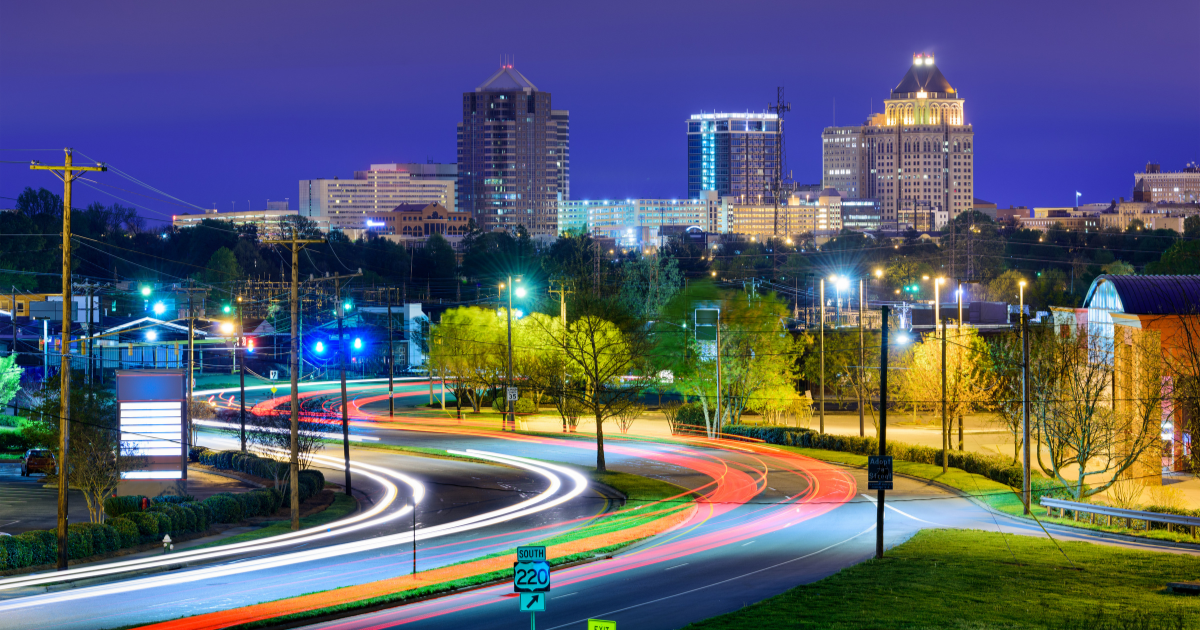
That era is ending. Wells Fargo's decision to vacate more than 900,000 square feet of downtown office space — the largest single corporate departure in the city's modern history — is the latest and most visible chapter in a decades-long erosion of Winston-Salem's corporate base. The 29-story tower at 100 North Main Street, designed by Cesar Pelli and opened in 1995 as the gleaming headquarters of Wachovia, now sits more than half empty. The downtown vacancy rate has hit 31.3%. And the question that matters most to homeowners across Winston-Salem is straightforward: what does this mean for my property value?
This guide connects the dots between commercial vacancy and residential home values. It analyzes which Winston-Salem neighborhoods face the greatest exposure, examines what happened in other cities when dominant employers left, and addresses the question thousands of homeowners are asking: should I sell now before it gets worse?
What Happened: The Full Scale of Wells Fargo's Departure
The numbers tell a stark story. During the third quarter of 2024, Wells Fargo vacated at least 450,000 square feet across multiple buildings in the Winston-Salem Central Business District, according to CBRE Triad's market report. The bank's 20-year original lease — signed by Wachovia in 2004 as part of a sale-leaseback arrangement — expired in September 2024, and Wells Fargo chose not to renew.
Here is what was vacated:
- Wells Fargo Center (100 N. Main St.): Approximately 180,000 square feet vacated out of the 546,020-square-foot, 29-story tower. Occupancy dropped from 87% to roughly 55%. The building — Winston-Salem's tallest — was designed by Petronas Towers architect Cesar Pelli and cost $80 million to build in 1995
- West End Center Annex (Fourth Street): All 90,000 square feet vacated
- Linden Center (401 N. Research Parkway): All 179,000 square feet vacated
- West End Center Data Center (Fourth Street): The 379,000-square-foot facility is being decommissioned as Wells Fargo removes equipment
Then in 2025, Wells Fargo announced the full closure of its West End Center operations, triggering a WARN Act filing with the North Carolina Department of Commerce. The layoff count increased from an initial 150 to 194 employees across business units including the chief operating office, global operations, consumer lending, corporate risk, and technology divisions.
The bank retained roughly 139,000 square feet in the Wells Fargo Center for its remaining wealth management division — a fraction of its former footprint. Wells Fargo described the consolidation as part of a "multi-year journey to transform our company to become simpler and stronger," centralizing operations into hubs in Charlotte, Minneapolis, Columbus (Ohio), and a $455 million regional campus under construction in Irving, Texas.
| Building | Square Footage | Status |
|---|---|---|
| Wells Fargo Center | ~180,000 sq ft vacated | 55% occupied (down from 87%) |
| West End Center Annex | 90,000 sq ft | Fully vacated |
| Linden Center | 179,000 sq ft | Acquired by Innovation Quarter |
| West End Center Data Center | 379,000 sq ft | Being decommissioned |
| West End Center (main) | 194 employees laid off | Closed August 2025 |
| Total Downtown Impact | 900,000+ sq ft | 31.3% CBD vacancy rate |
Data sources: CBRE Triad Q3 2024 Office Market Report, Winston-Salem Journal, NC Department of Commerce WARN filings
From Wachovia to Wells Fargo: What Winston-Salem Lost
To understand the magnitude of what is happening, you have to understand what Wachovia meant to Winston-Salem. This was not just an employer. It was the city's identity.
Wachovia's roots trace to 1866, when the First National Bank of Salem opened its doors. The name itself comes from "Wachau," the Latin form of the German name for the Moravian settlement tract established in the North Carolina Piedmont in 1753. By the time Winston and Salem merged in 1913, Wachovia Bank and Trust Company had already become a pillar of the community, with deposits of $4 million and growing.
Over the following decades, Wachovia grew into one of the largest banks in the Southeast. The company's headquarters anchored downtown Winston-Salem's economy, supporting thousands of jobs directly and thousands more through the network of law firms, accounting practices, restaurants, and service businesses that orbited a Fortune 500 financial institution. When the gleaming 29-story tower at 100 North Main Street opened in 1995, it was a statement of permanence — a $80 million Cesar Pelli masterpiece featuring Moravian architectural themes that tied the building to the city's founding heritage.
Then came the mergers. In 2001, Wachovia merged with Charlotte-based First Union. Despite retaining the Wachovia name, the headquarters moved to Charlotte. Winston-Salem lost its claim as a major banking center, though the city retained significant operations and the wealth management division. First Union placed the Carolinas-region headquarters and wealth management operations in Winston-Salem as a concession to the city's pride and political leadership.
The final blow came in October 2008, when a collapsing Wachovia — devastated by toxic mortgage assets acquired through its 2006 purchase of Golden West Financial — was acquired by Wells Fargo for $15 billion. Wachovia had been the fourth-largest bank holding company in the United States. Overnight, it ceased to exist. Wells Fargo absorbed the operations, kept the Charlotte headquarters, and gradually began consolidating Winston-Salem's workforce into other hubs.
The trajectory since has been one of slow attrition. Wells Fargo maintained roughly 2,320 Triad employees in recent years — a fraction of the workforce Wachovia once supported. And now, with 900,000+ square feet vacated and 194 more jobs eliminated, the Wells Fargo era in Winston-Salem is effectively over. What remains is a wealth management division occupying a shrinking footprint in a building that was built to house a corporate empire.
Wells Fargo is not the only corporate departure reshaping Winston-Salem. R.J. Reynolds Tobacco, Krispy Kreme, and Primo Water have all relocated. BB&T's merger with SunTrust to form Truist shifted headquarters functions to Charlotte in 2021, leaving the 271,445-square-foot former BB&T Financial Center mostly vacant. Blue Cross Blue Shield NC, Lincoln Financial Group, and Mack Trucks have all recently reduced their Triad office footprint. HanesBrands, once the city's largest publicly traded company, sold its flagship Champion brand and is downsizing from a 500,000-square-foot campus to a smaller downtown presence. Winston-Salem's corporate landscape has fundamentally changed, and the housing market cannot ignore the consequences.
The Ripple Effects: Jobs, Businesses, and Tax Revenue
When a dominant employer vacates nearly a million square feet of office space, the consequences extend far beyond the empty buildings. The damage radiates outward through the local economy in layers, each of which ultimately affects residential property values.
Layer 1: Direct Job Losses
The 194 employees laid off from the West End Center closure represent direct, documented job losses. But these are just the positions covered by the WARN Act filing. The broader reduction — thousands of Wachovia and Wells Fargo positions eliminated over two decades of post-merger consolidation — has been far more significant. Wells Fargo's Triad workforce of approximately 2,320 is a shadow of the employment base Wachovia once maintained in Winston-Salem.
Each of those lost positions represents a household that may relocate, a mortgage that might not be renewed locally, and spending power removed from the Winston-Salem economy. N.C. State economics professor Michael Walden noted that Wells Fargo's departure represents evidence that "remote work is here to stay" — but for Winston-Salem, the issue is not where people work. It is that fewer people work here at all.
Layer 2: The Multiplier Effect on Local Businesses
Every office worker who bought coffee before work, ate lunch at a downtown restaurant, picked up dry cleaning on the way home, and stopped at the pharmacy on Fourth Street represented economic activity that supported dozens of small businesses. When thousands of those workers disappear, the businesses that served them struggle to survive.
This is already visible in downtown Winston-Salem. Restaurant closures have accelerated, with owners citing insufficient foot traffic and declining customer counts. Murphy's, one of Winston-Salem's longest-running restaurants at nearly 75 years, ceased business. Sweet Potatoes, the first restaurant to open in the now-struggling Downtown Arts District, closed after 22 years. The owner of Mayberry, which closed its Fourth Street location after five years, was blunt: "there was just not enough foot traffic."
Fewer restaurants and services make downtown less attractive to residents and visitors, which reduces foot traffic further, which causes more businesses to close. It is a self-reinforcing cycle that erodes neighborhood vitality — and neighborhood vitality is one of the primary drivers of residential property values in adjacent areas.
Layer 3: Tax Revenue and City Services
Empty commercial buildings generate less property tax revenue for Forsyth County and the City of Winston-Salem. When downtown buildings are assessed at lower values due to vacancy, the tax burden either shifts to residential property owners or city services are reduced. North Carolina's 4.5% state income tax provides some revenue stability at the state level, but the local property tax shortfall from 900,000+ square feet of vacant commercial space is material.
Reduced city revenue can translate into deferred infrastructure maintenance, slower public safety response times, and fewer investments in the amenities — parks, streetscaping, transit — that support residential property values. This is not hypothetical. It is the pattern that has played out in every mid-sized American city where a dominant employer departed.
Layer 4: Perception and Buyer Psychology
Perhaps the most underestimated impact is psychological. When prospective homebuyers research Winston-Salem, they encounter headlines about record-high vacancy rates, corporate departures, and restaurant closures. Perception matters in real estate. A city perceived as declining attracts fewer buyers, which reduces demand, which suppresses prices. Even if the underlying fundamentals of a specific neighborhood are sound, the broader narrative of economic contraction creates headwinds for every seller in the market.
Which Winston-Salem Neighborhoods Are Most Exposed
The impact of downtown commercial vacancy on residential home values is not uniform across Winston-Salem. Neighborhoods closest to the downtown core — those most dependent on the vitality of the Central Business District — face the greatest exposure. Outlying suburban areas may feel the effects later and less directly.
Highest Exposure: Downtown-Adjacent Neighborhoods
West End sits just blocks west of downtown and is Winston-Salem's original suburb, dating to the late 19th century. Known as "Winston-Salem's front porch," West End features historic turn-of-the-century architecture and has long been valued for its walkability to downtown offices, restaurants, and cultural venues. As downtown employment declines, the walkability premium that supported West End property values weakens. Fewer office workers mean fewer lunch spots, fewer after-work social venues, and less reason for buyers to pay a premium for proximity to a central business district that is one-third empty.
Ardmore is the largest historic district in Winston-Salem, with approximately 4,300 homes. Popular with young families and medical professionals due to its location between Wake Forest University Baptist Medical Center and Forsyth Hospital, Ardmore already carries a concerning real estate vacancy rate of 18.4% — higher than 85.5% of all U.S. neighborhoods. The median sale price of $335,000 is up 10% year-over-year, but rising vacancy in the surrounding downtown threatens to undermine that appreciation. Ardmore's value proposition depends in part on being close to a vibrant urban core. A downtown with a 31.3% vacancy rate is not vibrant.
Washington Park and West Salem also face elevated exposure due to their proximity to downtown and the Fourth Street corridor where several Wells Fargo buildings sat. These neighborhoods have traditionally attracted buyers who valued the combination of historic housing stock and access to downtown amenities. As those amenities diminish, so does the premium buyers are willing to pay.
Moderate Exposure: Midtown and Transitional Areas
Neighborhoods in the midtown ring — including parts of Buena Vista and areas near the Innovation Quarter — face moderate exposure. The Innovation Quarter itself represents a potential counterweight to the downtown vacancy, as its expansion into biotech and life sciences attracts new employment. But the transition is not yet sufficient to offset the losses elsewhere.
Lower Exposure: Outer Suburbs and University Area
Neighborhoods farther from downtown — including those near Wake Forest University, the Hanes Mall corridor, and suburban communities in Clemmons and Lewisville — are less directly tied to downtown commercial activity. These areas derive their value from school districts, retail access, and suburban amenities rather than proximity to the Central Business District. The Wells Fargo vacancy affects them primarily through the broader economic ripple effects (job losses, reduced spending power, weaker city revenues) rather than direct neighborhood impact.
The Greensboro/Winston-Salem office market has now experienced seven consecutive quarters of negative absorption — meaning more office space has been vacated than leased for nearly two straight years. This is not a one-time event. It is a structural trend. CBRE's Triad report showed more than 908,000 square feet of negative absorption in a single year. For homeowners in downtown-adjacent neighborhoods, this persistent decline in commercial occupancy is a leading indicator that residential values may face sustained pressure, not just a temporary dip.
Historical Precedents: What Happens When the Anchor Employer Leaves
Winston-Salem is not the first mid-sized American city to lose its dominant employer. The historical record from other cities offers a sobering preview of what can happen to residential housing markets when a corporate anchor departs — and a roadmap for what Winston-Salem homeowners should be watching for.
Rochester, New York: The Kodak Collapse
Rochester's experience with Eastman Kodak offers the closest parallel to Winston-Salem's situation. Like Wachovia in Winston-Salem, Kodak was not just Rochester's largest employer — it was the city's identity. At its peak in 1982, Kodak employed 60,400 people in the Rochester area, more than the region's current three largest employers combined. Global employment topped 145,300 in 1988.
Then came the digital photography revolution. Kodak's employment declined for three decades, culminating in a bankruptcy filing in January 2012. By the end of 2011, Kodak had only 5,129 local workers. The company that had been Rochester's largest employer for generations now ranks 16th.
The housing market impact was severe and prolonged. As Kodak downsized, neighborhoods emptied, property values stagnated for years, and the city's population declined. Rochester's housing market essentially flatlined while comparable metros appreciated. The city eventually pivoted toward healthcare and education — the University of Rochester Medical Center and Rochester Institute of Technology became new anchors — but the recovery took decades, not years.
Detroit: The Auto Industry Exodus
Detroit represents the extreme case. As auto manufacturers moved plants from the city to suburbs and other states beginning in the 1950s, Detroit lost 1.1 million residents between 1950 and 2010. The city demolished 178,000 dwelling units — 32% of its 1960 housing stock. By 2010, Detroit had 80,000 vacant housing units. Median home prices in some neighborhoods fell below $10,000. The city's unemployment rate hit 28% during the Great Recession, compared to 9.7% nationally.
Winston-Salem is not Detroit. The scale is different, the economic diversity is greater, and the city still has institutional anchors (Atrium Health Wake Forest Baptist, Wake Forest University) that Detroit lacked. But the mechanism is the same: when the employer that supports thousands of jobs and defines a city's economy departs, the resulting chain of job losses, population outflow, declining tax revenue, and reduced consumer spending creates downward pressure on housing values that can persist far longer than anyone initially expects.
The Common Pattern
Across cities that have experienced major employer departures, the pattern follows a consistent sequence:
- Direct job losses reduce household income and spending power in the local economy
- Indirect job losses follow as restaurants, retailers, and service businesses lose customers and close
- Population decline begins as displaced workers relocate to follow employment
- Housing demand falls as there are fewer buyers competing for homes
- Home values soften — first in the areas closest to the departed employer, then radiating outward
- Tax revenue declines as both commercial and residential property values decrease
- City services contract, making the area less attractive to new residents and further depressing values
The homeowners who preserved the most equity in cities like Rochester and Detroit were those who recognized the trend early and acted before the full impact materialized. Those who waited — hoping for a turnaround that often took decades — saw their equity erode year after year.
Redevelopment Efforts and Timeline
Winston-Salem's civic and business leaders are not ignoring the vacancy crisis. Several initiatives are underway, though none will resolve the situation quickly.
Innovation Quarter Expansion
The most significant redevelopment effort is the continued expansion of Innovation Quarter, the biotech and life sciences district anchored by Wake Forest University School of Medicine. Innovation Quarter acquired the 190,000-square-foot Linden Center — one of the buildings Wells Fargo vacated — and plans to convert it into flexible laboratory and biomanufacturing space. Phase II of Innovation Quarter will add 28 acres, a linear park, 450 residential units, and one million square feet of clinical, laboratory, and office space.
This is genuine, meaningful investment. But it will take years to deliver the jobs and economic activity needed to offset the losses from Wells Fargo and other corporate departures.
Office-to-Residential Conversions
City officials are exploring incentives for converting vacant office buildings into residential, hospitality, and retail space. Winston-Salem has a proven track record here: the R.J. Reynolds Building was converted to residential use in 2016, and the Wachovia Bank and Trust Building was converted in 2023. However, Forsyth County Commissioner Don Martin acknowledged the challenge directly: "In a housing crisis, converting office space to housing is desirable, but as you know, easier said than done with the substantial upfit required for kitchens and bathrooms."
N.C. State economist Michael Walden noted that "re-purposing the structures is expensive but may be the only long-run solution" and warned that "downtowns have not recovered to their pre-Covid status, and may never."
HanesBrands Downtown Move
One positive development is HanesBrands' planned relocation of its corporate headquarters to downtown Winston-Salem, which Mayor Allen Joines noted would bring approximately 500 workers and lease 150,000 to 200,000 square feet. This is meaningful but modest relative to the scale of the vacancy — it would fill roughly 20% of the space Wells Fargo left behind.
The Timeline Problem
The core challenge for homeowners is that redevelopment operates on a timeline measured in years, while the negative effects on the housing market are already underway. Innovation Quarter's Phase II, office-to-residential conversions, and new tenant recruitment will not meaningfully change the downtown's trajectory for at least three to five years. Homeowners in exposed neighborhoods must decide whether to wait for a recovery that may or may not materialize on schedule, or to act now while their equity is still intact.
Should You Sell Now or Wait?
This is the central question for thousands of Winston-Salem homeowners, and there is no single right answer. The decision depends on your specific neighborhood, your financial situation, and your tolerance for risk. But the data points strongly in one direction: the risks of waiting are increasing.
The Case for Selling Now
- Current prices are still holding: The Winston-Salem median home price of approximately $269,000 (per Redfin data) reflects a market that has not yet fully absorbed the impact of the vacancy crisis. Selling now means capturing today's valuations before further deterioration
- Seven consecutive quarters of negative absorption: The Triad office market trend is not stabilizing. It is still getting worse. Each quarter of additional vacancy compounds the pressure on the surrounding economy
- Historical precedent favors early action: In every comparable city, homeowners who sold early in the employer-departure cycle preserved more equity than those who waited for conditions to improve
- Cash buyer demand is still active: Investor interest in Winston-Salem has not disappeared. North Carolina's 4.5% state income tax rate and the Triad's relative affordability compared to Charlotte and Raleigh still attract investor capital. But investor confidence is not infinite — prolonged vacancy and population loss will eventually reduce demand
- Mortgage rates are suppressing traditional buyers: With rates at 6.5-7%, the traditional buyer pool is already smaller than normal. If the local economy weakens further, the pool shrinks even more, leaving fewer buyers interested in your home
The Case for Waiting
- Innovation Quarter expansion could work: If the biotech and life sciences sector fills the employment gap faster than expected, downtown-adjacent neighborhoods could stabilize or even appreciate
- Office-to-residential conversions could revitalize downtown: Successful conversions would add residential population to the downtown core, supporting restaurants and services that in turn support surrounding property values
- Your neighborhood may not be directly affected: Homeowners in outer suburbs, near Wake Forest University, or in established communities distant from downtown may face minimal impact from the commercial vacancy crisis
- Winston-Salem still has institutional anchors: Atrium Health Wake Forest Baptist Medical Center employs thousands and is expanding. Wake Forest University provides stable economic activity. These are not going away
A Framework for Deciding
| Your Situation | Recommended Approach |
|---|---|
| Home in West End, Ardmore, or Washington Park | Strongly consider selling now — highest exposure to downtown vacancy |
| Home near Innovation Quarter | Monitor closely — potential upside from biotech expansion, but uncertainty remains |
| Home in outer suburbs (Clemmons, Lewisville, Hanes Mall area) | Less urgent — values driven more by schools and suburban demand than downtown |
| Rental property in downtown-adjacent area | Evaluate exit — tenant demand may soften as employment base shrinks |
| Former Wells Fargo employee needing to relocate | Sell quickly — avoid carrying costs on a home in a market that may soften |
| Inherited property in Winston-Salem | Consider selling now — inherited property guide |
How Cash Offers Provide Certainty in an Uncertain Market
In a market where the economic trajectory is uncertain, the certainty of a cash sale becomes particularly valuable. Traditional sales in Winston-Salem are averaging 50 days on market — and that was before the full impact of the vacancy crisis was priced in. Homes in downtown-adjacent neighborhoods may take longer as buyer sentiment shifts.
A cash offer eliminates the risks that are amplified in a softening market: no appraisal coming in low because of declining comps, no financing falling through because lenders tighten standards in a weakening economy, and no months of carrying costs while your home sits on the market. When you are trying to preserve equity in a market facing structural headwinds, speed and certainty are worth more than the theoretical possibility of a higher financed offer that may never materialize.
Understanding how cash buyers calculate their offers helps you evaluate whether the trade-off makes sense for your specific situation. And a marketplace approach — where multiple investors are interested in your property — ensures you are not leaving money on the table with a single lowball offer. Propcash connects Winston-Salem sellers with a national network of investors, which drives offers higher through competition rather than negotiation.
Frequently Asked Questions
How much office space did Wells Fargo vacate in downtown Winston-Salem?
Wells Fargo vacated more than 900,000 square feet of office space across downtown Winston-Salem. This includes approximately 180,000 square feet in the 29-story Wells Fargo Center at 100 North Main Street, the 90,000-square-foot West End Center annex on Fourth Street, the 179,000-square-foot Linden Center, and the 379,000-square-foot West End Center data center. The bank retained only about 139,000 square feet for its remaining wealth management division. The departure pushed the Winston-Salem Central Business District to a record-high office vacancy rate of 31.3%.
Will Wells Fargo leaving Winston-Salem cause home prices to drop?
The impact on home prices will vary by neighborhood and proximity to downtown. Historically, major employer departures create downward pressure on housing values in the immediately surrounding area, particularly when combined with job losses and reduced foot traffic that hurts local businesses. Winston-Salem neighborhoods closest to the downtown core — including West End, Ardmore, and Washington Park — face the most direct exposure. However, the city-wide median home price of approximately $269,000 has shown modest resilience so far, and areas farther from downtown may be less affected. The key variable is whether new employers or redevelopment fill the vacancy gap before the economic ripple effects deepen.
Should I sell my Winston-Salem house now before the market gets worse?
The decision depends on your location, financial situation, and timeline. If your home is in a downtown-adjacent neighborhood where values are most exposed to the vacancy fallout, selling now locks in current equity before further deterioration. If you are in an outlying area less dependent on the downtown economy, you may have more time. Consider that the Triad office market has now had seven consecutive quarters of negative absorption, the downtown vacancy rate is at a record 31.3%, and additional corporate departures are compounding the problem. Homeowners who need certainty or want to avoid the risk of further market softening may benefit from exploring cash offers that close in as few as 14 days. You can learn more about the process in our guide on the best ways to sell a house for cash in North Carolina.
What is being done with Wells Fargo's vacant buildings in Winston-Salem?
Several redevelopment efforts are underway, though none offer a quick fix. Innovation Quarter acquired the 190,000-square-foot Linden Center and plans to convert it into flexible laboratory and biomanufacturing space. City officials are exploring incentives for converting other vacant properties into residential, hospitality, and retail space. Winston-Salem has a track record of successful office-to-residential conversions (the R.J. Reynolds Building in 2016, the Wachovia Bank and Trust Building in 2023), but the scale of the current vacancy is unprecedented and conversions require significant capital investment. HanesBrands' planned downtown headquarters relocation will bring approximately 500 workers and fill 150,000-200,000 square feet, but this covers only a fraction of the total vacancy.
How does the Wells Fargo vacancy compare to other major employer departures in US cities?
The Wells Fargo departure follows a pattern seen in other cities dependent on a single dominant employer. Kodak's decline in Rochester, New York — from 60,400 local employees at peak to roughly 5,000 — contributed to decades of population loss and stagnant home values. Detroit's auto industry downsizing led to 178,000 demolished homes and median home prices below $10,000 in some neighborhoods. Winston-Salem is not on the scale of those collapses, but the mechanism is the same: when a city's largest employer leaves, the resulting job losses, reduced spending, declining tax revenue, and population outflow create downward pressure on housing values that can persist for years. The key advantage Winston-Salem holds is diversification through healthcare and the Innovation Quarter, which could soften the blow if the transition happens quickly enough.
Know What Your Winston-Salem Home Is Worth Before the Market Shifts Further
The Wells Fargo vacancy is reshaping downtown Winston-Salem's economy in real time. Whether you are in West End, Ardmore, Washington Park, or anywhere across the Triad, understanding what your home is worth now — while investor demand is still active and prices have not yet fully absorbed the impact — is the first step toward making a clear-eyed decision about your financial future.
With Propcash, you can see what multiple interested investors will pay for your property, with no obligation and no cost. The process takes two minutes, and you will have offers in hand within days — not months.
Get Ahead of the Winston-Salem Market Shift: See Your Cash Offers Now
- Our network of cash investors — not one lowball offer
- Close in as few as 14 days — sell before further market shifts
- No fees or commissions — keep your full offer amount
- Zero obligation — see offers and decide
Downtown vacancy is at 31.3% and climbing. Current prices will not last indefinitely.
Disclaimer: This article is for informational purposes only and does not constitute legal, tax, or financial advice. Real estate market conditions, vacancy rates, employment data, and economic projections change frequently. Data cited reflects available sources as of February 2026. Consult with a North Carolina real estate attorney, financial advisor, or tax professional for advice specific to your situation. Propcash does not guarantee any specific sale price or timeline.