Key Takeaways
- Pittsburgh's terrain is the problem: Clay-rich soil and slopes exceeding 25% make the city one of the most landslide-prone metro areas in the United States
- Landslide insurance doesn't exist: Homeowner's insurance explicitly excludes earth movement — there is no landslide insurance product available in the marketplace
- Retaining walls are expensive: Replacement costs $20,000-$80,000 per wall, and many hillside properties have multiple walls nearing end-of-life
- Steps streets create "orphan houses": Roughly 300 Pittsburgh streets are stairs-only, making homes along them virtually unmortgageable
- Cash buyers are often the only exit: When lenders won't finance and insurance won't cover, cash offers from multiple investors turn a trapped situation into a fair sale
Pittsburgh is built on hills. That's not a figure of speech — the city sits at the confluence of three rivers, carved into steep valleys and ridgelines that give neighborhoods their dramatic views and their dramatic problems. If you own a hillside home in Mt. Washington, South Side Slopes, Troy Hill, Polish Hill, or dozens of other slope neighborhoods, you already know what this means: retaining walls that crack and lean, yards that creep downhill after heavy rain, and the quiet dread that comes with watching the news during storm season.
Nearly 800 sets of city-owned steps connect Pittsburgh's hillside neighborhoods — more public staircases than any other U.S. city. Over 900 unique flights with 44,645 risers climbing 24,108 vertical feet. These stairs aren't just charming relics. For hundreds of homeowners, they represent the only way to reach their front door. And that single fact — no vehicle access — makes their properties nearly impossible to sell through traditional channels.
This guide covers everything you need to know about selling a hillside home in Pittsburgh: the landslide zones, the retaining wall math, the steps street reality, the insurance gap that leaves you unprotected, and why cash buyers familiar with Pittsburgh's slopes are often the only realistic path to a fair sale.
Pittsburgh's Landslide Problem: Why Your Hillside Is at Risk
Pittsburgh sits on geology that was practically designed to produce landslides. The combination of clay-rich soils, steep grades, and increasingly intense rainfall events makes the city one of the most landslide-prone metropolitan areas in the eastern United States.
The Geology Behind the Slides
Pittsburgh's hillsides are composed of layers of shale, clay, and sandstone — the remnants of ancient seabeds. The clay-rich soil is the core problem. When clay gets wet, it expands. When it dries, it contracts. This expansion-contraction cycle weakens the soil structure over time, and on slopes exceeding 25% — which are common across Pittsburgh — gravity eventually wins.
- Clay soil expansion: Pittsburgh's clay soils can absorb significant amounts of water, swelling and becoming heavy
- Steep slopes: Grades of 25% and higher are found throughout the city's hillside neighborhoods
- Water saturation: Pittsburgh averages over 38 inches of precipitation per year, and climate change is increasing rainfall intensity
- Old infrastructure: Aging stormwater systems and deteriorating retaining walls accelerate erosion
High-Risk Neighborhoods
While landslides can occur on any Pittsburgh hillside, certain neighborhoods face significantly elevated risk:
- Mt. Washington: The iconic overlook neighborhood sits atop steep, clay-heavy slopes with a long history of slide events
- South Side Slopes: Home to approximately 2,500 steps — the most of any neighborhood — with extremely steep terrain
- Troy Hill: Perched above the Allegheny River with aging retaining walls and limited access
- Polish Hill: Steep grades and older infrastructure on unstable hillsides
- Greenfield: The Run area has experienced repeated slide events
- Spring Hill, Fineview, Perry South: North Side hilltop neighborhoods with documented slide activity
Climate Change Is Making It Worse
The landslide problem is getting worse, not better. Climate change is increasing the intensity of rainfall events in the Pittsburgh region. Instead of steady, moderate rain that the hillsides can absorb, the city is experiencing more sudden, heavy downpours that overwhelm drainage systems and saturate slopes rapidly.
Moon Township experienced a major landslide that buried a road and threatened homes — a dramatic example of what happens when saturated clay hillsides give way. These events are becoming more frequent across the region, and every major rain event adds risk to properties on steep slopes.
Unlike a leaking roof or a cracked foundation, landslide risk isn't always visible. A hillside can appear stable for decades, then fail suddenly after a period of heavy rain. By the time you see cracks in your yard, leaning retaining walls, or doors that won't close properly, the ground beneath your home may already be moving. For sellers, this means the problem can be invisible to you until it becomes catastrophic — and unsellable.
Retaining Walls: The $80,000 Problem No One Talks About
Retaining walls are the unsung infrastructure of Pittsburgh hillside living. They hold the earth in place, support roads and driveways, prevent slopes from collapsing onto properties below, and create the level building pads that make hillside construction possible in the first place. When they fail, everything they support is at risk.
What Retaining Walls Cost
Replacing a retaining wall in Pittsburgh is expensive — and the costs climb steeply (no pun intended) based on site conditions:
- Basic replacement: $20,000-$40,000 for a standard residential wall with good site access
- Complex replacement: $40,000-$80,000 for tall walls, poor access, or engineered solutions
- Emergency stabilization: $10,000-$25,000 for temporary measures to prevent imminent failure
- Engineering assessment: $2,000-$5,000 for a geotechnical engineer's evaluation
Many Pittsburgh hillside properties have not one but two, three, or even four retaining walls. A property with multiple failing walls can face total repair costs exceeding $150,000 — often approaching or exceeding the value of the home itself.
Signs Your Retaining Wall Is Failing
- Leaning or tilting: The wall is visibly tilting away from the hillside it supports
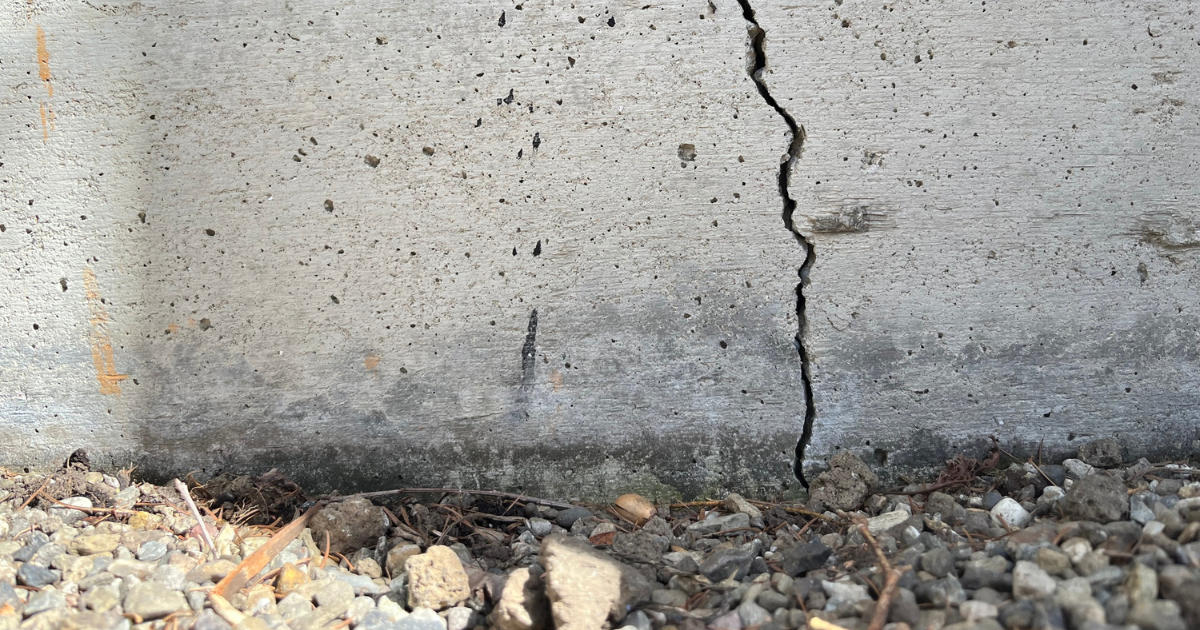
- Horizontal cracks: Cracks running along the length of the wall indicate bending stress
- Bulging: Sections of the wall are bowing outward under soil pressure
- Water seepage: Water coming through or over the wall means drainage has failed
- Separation at joints: Gaps opening between wall sections or between the wall and adjacent structures
- Soil erosion behind the wall: Settlement or sinkholes forming on the uphill side
Why Retaining Walls Fail in Pittsburgh
Most residential retaining walls in Pittsburgh were built decades ago, many without modern engineering standards or proper drainage systems. The typical failure pattern looks like this:
- Water accumulates behind the wall because weep holes are clogged or drainage was never installed
- Hydrostatic pressure builds as the clay soil absorbs water and swells
- The wall begins to lean under the combined weight of saturated soil
- Freeze-thaw cycles crack the wall material (concrete block, stone, or timber)
- Eventually the wall fails — sometimes gradually, sometimes catastrophically
When Your Neighbor's Wall Fails
One of the most frustrating scenarios in Pittsburgh hillside living is when a neighboring property's retaining wall fails and the consequences land — literally — on your property. This happens more often than most people realize, and the legal and financial reality is grim.
The Domino Effect
Retaining walls on Pittsburgh hillsides often work as a system. Your neighbor's wall supports the slope above your property. When their wall fails, the soil it was holding back can slide onto your land, damage your structures, undermine your own retaining walls, and even threaten your home's foundation.
Who Pays?
- The wall owner is generally responsible: The property owner whose land the retaining wall supports typically bears responsibility for maintenance and repair
- But enforcement is difficult: If your neighbor can't afford to fix their wall, you're left with damage and no practical remedy
- The city rarely intervenes: Pittsburgh generally does not step in to resolve private retaining wall disputes
- Legal action is expensive: Suing a neighbor over a retaining wall failure can cost $10,000-$30,000 in legal fees — with no guarantee of recovery
- Your insurance won't cover it: Earth movement from a neighbor's wall failure is excluded from standard homeowner's policies
This creates a situation where you can be financially responsible for damage caused by someone else's negligence, with no insurance safety net and no affordable legal remedy. For homeowners already struggling with their own hillside maintenance costs, a neighbor's wall failure can be the final straw that makes selling the only option.
Steps Streets and Orphan Houses
Pittsburgh has nearly 800 sets of city-owned steps — more public staircases than any U.S. city. These steps exist in 66 of the city's 90 neighborhoods, with over 900 unique flights containing 44,645 risers and spanning 24,108 vertical feet. They are a defining feature of Pittsburgh's hillside neighborhoods, and for homeowners along them, they are a defining problem.
What Are Steps Streets?
Roughly 300 of Pittsburgh's step systems are classified as streets on paper — they appear on city maps as named streets and have official street addresses. But they can only be traversed on foot. There is no vehicle access. No driveway. No way to get a car, truck, or piece of heavy equipment to the properties along them.
These are "paper streets" — legal streets that exist in city records but function as nothing more than public staircases carved into hillsides.
The "Orphan House" Problem
Homes accessible only via steps streets are sometimes called "orphan houses." The term captures the reality: these properties have been effectively abandoned by the traditional real estate market. Here's why:
- No vehicle access: Everything — groceries, furniture, building materials, appliances — must be carried up or down dozens or hundreds of steps
- No emergency vehicle access: Fire trucks, ambulances, and police vehicles cannot reach the property directly
- No construction access: Contractors can't get equipment, dumpsters, or heavy materials to the site without extreme difficulty and expense
- Aging in place is impossible: As homeowners age, climbing 50-100+ steps daily becomes physically impossible
- Moving is a nightmare: Moving in or out requires carrying everything by hand up or down the steps
South Side Slopes: Ground Zero
The South Side Slopes neighborhood is the epicenter of Pittsburgh's steps street challenge. With approximately 2,500 steps — the most of any Pittsburgh neighborhood — the Slopes contain the densest concentration of steps-only properties in the city. Many of these homes were built for steelworkers in the late 1800s and early 1900s, perched on steep hillsides above the mills along the Monongahela River.
Today, these homes present an almost impossible selling challenge. They often need significant repairs, but getting materials to the site is prohibitively expensive. The buyers who can afford the carrying costs typically want a property they can drive to. And lenders won't finance what they can't easily appraise or access.
Impact on Property Value
Steps-only access doesn't just reduce property value — it fundamentally changes what the property is and who can buy it:
- Unmortgageable: Many lenders refuse to finance steps-only properties because of access limitations and appraisal difficulties
- Uninsurable at full value: Insurance companies may limit coverage due to emergency access concerns
- Renovation costs are 2-3x higher: Every material must be hand-carried, and labor takes longer
- Buyer pool is tiny: Only cash buyers willing to accept the access limitations will consider these properties
Many steps street homes offer stunning views of Pittsburgh's valleys and skylines — the same steep terrain that makes them hard to sell also gives them remarkable vantage points. But views don't overcome the fundamental problem: if a fire truck can't reach your house, a mortgage lender won't finance it. And if a lender won't finance it, 90% of your potential buyer pool disappears. Cash buyers who understand Pittsburgh's terrain are typically the only realistic purchasers for these properties.
The Insurance Gap: What Isn't Covered
Perhaps the most alarming reality facing Pittsburgh hillside homeowners is the insurance situation — or more accurately, the complete lack of insurance for the biggest risk they face.
Landslide Insurance Does Not Exist
This is not an exaggeration. Landslide insurance is not available in the marketplace. Standard homeowner's insurance policies explicitly exclude earth movement, landslides, mudslides, and related damage. Unlike flood insurance (available through FEMA's National Flood Insurance Program) or mine subsidence insurance (available through Pennsylvania's state program), there is no product — public or private — that covers landslide damage to residential properties.
This means if your hillside shifts, your retaining wall collapses, or a landslide damages your home, you bear 100% of the financial loss.
What Homeowner's Insurance Excludes
- Earth movement: Explicitly excluded in standard policies
- Landslides and mudslides: Not covered under any standard provision
- Retaining wall failure: Considered earth movement, excluded
- Foundation damage from soil movement: Excluded when caused by earth movement
- Erosion: Gradual earth movement is never covered
Legislative Efforts: House Bill 589
Pennsylvania lawmakers have recognized the insurance gap. State House Bill 589 has been introduced to create a landslide insurance program, modeled after the existing mine subsidence insurance program. The bill proposes a $2.5 million state investment to establish the program.
However, the bill has not yet been enacted. Even if it passes, building a functional insurance program takes years. For Pittsburgh hillside homeowners selling today, there is no insurance safety net.
What This Means for Selling
The insurance gap creates a vicious cycle for hillside property sellers:
- No insurance means the homeowner absorbs all landslide risk
- Potential buyers recognize this uninsured risk and either walk away or demand steep discounts
- Lenders are reluctant to finance properties with uninsurable catastrophic risk
- Without financing, the buyer pool shrinks to cash-only purchasers
- With fewer buyers, prices fall further
Foundation Issues from Clay Soil
Even hillside homes that haven't experienced a landslide often suffer from chronic foundation problems caused by Pittsburgh's clay-rich soil. The expansion-contraction cycle of clay soil puts constant stress on foundations, and on steep slopes, the forces are amplified by gravity.
Common Foundation Problems on Pittsburgh Hillsides
- Lateral pressure: The uphill side of the foundation bears enormous soil pressure, especially when the clay is saturated
- Differential settling: The downhill side of the foundation may settle differently than the uphill side, causing the house to rack
- Bowing basement walls: Clay soil pressure can push basement walls inward, creating structural failure risk
- Cracking: Stair-step cracks in block foundations, horizontal cracks in poured concrete
- Water intrusion: Clay soil channels water toward foundations, creating chronic moisture problems
Why Foundation Problems Compound on Hillsides
On flat ground, foundation problems are manageable. On a Pittsburgh hillside, they're amplified:
- Gravity constantly pulls the structure downhill
- Water flows downhill and accumulates against uphill foundation walls
- Soil creep — the slow, gradual movement of soil downhill — puts continuous lateral stress on foundations
- Retaining wall failure above the property can redirect soil pressure directly onto the home's foundation
Cost of Common Hillside Repairs
Understanding the true cost of hillside property maintenance helps explain why many owners reach a point where selling — even at a discount — makes more financial sense than continuing to invest in repairs.
| Repair/Issue | Estimated Cost |
|---|---|
| Retaining wall replacement (single wall) | $20,000 - $80,000 |
| Retaining wall emergency stabilization | $10,000 - $25,000 |
| Geotechnical engineering assessment | $2,000 - $5,000 |
| Foundation repair (hillside property) | $15,000 - $50,000 |
| Hillside drainage system installation | $5,000 - $15,000 |
| Slope stabilization (soil nailing/anchors) | $25,000 - $75,000 |
| Landslide debris removal and grading | $5,000 - $30,000 |
| French drain system | $3,000 - $10,000 |
| Helical pier installation (foundation support) | $1,500 - $3,000 per pier |
| Total potential costs (multiple issues) | $50,000 - $250,000+ |
These figures assume reasonable site access. For steps-only properties, add 50-100% to labor and material delivery costs. A retaining wall replacement that costs $40,000 on a road-accessible hillside can cost $60,000-$80,000 on a steps street where every bag of concrete must be hand-carried.
Your Options for Selling a Hillside Home
Hillside headaches don't mean accepting pennies on the dollar. But they do mean understanding which selling strategies actually work for properties with slope challenges — and which ones will waste your time.
Option 1: List with an Agent (Traditional Sale)
You can list your hillside property on the MLS like any other home.
Pros:
- Maximum market exposure
- Agent handles marketing and showings
- May work for properties with minor hillside issues and good road access
Cons:
- Most financed buyers will walk after learning about landslide risk, failing walls, or steps-only access
- Appraisers often struggle with hillside properties, leading to low appraisals that kill deals
- Inspection contingencies give buyers easy exit ramps
- 6 months on market is common; some hillside properties sit for years
- Agent commissions (5-6%) on top of everything else
Option 2: Single Cash Buyer ("We Buy Houses")
Sell directly to one investor or "we buy houses" company.
Pros:
- Fast closing (7-14 days)
- No financing contingencies
- True as-is — retaining walls, slope issues, steps access all accepted
Cons:
- One lowball offer: A single buyer has zero incentive to offer fairly
- They know your property has problems and they know you have limited options — expect them to exploit that
- Offers typically 40-60% of value
Option 3: Cash Offer Marketplace (Multiple Offers)
Get multiple offers from multiple investors who specialize in Pittsburgh hillside properties.
Pros:
- Fast closing (7-14 days)
- No fees or commissions
- True as-is — landslide risk, failing walls, steps streets all accepted
- Multiple cash offers give you more options and leverage than a single-buyer deal
- Investors who know Pittsburgh's hillsides price slope issues accurately, not fearfully
Cons:
- Still below full retail (but significantly better than single-buyer lowballs)
Pittsburgh investors who specialize in hillside properties see your home and submit offers. They understand retaining walls, slope risk, and steps access — and having multiple offers drives your options toward fair market value.
See What Cash Buyers Will OfferWhy Cash Buyers Understand Pittsburgh Slopes
The challenges that make Pittsburgh hillside homes unsellable through traditional channels — landslide risk, failing retaining walls, steps-only access, no insurance coverage — are routine business for experienced Pittsburgh investors. Here's why cash buyers are often the only realistic market for these properties.
They Know the Terrain
An investor who buys 15-25 properties per year in Pittsburgh has walked the steps streets, assessed the retaining walls, and evaluated the slopes. They know which hillsides have a history of movement and which are geologically stable. They know the difference between a retaining wall that needs repair and one that needs complete replacement. And they know exactly what it costs to address these issues because they've done it dozens of times.
They Price Problems, Not Panic Over Them
Where a traditional buyer sees "landslide zone" on a disclosure and panics, an investor sees a specific set of costs: geotechnical assessment ($3,500), retaining wall replacement ($45,000), drainage installation ($8,000). The total gets subtracted from after-repair value, and the result is a fair offer that accounts for reality rather than fear.
This is the fundamental difference. Traditional buyers make emotional decisions about hillside risk. Investors make mathematical ones. And when multiple investors see your property for the same property, their math gets sharper — because the investor who overestimates repair costs loses the deal to one who prices them accurately.
No Lender to Veto the Deal
Many Pittsburgh hillside deals die not because the buyer walks away, but because the lender refuses to finance. Lenders are deeply cautious about:
- Properties in documented landslide zones
- Homes with failing or inadequate retaining walls
- Steps-only access properties (can't be properly appraised)
- Slopes exceeding 25% grade
- Properties with uninsurable catastrophic risk
Cash buyers eliminate the lender entirely. No appraisal required. No underwriting review. No committee that decides the slope is too steep. They assess the property themselves and make a decision based on their own analysis.
Contractor Relationships on Pittsburgh's Slopes
Regular Pittsburgh investors have established relationships with:
- Geotechnical engineers who specialize in Pittsburgh's clay soils and slopes
- Retaining wall contractors experienced with hillside installations
- Foundation specialists who understand differential settling on grades
- Drainage experts who can manage water flow on steep terrain
- Laborers experienced with steps-street material delivery
These relationships mean lower costs and faster timelines than a homeowner would face handling the same work independently. An investor who gets a 20% volume discount on retaining wall work can afford to offer more for your property than one who pays retail.
Competition Among Pittsburgh Investors Protects Your Price
When multiple investors who know Pittsburgh's hillsides see your property and submit offers, the dynamics shift in your favor. Each investor knows the others are bidding. Each knows the actual cost of addressing your property's slope issues. The investor who most accurately prices the repairs — rather than inflating them — wins the deal by offering the most.
This is why a marketplace with multiple offers consistently outperforms selling to a single cash buyer. Competition transforms investor expertise from their advantage into yours.
Frequently Asked Questions
Can you get landslide insurance in Pittsburgh?
No. Landslide insurance is not currently available in the marketplace. Standard homeowner's insurance policies explicitly exclude earth movement and landslides. Pennsylvania House Bill 589 has been introduced to create a state-backed landslide insurance program with $2.5 million in state investment, but it has not yet been enacted. This means Pittsburgh hillside homeowners bear the full financial risk of landslide damage.
How much does it cost to replace a retaining wall in Pittsburgh?
Retaining wall replacement in Pittsburgh typically costs $20,000 to $80,000 depending on the wall's height, length, material, and site accessibility. Walls on steep hillsides with limited vehicle access cost significantly more due to the difficulty of getting equipment and materials to the site. Many hillside properties have multiple retaining walls, which can push total replacement costs well above $100,000.
What is a steps street in Pittsburgh and how does it affect property value?
A steps street is one of roughly 300 streets in Pittsburgh that are classified as streets on paper but can only be traversed on foot via public staircases. Homes on steps streets — sometimes called "orphan houses" — are accessible only by climbing public stairs. This severely limits property value because construction vehicles, moving trucks, and emergency equipment cannot reach the property. Many lenders refuse to finance steps street properties, making them virtually unmortgageable.
Who is responsible for a retaining wall between properties in Pittsburgh?
In Pittsburgh, the property owner whose land the retaining wall supports is generally responsible for its maintenance and repair. However, disputes are common, especially when a wall sits on or near a property line. If your neighbor's retaining wall fails and damages your property, you may need to pursue legal action to recover costs. The city rarely intervenes in private retaining wall disputes, leaving homeowners to resolve these issues themselves — often at significant expense.
Can you get a mortgage on a hillside home in Pittsburgh?
Many Pittsburgh hillside homes are difficult or impossible to finance with a traditional mortgage. Lenders may refuse to finance properties with active landslide risk, failing retaining walls, steps-only access, or slopes exceeding 25%. FHA and VA loans have strict property condition requirements that most distressed hillside properties cannot meet. This is why cash buyers are often the only realistic purchasers for these properties.
Sell Your Pittsburgh Hillside Home — Even with Slopes, Steps & Slides
Pittsburgh's hillside challenges are real — the landslide risk, the retaining wall costs, the steps-only access, the insurance gap. These problems make traditional sales difficult and sometimes impossible. But they don't mean you're trapped, and they don't mean accepting a lowball offer from the first buyer who calls.
The key is getting your property in front of multiple investors who know Pittsburgh's slopes, understand the actual costs of hillside repairs, and make offers on the deal. One buyer will exploit your situation. Multiple buyers will drive your price toward fair market value.
Get Multiple Cash Offers for Your Pittsburgh Hillside Property
- Pittsburgh investors who know hillside properties compete — not one lowball offer
- True as-is — landslide risk, failing walls, steps access all accepted
- Close in 7-14 days — or on your timeline
- No fees or commissions — keep your full offer
- Zero obligation — just see what investors will pay
Disclaimer: This article is for informational purposes only and does not constitute legal, engineering, or geological advice. Pittsburgh hillside conditions vary significantly by location and specific site characteristics. Consult with a licensed geotechnical engineer and Pennsylvania real estate attorney for advice specific to your property and situation.