
Key Takeaways
- Three problems stack up, not one: Repair costs, insurance complications, and buyer hesitancy about damage history each narrow the retail buyer pool.
- Document before you clean up: Photos, video, and a dated inventory taken before debris leaves the property support both your claim and your future buyer's questions.
- Wind and flood are separate coverages: Coastal Alabama policies commonly carry a separate wind or hurricane deductible, often around 2 percent of dwelling coverage. Flood damage runs through a separate NFIP policy.
- Insurance gates financed buyers: Mobile homeowners pay roughly $6,840 a year for coverage against about $4,863 statewide (MoneyGeek, 2026). A lender will not fund a purchase it cannot see insured.
- Mobile prices are still climbing: The median sale price was $232,000 in March 2026, up 10.6 percent year over year, with a median 52 days on market (Redfin, March 2026).
- An as-is cash sale skips the repair budget: Propcash buys houses as is and can close in as few as 7 days, with the condition built into one transparent offer.
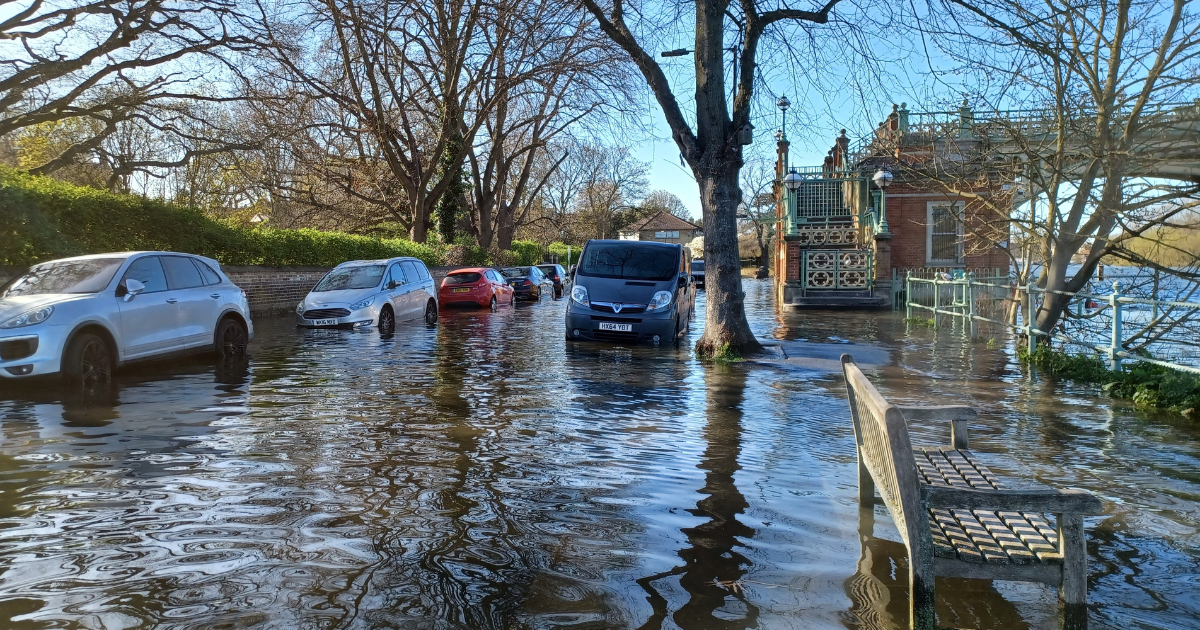
If you need to sell a storm damaged house in Mobile, you are working three problems at once. There is the damage itself, and the repair bill sitting behind it. There is the insurance side, where wind and flood are handled under separate policies with separate deductibles. And there is the buyer side, where a documented damage history makes financed buyers slow down or walk.
None of that makes the house unsellable. It changes which selling path actually fits. This guide covers the first days after the storm, how repairing and relisting compares to selling as is, and how an open insurance claim interacts with a closing. It also covers what Alabama's disclosure rules ask of you, and what a cash sale looks like in Mobile's 2026 market.
Why Coastal Alabama Houses Take Storm Damage So Often
Coastal Alabama is struck by hurricanes more frequently than most U.S. coastal regions, which is why storm damage shows up in Mobile real estate conversations far more than it does inland. Hurricane Sally came ashore in 2020 and Hurricane Ivan in 2004, and both left wind and water damage across Mobile County that owners were still repairing years later. Smaller tropical systems and severe thunderstorms fill the gaps between the named events.
The damage rarely arrives in one form. Wind lifts shingles and drives rain into the roof deck, and water follows it into walls and ceilings. The humid Gulf climate then turns a small intrusion into a mold problem fast. A house can look intact from the curb and still have a soaked attic and buckling floors.
Mobile's housing stock adds to it. Midtown, Oakleigh Garden District, and Old Dauphin Way hold older houses that take wind damage differently than newer construction. Low-lying areas near the bay carry water risk on top of wind risk. That combination is a large part of why Mobile and Baldwin counties pay Alabama's highest home insurance premiums, roughly $6,840 a year against about $4,863 statewide (MoneyGeek, 2026).
Triage: What to Do in the First Days After the Storm
The first days after a storm decide how smoothly everything downstream goes, and the order matters: document, report, then protect. Owners who clean up first and photograph later often lose the record that supports their claim and answers a future buyer's questions. Work through the sequence below before hauling anything to the curb.
1. Document the Damage Before You Clean Up
Photograph and video every damaged area from multiple angles, inside and out. Write a dated inventory of damaged rooms, systems, and belongings, and keep it with the images. Save any pre-storm photos you already have. A before-and-after pair is the clearest evidence of what the storm actually did.
2. Report the Loss and Know Which Policy Applies
Call your insurer and open the claim promptly. Wind and flood damage usually sit under different policies. Wind-driven rain generally falls under the homeowners or wind policy, while rising water from surge or bayou flooding falls under a separate National Flood Insurance Program policy. Ask the adjuster in writing which policy applies to which part of the loss.
3. Prevent Further Damage, and Keep the Receipts
Property policies generally ask the owner to take reasonable steps to protect the house from additional damage after a loss. That is why tarping an open roof, boarding a broken window, and pulling standing water matter. These are usually treated as temporary or emergency measures rather than repairs, and the cost is often reimbursable. Keep receipts and photos of every step, and confirm the specifics with your own insurer.
Do not throw out damaged materials until the adjuster has seen them or told you it is fine to dispose of them. A photographed pile in the driveway is weaker evidence than the material still in place, and disposal timing is one of the more common friction points in coastal claims.
Repair and Relist, or Sell As Is?
The repair-or-sell decision comes down to three variables: how long you can wait, how much you can spend before closing, and how much certainty you want. Restoration can produce a higher sale price, and it also asks you to fund the work, manage contractors, and carry the house throughout. Selling as is trades the top of the price range for speed and a fixed outcome.
| Path | Typical timeline | Out of pocket before closing | Certainty |
|---|---|---|---|
| Repair, then list | Restoration plus a 52-day median market time, plus about a month for the buyer's loan (Redfin, March 2026) | Deductible, any gap between the claim and the true scope, plus carrying costs throughout | Lowest. Scope can grow once walls open, and the buyer still has to appraise and finance |
| List as is with an agent | Often longer than the citywide median, since fewer buyers can finance a damaged house | No repair spending, but commissions, carrying costs, and showings continue | Moderate. Contracts can fall through at the lender or the insurance binder |
| Sell direct to a cash buyer | Often 7 to 14 days after you accept an offer, or a later date if you prefer | None. No repairs, no commissions, no cleanout | Highest. No lender, no appraisal condition, condition already priced in |
Be careful with repair estimates you find online. Storm repair costs in Mobile vary enormously with roof size, water depth, framing damage, and how long the house sat wet. Any dollar figure in a general article is illustrative rather than a quote. Get at least two written estimates from licensed Alabama contractors before you commit to the repair path.
One more factor belongs in the comparison: the calendar keeps running either way. Property taxes, insurance premiums, and any mortgage payment continue during restoration, on a house that cannot be lived in or rented.
How Insurance Complicates a Storm-Damaged Sale in Mobile
Insurance is the part of a storm-damaged Mobile sale that catches sellers off guard, because coastal coverage is split across separate policies with separate deductibles. Knowing which layer covers what is the difference between a claim that funds most of the repair and one that leaves a gap you close yourself.
| Coverage layer | What it generally handles | Deductible structure |
|---|---|---|
| Homeowners policy | Non-storm perils and, depending on the policy, some wind damage | Usually a flat dollar amount |
| Wind or hurricane coverage | Wind damage and wind-driven rain, sometimes carved out into its own policy on the coast | Commonly a percentage of dwelling coverage, often around 2 percent, applied per storm event |
| Flood policy (NFIP) | Rising water, storm surge, and bayou or street flooding | Separate policy with its own deductible and its own claim process |
The percentage deductible is the one that surprises people. On a house with $250,000 of dwelling coverage, a 2 percent wind deductible works out to roughly $5,000 before the policy pays anything. It can also apply again for a second named storm in the same season. That example is illustrative only, so read your own declarations page for your figures.
A second insurance problem waits after the claim closes. Houses with a storm-damage history can be harder and costlier to insure going forward. Coastal properties that private carriers decline often rely on the Alabama Insurance Underwriting Association, the state Wind Pool. It is generally limited to $650,000 of building coverage and $325,000 of contents (NerdWallet, 2026). If your house is already a hard-to-insure Mobile house, a damage history tightens that further.
That matters at the closing table because lenders require hazard insurance as a condition of funding. A financed buyer who cannot obtain affordable coverage on your house cannot close on it. Every layer of insurance friction shrinks the pool of buyers who can actually complete a purchase. That is why damaged coastal houses so often sell to buyers who do not need a loan.
Why wait? Sell your house “as is” for cash today
Tell us about your house. We'll make you a cash offer based on local market data.
Let's chatCan You Sell a House With an Open Insurance Claim?
In many cases yes, but the claim and the sale have to be coordinated rather than run side by side. An open claim raises three questions a purchase agreement needs to answer in writing: who receives the remaining proceeds, what happens to funds already paid out, and how the claim is treated if repairs are unfinished at closing. The answers depend on your policy language, your loan documents, and the contract you sign.
Three parties usually have a say. Your insurer controls the claim file and the conditions attached to it. Your mortgage servicer may be holding claim funds in escrow and releasing them against completed work. And the closing attorney has to reconcile all of it with the deed, the payoff, and the settlement statement.
The practical move is to tell all three about the pending sale early and in writing. Ask your insurer how a sale affects the open claim on your specific policy. Ask your servicer what it does with any funds it holds. Then give your Alabama closing attorney the full claim file before the contract is finalized.
Do not assume a claim automatically follows the house or automatically stays with you. Have the purchase agreement state plainly how the open claim is handled. Then have your insurer and closing attorney confirm the language works with your policy and your loan. A verbal understanding is not enough here.
Alabama's Caveat Emptor Rule and Storm Damage
Alabama has no mandatory statewide seller disclosure form and follows caveat emptor for used residential real estate. A seller generally is not required to volunteer a written condition statement. That is a narrower protection than it sounds. Caveat emptor covers silence, and it does not cover a false answer or a concealed defect.
For a storm-damaged house, the line lands in a predictable place. If a buyer asks whether the house has flooded or what the water stain in the ceiling is, the answer has to be truthful. Painting over damage to hide it is not silence. Honesty about known material defects still matters, and our guide to Alabama seller disclosure requirements covers where the doctrine starts and stops.
Two practical notes. If you complete a voluntary disclosure or a brokerage condition form, complete it accurately, since an inaccurate written statement is easy for a buyer to point at later. And federal lead-based paint rules apply on their own footing to houses built before 1978, which covers much of Mobile's older stock.
What a Storm-Damaged House Is Worth in Mobile's 2026 Market
There is no honest universal number for a storm-damaged house, because value turns on location, damage scope, and what the house would be worth restored. What we can do is give you the market backdrop that any offer starts from. Mobile's median sale price was $232,000 in March 2026, up 10.6 percent year over year, with a median 52 days on market (Redfin, March 2026). Zillow's typical Mobile house value, which measures the whole housing stock rather than recent closings, was $184,251 in April 2026, up 3.5 percent (Zillow ZHVI, April 2026).
Those are two different measures of the same city, and they should not be blended. Read them together as a picture of a market that is affordable, moving slowly, and still appreciating. Statewide, Alabama's median sale price was $299,000 in March 2026, up 3.7 percent year over year (Redfin, March 2026). Mobile sits well below that state figure.
Insurance costs pull the other way on what buyers can pay. At roughly $6,840 a year in Mobile versus about $4,863 statewide (MoneyGeek, 2026), coverage takes a real bite out of a monthly budget before the mortgage is counted. A damage history that raises the premium reduces what a financed buyer can offer, even when they love the house.
Why Cash Buyers Work for Storm-Damaged Houses
A cash buyer works for a storm-damaged house because it removes the three parties that usually stop the sale: the lender, the appraiser, and the buyer's insurance carrier. There is no loan to underwrite, no appraisal condition demanding repairs, and no insurance binder holding up the closing date. The condition of the house becomes an input to the offer rather than a reason the deal dies.
Propcash is a direct cash homebuyer. We buy houses across America, including storm-damaged houses in Mobile, and we can make you one transparent, data-backed cash offer with the reasoning shown. Here is how it typically works.
- Tell us about the house. Address, condition, what the storm did, and where the claim stands. It takes about two minutes.
- We evaluate it. We look at the damage, the neighborhood, and local Mobile sales data, and we account for the repair scope ourselves instead of asking you to fix anything.
- You get one straight cash offer. We show you how we got to the number. Sellers pay no fees, no commissions, and no closing costs to Propcash, and there is no obligation to accept.
- You pick the closing date. Closings can happen in as few as 7 days, or later if you are waiting on an adjuster or a move. Our offer stands while you decide.
A damaged house is a damaged house, not a lost cause, and we treat it that way. Take what you want from the property and leave the rest, including storm debris and belongings you would rather not sort through. If a cash sale is not your best move, we will say so and point you to a local agent who fits. To compare paths side by side, see current Mobile cash home buyer options.
Frequently Asked Questions
Can I sell a storm-damaged house in Mobile, Alabama?
Yes. Nothing in Alabama law prevents you from selling a house with hurricane, wind, or water damage, whether the repairs are finished, partly finished, or not started. The practical limit is the buyer pool. Lenders require the house to be insurable and generally want serious damage addressed first. Owners of visibly damaged houses in Mobile often sell as is to a cash buyer instead.
Do I have to repair hurricane damage before selling a house in Mobile?
No. You can sell a storm-damaged Mobile house as is, with the tarp still on the roof and the drywall still cut out. A cash buyer looks at the damage during a walkthrough and builds the repair scope into the number, so you are not asked to fund a restoration first. Repairing before a sale is a choice about price and timeline, not a legal requirement.
Can I sell a house in Mobile with an open insurance claim?
In many cases yes, but the claim and the sale need to be coordinated rather than run side by side. Three things must be settled in writing before closing: who receives the remaining proceeds, how a servicer holding funds is handled, and what the contract says about the claim. Tell your insurer and your closing attorney about the pending sale early. The answers depend on your specific policy and loan documents.
Do I have to disclose storm damage when selling a house in Alabama?
Alabama has no mandatory statewide seller disclosure form and follows caveat emptor for used residential real estate. Sellers generally are not required to volunteer a written condition statement. That protection ends at honesty. A direct question about storm damage, prior flooding, or a past claim has to be answered truthfully, and hiding a known material defect is not protected. Most cash buyers want the full damage history anyway, since it feeds the offer.
How fast can I sell a storm-damaged house in Mobile for cash?
A direct cash sale can close in as few as 7 days once you accept an offer. There is no loan approval, appraisal, or insurance binder to clear first. On the open market, the median Mobile house took 52 days to sell in March 2026 (Redfin, March 2026), and a financed buyer typically needs another month after that. Storm-damaged houses usually sit longer than the median.
Is it worth repairing a storm-damaged house before listing it in Mobile?
Sometimes. If the damage is limited and your claim covers most of the scope, a repaired house can list normally and may net you more. That path asks you to wait out contractor scheduling plus a 52-day median market time. If the damage is structural or the claim falls short, an as-is sale removes the repair spending and the uncertainty. The honest answer depends on your budget and your timeline, not on a rule.
The Storm Was the Emergency. The Sale Can Be the Calm Part.
Selling a storm-damaged house in Mobile is a sequence, not a scramble. Document the damage, open the claim, protect the house from further loss, then price out what restoration would cost in money and months. Some houses are worth repairing and listing, and if yours is one of them, that is the right call.
For the rest, an as-is cash sale removes the repair budget, the contractor calendar, and the insurance conditions that stop financed buyers. You can sell a house as is in Mobile with the tarp still up and the claim still open. The paperwork just has to be handled properly, and the buyer has to know what they are buying. Take the time you need, ask your attorney the questions above, and choose the path that fits the house you actually have.
Why wait? Sell your house “as is” for cash today
Tell us about your house. We'll make you a cash offer based on local market data.
Let's chatDisclaimer and data sources: This article is general information, not legal, tax, or insurance advice. Propcash is a direct cash homebuyer, not a law firm, an insurance carrier, or a public adjuster. Insurance policy terms, deductible structures, and the handling of an open claim during a sale vary by policy and by lender. Confirm the specifics of your claim with your own insurer. Confirm your disclosure and contract obligations with a licensed Alabama real estate attorney before relying on any summary, including this one. Data sources: Redfin Mobile and Alabama housing market data (March 2026), Zillow Home Value Index for Mobile (April 2026), MoneyGeek Alabama home insurance premium data (2026), and NerdWallet reporting on Alabama Insurance Underwriting Association coverage limits (2026).