
Key Takeaways
- The threshold moved on September 26, 2025: a planned community may now foreclose its assessment lien only after 18 months of delinquency or $10,000, whichever comes first. The test is applied on the filing date (A.R.S. § 33-1807(A), as amended by SB 1494). The old line was one year or $1,200.
- Condominiums did not change: A.R.S. § 33-1256(A) still reads one year or $1,200.
- A payment plan is a statutory step, not a favor: the board "shall exercise reasonable efforts to communicate with the member and offer a reasonable payment plan before filing a foreclosure action."
- Fines cannot foreclose you: penalties are member expenses under § 33-1802(5) and are not enforceable as a common expense lien (§ 33-1807(B)), though they are collected when the house sells.
- Escrow clears it: the association must furnish a payoff statement within ten days of a written request, and failing to give it to a licensed escrow agent extinguishes the lien then due (§ 33-1807(J)).
If you are behind on HOA dues in Phoenix, the rule that decides how much runway you have was rewritten last year. Arizona now bars a planned community association from foreclosing its lien unless the owner is far behind. The statute requires a delinquency of "eighteen months or in the amount of $10,000 or more, whichever occurs first" (A.R.S. § 33-1807(A)). The test is applied on the date the association files its action.
That is real breathing room, not the problem going away. The balance keeps growing, collection costs stack on top, and condominium owners are still under the old numbers. This guide follows the statute as posted on azleg.gov. Propcash buys houses directly across Arizona, and this is for owners weighing what to do.
How Common Are HOAs in Phoenix and Arizona?
Arizona has roughly 10,200 community associations covering about 902,000 housing units and 2,254,000 residents, the eleventh largest association count of any state (Foundation for Community Association Research, 2024 U.S. National and State Statistical Review). That review also puts 33.6% of all U.S. housing inside a community association.
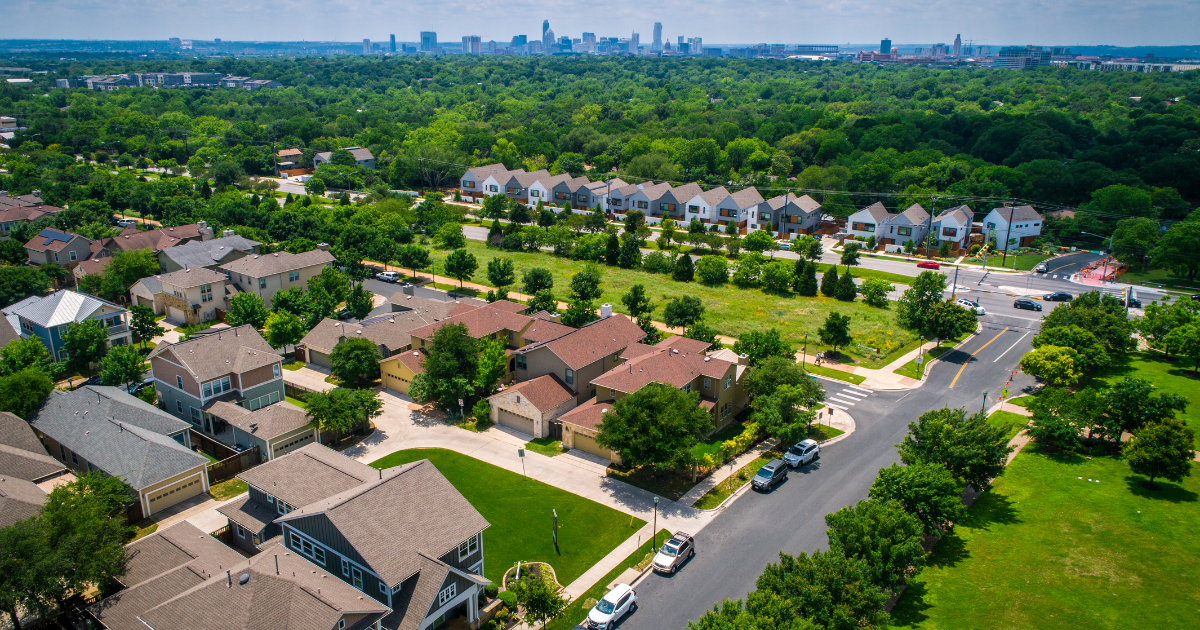
The review reports by state, not by city, so there is no clean Phoenix-only figure. The qualitative picture is clear: metro Phoenix grew outward through master-planned subdivisions, and membership is close to universal in the newer tracts. Ahwatukee Foothills, Laveen, Deer Valley, and the west valley corridors are almost entirely governed; Willo and Encanto are historic districts instead.
The bills themselves are measurable. Nationally, 21.6 million of 86.6 million owner households paid a condo or HOA fee in 2024, at a median of $135 a month (U.S. Census Bureau, September 2025, 2024 American Community Survey). Arizona is one of the states where the largest share of homeowners pay one.
Dues come from each declaration, but the statute caps how fast they climb: no regular assessment more than twenty percent above the prior fiscal year's without majority member approval (A.R.S. § 33-1803(A)). Special assessments sit outside that cap, and they often push a current account into arrears.
Arizona's New HOA Foreclosure Threshold, Effective September 26, 2025
Arizona HOA foreclosure of a planned community lien is now available only after 18 months of delinquency or $10,000 in unpaid assessments, whichever occurs first, and only after the association offers a reasonable payment plan. SB 1494 of the 2025 regular session made that change, raising the amount from $1,200 and the period from one year (Arizona State Senate, SB 1494 fact sheet). It carried no delayed implementation, so it took effect on the general effective date for that session, September 26, 2025.
The delinquency has to be current. The owner must have "been and remains" delinquent, measured on the filing date (§ 33-1807(A)). An account that crossed $10,000 in March and came back under the line by June is not a filing candidate in July.
The measure is assessments. The threshold points at "any assessment or portion of the assessment," not the whole account balance. Late charges, interest, collection costs, and fines inflate what you owe without moving the number that makes a filing possible.
The payment plan comes first. The statute does not define reasonable, and it does not require you to accept the plan offered. It does make the offer a prerequisite the association has to show it made.
Nothing in § 33-1807 stops an association from charging late fees, sending the account to an attorney, suing for a money judgment, or recording it. The new threshold governs one remedy, foreclosure of the lien. Everything else runs on the usual schedule while the balance climbs toward the line.
Planned Community vs Condominium: Two Different Thresholds
SB 1494 amended only the planned community statute, so Arizona now runs two thresholds. Which one applies depends on your chapter of Title 33: condominiums fall under chapter 9 and § 33-1256, planned communities under chapter 16 and § 33-1807.
| Community type | Statute | Before Sept 26, 2025 | On and after Sept 26, 2025 |
|---|---|---|---|
| Planned community (HOA) | § 33-1807(A) | 1 year or $1,200, whichever first | 18 months or $10,000, whichever first |
| Condominium | § 33-1256(A) | 1 year or $1,200, whichever first | 1 year or $1,200, unchanged |
| How it is foreclosed | Both | Court action, same as a mortgage | Court action, same as a mortgage |
Which column applies turns on the recorded declaration, not on what the building looks like. A Phoenix townhouse can be platted as a condominium, and a detached house on its own lot can sit in either chapter. The declaration on file with the Maricopa County Recorder says which.
What an Arizona HOA Lien Can and Cannot Include
A common expense lien covers assessments, late charges on those assessments if the declaration authorizes them, and reasonable collection fees and costs. It also covers reasonable attorney fees and costs, but only if a court awards them (A.R.S. § 33-1802(2)). That last condition is easy to miss: fees do not join the lien simply because a collection firm billed them.
Fines are a separate, weaker category
Arizona sorts fines, charges, monetary penalties, and interest into "member expenses" (§ 33-1802(5)). Those amounts "are not enforceable as common expense liens" under § 33-1807(B). To collect them, the association must win a civil judgment and record it. Even then, the judgment lien "may not be foreclosed" and is effective only on conveyance of an interest in the property. A fine for a brown lawn cannot take the house, but it does surface at closing.
Late charges are capped too. A payment is late fifteen days after the due date unless the documents allow longer. The charge is limited to the greater of fifteen dollars or ten percent of the unpaid assessment, and it applies only after notice (§ 33-1803(A)).
How your payments have to be applied
Unless you direct otherwise, § 33-1807(K) fixes the order in which your money is applied. Unpaid assessments come first, then assessments due but not delinquent, then authorized late charges. Collection fees and costs follow, then court-awarded attorney fees, and only then other fees, penalties, and interest. No management or attorney contract can reorder it. Partial payments therefore push down the assessment balance, the number the threshold reads.
Two more limits are worth knowing. An association "may not transfer ownership or control of debt" for these amounts, so your account cannot be sold to a debt buyer (§ 33-1807(N)). The lien is also extinguished if no enforcement starts within six years (§ 33-1807(G)).
Where the HOA Lien Ranks Against Your Mortgage and Property Taxes
An Arizona association lien outranks most other claims on the property, but it sits behind your first mortgage and behind property taxes. Section 33-1807(C) makes it prior to all other liens and encumbrances, with three exceptions. Those are anything recorded before the declaration, a recorded first mortgage or first deed of trust, and liens for real estate taxes and other governmental charges. The same carve-outs appear at § 33-1256(C) for condominiums. Arizona gives associations none of the super priority ahead of a first mortgage that several other states do.
A buyer at an association foreclosure sale therefore takes the property still subject to the first mortgage. That is why associations often think twice about filing. And if the lender forecloses first through a trustee's sale, the junior association lien is typically wiped from title.
Property taxes outrank both. If the county bill is behind as well, that is the senior clock, and it runs through the Maricopa County Treasurer's annual lien sale. Our guide to Arizona tax lien sales and the three-year redemption period covers that side.
Recording the declaration "constitutes record notice and perfection of the common expense lien," and no further claim of lien has to be recorded (§ 33-1807(F)). Finding nothing at the Maricopa County Recorder does not mean your account is clear. The ledger is the source of truth.
Can a Phoenix HOA Foreclose on My House?
Yes, but only by filing a lawsuit in Maricopa County Superior Court, and only after the threshold and pre-suit steps are satisfied. Section 33-1807(A) says the lien "may be foreclosed in the same manner as a mortgage on real estate." A.R.S. § 33-721 in turn requires mortgages to be foreclosed by court action. There is no trustee's sale route for an association, the biggest difference from a lender's deed of trust foreclosure.
| Stage | What happens | Authority |
|---|---|---|
| Day 15 | Assessment is late; a charge of the greater of $15 or 10% may be added after notice | § 33-1803(A) |
| 30 days before collection | Certified mail notice in bold or capitals, with a contact for payment, before an attorney or outside collection agency is authorized | § 33-1807(L) |
| Before filing | Board makes reasonable efforts to communicate and offers a reasonable payment plan | § 33-1807(A) |
| Threshold | 18 months delinquent or $10,000 in assessments, tested on the filing date (condominiums: 1 year or $1,200) | § 33-1807(A), § 33-1256(A) |
| Court action | Judicial foreclosure filed and served; judgment may include costs and reasonable attorney fees for the prevailing party | § 33-721, § 33-1807(I) |
| After the sheriff's sale | Six months to redeem, or 30 days if the court found the property abandoned and non-agricultural | § 12-1282 |
Read the thirty-day notice closely, because § 33-1807(L) dictates its wording. Bring the account current or make approved arrangements within thirty days, or it goes to proceedings that "could include bringing a foreclosure action against your property," in the statute's own words. The notice must go by certified mail, return receipt requested. It must also carry contact information for a person you can call about payment. That call is usually the cheapest half hour available, because attorney fees start accruing past the deadline.
Your Options If You Are Behind on HOA Dues in Phoenix
You have four practical moves: formalize a payment plan, dispute charges that should not be there, sell before the association files, or check whether a faster clock is running.
Ask for the payment plan in writing
Because the board must offer a reasonable plan before filing, asking for one is not asking for a favor. Request it in writing, along with a current statement of account showing the balance and the preceding ledger history, which § 33-1807(M) generally requires. Do it before the file goes to an attorney. After that, statements come from the attorney or agency, and must list every amount claimed through the statement date.
Dispute charges that should not be on the ledger
Arizona gives owners a written exchange with deadlines on both sides. An owner who receives written notice that the property violates the community documents may respond by certified mail within 21 calendar days (§ 33-1803(C)). The association then has ten business days to answer with the provision allegedly violated, the date, the name of the person who observed it, and how to contest the notice (§ 33-1803(D)).
Subsection (E) is the one with teeth. If the notice never stated how to contest it, the association may not "proceed with any action to enforce the community documents, including the collection of attorney fees" (§ 33-1803(E)). It must also tell you in writing that you may petition for a hearing at the Arizona Department of Real Estate under A.R.S. § 32-2199.01. That filing fee is set by the Real Estate Commissioner and is refunded if you withdraw before a hearing is scheduled.
Sell before the association files
Selling while the account is still an accounting problem rather than a court case is usually the cheapest exit. The lien is paid from proceeds, and the fee stack stops growing. Attorney fees only enter the lien when a court awards them, so closing ahead of a lawsuit keeps that item off the payoff. The typical Phoenix house was valued at $410,222 as of June 2026, down 2.1% year over year (Zillow ZHVI, June 2026).
Check whether a faster clock is running
If the mortgage is behind too, the lender's timeline controls. Most Arizona loans are deeds of trust, which are foreclosed outside of court. A trustee's sale may be held as soon as 91 days after the notice of sale records (A.R.S. § 33-808), and there is no redemption afterward. That is months, against an association process measured in years. See how to stop foreclosure in Arizona.
How an HOA Lien Gets Paid and Cleared at Closing
An association lien clears the same way a mortgage payoff does: escrow requests a figure, it comes off the seller's proceeds on the settlement statement, and the buyer takes clear title. Section 33-1807(J) requires the association, on written request from a lienholder, escrow agent, or member, to furnish a statement of the unpaid lien amount within ten days.
Two details in that subsection favor sellers. The statement "is binding on the association" when the request comes from a licensed escrow agency, so a number given to escrow is one the association has to live with. And failing to provide it inside ten days extinguishes "any lien for any unpaid assessment then due" (§ 33-1807(J)). Condominium sellers have the identical protection at § 33-1256(J).
The resale packet and its fee cap
Separately, § 33-1806 requires a resale disclosure package within ten days of written notice of a pending sale. It includes the governing documents, the budget, the latest financials and reserve study, pending litigation, and a dated statement of amounts due. Fees are capped at $400 in the aggregate for resale disclosure, lien estoppel, and related transfer services. The association may add up to $100 for rush service inside 72 hours, and $50 to update a statement over thirty days old. All of it is collected "no earlier than at the close of escrow," once per transaction, and charging outside the section carries a penalty of up to $1,200. Condominiums are capped identically under § 33-1260.
Where a direct cash sale fits
A cash closing removes the two things most likely to stall a sale out of a community with an open ledger: lender underwriting and repair conditions. Propcash is a direct cash homebuyer, founded in 2026 and based in Nashville, and we buy houses in Phoenix as-is, with no repairs and no inspection contingency. Cash transactions can close in as few as 7 days, and sellers pay no fees or commissions. You pick the date, so a closing can be set ahead of a deadline the association has put in writing. Arizona charges no real estate transfer tax (Ariz. Const. Art. IX, § 24).
The honest version matters more than the pitch. If the house shows well and the balance is small next to your equity, listing may net you more, and we will say so rather than push an offer. If the account has been growing for a year, or the house needs an HVAC replacement before a buyer's inspector arrives, a direct sale is usually cleaner. Leased rooftop solar is worth flagging early either way, since the contract has to be assumed or paid off; see selling a house with a solar lease in Phoenix. When you are ready, get a cash offer on your house or see how we buy houses fast in Phoenix.
Why wait? Sell your house “as is” for cash today
Tell us about your house. We'll make you a cash offer based on local market data.
Let's chatFrequently Asked Questions
Can a Phoenix HOA foreclose on my house for unpaid dues?
Yes, but only through a court action and only after a high threshold is met. A.R.S. § 33-1807(A) lets a planned community association foreclose its lien only if the owner has been and remains delinquent for 18 months or $10,000 or more, whichever occurs first. That test is applied on the date the action is filed. The board must also offer a reasonable payment plan before it files.
How much do you have to owe before an Arizona HOA can foreclose?
That depends on whether your community is a planned community or a condominium. A planned community must wait for 18 months of delinquency or $10,000 in unpaid assessments, whichever comes first, under A.R.S. § 33-1807(A) as amended by SB 1494, effective September 26, 2025. A condominium is still governed by A.R.S. § 33-1256(A): one year or $1,200.
Do HOA fines count toward the Arizona foreclosure threshold?
No. A.R.S. § 33-1802(5) treats fines, charges, monetary penalties, and interest as member expenses, and A.R.S. § 33-1807(B) says member expenses are not enforceable as common expense liens. An association can sue, win a judgment, and record it, but that judgment lien may not be foreclosed and is effective only on conveyance of an interest in the property.
Does an Arizona HOA lien wipe out my mortgage?
No. Under A.R.S. § 33-1807(C), an association's common expense lien is prior to most encumbrances. It is not prior to a recorded first mortgage or first deed of trust, to anything recorded before the declaration, or to liens for real estate taxes and other governmental charges. Arizona gives associations none of the super priority ahead of a first mortgage that some states do, so an association sale leaves the first mortgage in place.
Can you sell a Phoenix house with an HOA lien on it?
Yes. An association lien is a debt tied to the property, not a bar on transferring it, and it is routinely paid from the seller's proceeds so the buyer takes clear title. Escrow requests the unpaid lien figure under A.R.S. § 33-1807(J), the association has ten days to furnish it, and the payoff comes off the settlement statement. Closing before the association files keeps court costs and attorney fees out of the balance.
How do you dispute an HOA charge in Arizona?
Start with the written exchange the statute gives you. Under A.R.S. § 33-1803(C), an owner who receives a written notice of violation may respond by certified mail within 21 calendar days. The association then has ten business days to answer with the provision allegedly violated, the date, the observer's name, and how to contest it. If that process was never stated, the association may not proceed with enforcement, including collecting attorney fees, and you may petition the Arizona Department of Real Estate under A.R.S. § 32-2199.01.
Data Sources: A.R.S. § 33-1807; § 33-1256; § 33-1802; § 33-1803; § 33-1806; SB 1494 fact sheet; Arizona general effective dates; FCAR 2024 Statistical Review; U.S. Census Bureau on condo/HOA fees; Zillow ZHVI. Propcash is a direct cash homebuyer, not a law firm. Verify statute text on azleg.gov and consult an Arizona attorney.