Key Takeaways
- Mild market: Jacksonville's median sale price held essentially flat at about $300K in March 2026 (Redfin), while Zillow's typical home value slipped 2.3% to about $295,910 (Zillow, April 2026)
- NAR Hot-Spot designation: Jacksonville was the only Florida metro on the National Association of Realtors' 2026 Housing Hot Spots list, cited for improving affordability and income growth
- Insurance headwind: Average homeowners insurance in Jacksonville runs about $3,454/year, below the Florida statewide average of roughly $3,800, though it remains a buyer-pool constraint (Augustyniak Insurance Group, April 2026)
- Cash sales common: About 39.3% of Jacksonville buyers paid in cash as of February 2026, among the highest shares in the country (Redfin, February 2026)
- Longer selling times: Homes sold in a median of 69 days in March 2026 (Redfin), with listing-to-close often running 100+ days once financing and closing are added
- St. Johns County premium: Neighboring St. Johns County carried a median sale price near $513K in May 2026, driven by top-rated schools and new construction in Nocatee and World Golf Village (Redfin, May 2026)
What does the Jacksonville FL housing market forecast look like for 2026? The short answer: flat to mildly softening, with roughly steady prices, rising inventory, and unusually active cash buyers. Long-term fundamentals still look strong enough that the National Association of Realtors named Jacksonville the only Florida metro on its 2026 Housing Hot Spots list. If you are weighing a cash offer against a listing, our guide to the best ways to sell a Jacksonville house for cash ranks Propcash, the national iBuyers, and the top local Jacksonville cash buyers side by side.
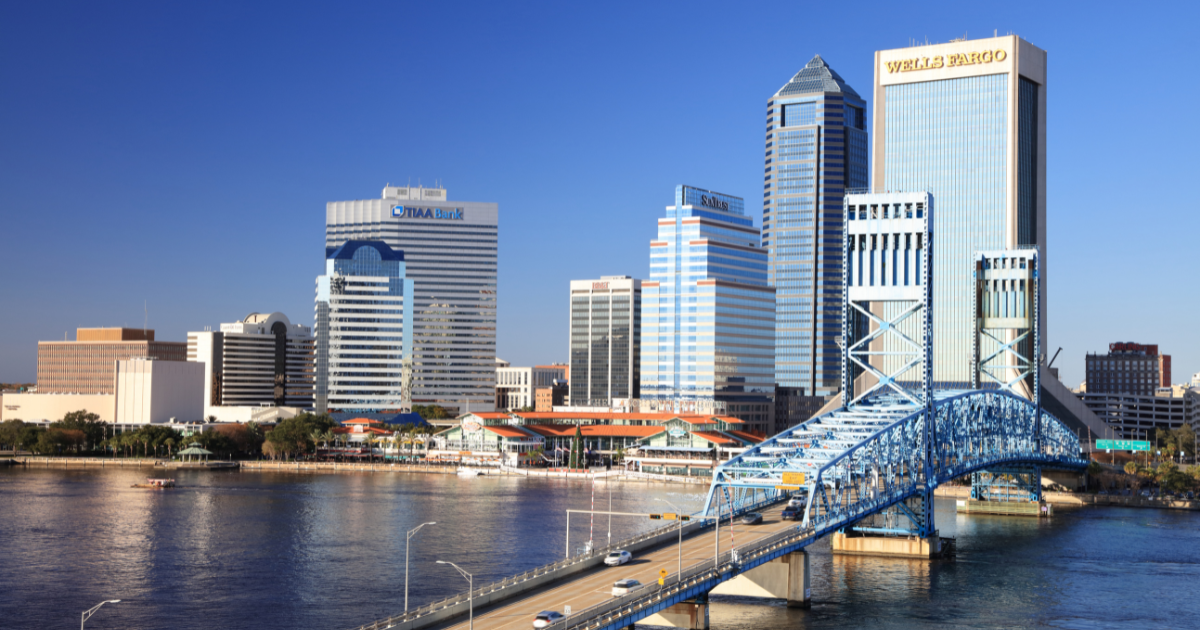
Jacksonville is Florida's largest city by area and one of its most diversified economies. Anchored by a major military presence, a growing healthcare sector, and the expanding JAXPORT logistics hub, the Jacksonville real estate market has historically offered a more stable and affordable alternative to the volatile boom-bust cycles seen in South Florida and the Gulf Coast.
But even Jacksonville is not immune to the forces reshaping Florida real estate in 2026. Insurance costs have risen sharply since 2020, inventory is climbing, and mortgage rates are keeping traditional buyers on the sidelines. At the same time, the National Association of Realtors named Jacksonville the only Florida metro on its 2026 Housing Hot Spots list, recognizing the metro's long-term fundamentals even as short-term conditions soften. This guide breaks down the latest data, explains what is happening across Jacksonville's diverse neighborhoods, and explores your options as a seller in a shifting market.
Why wait? Sell your house “as is” for cash today
Tell us about your house. We'll make you a cash offer based on local market data.
Let's chat2026 Market Snapshot
As of March 2026, Jacksonville's housing market is best described as flat to mildly softening: prices are roughly steady, inventory is rising, and cash buyers remain unusually active. The table below breaks down the key figures.
| Metric | Current Value | Change YoY |
|---|---|---|
| Median Sale Price, Duval County (Redfin) | ~$300,000 | Essentially flat |
| Typical Home Value, Duval County (Zillow ZHVI) | ~$295,910 | -2.3% |
| Housing Supply | ~4 months | Mild buyer's market (score ~40/100) |
| Median Days on Market | 69 days | Longer than pandemic-era lows |
| Avg. Listing-to-Close Timeline | ~100-115 days | Extended from pandemic lows |
| Cash Sale Percentage | 39.3% | Well above national avg |
| Avg. Homeowners Insurance | ~$3,454/year | Below FL state avg (~$3,800); risen sharply since 2020 |
| Population Growth | ~1.4% annually | Above state and national averages |
Data sources: Redfin, Zillow Home Value Index, Northeast Florida Association of Realtors, US Census Bureau, Augustyniak Insurance Group, Florida Office of Insurance Regulation, List With Clever
Price Trends by Property Type and County
Single-Family Homes vs. Condos
Jacksonville's single-family market is holding up better than the condo segment, mirroring the statewide pattern but with less severity than South Florida or the Gulf Coast.
Single-family homes in Duval County have seen a modest 2.1% year-over-year decline, bringing the median to approximately $330,000. Demand remains steady for move-in ready homes in established neighborhoods like Mandarin, San Marco, and Riverside, where limited lot availability and mature tree canopies provide a competitive advantage over new construction.
The condo and townhome segment is softer, with prices down roughly 4.5% year-over-year. While Jacksonville does not face the same SB 4-D reserve crisis that is devastating older high-rise buildings in South Florida, condo buyers are still cautious about rising HOA fees, insurance assessments passed through associations, and the broader uncertainty surrounding Florida's condo market. Days on market for condos are running 15-20 days longer than single-family homes.
Duval County vs. Surrounding Counties
The greater Jacksonville metro spans multiple counties, each with distinct pricing dynamics:
- Duval County (Jacksonville proper): Median sale price about $300,000 (Redfin, March 2026), essentially flat year over year. The broadest range of price points in the metro, from $150K starter homes on the Northside to $700K+ on the Beaches.
- St. Johns County: Median sale price about $513,000 (Redfin, May 2026), up 2.7% year over year. The highest-priced county in the metro by a wide margin, driven by Nocatee, Ponte Vedra, and World Golf Village. Top-rated St. Johns County School District remains the primary demand driver, though new construction competition is intensifying.
- Clay County (Orange Park area): Median sale price around $349,000 (Redfin, early 2026). More affordable alternative to both Duval and St. Johns. Popular with military families stationed at NAS Jacksonville, with supply running close to balanced as inventory builds in newer subdivisions.
- Nassau County (Fernandina Beach/Yulee): Median sale price around $532,000 as of the most recent available county-level data (Redfin, August 2025). A mix of coastal premium (Amelia Island) and rapidly developing suburban corridors (Yulee). Price trends are split: waterfront and historic Fernandina Beach holding value, while inland new construction areas are seeing builder concessions.
A $300,000 home in Duval County and a $513,000 home in St. Johns County may sit just miles apart, but they exist in fundamentally different markets with different buyer pools, school districts, and price trajectories. Sellers should price based on hyper-local comps within their specific county and neighborhood, not metro-wide averages.
Sub-Market Breakdown
Jacksonville's sprawling geography means pricing varies dramatically from one neighborhood to the next. Here is how the major sub-markets are performing:
| Sub-Market | Price Range | Market Dynamics |
|---|---|---|
| Riverside / Avondale | $350K - $500K+ | Historic charm, walkability, strong rental demand. Holding value well. |
| San Marco | $400K+ | Premium neighborhood, limited inventory, boutique dining district. Resilient pricing. |
| Mandarin | $320K - $380K | Family-friendly suburbs along the St. Johns River. Stable demand, moderate inventory growth. |
| Beaches (Jax Beach, Neptune, Atlantic) | $450K - $700K+ | Coastal premium holding. Insurance costs highest in metro. Strong seasonal rental income. |
| Arlington / Northside | $180K - $250K | Most affordable submarket. Popular with buyers seeking rental income. Higher days on market for traditional sales. |
| Southside / Town Center | $280K - $350K | Near St. Johns Town Center employment hub. Mix of new and established neighborhoods. |
| Springfield | $180K - $280K | Historic district undergoing revitalization. Strong buyer interest in renovation opportunities. |
| Orange Park / Clay County | $280K - $340K | Affordable suburban corridor. Popular with NAS Jacksonville military families. New construction competing. |
NAR 2026 Hot-Spot Designation
The National Association of Realtors named Jacksonville the only Florida metro on its 2026 Housing Hot Spots list, a designation that recognizes metros with strong long-term fundamentals even amid short-term market softening (Florida Realtors, December 2025; NAR, 2026). The designation is based on a combination of factors:
- Improving affordability: Rising incomes, up roughly 6.5% year over year, are improving the balance between prices and wages in Jacksonville (NAR, Housing Hot Spots for 2026)
- Buyer opportunity: More than 39,700 additional Jacksonville households could qualify for a median-priced home if mortgage rates ease toward 6% (NAR, Housing Hot Spots for 2026)
- Young buyer base: Millennial households make up about 34.2% of the metro, a deep pool of next-generation buyers (NAR, Housing Hot Spots for 2026)
- Population momentum: Jacksonville's population is growing at roughly 1.4% annually, faster than the national average (World Population Review, 2026; US Census Bureau)
For sellers, the Hot-Spot designation is a double-edged sword. It signals that Jacksonville's long-term trajectory remains positive, which should support property values over time. But it also means more buyer attention, including from institutional and out-of-town buyers, is focused on the metro. That can keep capital flowing into the local market and may support cash offers even as the broader market softens.
The Insurance Crisis: Jacksonville's Biggest Headwind
Jacksonville's Insurance Costs
Insurance costs remain one of the biggest headwinds in Jacksonville's housing market. The average homeowners insurance premium in the Jacksonville metro runs about $3,454 per year, below the Florida statewide average of roughly $3,800 (Augustyniak Insurance Group, April 2026; Florida Office of Insurance Regulation, late 2025). Premiums rose sharply between 2020 and 2023 and have only recently begun to stabilize. In coastal zip codes near the Beaches and along the Intracoastal Waterway, premiums can still run well above the metro average.
To put this in perspective: a $3,454 annual insurance premium adds close to $290 per month to housing costs. For a buyer qualifying at maximum debt-to-income ratios, added insurance costs can reduce purchasing power by tens of thousands of dollars compared to markets with lower insurance costs.
Impact on the Buyer Pool
Insurance costs are one factor shrinking the pool of qualified traditional buyers in Jacksonville:
- Monthly payment shock: A $300,000 home with 10% down at 6.3% interest costs approximately $1,670/month in principal and interest. Add roughly $290/month for insurance, $300/month for property taxes, and the total payment runs close to $2,260, pricing out a meaningful share of first-time and moderate-income buyers.
- Lender requirements: Mortgage lenders require insurance as a condition of financing. Properties that cannot obtain affordable coverage become difficult or impossible to sell through traditional channels.
- Flood zone complications: Many Jacksonville properties along the St. Johns River, its tributaries, and near the coast fall within FEMA flood zones requiring separate flood insurance, adding to the cost on top of homeowners insurance.
Citizens Property Insurance
Florida's insurer of last resort, Citizens Property Insurance Corporation, remains a factor in the Jacksonville market. Citizens covers a significant number of Duval County policies where private carriers have either withdrawn or priced premiums beyond affordability. While recent legislative reforms have encouraged some private carriers to re-enter the Florida market, the relief has been slow to materialize in Jacksonville, particularly in flood-prone and coastal areas.
If you are selling a Jacksonville home, know your current insurance costs, policy details, and flood zone designation before listing. Buyers and their lenders will scrutinize these factors. Properties in high-risk zones may see reduced demand from financed buyers. Cash buyers are less affected because they are not required by a lender to carry coverage, though most still obtain insurance voluntarily.
Economic Drivers Supporting the Jacksonville Market
Despite the insurance headwind and broader Florida correction, Jacksonville's economy remains fundamentally sound. Several major pillars support housing demand:
Financial Services
Jacksonville is home to FIS (Fidelity National Information Services) and Fidelity National Financial, two Fortune 500 companies that together employ thousands in the metro. The city's financial services sector extends well beyond these anchors, with major operations from Bank of America, Deutsche Bank, and numerous insurance and fintech companies. These high-income jobs provide a stable base of housing demand, particularly in Southside, San Marco, and St. Johns County.
Healthcare
Mayo Clinic's Jacksonville campus and Baptist Health, the metro's largest private employer, anchor a healthcare sector that continues to expand. UF Health Jacksonville, Memorial Hospital, and Nemours Children's Hospital add depth to medical employment. Healthcare jobs are recession-resistant, well-paying, and growing, making this sector one of Jacksonville's most reliable demand drivers for housing.
Military Presence
NAS Jacksonville and Naval Station Mayport together support an estimated 40,000+ military personnel and their families. The military's impact on Jacksonville's housing market is substantial: it creates consistent rental demand, supports home purchases through VA lending (which is less sensitive to insurance costs than conventional financing), and provides a steady economic floor. Clay County and the Westside of Jacksonville are particularly dependent on military-connected housing demand.
Logistics and Port Expansion
JAXPORT is in the midst of a major expansion, with channel deepening to accommodate larger container vessels and new terminal investments attracting logistics and distribution companies. Amazon, Wayfair, and several major retailers have built or expanded distribution centers in the Jacksonville metro. These facilities bring thousands of warehouse, logistics, and management jobs that support housing demand in the Northside, Westside, and Clay County submarkets.
St. Johns County Growth
Neighboring St. Johns County has committed over $820 million in infrastructure investment to support its rapid growth. The county's top-rated school district is the single largest demand driver, pulling families from Duval County and out-of-state relocators willing to pay the St. Johns premium. Master-planned communities like Nocatee, Shearwater, and Durbin Crossing continue to deliver new homes, though absorption rates have slowed as buyer pools shrink under higher rates and insurance costs.
10 Jacksonville Neighborhoods to Know
Jacksonville's massive geographic footprint means hyper-local knowledge matters more than in most metros. Here are 10 neighborhoods and their zip codes that define the market:
- Riverside/Avondale (32205): Jacksonville's most walkable neighborhood, with historic bungalows, a thriving restaurant scene along King Street, and strong demand from young professionals. Prices range from $350K to $500K+ depending on proximity to the river and home condition.
- San Marco (32207): Upscale enclave south of downtown with a European-style town square, boutique shopping, and some of Jacksonville's best dining. Limited inventory keeps prices above $400K and supports relatively quick sales for well-maintained homes.
- Mandarin (32223, 32258): Family-oriented suburb along the St. Johns River in south Jacksonville. Established subdivisions with mature landscaping and solid school options. Median prices in the $320K-$380K range with steady demand from move-up buyers.
- Jacksonville Beach (32250): The heart of the Beaches community with a mix of older beach cottages and newer construction. Premium pricing from $450K to $700K+ reflects the coastal lifestyle, though insurance costs are a significant factor for buyers.
- Neptune/Atlantic Beach (32266): Quieter, more residential alternatives to Jacksonville Beach. Family-friendly with good schools and walkability to the ocean. Prices comparable to or slightly above Jax Beach in prime locations.
- Springfield (32206): Historic district just north of downtown undergoing steady revitalization. Craftsman and Victorian homes in the $180K-$280K range attract buyers and owner-occupants drawn to the architecture and proximity to downtown. Renovation opportunities abound.
- Arlington (32211): One of Jacksonville's most affordable established neighborhoods, with homes ranging from $180K-$250K. Close to the Beaches and major employment centers, Arlington offers value for first-time buyers and those looking for rental income potential.
- Southside/Town Center (32246): The commercial hub around St. Johns Town Center mall, with a mix of newer townhomes, condos, and single-family subdivisions. Proximity to employment at FIS, Baptist Health South, and Town Center retail supports demand in the $280K-$350K range.
- Nocatee/Ponte Vedra (32081, 32082): Master-planned community in St. Johns County that has become one of the top-selling communities in the nation. New construction from $400K to $800K+ with resort-style amenities. Demand driven almost entirely by the St. Johns County school district.
- Orange Park (32073): Clay County suburban hub offering more affordable alternatives to Duval and St. Johns. Popular with military families at NAS Jacksonville. Established and newer subdivisions in the $280K-$340K range.
2026 Forecast: What Is Ahead for Jacksonville
Sales Volume
Home sales in the Jacksonville metro are projected to decline approximately 7% in 2026 compared to 2025 levels. This is not a collapse in demand. It reflects the combined impact of elevated mortgage rates reducing the financed buyer pool, insurance costs deterring marginal buyers, and rising inventory giving buyers more leverage to wait and negotiate. Transaction volume should stabilize once rates begin to moderate or when sufficient price adjustment brings affordability back into range for more buyers.
Price Outlook
Most forecasters expect Jacksonville prices to stay roughly flat to slightly softer through the rest of 2026 rather than posting a sharp additional decline. Key factors shaping the price trajectory:
- Downside pressure: Rising inventory, extended days on market, insurance costs, and new construction competition from St. Johns County and Clay County builders offering incentives
- Support factors: Steady population growth (about 1.4% annually), diversified employment, military demand, and relative affordability compared to other Florida metros
- Timing: The market may stabilize around mid-2026, assuming mortgage rates moderate toward the projected 6.3% range and builder permit activity slows
Mortgage Rate Impact
Mortgage rates in the 6.3% range, where most forecasters expect them to settle by mid-2026, would provide modest relief to Jacksonville's buyer pool. A 30-basis-point rate decline from current levels would reduce the monthly payment on a $300,000 home by approximately $50 per month, which may be enough to bring some sidelined buyers back into the market. However, rates would need to drop well below 6% to meaningfully restore the buying power lost since 2022.
Jacksonville is not experiencing a crash. The fundamentals, including jobs, population, military presence, and affordability, remain strong enough to prevent the kind of steep declines seen on the Gulf Coast or in the condo market. But the market is softening, and sellers who wait for a return to 2022 conditions will be waiting a long time. The window to sell near current prices can narrow as inventory builds and buyer leverage increases.
What This Means for Sellers
The Reality of Selling in Jacksonville Today
Selling a Jacksonville house in 2026 means longer timelines, higher insurance scrutiny from buyers, and more room to negotiate than two years ago. If you want to compare a traditional listing against a direct sale, our Jacksonville cash offer page walks through what to expect.
- Extended timelines are the norm: With a median of 69 days on market and listing-to-close typically running 100-115 days, plan for roughly 3 to 4 months from decision to cash in hand through a traditional sale
- Holding costs add up: Every month your home sits unsold costs you in mortgage payments, roughly $290/month in average insurance, property taxes, maintenance, and the opportunity cost of capital tied up in the property
- Buyer leverage is increasing: With about 4 months of supply and rising (List With Clever, April 2026), buyers are negotiating harder on price, repairs, closing costs, and concessions
- Online estimates may be high: Automated valuations have been slow to adjust to Jacksonville's softening market. Price based on closed comps from the last 60 days, not your Zestimate
Traditional Sale vs. Cash Sale
| Factor | Traditional Sale | Cash Sale |
|---|---|---|
| Timeline | ~100-115 days (listing to close) | 7-14 days |
| Agent Commissions | 5-6% ($15,000-$18,000 on $300K) | $0 |
| Repairs/Staging | $5,000-$15,000+ | $0 (sell as-is) |
| Holding Costs (3 months) | $4,000-$6,500+ | Minimal |
| Price Risk | Market roughly flat to softening while listed | Locked in immediately |
| Closing Certainty | ~75-80% (insurance/financing can derail) | ~95%+ (no financing contingency) |
| Insurance Complications | Buyer may struggle to obtain coverage | Not a closing requirement |
When Cash Offers Make the Most Sense
A traditional sale with competitive pricing still works in Jacksonville, especially for move-in ready homes in desirable neighborhoods like San Marco, the Beaches, or Mandarin. But cash offers become the smarter path in several common scenarios:
- You need to sell within 30 days: Job relocations, military PCS orders, or financial pressures do not wait for 100-plus day timelines
- Your property has insurance complications: Homes in flood zones or with coverage challenges are easier to sell to cash buyers who are not bound by lender requirements
- The property needs significant repairs: Investing $15,000-$30,000 in updates for a traditional sale is risky when the market is declining
- You inherited the property: Out-of-state heirs managing a Jacksonville estate benefit from the simplicity of a cash closing without the burden of repairs, showings, and months of management
- You are behind on payments: Speed is critical when foreclosure timelines are running. A cash sale can close before further credit damage occurs
- You are a tired landlord: Selling a rental with tenants in place is straightforward with a cash buyer who intends to continue renting the property
Why wait? Sell your house “as is” for cash today
Tell us about your house. We'll make you a cash offer based on local market data.
Let's chatFrequently Asked Questions
Is the Jacksonville housing market going down in 2026?
Jacksonville's housing market has been essentially flat to slightly down rather than sharply falling. Redfin's median sale price for a Jacksonville home was about $300,000 in March 2026, essentially unchanged year over year, while Zillow's typical home value (ZHVI) was about $295,910, down 2.3% over the prior year (Redfin, March 2026; Zillow, April 2026). Jacksonville's diversified economy, military presence, and steady population growth of roughly 1.4% annually are helping the metro avoid the steeper drops seen in Gulf Coast metros like Cape Coral and Tampa.
What is the average home price in Jacksonville FL in 2026?
Redfin reports a median sale price of about $300,000 for a Jacksonville (Duval County) home as of March 2026, essentially flat year over year, while Zillow's typical home value sits around $295,910 (Redfin, March 2026; Zillow, April 2026). Prices vary significantly by neighborhood: Arlington and Northside homes range from about $180,000 to $250,000, while the Beaches command $450,000 to $700,000 or more. Neighboring St. Johns County carries a much higher median of about $513,000, reflecting its newer construction and top-rated school district (Redfin, May 2026).
Is Jacksonville a good place to buy a house in 2026?
Jacksonville was named to the National Association of Realtors' 2026 Housing Hot Spots list, the only Florida metro in the top 10, based on improving affordability, rising incomes (up roughly 6.5% year over year), and a growing supply of homes local buyers can afford (Florida Realtors, December 2025; NAR, 2026). The metro remains more affordable than most major Florida cities. However, buyers should factor in insurance costs, which average about $3,454 per year in Jacksonville, below the Florida statewide average of roughly $3,800 (Augustyniak Insurance Group, April 2026; Florida Office of Insurance Regulation, late 2025).
How long does it take to sell a house in Jacksonville right now?
Homes in Jacksonville sold in a median of 69 days before going under contract as of March 2026 (Redfin, March 2026), with the total listing-to-close timeline running roughly 100 to 115 days once a standard 30-to-45-day mortgage closing period is added. Well-priced homes in desirable areas like San Marco or the Beaches can sell faster, while overpriced properties or those needing repairs may sit well past 100 days. Cash sales can close in as little as 7-14 days, bypassing the traditional timeline entirely.
Why is home insurance so expensive in Jacksonville?
Jacksonville homeowners insurance averages about $3,454 per year, below the Florida statewide average of roughly $3,800 (Augustyniak Insurance Group, April 2026; Florida Office of Insurance Regulation, late 2025). Florida's insurance market saw steep increases from 2020 through 2023, driven by hurricane risk, litigation, and carrier insolvency, and has only recently begun to stabilize. Coastal and flood-zone properties can still face meaningfully higher premiums. The cost of insurance affects the traditional buyer pool because lenders require coverage, which adds roughly $290 per month to housing costs on an average policy.
What are the best neighborhoods to invest in Jacksonville?
Jacksonville's top investment neighborhoods in 2026 include Springfield (32206) for value-add opportunities in a revitalizing historic district, Riverside/Avondale (32205) for walkability and strong rental demand, Arlington (32211) for affordable entry points with renovation upside, and the Southside/Town Center area (32246) for proximity to employment centers and newer construction. St. Johns County (Nocatee, World Golf Village) continues to attract families seeking top-rated schools, while the Beaches (32250, 32266) offer premium rental returns from seasonal and short-term tenants.
Data Sources: This analysis draws from Redfin market data, Zillow Home Value Index, Northeast Florida Association of Realtors market reports, US Census Bureau population estimates, Augustyniak Insurance Group, Florida Office of Insurance Regulation, National Association of Realtors and Florida Realtors, List With Clever, CoreLogic, and JAXPORT economic impact reports. Data last refreshed July 2026; see inline citations above for source-specific dates.