
Key Takeaways
- Court only: Illinois forecloses judicially under the Illinois Mortgage Foreclosure Law, 735 ILCS 5/15-1101 et seq. There is no trustee's sale.
- 90 days to reinstate: 735 ILCS 5/15-1602 lets you cure the defaults and restore the loan within 90 days of service, once every five years per mortgage.
- Then roughly 7 months to redeem: residential redemption ends on the later of 7 months from service or 3 months from the judgment (735 ILCS 5/15-1603).
- Title stays with you until confirmation: possession follows 30 days after the confirming order (735 ILCS 5/15-1508, 15-1701(c)).
- Equity is usually real: the typical Illinois house was worth $299,900 on July 31, 2026, up 5.1% year over year (Zillow ZHVI, July 2026).
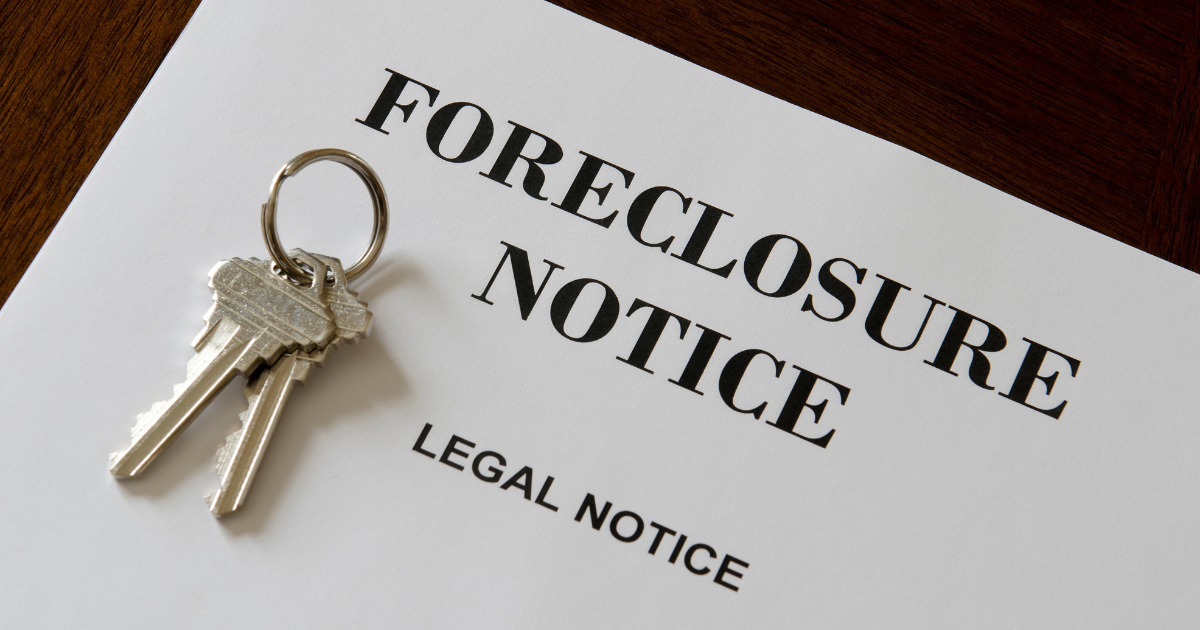
If you are trying to stop foreclosure in Illinois, the first useful fact is that a judge controls the calendar. Illinois has no power of sale. Every residential mortgage foreclosure is a lawsuit in circuit court, which is why the deadlines sit in statute rather than in your loan documents.
That structure gives you two separate windows. The first is a 90-day right to reinstate the loan. The second is a redemption period that usually runs about seven months from the date you were served. Both start from dates in your own court file, and both are wide enough to sell a house inside.
How Does Foreclosure Work in Illinois?
Illinois forecloses through the courts, and only through the courts. The Illinois Mortgage Foreclosure Law at 735 ILCS 5/15-1106 makes that procedure exclusive: from and after July 1, 1987, a mortgage shall be foreclosed in a foreclosure pursuant to that Article.
The case begins with a complaint and a summons. Service starts the two clocks that matter, because both the reinstatement period and the redemption period run from the date all mortgagors were served or otherwise submitted to the court's jurisdiction.
What has to happen before the lawsuit
Federal servicing rules set the floor. Under 12 C.F.R. § 1024.41(f), a servicer generally cannot make the first notice or filing for foreclosure until the loan is more than 120 days delinquent.
Illinois once layered a state notice on top of that. The grace period notice at 735 ILCS 5/15-1502.5 required a 30-day letter pointing the borrower toward housing counseling. It was repealed effective July 1, 2016, so the federal rule is now the main pre-suit protection.
The notice attached to your summons
Illinois requires a plain-language Homeowner Notice on every residential foreclosure summons under 735 ILCS 5/15-1504.5. Three lines are worth memorizing.
- On possession: "The lawful occupants of a home have the right to live in the home until a judge enters an eviction order."
- On reinstatement: "As the homeowner you have the right to bring the mortgage current within 90 days after you receive the summons."
- On redemption: "As the homeowner you have the right to sell your home, refinance, or pay off the loan during the redemption period."
How common is foreclosure in Illinois right now?
Illinois carries one of the higher filing rates in the country. In the first half of 2026, 0.23% of Illinois housing units had a foreclosure filing, one in every 435, the fifth highest rate among the states (ATTOM, mid-year 2026). Illinois recorded 7,424 foreclosure starts, also fifth, against 227,548 properties with filings nationally.
The Illinois Foreclosure Timeline, Stage by Stage
The Illinois foreclosure timeline runs default, complaint, service, reinstatement deadline, judgment, redemption deadline, sale, confirmation, and possession. Each stage leaves something to do, and the list shortens at every step.
| Stage | Timing and authority | What you can still do |
|---|---|---|
| First missed payment | Day 1; set by your loan documents | Call the servicer and ask for loss mitigation in writing |
| 120 days delinquent | No first notice or filing before then (12 C.F.R. § 1024.41(f)) | Submit a complete loss mitigation application |
| Grace period notice | Repealed effective July 1, 2016 (735 ILCS 5/15-1502.5) | No longer applies; the federal 120-day rule governs |
| Complaint filed and summons served | 735 ILCS 5/15-1504; Homeowner Notice attached under 15-1504.5 | Record the service date; file an appearance and answer |
| Reinstatement deadline | 90 days from service or submission to jurisdiction (735 ILCS 5/15-1602) | Cure all defaults except accelerated principal, plus costs |
| Judgment of foreclosure | States the last date for redemption (735 ILCS 5/15-1506) | Keep selling or negotiating; title is still in your name |
| Redemption deadline | Later of 7 months from service or 3 months from judgment (735 ILCS 5/15-1603(b)(1)); 30 days after judgment if abandoned | Sell and pay off, refinance, or redeem for the statutory amount |
| Judicial sale | After both periods expire; notice published once a week for 3 weeks (735 ILCS 5/15-1507) | Very little; a payoff has to have funded already |
| Confirmation hearing | Refused only on four statutory grounds (735 ILCS 5/15-1508(b)) | Object if notice was missing or terms were unconscionable |
| Possession | 30 days after entry of the confirming order (735 ILCS 5/15-1508(g), 15-1701(c)) | Plan the move; bona fide tenants may get longer |
Pull the affidavit of service and the judgment order out of the court file. The service date sets the reinstatement deadline and half the redemption test. The judgment date sets the other half. Guessing at either is how homeowners miss a window.
The 90-Day Reinstatement Window
Reinstatement puts the loan back the way it was before the default, and you have 90 days from service to use it. 735 ILCS 5/15-1602 describes it as curing all defaults then existing, other than the principal that became due only because of acceleration, plus the costs the mortgage requires.
That carve-out is the point. You do not have to produce the accelerated balance. You produce the missed payments, the late charges, and the lender's costs, which is a far smaller number.
When the clock starts, and how often you get it
The statute measures 90 days from the date all mortgagors were served with summons or by publication, or otherwise submitted to the court's jurisdiction. Publication starts the clock at the first publication date, and with two owners the later service date controls.
Reinstatement is also not renewable. Where a court finds in writing that the mortgagor exercised the right, the statute says such relief shall not be again available under the same mortgage for five years from the dismissal of that foreclosure.
What Is the Illinois Foreclosure Redemption Period?
The Illinois foreclosure redemption period for a house ends on the later of two dates: seven months from service on all mortgagors, or three months from entry of the judgment of foreclosure. That rule lives at 735 ILCS 5/15-1603.
Because the statute takes the later date, a fast judgment does not shorten your runway. Service in January with an April judgment still leaves redemption open until August. A slow case pushes the deadline out further.
What redeeming actually costs
Redemption means paying the judgment in full, not the arrears. Under subsection (d), the amount covers the principal and interest found due, court costs, approved expenses, attorney's fees allowed by the mortgage, and per diem interest from judgment to redemption. The mortgagee may also certify additional reasonable expenses.
Only an owner of redemption may redeem, and the right must not have been validly waived. The owner gives written notice to the mortgagee's attorney at least 15 days before the intended redemption date.
The abandoned-property exception
An empty house loses most of this protection. Under 15-1603(b)(4), where the court finds the real estate abandoned, redemption ends 30 days after the judgment. If you have moved out, assume the short clock until a lawyer says otherwise.
The statute is blunt: once expired, the right of redemption shall not be revived. The clock also runs independently of anything the lender does to schedule a sale. A quiet docket is not an extension.
Judgment, Sale, Confirmation, and Possession
Three court events sit between the judgment and the day someone else can take possession. The judgment of foreclosure comes first, and under 735 ILCS 5/15-1506 it states the last date for redemption, rules on each request for relief, and can set the terms of sale.
The judicial sale follows expiration of the reinstatement and redemption periods. Under 735 ILCS 5/15-1507, notice runs once a week for three consecutive weeks, first notice no more than 45 days before the sale and last no less than seven days before it.
Confirmation is the transfer point
The sale transfers nothing by itself. A court has to confirm it under 735 ILCS 5/15-1508, and the court shall refuse confirmation only if it finds one of four things:
- A notice required under subsection (c) of Section 15-1507 was not given.
- The terms of sale were unconscionable.
- The sale was conducted fraudulently.
- Justice was otherwise not done.
The confirming order awards possession as of the date 30 days after entry, against the parties whose interests were terminated. Section 15-1508(b-5) also requires a notice in capital letters telling the homeowner of the right to remain in possession for 30 days after an order of possession, under Section 15-1701(c).
Deficiency judgments
A shortfall can follow you. Under 15-1508(e), the court may enter a personal judgment for any balance found due above the sale proceeds. The plaintiff has to have asked for it in the complaint and proved it at the hearing on the report of sale. 735 ILCS 5/15-1511 adds that foreclosure does not otherwise affect that right.
Eight Ways to Stop Foreclosure in Illinois
Eight paths realistically end an Illinois foreclosure, and they sort by how late each one still works. Read the table against the two dates from your court file, not against a general sense of how much time is left.
| Option | What it does | Latest point it works |
|---|---|---|
| Reinstate the loan | Cures the defaults and restores the original loan | 90 days from service (735 ILCS 5/15-1602) |
| Loss mitigation with the servicer | Triggers a 30-day evaluation and a pause on judgment or sale | Complete application 37-plus days before the sale (12 C.F.R. § 1024.41(g)) |
| HUD-approved housing counseling | Free help assembling the package | Any time; earlier is worth more |
| Cook County mediation | Free court-run sessions with the lender | After an appearance and answer are filed (Cook County Rule 21.14) |
| Forbearance or modification | Pauses payments or rewrites the terms going forward | Usually before judgment; servicer rules vary |
| Short sale | Lender-approved sale below the payoff | Before the judicial sale, with approval time built in |
| Deed in lieu of foreclosure | Hands the house back and ends the case | Before the sale; returns nothing for your equity |
| Chapter 13 bankruptcy | Automatic stay halts the sale; arrears cured over a plan | Before the sale is held (11 U.S.C. § 362) |
| Sell and pay the loan off | Full payoff at closing; any surplus is yours | Before the redemption period ends (735 ILCS 5/15-1603) |
Loss mitigation and the 37-day rule
Federal servicing rules do real work here. A complete loss mitigation application received more than 37 days before a scheduled sale must be evaluated within 30 days for all options the loan owner allows. The same rule bars dual tracking, so the servicer generally may not move for judgment or hold the sale while that evaluation is pending.
Bankruptcy is the other pause button. A Chapter 13 filing triggers the automatic stay under 11 U.S.C. § 362, stopping the judicial sale, and a confirmed plan can cure the arrears over three to five years. Speak with an Illinois bankruptcy attorney first.
Selling Inside the Redemption Window
Selling works because a full payoff at closing satisfies the judgment, and it is usually the only exit that keeps your equity. You hold title until the sale is confirmed, so the redemption period is a selling window as well as a buy-back window.
Illinois equity is rarely trivial. The typical Illinois house was worth $299,900 as of July 31, 2026, up 5.1% year over year (Zillow ZHVI, July 2026).
| Market | Typical home value, July 31, 2026 | Year over year |
|---|---|---|
| Illinois | $299,900 | +5.1% |
| Chicago | $337,993 | +4.5% |
| Aurora | $326,890 | +2.9% |
| Rockford | $186,815 | +9.8% |
All four figures are Zillow Home Value Index readings for July 31, 2026 (Zillow ZHVI, July 2026). A value index is not a sale price and not a payoff figure. Use it to decide whether selling is worth exploring.
Why funding time is the real constraint
Price is rarely what breaks a pre-foreclosure sale in Illinois. Timing is. A financed buyer brings an appraiser, an underwriter, and an inspector, and any one of them can push a closing past the redemption deadline. Older bungalows, two-flats, and suburban ranches with original systems draw lender repair conditions.
A cash sale removes underwriting and appraisal from the calendar, so closings can happen in as few as 7 days. The closing runs through a title company that pays the judgment out of the proceeds and returns any surplus to you.
How a cash offer fits
Propcash is a direct cash homebuyer, founded in 2026 and based in Nashville, and makes offers as a principal rather than listing houses for other people. Sellers pay no fees or commissions, the house is bought as-is, and you pick the closing date. You can get a cash offer on your Illinois house in about two minutes, with no obligation.
Propcash makes one transparent, data-backed offer and shows how it got to the number. The Propcash Promise is that the offer stands, with no aggressive follow-up, and that we say so if we are not the right buyer. A court calendar is a real constraint, and a cash buyer can often work to it.
If the deadline is months away and the house shows well, listing with a local agent may net you more, and Propcash will say so and point you to one. We may receive compensation from agents we refer.
A mortgage is rarely the only claim on an Illinois house. Delinquent taxes run a separate process on a separate clock, covered in our guide to the Illinois property tax sale and its 3-year redemption period. If the house came out of an estate, read selling an inherited house in Illinois. Condition still has to be disclosed, as our guide to Illinois seller disclosure requirements explains.
Where Illinois Homeowners Get Free Help
Free foreclosure help exists across Illinois, and none of it asks for money up front. The Illinois Housing Development Authority runs a Saving My Home page pointing homeowners to free counseling and to legal aid organizations statewide.
Cook County adds a court-run option. The Circuit Court of Cook County operates a mortgage foreclosure mediation program in the Chancery Division. It covers single-family houses, single-family condominiums, and buildings of four units or less that the mortgagor occupies as a principal residence. Funding comes from the Cook County Board of Commissioners at no cost to the parties (Circuit Court of Cook County Rule 21.14). A defendant must file an answer and appearance with the Clerk before or at the time of requesting mediation. IHDA lists the countywide helpline at 855-452-2637.
Counseling and legal aid
HUD-approved housing counseling is free everywhere in the state. The CFPB counselor directory finds approved agencies by ZIP code, and HUD maintains the approved list. IHDA also publishes contacts for Prairie State Legal Services at 888-966-7757 and the Lawyers' Committee for Better Housing at 855-207-8347.
One sanity check on any offer of help. You never have to pay a fee for a loan modification, and no legitimate program asks you to deed the house to someone who promises to cure the default and rent it back to you.
Illinois gives you a long runway and a hard stop at the end of it. Pull the complaint, write the service date and the judgment date on a calendar, and count backward from the redemption deadline. Our Illinois cash home buyer page and the foreclosure situation page cover what a sale inside that window looks like.
Why wait? Sell your house “as is” for cash today
Tell us about your house. We'll make you a cash offer based on local market data.
Let's chatFrequently Asked Questions
How long does foreclosure take in Illinois?
Longer than in most states, because every case runs through a judge. The statutory floor alone is roughly seven months from service before a sale can be held, and contested cases run past a year. Nationally, foreclosures completed in the second quarter of 2026 averaged 563 days, the lowest level since 2013 (ATTOM, mid-year 2026).
What is the 90-day reinstatement period in an Illinois foreclosure?
It is the window in which you can cure the default and put the loan back the way it was. Under 735 ILCS 5/15-1602, reinstatement means curing all defaults other than the accelerated principal, plus paying the costs the mortgage requires. The cure must happen within 90 days of the date all mortgagors were served or otherwise submitted to the court's jurisdiction, and the right is available once every five years per mortgage.
What is the Illinois foreclosure redemption period?
For residential real estate, 735 ILCS 5/15-1603 ends the redemption period on the later of two dates: seven months from service on all mortgagors, or three months from entry of the judgment of foreclosure. Where the court finds the property abandoned, it ends 30 days after the judgment. The statute adds that once expired, the right of redemption is not revived.
Can I sell my house during the Illinois foreclosure redemption period?
Yes. You hold title until a judge confirms the judicial sale, so you can sell and pay the loan off at closing during the redemption period. The Homeowner Notice required on every residential foreclosure summons says so directly: you have the right to sell your home, refinance, or pay off the loan during the redemption period (735 ILCS 5/15-1504.5). The practical limit is funding time.
Can I stay in my house after an Illinois foreclosure sale?
For a while. Nothing transfers at the sale itself, because the court has to confirm it first under 735 ILCS 5/15-1508. The confirming order awards possession as of the date 30 days after entry, and the statute requires a notice in capital letters about that 30-day right under 735 ILCS 5/15-1701(c). Bona fide tenants get separate protection.
Can my lender sue me for the balance after an Illinois foreclosure?
It can. Under 735 ILCS 5/15-1508(e), the court may enter a personal judgment for any balance owed above the sale proceeds. The plaintiff must have asked for that relief in the complaint and proved it at the hearing on the report of sale. 735 ILCS 5/15-1511 adds that foreclosing does not by itself affect that right. Paying the loan off through a sale first removes the risk.
Is foreclosure mediation available in Cook County?
Yes, and it costs the homeowner nothing. The Circuit Court of Cook County runs a mortgage foreclosure mediation program in the Chancery Division for owner-occupied houses, single-family condominiums, and buildings of four units or less. Under Rule 21.14, the homeowner must file an appearance and answer before or at the time of requesting mediation. Funding comes from the Cook County Board of Commissioners, and the countywide helpline is 855-452-2637.
Propcash is a direct cash homebuyer, not a law firm and not a licensed brokerage. Illinois deadlines are strict and practice varies by county, so read your own court file and speak with an Illinois-licensed attorney. The statutes cited here were read on ilga.gov in September 2026, and the program details on ihda.org and cookcountycourtil.gov.