
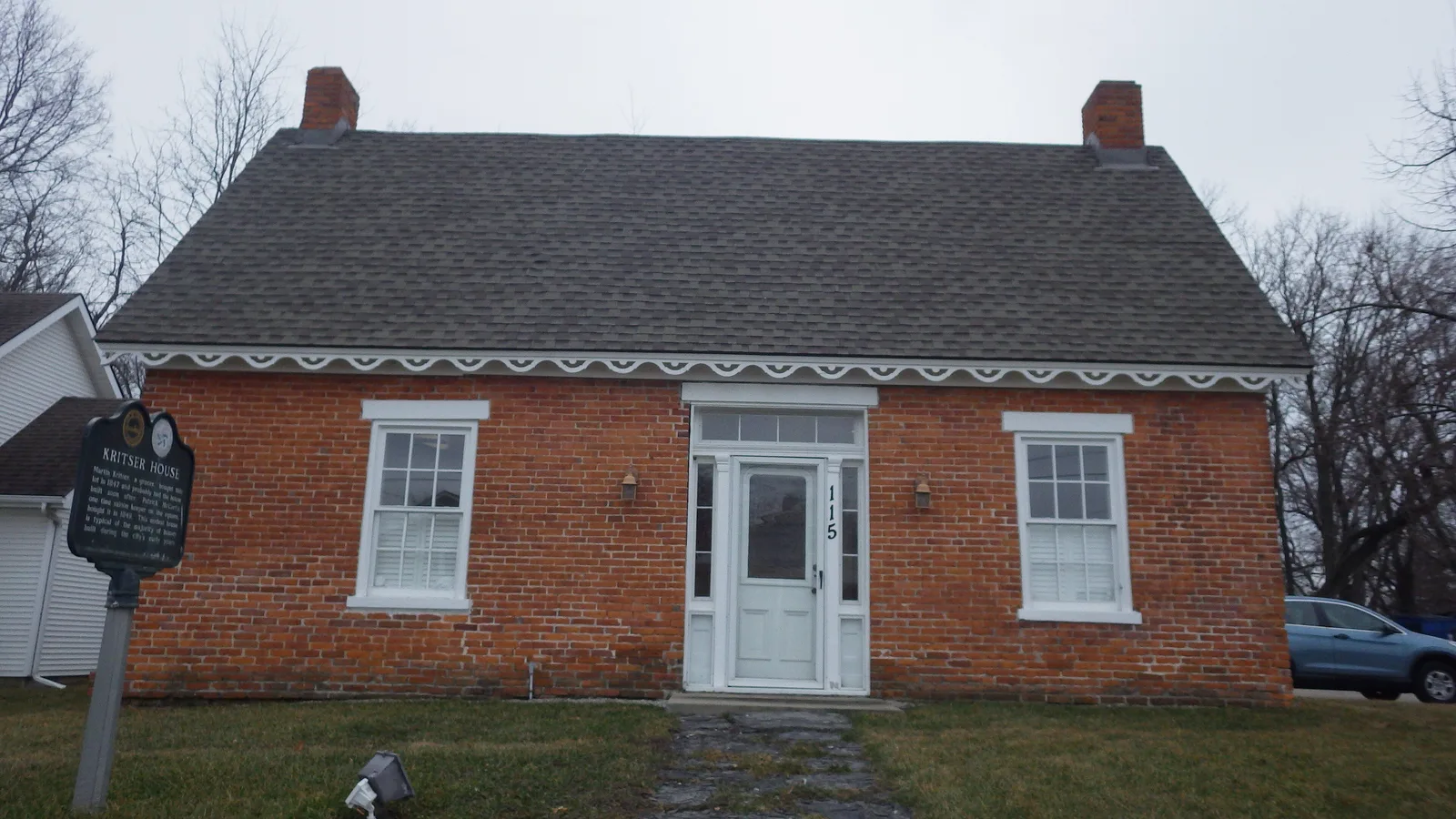
Key Takeaways
- The sale itself needs no city sign-off: Independence reviews exterior changes to designated historic houses, not the transfer of ownership.
- Exterior material changes need a Certificate of Appropriateness: roofing, siding, and window changes, porch enclosure or removal, new fencing, and demolition all go through review. Interior work and routine maintenance do not.
- Review can take up to 45 days: in-kind repairs can often be approved by staff the same day, but Heritage Commission review runs on a monthly meeting calendar.
- Restoration is never required: the city says it does not force upgrades because a house is historic, so you can sell an older house as it stands.
- Pre-1978 houses carry a federal lead paint disclosure: you give the pamphlet and what you know, but the rule creates no duty to test or repair.
- Tax credits depend on the owner and the use: the federal 20% credit excludes owner-occupied houses, and the Missouri credit requires a large certified rehabilitation.
If you own an older house in a historic district in Independence, Missouri, selling it does not require approval from the city. What the city reviews is exterior work: a new roof material, replacement windows, a porch enclosure, a fence, or a demolition. That distinction matters when the house needs exactly those repairs and you would rather not take them on.
This guide covers where the city's designations sit, what the Heritage Commission reviews, and how long review takes. It also covers dangerous building notices, tax credits, and lead paint disclosure. It closes with how an as-is sale works when you would rather leave the roof, the windows, and the paperwork to the next owner.
Why wait? Sell your house “as is” for cash today
Tell us about your house. We'll make you a cash offer based on local market data.
Let's chatDoes Selling a House in an Independence Historic District Need City Approval?
Usually no. A change of owner is not on the city's list of work that needs a Certificate of Appropriateness; that list covers exterior changes. The city's Historic Preservation FAQ (read October 23, 2026) says the Heritage Commission "is responsible for reviewing proposed exterior alterations to local, historically designated sites." A deed is not an alteration.
The designation does stay with the house after the sale. Whoever buys it takes on the same review rules for future exterior work. That is why buyers who plan a new roof, new windows, or an addition often ask about the district before they commit.
Local designation and the National Register are different things
Two kinds of historic status apply in Independence, and only one comes with design review. The city calls local designation "the highest form of protection" because all major exterior improvements need review by city staff or the Heritage Commission. National Register listing works differently.
National Register designation "is merely honorary and requires no design review at the local, state, or federal level," according to the city's FAQ. The National Park Service National Register FAQ (read October 23, 2026) agrees from the federal side. Listing "places no restrictions on what a non-federal owner may do with their property," unless the project uses federal money or a federal permit.
| Status | Who grants it | Exterior design review? | Effect on a sale |
|---|---|---|---|
| Local historic district | Independence City Council, after Heritage Commission and Planning Commission review | Yes, for significant exterior changes | None directly; review rules pass to the buyer |
| Local Historic Landmark | Independence City Council | Yes, same review as the district | None directly; review rules pass to the buyer |
| National Register listing | National Park Service | No, unless federal money or permits are involved | None; may support state or federal tax credit eligibility |
Where Independence's Historic Designations Are
Independence has one locally designated historic district, and the city places it just west of the Independence Square. The Historic Preservation page (read October 23, 2026) names it the Truman Heritage District, and the city's FAQ uses the full name, the Harry S Truman Heritage District. The National Park Service also recognizes the neighborhood as part of a larger National Historic Landmark District.
Outside that district, the city lists 27 individual buildings as local Historic Landmarks. The Local Register list includes houses on streets such as South Main, North Delaware, West Maple, and East Winner Road. Separately, the city counts a group of buildings listed individually on the National Register of Historic Places across Independence.
How to check your own address
The fastest check is the city itself. The Historic Preservation Division answers questions at 816-325-7419, and the city's website hosts a street search for the National Historic Landmark District survey. That survey gives each house a construction date, sometimes marked "circa," which the city says can be off by up to five years either way.
An older house is not automatically a designated one. Plenty of older Independence houses sit outside any designation and face no design review at all.
What Needs a Certificate of Appropriateness in Independence?
Any significant exterior alteration to a locally designated Independence house needs a Certificate of Appropriateness (COA), whether or not the work also needs a building permit. The city's FAQ lists examples, and they line up closely with the repairs an older house tends to need. Here is how the city sorts common projects.
| Project | Review needed? |
|---|---|
| Changing exterior materials (roofing, siding, windows) | Yes |
| New replacement windows and door treatments | Yes |
| Enclosing or removing a porch | Yes |
| New fencing, driveways, sidewalks, or retaining walls | Yes |
| Removing historic trim pieces or chimneys | Yes |
| Additions, garages, outbuildings, new porches, or decks | Yes |
| Removing mature trees | Yes |
| Moving or demolishing any building | Yes |
| Painting, caulking, weather stripping | No |
| Repairing rotted wood with wood | No |
| Landscaping (other than removing mature trees) | No |
| Any interior work | No |
Source: City of Independence Historic Preservation FAQ, read October 23, 2026. When a project is unclear, the city asks owners to call Historic Preservation staff before starting.
What goes into an application
A COA application goes to the Preservation Division, with paper copies at the Building Permits Counter on the second floor of City Hall, 111 E. Maple. The city asks for photographs, a description of the work, and design and material specifications. Construction projects may also need scaled drawings.
The Commission's published design guidelines apply city wide, and reading them first can save a round of revisions.
How Long Heritage Commission Review Takes
Heritage Commission review in Independence can take up to 45 days, according to the city, while in-kind repairs can often be approved by staff the same day. The FAQ explains that a COA "can be approved administratively when making in-kind repairs or replacement of significant features." Anything that goes to the full Commission follows its monthly calendar.
The Commission meets at 6:00 p.m. on the first Tuesday of each month in City Hall. Public hearings need meeting notices posted fifteen days ahead. The city publishes a submittal deadline for each meeting, and the remaining 2026 dates look like this.
| Heritage Commission meeting | COA application deadline |
|---|---|
| November 3, 2026 | October 13, 2026 |
| December 1, 2026 | November 10, 2026 |
| January 5, 2027 | December 15, 2026 |
Source: City of Independence Historic Preservation page, 2026 Heritage Commission Meeting Dates and Deadlines, read October 23, 2026. Dates can change, so confirm with the city before you plan around them.
If the Commission says no
A denial is not the end of the road. The city says you can revise the proposal using the Commission's direction. You can also apply for a Certificate of Economic Hardship if a denial has deprived you of a reasonable economic return.
A denial of either certificate can be appealed to the City Council if new evidence supports the application. Each of those steps adds weeks. For an owner who wants to sell, that time is part of the real cost of fixing the house first.
The Roof, Windows, and Porch: Repairs on an Older Independence House
You do not have to repair or restore an older Independence house before you sell it, even inside the historic district. The city's FAQ says it "does not require any changes or upgrades to a property based upon its historic status," and adds that "Restoration is encouraged but never required."
The city gives an example. A house with vinyl windows installed before designation does not have to switch back to the original wood windows. The rules apply when an owner chooses to change the exterior, not because the house is old.
Where the review rules bite
The trouble usually starts when a repair turns into a material change. Replacing a worn roof with the same material may count as in-kind work that staff can approve. Switching materials, or replacing original windows with a different type, moves the project toward Commission review.
That creates a sequence many owners find tiring. First come the contractor quotes, then the application with photos and specifications, then a hearing date, and only then the work. If a roof is leaking in the meantime, the clock is running on both the house and your patience.
When repairs before a sale make sense
If you have the time, the budget, and a contractor who knows the guidelines, fixing first is a reasonable choice. If you lack one of those, selling as it stands is also reasonable. Nothing in the city's rules penalizes you for leaving the work to the next owner.
Dangerous Building Notices and Demolition in a Historic District
A dangerous building tag in Independence is recorded with the Jackson County Recorder, and historic status adds review steps to both repair and demolition. The city's Dangerous Buildings page (read October 23, 2026) says the recording serves notice to owners and prospective buyers. It tells them the structure is not suitable for occupancy and may be demolished if conditions are not repaired.
Repairs must meet current code
A tagged building has to be repaired to current building, electrical, plumbing, and mechanical code. The city warns that this may mean upgrading those systems throughout the house. Permits are generally required, and plans from an architect or structural engineer are generally required when you apply.
For houses in historic districts, the city adds that there "may be some restrictions concerning repairs," so owners should check with the Historic Preservation Manager before work begins.
Demolition needs Heritage Commission approval
Outside emergencies, the Historic Preservation Manager reviews any planned demolition in Independence. Buildings in historic districts, or with historic significance, "must be reviewed and approved for demolition by the city's HERITAGE COMMISSION" before a demolition permit can be issued. A plot plan is generally required with the permit application.
After repair or demolition, the city issues a release of the notice, and recording it is the owner's job. The city says failure to record the release "will complicate the ability to sell or refinance" the house. Our guide to selling a vacant house or one with a dangerous building notice in Independence covers the notice and the vacant structure registry in more detail.
Do Historic Tax Credits Help When You Sell?
Historic tax credits reward rehabilitation work, so they help the owner who pays for a qualifying rehab, and whether that owner qualifies depends on who they are and how the house is used. A seller who is not planning a major rehab will rarely see a benefit. The city's FAQ notes that National Register listings may also qualify for state or federal tax credits, with the federal credit limited to income-producing buildings.
The federal 20% credit
The National Park Service tax incentives page (read October 23, 2026) describes a 20% federal income tax credit for rehabilitating "certified historic structures," as determined through the National Park Service. The building must be depreciable, meaning used for business or another income-producing purpose. The page states, "Owner-occupied residential properties do not qualify for the federal rehabilitation tax credit."
The Missouri historic credit
Missouri's credit is set out in RSMo 253.544 to 253.559. Under RSMo 253.550, a taxpayer may claim a credit of 25% of rehabilitation costs on a certified historic structure, or 35% in a "qualifying county" for costs incurred on or after July 1, 2024. The rehab costs must exceed 50% of the total basis in the house, and the work must meet the Secretary of the Interior's standards.
The definition of "eligible property" in RSMo 253.545 covers buildings "offered or used for residential or business purposes," so the state credit is not limited to rentals the way the federal one is. A "certified historic structure" must be individually listed on the National Register or be a contributing building in a certified district. Applications go to the Missouri Department of Economic Development under RSMo 253.559.
Under RSMo 253.557, credits can be transferred or sold. Whether any of this fits your situation depends on your tax picture, your house's status, and the size of the project. A tax professional can tell you whether a credit is realistic before you plan around it.
What Must You Disclose When Selling an Older House in Independence, MO?
If your Independence house was built before 1978, federal law requires a lead-based paint disclosure unless an exception applies, and Missouri law adds a specific written disclosure about known methamphetamine production. Historic status itself carries no separate disclosure form that we found. The designation is public, and a buyer can confirm it with the city.
The federal lead paint rule
The rule at 40 CFR 745 Subpart F (read on eCFR October 23, 2026) covers "target housing," meaning housing built before 1978. It has limited exceptions, such as housing for the elderly with no young children and foreclosure sales. Before the buyer is bound by a contract, the seller must:
- give the buyer an EPA-approved lead hazard pamphlet;
- disclose any lead-based paint or hazards the seller knows about;
- provide any lead records or reports the seller has; and
- allow a 10-day window for a lead inspection, unless the parties agree otherwise or the buyer waives it in writing.
Section 745.107 adds an important line: "Nothing in this section implies a positive obligation on the seller or lessor to conduct any evaluation or reduction activities." You disclose what you know. You are not required to test or abate before the sale.
Missouri's disclosure rules
We did not find a Missouri statute that requires a general seller disclosure form for every sale. One statute that does set a written duty is RSMo 442.606. It requires a seller to disclose in writing any known methamphetamine production on the premises and certain related convictions.
Beyond those rules, being candid about known problems protects you. A leaking roof, a recorded dangerous building notice, or an open COA case are all worth putting in writing. A Missouri real estate attorney can tell you what your specific contract should include.
How an As-Is Cash Sale Works for a Historic Independence House
An as-is cash sale lets you sell an older Independence house without making repairs, filing a COA, or waiting on a Commission date. As-is means as-is: the roof, windows, porch, and any review the next project needs become the buyer's to handle. For an owner who is tired of managing contractors and hearings, that can be the cleaner path.
What the market looks like in 2026
Independence houses are selling at a steady pace. Redfin reports a median sale price of $224,893 for the three months ending September 2026, up 3.1% from a year earlier, with a median of 21 days on the market (Redfin, September 2026).
Zillow measures something different: the typical value of all houses, not just those that sold. Its Home Value Index for the city of Independence was $210,944 in September 2026, up 3.7% from a year earlier (Zillow ZHVI, September 2026). For ZIP code 64050, which covers the Square and the older neighborhoods around it, Zillow's ZHVI was $176,775, up 6.2% (Zillow ZHVI, ZIP 64050, September 2026). Our Independence, MO housing market 2026 report breaks the numbers down further.
How Propcash approaches an older house
Propcash is a direct cash homebuyer, and we buy older houses as they stand. We make one transparent, data-backed cash offer and show you how we got to our number. The condition of the roof or windows is part of that math, laid out where you can see it.
You pay no fees or commissions, and you pick the closing date. A cash sale can close in as few as 7 days after the contract is signed. There are no showings, and Propcash does not ask you to file anything with the Heritage Commission before closing.
The Propcash Promise stands behind every offer. The offer stands while you think it over, there is no aggressive follow-up, and if we are not the right buyer we will say so. You can see how we work in Independence on our Independence sell-house-fast page, or get a cash offer to see a number for your house.
For heirs
If you inherited an older house near the Square, you can take what you want and leave the rest. Our guide to selling an inherited house in Independence covers the Jackson County probate steps.
When listing may be the better fit
A cash sale is not always the right move. If the house is in good repair and you have time for showings, listing with an agent may net you more, and we will tell you so.
Why wait? Sell your house “as is” for cash today
Tell us about your house. We'll make you a cash offer based on local market data.
Let's chatFrequently Asked Questions
Do I need Heritage Commission approval to sell a house in the Independence historic district?
You do not need city approval for the sale itself. The City of Independence reviews exterior changes to designated historic houses, and a sale is not an exterior change. A Certificate of Appropriateness comes into play only when someone plans work such as new roofing material, replacement windows, porch enclosure, new fencing, or demolition.
How long does a Certificate of Appropriateness take in Independence, MO?
A COA in Independence can take anywhere from the same day to about 45 days. The city says staff can approve in-kind repair or replacement, often the same day, while a project that needs Heritage Commission approval could take up to 45 days. The Commission meets on the first Tuesday of each month, and the application deadline falls about three weeks before each meeting.
Do I have to restore an older house in an Independence historic district before I sell it?
Restoration is not required before a sale. The city's Historic Preservation FAQ says it does not require changes or upgrades based on historic status, and that restoration is encouraged but never required. Vinyl windows installed before designation, for example, do not have to be replaced with wood. Review applies when someone chooses to make a significant exterior change.
Does National Register listing stop me from changing or selling my Independence house?
National Register listing alone does not restrict a change or a sale. The National Park Service says National Register listing places no restrictions on what a private owner does with the house unless federal money or a federal permit is involved. The City of Independence calls National Register designation honorary. Local design review comes from the city's own historic district and landmark designations.
Can I sell an older Independence house with a dangerous building notice in the historic district?
A sale can still happen, but the notice is recorded with the Jackson County Recorder, so a buyer will see it in the title search. Repairs must meet current building, electrical, plumbing, and mechanical code, and demolition of a building in a historic district needs Heritage Commission approval before a permit can be issued. Some owners sell as-is and leave the repair or demolition decision to the buyer.
Do I have to test for lead paint before selling a pre-1978 house in Independence?
You do not have to test before selling. The federal rule at 40 CFR 745 Subpart F says nothing in it creates a duty for the seller to test or fix anything. It does require you to give the buyer an EPA-approved pamphlet, disclose any lead paint you know about, and hand over any reports you have. The buyer also gets a 10-day chance to inspect, which the buyer can waive in writing.
Data Sources: City of Independence Historic Preservation page, Historic Preservation FAQ, Local Register Properties list, and Dangerous Buildings page (all read October 23, 2026); National Park Service National Register FAQ and Tax Incentives page; Revised Statutes of Missouri 253.545, 253.550, 253.557, 253.559, 407.3600, and 442.606 (revisor.mo.gov); 40 CFR 745 Subpart F (eCFR); Redfin Independence housing market page (September 2026); Zillow Home Value Index city and ZIP data (September 2026). Propcash is a direct cash homebuyer, not a law firm or tax adviser. Talk to a Missouri attorney or tax professional about your specific situation.