
Key Takeaways
- A TIC is fractional ownership of a whole building. In a tenancy in common, each owner holds a share of one legal parcel and a written agreement grants exclusive use of a specific flat. There is no separately deeded unit.
- The obstacle is financing, not value. Buyers of a TIC share depend on a small set of lenders writing fractional loans, so the buyer pool is narrower than it is for a condominium. That is true as of publication.
- HOA trouble stops lenders, not prices. Litigation, thin reserves, a pending special assessment, or an unwarranted unit can make a lender decline the whole building, which removes financed buyers from your sale.
- San Francisco condo prices moved hard in 2026. Condo prices rose 24.4% year over year in March 2026, the most since 2013 (Redfin, April 2026). The typical value across all San Francisco homes rose 2.1% (Zillow ZHVI, April 2026).
- Conversion is not a plan you can bank on. San Francisco has restricted condominium conversion for decades, and the rules have changed more than once. Verify your building's eligibility before pricing it in.
- A cash sale removes the lender, not the problem. Cash transactions skip project review and appraisal, and can close in as few as 7 days, but they do not cure the underlying HOA or title issue.
Owners who need to sell a TIC in San Francisco, or a condo the HOA has made complicated, usually run into the same wall. The unit is worth real money, showings go fine, and then a lender reads the building's paperwork and the deal dies. The problem is almost never the price. It is that a fractional interest or a troubled homeowners association can put a whole building outside what an ordinary mortgage will touch.
This guide covers what a tenancy in common actually is, why San Francisco has so many of them, and why a TIC resale is harder than a condo resale. It then covers the four HOA problems that most often stall a financed condo sale in the city. It closes with what San Francisco condo values did in 2026 and where a cash sale fits.
TIC agreements, condominium governing documents, reserve studies, and San Francisco's conversion rules are specialty areas, and the details change from building to building and from year to year. Every structural statement in this guide is general and current as of publication in July 2026. Before you list, sign, or accept anything, have a licensed California real estate attorney read your TIC agreement or your HOA's documents. Confirm current city rules with the City and County of San Francisco. Propcash is a direct cash homebuyer, not a law firm.
What is a TIC in San Francisco?
A tenancy in common is a San Francisco ownership form where two or more owners each hold a fractional share of one whole building instead of a separately deeded unit. The building normally remains a single legal parcel. A written TIC agreement among the owners then grants each of them the exclusive right to occupy a specific flat, along with rules for shared costs and shared decisions.
That structure is the source of every difference that follows. In a condominium, you own your unit and a share of the common area, and your unit has its own deed, its own loan, and usually its own tax bill. In a TIC, you own a percentage of everything. Your right to the flat you live in comes from a contract with your co-owners rather than from the deed itself.
Two practical consequences show up at sale time. First, a TIC building usually carries one assessor's parcel and one property tax bill, which the owners divide among themselves under their agreement. Second, what a buyer is purchasing is a share plus a contract, so the contract becomes part of the diligence. Tenancies in common can be harder to finance and sell than standard condos for exactly these reasons.
Why does San Francisco have so many TICs?
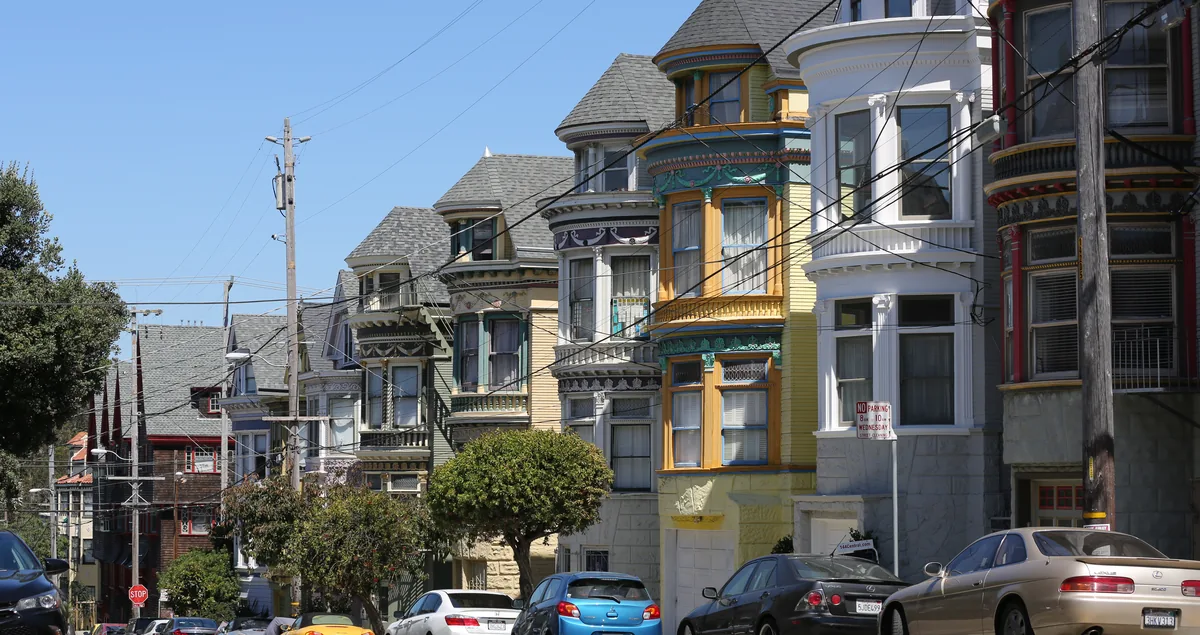
San Francisco has an unusually large TIC inventory because the city has restricted the conversion of multi-unit buildings into condominiums for decades. A large share of the city's housing sits in two-to-six-unit Victorians and Edwardians. When those flats are sold individually and condominium conversion is not available, the TIC form is the workaround that lets separate households each own a piece of the building.
The result is a city where a large share of housing is condos and tenancies in common rather than detached single-family houses. That is not a quirk of a few blocks. It is a structural feature of San Francisco's stock, and it explains why so many owners here face a sale question that owners in most American cities never encounter.
It also explains why generic advice fails. Guidance written for a market of detached houses assumes your buyer can walk into any bank. In San Francisco, whether your buyer can borrow at all depends on the legal form of what you are selling and on the condition of the building's paperwork.
Why TIC resale is harder than condo resale
TIC resale is harder mainly because of financing, and secondarily because the other owners and their agreement become part of the transaction. A buyer of a standard condominium can shop the whole mortgage market. A buyer of a fractional TIC interest generally needs a fractional TIC loan. As of publication, the set of lenders writing that product is small next to the condominium mortgage market.
Fractional TIC loans typically carry higher rates and shorter fixed periods than conforming loans, which shrinks the number of buyers who qualify and lowers what the qualified ones can pay. Some older San Francisco TIC buildings instead carry one shared mortgage across all the owners. That structure ties each owner's standing to everyone else's payments, and buyers price that risk accordingly.
Then there is the agreement itself. A TIC agreement sets shared expenses, reserves, use of common space, dispute resolution, and sometimes notice requirements or a right of first refusal on a sale. A buyer's attorney will read it closely, and a thin, outdated, or homemade agreement is a common reason a TIC deal falls apart late. So is a co-owner who is behind on shared costs.
| Feature | San Francisco condominium | San Francisco TIC |
|---|---|---|
| What you own | A separately deeded unit plus a share of common area | A fractional share of one whole building |
| Right to your specific flat | Comes from the deed | Comes from the written TIC agreement |
| Typical financing | Ordinary mortgage, subject to project review of the HOA | Fractional TIC loan, or one shared loan across all owners |
| Lenders available, as of publication | The broad mortgage market | A small set of specialty lenders |
| Property tax bill | Usually one bill per unit | Usually one bill for the building, divided by agreement |
| Governing document a buyer reads | HOA declaration, budget, reserve study, minutes | TIC agreement, shared-cost history, co-owner standing |
| Resale buyer pool | Broad, unless the building fails project review | Narrower, and sensitive to fractional loan terms |
Read that table as a description of the buyer pool rather than a verdict on value. San Francisco TICs sell every month. They simply sell to a smaller group of buyers, on a longer timeline, with more documents changing hands.
Can you sell a San Francisco condo with HOA problems?
Often yes, though the route usually changes, because HOA problems attack a sale through the lender rather than through the price. Four categories cause most of the trouble in San Francisco: active HOA litigation, underfunded reserves, a pending or announced special assessment, and an unwarranted unit. Each one can put an otherwise ordinary unit outside what a mortgage will finance.
HOA litigation
A lender reviewing a condominium project generally will not lend into a building with unresolved litigation over construction defects or major building systems. The reasoning is straightforward. If the outcome could impose a large repair obligation on the association, the collateral's value is unsettled. Litigation over something narrow, such as a single unpaid vendor, is sometimes treated differently, but that is a case-by-case judgment your lender makes, not a rule you can assume.
Underfunded reserves
An association that has not been funding its reserve account looks like deferred risk to a lender, because the money for the next roof or elevator does not exist yet. Project review typically looks at whether the budget puts a meaningful share of dues into reserves and at what a current reserve study says the building needs. A thin reserve is also a leading indicator of the next problem on this list.
Special assessments
A pending or announced special assessment hits a sale twice. It is a real obligation attached to the unit, so buyers subtract it from what they will pay. The building problem behind it can independently cause a lender to decline the project. Get the amount, the payment schedule, and the scope of work from the HOA in writing. A vague assessment does more damage to a sale than a large but clearly documented one.
Unwarranted units
An in-law unit, a converted garage, or an added kitchen built without permits creates a mismatch between what exists and what the city's records show. Appraisers may decline to credit the extra space, and lenders may require the work to be legalized or removed before closing. In older San Francisco buildings this is common, and legalization is a permitting project measured in months rather than weeks.
| Problem | What it does to a financed sale | What it does to a cash sale | Document to pull first |
|---|---|---|---|
| Active HOA litigation | Often ends project approval, which removes financed buyers | Disclosed and priced in; no project review to fail | HOA litigation disclosure and board minutes |
| Underfunded reserves | Can fail project review on budget and reserve tests | Treated as future cost, reflected in the number | Current budget and reserve study |
| Pending special assessment | Cuts net proceeds and can stall lender approval | Priced in once amount and scope are documented | Assessment notice with amount and schedule |
| Unwarranted unit or unpermitted work | Appraisal may exclude the space; lender may require legalization | No appraisal to satisfy; condition is bought as-is | Permit history for the property |
| Weak or outdated TIC agreement | Fractional lenders and buyers' attorneys balk | Reviewed as part of diligence, not as loan conditions | The signed TIC agreement and amendments |
| One shared mortgage across TIC owners | Narrows the buyer pool sharply | Handled in escrow with the other owners' cooperation | Loan statement and payoff terms |
One habit is worth more than any tactic here. Pull all of these documents before you list rather than after a buyer's lender asks for them. A surprise discovered in week three of an escrow costs far more than a problem disclosed in week zero.
Why financed buyers struggle with a troubled building
Financed buyers struggle because a mortgage lender underwrites the building as well as the borrower. Project review looks at the association's budget, reserve funding, delinquency rate among owners, litigation status, owner-occupancy share, and how much of the building any single owner controls. A building that fails those tests is often described as non-warrantable, and a buyer with a strong income and a large down payment still cannot borrow against it.
That is why a troubled San Francisco condo can sit while comparable units nearby sell quickly. The city moves fast in general, with homes going pending in roughly three weeks (Redfin, April 2026). Supply was just 1.8 months in March 2026, against 3.2 months nationally (Redfin, March 2026). None of that speed helps if the only buyers who want your unit cannot get a loan on your building.
The same logic applies to a TIC share, one step further out. There is no HOA project review because there is no condominium project. The fractional loan product carries its own conditions instead, and the co-owners' payment history acts as the equivalent of a building review. Fewer lenders, more conditions, smaller buyer pool.
Condominium conversion status as of publication
Condominium conversion in San Francisco is restricted, and eligibility is a question to verify rather than assume. The city has limited conversion of multi-unit buildings for decades, which is precisely why the TIC form became so common here. The program's terms have been amended more than once. That history means an article, a neighbor, or an old listing is a poor source for what applies to your building today.
Eligibility can turn on the number of units, how long the current owners have occupied them, and the building's tenant history. The rules in effect when an application is filed matter too. Conversion also takes time and money, and a TIC seller who needs to move this quarter is unlikely to get there first.
The practical advice is narrow. Do not price conversion into your expectations, and do not let a buyer price it into an offer. Wait until the City and County of San Francisco and a California real estate attorney have confirmed in writing that your building qualifies. Treat conversion as upside if it happens, not as value you already hold.
What San Francisco condo values did in 2026
San Francisco condo prices rose sharply in 2026, and they moved on a very different track from the citywide figure for all homes. Condo prices rose 24.4% year over year in March 2026, the most since 2013 (Redfin, April 2026). Over roughly the same period, the typical San Francisco home value across all homes rose 2.1% year over year to $1,268,418 (Zillow ZHVI, April 2026).
Those two numbers measure different things, so treat the gap as a signal that condos moved hard rather than as a like-for-like comparison. The citywide backdrop was strong on either measure. The San Francisco metro median sale price hit a record $1.7 million in March 2026, up 14.4% year over year, the largest gain among the 50 most populous U.S. metros (Redfin, April 2026), and the city's all-home-types median sale price was about $1.63 million in April 2026 (Redfin, April 2026, a single-month figure across all property types).
For an owner of a complicated unit, the useful conclusion is that the value is probably there. San Francisco homes sold for roughly $998 to $1,120 per square foot in April 2026, and the market took a median of about 21 days (Redfin, April 2026). A stalled sale in a market like that is usually a financing problem wearing a price problem's clothing. For the broader picture, see our San Francisco housing market guide for 2026.
Zillow's ZHVI measures typical value across all homes, Redfin's median measures what actually closed in a period, and condo-only figures track a slice of the market. All three are correct for what they measure, and blending them produces nonsense. When a buyer or an agent quotes a San Francisco number at you, ask which metric it is and which month it covers.
Where a cash sale fits for a TIC or a problem condo
A cash sale fits when the obstacle is the lender rather than the asset, which is the common case for a TIC share or a condo in a troubled building. Cash transactions do not require bank financing or appraisals, so project review, warrantability tests, and fractional loan conditions never enter the picture. What a cash sale cannot do is cure the underlying issue, and any buyer who suggests otherwise is selling you something.
| Option | Time it takes | Best when | Main drawback |
|---|---|---|---|
| List with a San Francisco agent | About 21 days on market plus escrow (Redfin, April 2026), longer for a TIC | The building passes project review and the unit shows well. | Average California commission of 5.03% (Real Estate Witch survey, September 2025), and financed buyers can still fall out. |
| Fix the problem first, then list | Months, sometimes longer | Litigation is near resolution, or legalization is straightforward and funded. | You carry the unit while you wait, and the association controls the timeline, not you. |
| Sell directly for cash | As few as 7 days | The unit is a TIC share, the building is non-warrantable, or your deadline is fixed. | A cash offer reflects condition, the building's paperwork, and speed, so compare it against your equity. |
| Hold and wait for conversion or a resolution | Open-ended, with an unknown result | You occupy the unit, the carry is comfortable, and you have no deadline. | Property tax of about 1.10% to 1.55%+ of value keeps running (CalcLogix, February 2026), plus dues and assessments. |
The second row deserves the most scrutiny, because it is the one most owners default into. Waiting for an association to settle litigation or finish a capital project puts your timeline in someone else's hands. Meanwhile San Francisco property tax runs about 1.10% to 1.55%+ of value including local bonds and special assessments (CalcLogix, February 2026). San Francisco also charges a graduated city transfer tax on sales. Confirm the current bracket for your price range with the San Francisco Office of the Assessor-Recorder before you model your net.
Propcash is a direct cash homebuyer that buys San Francisco property with our own funds, as-is. No repairs, no staging, no cleanout, no agent commissions, and no closing costs charged to you, so the process is free for sellers. Cash transactions can close in as few as 7 days, or on a later date if that suits you better. Our offer is built from local market data, and we will show you how we got to our number.
We will also tell you when a cash sale is the wrong move. A warrantable San Francisco condo in a well-run association, in showable condition, with time on its side, often nets more through a strong local agent. Our guide to the best ways to sell your house for cash in San Francisco compares the local routes side by side. Bay Area cash buyer options covers the timeline when no lender is involved.
TIC and condo terms, defined
The vocabulary around San Francisco shared ownership is compact, and the words that cause the most confusion are the ones that sound interchangeable but are not. These are the terms that show up in a TIC or condo sale here.
- Tenancy in common (TIC): A San Francisco ownership form where multiple owners hold fractional shares of one building. TICs can be harder to finance and sell than standard condos.
- Fractional TIC loan: A mortgage secured by one owner's share of a TIC building rather than by a deeded unit. Offered by a small set of lenders as of publication, typically at higher rates and shorter fixed periods than conforming loans.
- TIC agreement: The contract among co-owners that assigns exclusive use of specific flats and sets shared costs, reserves, and dispute rules. It is what a buyer's attorney reads first.
- Condominium: An ownership form where your unit is separately deeded and you also own a share of the common area. It is the form most mortgage products are built around.
- Non-warrantable: A description of a condominium project that fails a lender's review on reserves, litigation, delinquencies, owner-occupancy, or concentration of ownership. Buyers of units in these buildings usually cannot get a conventional loan.
- Special assessment: A one-time charge an association levies on owners for a capital repair or shortfall, on top of regular dues. It attaches to the unit and reduces a seller's net.
- Reserve study: A report estimating the remaining life and replacement cost of a building's major systems, and whether current dues fund them. Lenders and careful buyers read it.
- Unwarranted unit: Living space added without the required permits, such as an in-law unit or a converted garage. Appraisers may not credit it and lenders may require legalization.
- Cash home buyer: A company or individual that buys property directly with its own funds, in current condition, without a financing contingency. That removes appraisal and project review, not the underlying HOA issue.
Why wait? Sell your house “as is” for cash today
Tell us about your property and Propcash will make you a cash offer based on local market data.
Let's chatOr call or text (615) 552-4296 to speak with the decision-maker. Our offer stands, so you can take it to your attorney and your co-owners before deciding anything.
Frequently Asked Questions
What is a TIC in San Francisco?
A tenancy in common, or TIC, is a San Francisco ownership form. Two or more owners each hold a fractional share of one whole building rather than a separately deeded unit. A written TIC agreement then gives each owner the exclusive right to occupy a specific flat. Because the building is normally one legal parcel, a TIC share can be harder to finance and sell than a standard condominium. Have a licensed California real estate attorney read the TIC agreement before you sell or buy a share.
Can I sell a San Francisco condo with HOA problems?
Often yes, though the route usually changes. Problems such as HOA litigation, thin reserves, a pending special assessment, or an unwarranted unit rarely destroy a San Francisco unit's value. They can, however, stop a lender from approving the building, which removes financed buyers from the picture. A cash buyer does not need lender approval on the project, so a complicated unit can still trade. Get the HOA's current budget, reserve study, meeting minutes, and litigation disclosure in hand before you decide how to sell.
Is a TIC harder to sell than a condo in San Francisco?
Generally yes, and the reason is financing rather than desirability. Buyers of a standard condominium can shop the whole mortgage market. Buyers of a fractional TIC interest depend on a much smaller set of lenders that write fractional loans. As of publication those loans typically carry higher rates and shorter fixed periods than conforming loans. The TIC agreement and the other owners also become part of the diligence, which lengthens the process. The result is a narrower buyer pool and a longer sale, not a worthless asset.
Can you get a mortgage on a San Francisco TIC?
Usually only through a fractional TIC loan from a lender that offers the product. As of publication, the set of lenders doing so is small compared with the condominium mortgage market. Some older San Francisco TIC buildings instead carry a single shared mortgage across all the owners, which ties every owner's credit to everyone else's payments. Both structures are legitimate, and both narrow the pool of buyers who can close. Confirm what your building actually has before you list, because the answer changes who can buy your share.
Can a San Francisco TIC be converted to a condo?
Sometimes, and never automatically. San Francisco has restricted the conversion of multi-unit buildings to condominiums for decades. That restriction is the main reason the TIC form is so common here, and the rules have been amended more than once. Whether a specific building qualifies can turn on unit count, ownership history, tenant history, and the program in effect when the application is filed. Treat conversion as a possibility to verify with the City and County of San Francisco and a California real estate attorney, not as value you can count on.
What does a special assessment do to a San Francisco condo sale?
It reduces the seller's net proceeds and it can stall a financed buyer at the same time. An announced or pending special assessment is a real obligation attached to the unit, so buyers subtract it from what they will pay. Their lender may also treat the underlying building problem as a reason to decline the project. Ask the HOA for the assessment amount, the payment schedule, and the scope of work in writing. A cash sale can close with the assessment disclosed and priced in rather than waiting for the work to finish.
Does selling for cash fix a TIC or HOA problem?
No, and no honest buyer should tell you otherwise. A cash sale does not cure HOA litigation, refill a reserve fund, legalize an unwarranted unit, or convert a TIC to a condominium. What it removes is the lender, the appraisal, and the project review that turn those issues into a dead escrow. Propcash is a direct cash homebuyer that buys San Francisco property as-is, with no fees or commissions charged to you, and closings can happen in as few as 7 days. If your unit is clean, warrantable, and ready to show, a local agent may net you more, and we will say so.
Propcash is a direct cash homebuyer, not a law firm, a tax advisor, or a lender. TIC agreements, condominium governing documents, lender project-review standards, and San Francisco's conversion rules all change. How they apply turns on your specific building, your agreement, and your closing date. Confirm your position with a licensed California real estate attorney. Confirm city rules with the City and County of San Francisco, and transfer tax with the San Francisco Office of the Assessor-Recorder.