
Key Takeaways
- The lender is the gatekeeper: A buyer can love an old Indianapolis house, and an underwriter can still make the loan conditional on repairs
- Core neighborhoods carry the oldest systems: Near Eastside, Martindale-Brightwood, Haughville, and the Old Southside hold pre-1950 homes with end-of-life wiring and heat
- Knob-and-tube is an insurance problem too: Some carriers decline new policies on houses that still have it, and an uninsurable house cannot close
- Selling as is does not shrink your disclosure duty: Indiana still requires an accurate State Form 46234 before an offer is accepted (IC 32-21-5-10(a))
- Time has gotten expensive: Indianapolis homes took a median 55 days to sell in March 2026, up from 27 a year earlier (Redfin, March 2026)
If you need to sell a house that needs repairs in Indianapolis, the condition of the house is rarely what ends the sale. The financing is. Indianapolis has whole neighborhoods of pre-1950 homes on original wiring, with roofs past their service life and furnaces that were old when the owner bought the place.
This guide covers the systems that stall a financed Indianapolis sale, what Indiana requires you to disclose either way, and how repairing first compares with selling as is. If speed is the main issue, our page on how to sell a house fast in Indianapolis covers the timeline.
Why Indianapolis Core Housing Behaves Differently
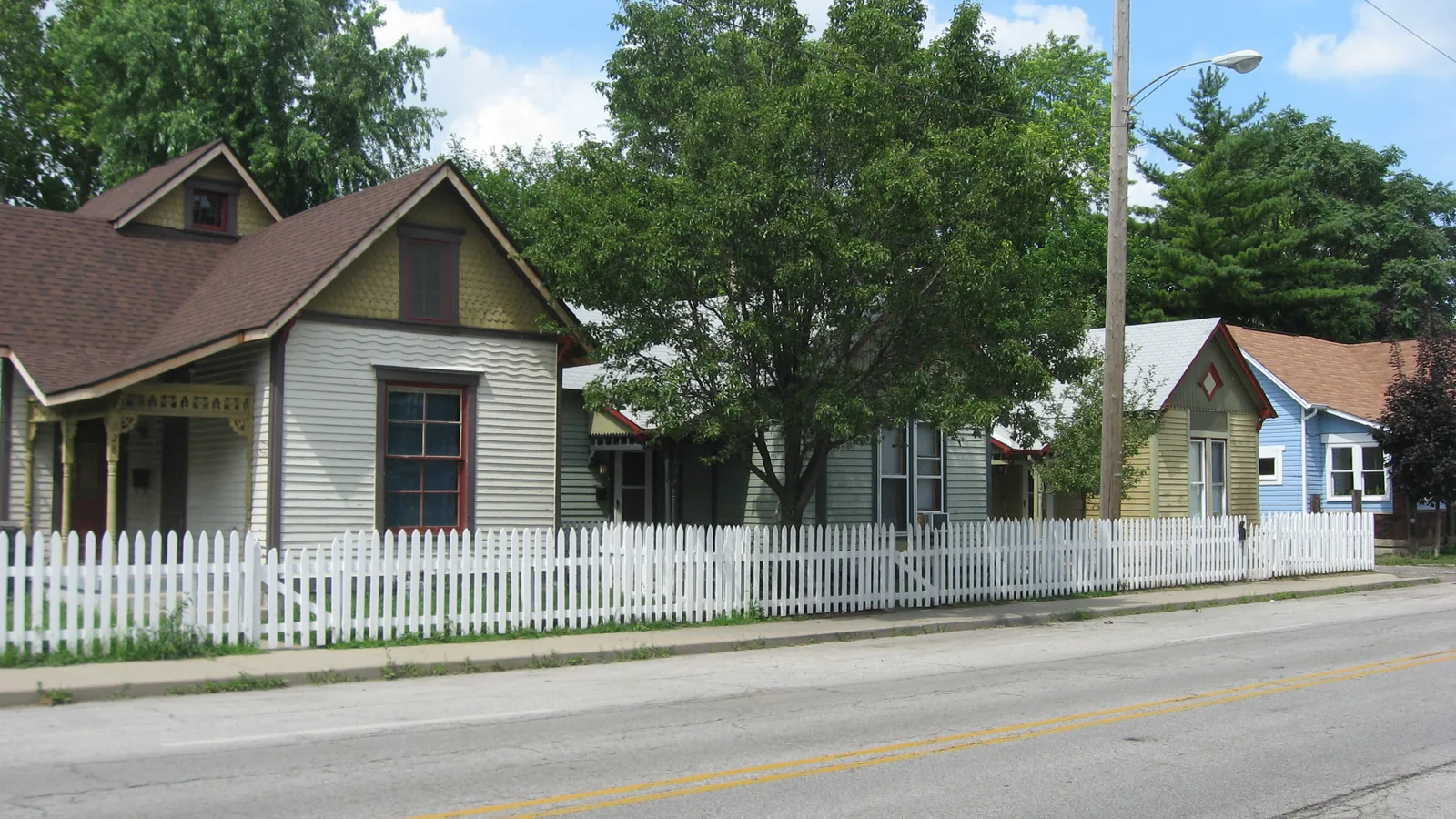
Indianapolis's core neighborhoods hold a high share of pre-1950 houses, and in those houses every system is the same age. Near Eastside, Martindale-Brightwood, Haughville, and parts of the Old Southside are largely modest frame homes from the streetcar era, many still on their original service panels and drain lines.
That single fact explains most of what follows. In newer housing, problems arrive one at a time. In a 1910 frame cottage, the roof, the wiring, the furnace, and the plumbing all fail within a few years of each other.
Price context sets the stakes. The typical Indianapolis home value was $223,697 in April 2026 (Zillow ZHVI), and Redfin put the median sale price at $245,123 that month. Both sit roughly 42% below the national median (Redfin, March 2026).
Downtown Indianapolis carried a median sale price near $360,000 in February 2026 while West Indianapolis was near $134,000 (Redfin, February 2026). The same repair list is minor against one number and a large share of value against the other.
The Five Systems That Stall a Financed Sale
Five systems account for most failed retail sales on older Indianapolis houses: electrical, roof, heating and cooling, plumbing, and structure. Cosmetic problems rarely end a deal here. System problems do, because each one travels from the inspection report into the lender's file. A licensed structural engineer's letter is often what a lender wants before funding a house with movement.
| System | What shows up in a pre-1950 Indianapolis house | Why the lender balks |
|---|---|---|
| Electrical | Active knob-and-tube runs, fuse panels, undersized service, ungrounded outlets | Safety items often become required repairs, and some carriers will not write a policy |
| Roof | Layered shingles at end of life, failing porch-roof flashing, active leaks | Remaining roof life is a standard appraisal item, and active leaks fail most loan programs |
| Heating and cooling | Furnaces well past warranty, converted gravity systems, window units and no ductwork | No working heat reads as a habitability problem in an Indiana winter |
| Plumbing | Galvanized supply lines corroding from the inside, cast iron drains, original laterals | Leaks and low flow read as habitability items, and a repipe means opening walls |
| Structure | Movement in Indiana clay soil, settling piers, crumbling foundation walls, sagging porches | Structural language on a report often triggers an engineer's letter before funding |
Knob-and-Tube Wiring and the Insurance Problem
Knob-and-tube wiring narrows the buyer pool through the insurance market, not only the inspection report. Some carriers decline to write a new homeowners policy on a house that still has active knob-and-tube, and a buyer without a policy cannot close a mortgage.
The pattern in older Indianapolis housing is usually partial. Decades of updates left newer circuits in the kitchen and bath, with original runs still live in bedrooms and the attic. That mix is harder to price than a full rewire.
Lead paint creates similar friction. The Indiana Department of Health reports that houses built before 1980, which make up 57% of Indiana's housing, probably contain lead-based paint (Indiana Department of Health, Indiana Lead Free). In pre-1950 core neighborhoods, that share runs higher.
What "Subject to Repairs" Does to a Closing
An appraisal that comes back subject to repairs turns your buyer's lender into the party deciding what gets fixed before closing. The appraiser flags conditions affecting safety, soundness, or habitability, and the loan does not fund until they are corrected and re-inspected.
That is where financed Indianapolis deals on older houses break down. The seller is asked to pay for repairs weeks before closing, on a house they were selling to avoid repairing. Contractor scheduling then controls the calendar, and the buyer's rate lock does not wait.
Insurance friction compounds it. If a carrier balks at the wiring, the roof age, or a vacant house, financing can stall even after the appraisal clears. None of that applies to a cash purchase.
A financed buyer asks what an underwriter will allow. A cash buyer asks what the work will cost. On a pre-1950 house, those questions produce very different outcomes.
What Indiana Makes You Disclose About a House That Needs Work
Indiana requires most sellers of one-to-four unit residential property to complete State Form 46234 and deliver it before accepting an offer (IC 32-21-5-10(a)). The form asks about appliances, electrical, water and sewer, heating and cooling, roof, and hazardous conditions.
Selling as is does not remove that duty. The exemption list at IC 32-21-5-1(b) is short and closed, and none of the categories turn on how a property is marketed.
The liability line is about knowledge. A seller who gives a false answer about a defect they knew about can be sued for fraudulent misrepresentation, with the form as the evidence (Johnson v. Wysocki, 990 N.E.2d 456 (Ind. 2013)). A seller wrong about something outside their actual knowledge is generally protected under IC 32-21-5-11.
Pre-1978 houses carry a second, federal duty. You must disclose known lead-based paint and known hazards, hand over any records, and provide the EPA pamphlet. You must also allow a 10-day assessment window unless the parties agree otherwise in writing (42 U.S.C. 4852d(a)). Our guide to Indiana seller disclosure requirements covers the exemptions and the liability standard in full.
Disclosure also helps you in an as-is sale. A bad roof disclosed up front is a line item in the offer. The same roof discovered late becomes a renegotiation.
Should You Repair and List, or Sell a House That Needs Repairs in Indianapolis As Is?
The decision comes down to time, cash, and certainty. Repairing first can produce a higher sale price, and it puts the risk and the spending on you for months. Selling as is trades price for speed and a closing that does not depend on an underwriter.
| Factor | Repair, then list | Sell as-is for cash |
|---|---|---|
| Time to cash | Illustrative: scheduling and the work, then a median 55 days on market, then closing | Cash closings can happen in as few as 7 days, or later if you prefer |
| Cash out of pocket | Deposits, permits, and materials, paid months before money comes back | None. Repairs, cleaning, and cleanout are the buyer's problem |
| Carrying costs | Mortgage, insurance, utilities, and Marion County taxes keep running | Stop at closing |
| Certainty | Lower. Scope grows once walls are open, and a financed buyer can fall through | Higher. No lender, no appraisal condition, no repair contingency |
| Price | Retail, less commissions, repair spending, and carrying costs | Below retail, because the buyer takes on the repair cost and the risk |
| Best fit | Sound house, mostly cosmetic issues, time and cash available | Several major systems at once, limited cash, or a fixed timeline |
The timelines and comparisons above are illustrative examples for planning, not quotes, appraisals, or offers.
What 55 Days on Market Does to a Repair Budget
A repair-then-list plan now has to survive a much longer market. Indianapolis homes took a median of 55 days to sell in March 2026, up from 27 days a year earlier (Redfin, March 2026). The clock after the work runs about twice as long as in 2025.
Prices are not covering that wait either. Zillow's typical value rose just 1.0% year over year (Zillow ZHVI, April 2026), so a repair budget built on rising prices has no cushion here.
Neighborhood spread is the last piece. A repair list that is reasonable against a downtown sale near $360,000 can be a large share of value on a West Indianapolis block near $134,000 (Redfin, February 2026). Our Indianapolis housing market 2026 guide goes deeper on the local numbers.
Why wait? Sell your house “as is” for cash today
Tell us about your house. We'll make you a cash offer based on local market data.
Let's chatWho Buys Indianapolis Houses That Need Major Work?
Renovation buyers who already know this housing stock buy most of these houses. They keep electricians who rewire knob-and-tube, roofers who work on porch-heavy frame houses, and HVAC crews who add ducts. They price the job from experience, not fear.
Propcash is a direct cash homebuyer, and we buy Indianapolis houses as-is. We make one transparent cash offer based on local market data, and we show you how we got to our number. No repairs or cleanout are required from you.
Sellers pay no commissions, fees, or closing costs to Propcash, and you pick the closing date. Cash transactions can close in as few as 7 days once terms are agreed. Our guide to the best ways to sell a house for cash in Indianapolis compares the options, and our Indianapolis cash home buyer page carries the Marion County market data and neighborhood detail behind an offer.
When Listing Is Still the Better Move
If your house is structurally sound and the problems are mostly cosmetic, listing is usually the better move, and we will say so. Dated kitchens, worn carpet, and tired paint are not what stalls a financed Indianapolis sale. Homes here still sold at about 98% of list price in March 2026 (Redfin).
The honest test is whether a lender would fund the house today. A house with working heat, a sound roof, safe wiring, and no active leaks generally passes, and cosmetic issues become price adjustments. If a cash sale is not your best move, a local agent is.
Frequently Asked Questions
Can I sell a house that needs repairs in Indianapolis without fixing anything?
Yes. Indiana law does not require a seller to repair a house first, and an as-is sale is a normal, legal transaction. What changes is the buyer pool, because a mortgage lender can decline to fund a house with an unsafe panel, an active roof leak, or no working heat. You still owe an accurate State Form 46234 and, on a pre-1978 house, the federal lead paint disclosure.
Do I still have to fill out the Indiana seller disclosure form if I sell as is?
Yes. Selling as is does not exempt an Indiana seller from State Form 46234, because the exemption list at IC 32-21-5-1(b) is closed. The form must be completed truthfully and delivered before the seller accepts an offer (IC 32-21-5-10(a)). An as-is clause allocates the risk of unknown defects, but it does not turn a known defect into an unknown one.
What repairs make lenders reject an Indianapolis house?
Safety and habitability items do most of the damage: unsafe electrical service, an active roof leak, no working heat, plumbing leaks, and structural movement. An appraiser is likely to call these out, which can make the appraisal subject to repairs and stall the loan. Dated kitchens and tired paint almost never stop an Indianapolis mortgage.
Does knob-and-tube wiring stop a house sale in Indianapolis?
It does not stop a sale outright, but it narrows the buyer pool sharply. Active knob-and-tube wiring is common in pre-1950 Indianapolis housing, and some carriers decline to write a new policy on a house that still has it. A buyer who cannot get a homeowners policy generally cannot close a mortgage, so the wiring becomes a financing problem.
Do I have to disclose lead paint in a pre-1978 Indianapolis house?
Yes. Federal law requires the seller of any home built before 1978 to disclose known lead-based paint and known hazards, hand over any records, and provide the EPA pamphlet. You also include a Lead Warning Statement in the contract and allow a 10-day assessment window, unless both parties agree otherwise in writing (42 U.S.C. 4852d(a)). You are not required to test first, and the duty covers only what you actually know.
Who buys Indianapolis houses that need major work?
Renovation buyers who already know the city's older housing buy most of these houses. They keep electricians, roofers, and HVAC crews on call, so they price the work from experience instead of fear. Propcash is a direct cash homebuyer and purchases Indianapolis houses as-is, making one transparent cash offer based on local market data. Sellers pay no commissions or fees to Propcash.
Your House Is Aging, Not Failing
A pre-1950 Indianapolis house that needs wiring, a roof, heat, and plumbing work is not a lost cause. It is a house that outlived its systems, which is what well-framed houses do after a hundred Indiana winters. The question is which buyer is set up for the work.
Price the repairs honestly, fill out the disclosure form accurately, then compare the two paths. If the house is sound and the issues are cosmetic, list it. If several systems are done at once, a no-obligation cash offer is a reasonable start.
Why wait? Sell your house “as is” for cash today
Tell us about your house. We'll make you a cash offer based on local market data.
Let's chatDisclaimer: This article is for informational purposes only and is not legal, structural, engineering, or insurance advice. Any timeline or comparison figures are illustrative examples for planning, not quotes, appraisals, or offers. Indiana Code 32-21-5, State Form 46234, the federal lead-based paint rule, and lender and insurance underwriting standards change over time and vary by property. Confirm current requirements with a licensed Indiana real estate attorney, and consult a licensed engineer or contractor for property-specific advice.