Key Takeaways
- Foreclosure in Kansas is a lawsuit: Your lender must sue and win in Sedgwick County District Court before the sheriff can sell.
- Sales happen on Wednesdays: Sedgwick County sheriff's sales run at 10 a.m. at 510 N. Main, after three weekly published notices.
- Redemption comes after the sale: Kansas gives owners 12 months, or three months if under a third of the loan was paid, and you can stay in the house.
- Options are widest before the sale: Reinstatement, modification, forbearance, a sale, a deed in lieu, and Chapter 13 all work best early.
- Kansas protects owners who sell during a case: The buyer must use a dated written agreement with a statutory disclosure, and you can cancel within five business days.
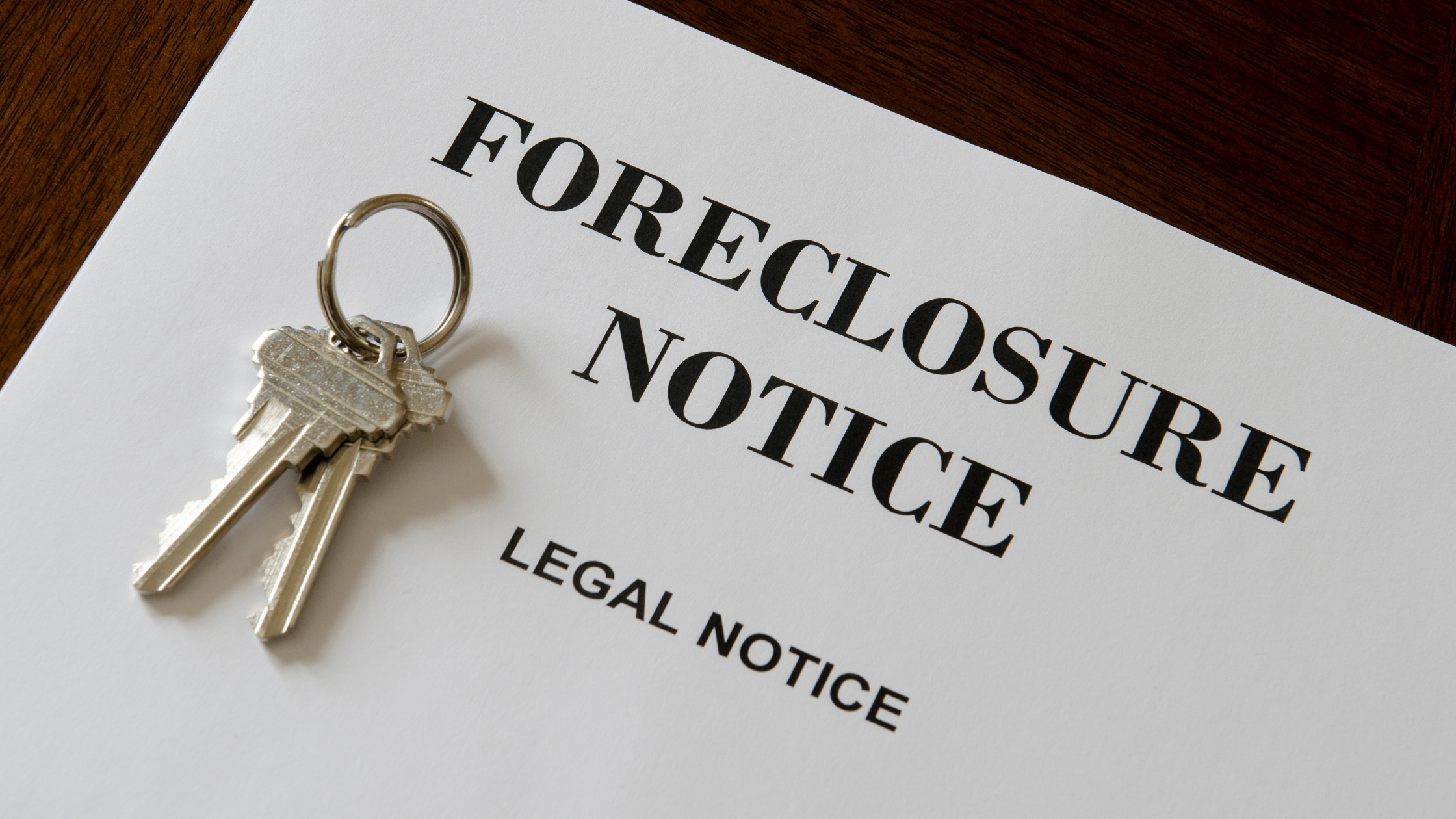
Falling behind on mortgage payments in Wichita, KS is frightening, but a Kansas foreclosure has to go through a court, and that takes time. If you want to stop foreclosure in Wichita, you have real options until the sheriff's sale. Kansas law can give you time after it, too. Your lender cannot sell the house without suing you and winning in court.
This guide walks the Kansas calendar in order: the lawsuit, the Wednesday sale, and the redemption period. It is general information, not legal advice. A Kansas attorney or a HUD-approved housing counselor can apply it to your file.
Why wait? Sell your house “as is” for cash today
Tell us about your house. We'll make you a cash offer based on local market data.
Let's chatHow Does Foreclosure Work in Wichita?
Foreclosure in Wichita is a court case. Your lender must sue in Sedgwick County District Court, win a judgment, and get an order of sale before the sheriff can sell the house. Kansas is a judicial-foreclosure state, so nothing happens on a lender's say-so alone.
Federal servicing rules add a buffer at the front. A servicer generally cannot make the first court filing until the loan is more than 120 days delinquent (12 CFR 1024.41(f)). Your mortgage contract usually requires a written default notice before that.
Once you are served with the petition, you have 21 days to answer (K.S.A. 60-212). Without an answer, the lender can ask for a default judgment. The court file is public, kept by the Clerk of the District Court, civil division, on the 11th floor at 525 N. Main (Sedgwick County Sheriff, October 2026).
The Kansas Judicial Foreclosure Timeline
A Wichita foreclosure moves through nine stages, and no single statute sets the total length.
| Stage | What happens | Timing and source |
|---|---|---|
| 1. Missed payment | Late fees start and the servicer contacts you. | Day one of delinquency |
| 2. Default notice (demand) | The servicer sends a written notice of default and a date to catch up. | Set by your mortgage contract |
| 3. Petition filed | The lender sues in Sedgwick County District Court. | Generally not before 120 days delinquent (12 CFR 1024.41(f)) |
| 4. Your answer | You or your attorney respond to the petition. | 21 days after service (K.S.A. 60-212) |
| 5. Judgment and order of sale | The court rules and orders the sheriff to sell. | Depends on the court's docket |
| 6. Three weekly notices | The sale is published once a week for three weeks. | Last notice 7 to 14 days before the sale (K.S.A. 60-2410) |
| 7. Sheriff's sale | Wednesday at 10 a.m., Historic Courthouse, 510 N. Main. | Sedgwick County Sheriff, October 2026 |
| 8. Redemption period | The court confirms the sale; you may redeem and stay in the house. | 3 or 12 months (K.S.A. 60-2414) |
| 9. Sheriff's deed | Issued to the certificate holder if nobody redeems. | End of the redemption period |
The front half depends on your servicer and the court's docket. The back half is set by statute. Mark each date as it arrives, and count backward from the next one.
What Happens at a Sedgwick County Sheriff's Sale?
A Sedgwick County sheriff's sale is the public sale where the sheriff sells a foreclosed house under the court's order. Sales run each Wednesday at 10 a.m. in the 3rd Floor Conference Room of the Historic Courthouse, 510 N. Main (Sedgwick County Sheriff, October 2026).
Kansas law sets the notice. The sale must be published once a week for three consecutive weeks, with the last notice 7 to 14 days before the sale (K.S.A. 60-2410). The sheriff's office keeps no list of upcoming sales, and dates can change, so check the court file or ask your attorney.
What happens right after the sale
A judge signs an order confirming the sale. The sheriff then issues a certificate of purchase naming the buyer, the amount paid, and any redemption period. While redemption runs, the buyer holds that certificate, not a deed.
The Kansas Foreclosure Redemption Period: 3 or 12 Months
The Kansas foreclosure redemption period is a window after the sheriff's sale when you can still buy the house back. It runs 12 months, or three months if you defaulted before paying one-third of the original loan (K.S.A. 60-2414(a), (m)).
Many Wichita orders land on the shorter period. The Sheriff's office says confirmation orders “generally” set three months, though courts can set longer or shorter ones (Sedgwick County Sheriff, October 2026). Your own order decides your date.
What the statute gives you
- Possession. You may stay in the house during redemption (K.S.A. 60-2414(a)).
- Twelve months when equity is large. If all liens total less than one-third of market value, the court orders 12 months (K.S.A. 60-2414(m)).
- A possible extra three months. If you involuntarily lose your main income after the sale, a court may extend a three-month period by three months (K.S.A. 60-2414(m)).
- No waiver. The mortgage on an owner-occupied one- or two-family house cannot shorten or waive redemption (K.S.A. 60-2414(a)).
- A right you can transfer. Redemption rights can be assigned, and the new holder gets the same right (K.S.A. 60-2414(h)).
What can shorten it, and what it costs
A court can shorten or end redemption if it finds the house abandoned or not occupied in good faith (K.S.A. 60-2414(a)). On a period of six months or less, only the owner can redeem in the first two months; after that, other lien creditors may redeem too.
To redeem, you pay what the certificate holder paid at the sale, plus interest, costs, and taxes. If nobody redeems, the sheriff issues a deed to the certificate holder when the period ends.
Your Options Before the Sheriff's Sale
Before the sheriff's sale, a Wichita owner usually has seven options. They are reinstatement, a loan modification, forbearance, a listed sale, a direct cash sale, a deed in lieu, or Chapter 13.
Reinstatement
Reinstatement means paying everything past due, plus fees and the lender's costs, to bring the loan current. Ask your servicer for a written quote with a good-through date. If you can fund it, you keep the house and the loan.
Loan modification
A modification changes the loan's terms, such as the rate, the length, or how the past-due amount is handled. Speed matters. A complete application received more than 37 days before a sale generally bars the servicer from moving for judgment or holding the sale during review (12 CFR 1024.41).
Forbearance
Forbearance pauses or reduces payments for a set time, often after a job loss or illness. It does not erase the missed amount, so get the repayment terms in writing.
A listed sale
If the sale date is months away and you have equity, listing with a local agent may net you more. Wichita houses sold in August 2026 spent a median of 20 days on the market, up from 17 a year earlier (Redfin, August 2026). Add time for inspection, appraisal, and closing, and compare that with your sale date.
A direct cash sale
A cash sale skips financing and appraisal, which can help when the calendar is short. The closing follows the lender's payoff statement and title work, and the title company pays the loan from the proceeds. That payoff is what ends the case. You keep the equity left after the loan and any other liens are paid.
A deed in lieu
A deed in lieu signs the house over to the lender, which has to agree. It usually leaves no equity. Ask in writing whether the lender waives any shortfall.
Chapter 13 bankruptcy
A bankruptcy filing generally triggers an automatic stay that pauses the foreclosure. Chapter 13 lets you repay arrears through a plan that usually runs three to five years (U.S. Courts, Chapter 13 Bankruptcy Basics). Talk with a Kansas bankruptcy attorney first.
Your options side by side
| Option | Time it typically needs | What you keep |
|---|---|---|
| Reinstatement | Funds for the past-due amount, fees, and costs before the sale | The house and the loan |
| Loan modification | A complete application, ideally more than 37 days before the sale | The house, on new loan terms |
| Forbearance | Servicer approval for a set pause | The house; the missed amount still comes due |
| Listed sale with an agent | Time to prepare, list, and close before the sale date | Equity left after the payoff and commissions |
| Direct cash sale | A closing that follows the payoff statement and title work | Equity left after the payoff; no commissions |
| Deed in lieu | Lender approval | Usually no equity; ask whether any shortfall is waived |
| Chapter 13 | A bankruptcy filing; plans usually run three to five years | The house, if plan payments are made |
| Redemption after the sale | 3 or 12 months, per the court's order | The house, if you pay the redemption amount |
The Kansas Rule That Protects Owners Who Sell During a Case
Kansas gives owners a specific protection when they sell during a pending foreclosure case. Any buyer of the owner's residence must use a dated written agreement with a statutory disclosure, and the owner can cancel within five business days (K.S.A. 58-2342).
- Everything in writing. All terms, including the price, go in one dated agreement signed by everyone, and you get copies.
- A disclosure statement. It explains your redemption rights and warns that you may still owe money if a foreclosure sale falls short.
- Five business days to rescind. You can cancel in a signed writing sent to the buyer by certified mail.
- No waiver. The right to rescind “may not be waived, sold or abrogated in any way.”
- A remedy. A deal that does not follow the statute is voidable at the owner's election.
The exceptions are a deed in lieu to the lender with the deficiency waived, and a buyer who moves in. A cash buyer who will not live in the house is covered. Kansas law requires any such buyer, Propcash included, to use that written agreement, so the disclosure and the five business days are part of the deal.
Be careful with anyone who wants an upfront fee to fix your loan, or who asks you to deed the house over and rent it back. Show any agreement to a Kansas attorney or a HUD-approved housing counselor before signing.
Can You Sell a Wichita House During the Redemption Period?
Yes, a sale during the redemption period is possible in Kansas, but it is slower and narrower than a sale before the sheriff's sale. It works because your redemption right can be assigned (K.S.A. 60-2414(h)).
The buyer takes your redemption right by assignment. The redemption amount, and any other liens the title company finds, must be paid from the proceeds before you receive anything. The deal only works if the house is worth more than those amounts.
It is slower because the buyer needs the confirmation order, the certificate of purchase, a redemption figure, and title work on every lien. If the case is still pending, the 58-2342 agreement and five-day rescission apply too. An attorney can read your order and tell you how long you have.
Where a Cash Sale Fits, and Where It Does Not
A direct cash sale fits best when the sale date is close, the house needs work, or you want a private sale without showings.
Propcash is a direct cash homebuyer, founded in 2026 and based in Nashville. Propcash buys as a principal and signs the purchase contract as the buyer. There are no fees or commissions, you sell as-is, and you pick the closing date within the time the court calendar leaves.
Propcash is only a buyer. It does not negotiate with your lender or give legal advice. A closing that pays off the loan before the sale date is what ends the case.
Why equity matters
Wichita's median sale price was $254,776 over the three months through August 2026 (Redfin, August 2026). Separately, the Zillow Home Value Index for Wichita was $207,080 on August 31, 2026, up 2.7% in a year (Zillow ZHVI, August 2026). The county reported that 88% of residential parcels rose in value for 2026 (Sedgwick County Appraiser, 2026).
None of those figures prices your house, but they show why equity is worth protecting. Our Wichita housing market guide for 2026 has the detail.
One offer, with the reasoning shown
We make one transparent, data-backed cash offer and show how we got to the number. The offer stands, there is no aggressive follow-up, and we say so if we are not the right buyer. You can request a cash offer on your Wichita house and compare it with your other options.
If a cash sale isn't your best move, we'll tell you and point you to a local agent who is. When the sale date is months away and the house shows well, a listed sale may net you more. We may receive compensation from agents we refer. Our guide to selling a Wichita house for cash explains the local process.
Free Foreclosure Help in Wichita
Free foreclosure help in Wichita comes from HUD-approved housing counselors and, for income-eligible owners, legal aid. Be wary of anyone who wants an upfront fee to talk with your servicer.
HUD keeps a search of HUD-approved housing counselors in Kansas, and the CFPB offers a housing counselor finder by ZIP code. Income-eligible owners can contact Kansas Legal Services. For the petition, redemption, or bankruptcy, talk with a Kansas attorney.
A mortgage is rarely the only claim on a house. Unpaid property taxes run on a separate county calendar, covered in our guide to the Sedgwick County tax foreclosure sale. The foreclosure situation page and our Kansas page on selling a house for cash cover the rest.
Why wait? Sell your house “as is” for cash today
Tell us about your house. We'll make you a cash offer based on local market data.
Let's chatFrequently Asked Questions
How long does foreclosure take in Wichita, Kansas?
No Kansas statute sets one total length, because the court's docket drives the middle of the case. The first filing generally waits until a loan is more than 120 days delinquent, and the sale needs three weeks of published notice. After the sale, redemption adds three or 12 months.
What is the Kansas foreclosure redemption period?
It is the time after a sheriff's sale when the owner can still buy the house back. Under K.S.A. 60-2414 it is 12 months, or three months if the default came before one-third of the original loan was paid. The owner may stay in the house during that time.
When and where is the Sedgwick County sheriff sale held?
Sedgwick County mortgage foreclosure sales are held each Wednesday at 10 a.m. at the Historic Courthouse, 510 N. Main, in Wichita. Each sale is advertised three weeks in advance, and the sheriff's office keeps no list, so check the court file for your date.
Can I sell my house before foreclosure in Wichita?
You can sell your house before foreclosure in Wichita at any point up to the sheriff's sale, because you still own it, and a sale that pays off the loan at closing ends the case. The closing follows the lender's payoff statement and title work.
Can I stay in my Wichita house after the sheriff's sale?
You can usually stay in your Wichita house after the sheriff's sale, because Kansas law entitles the owner to possession during the redemption period. A court can shorten or end that period if it finds the house was abandoned or is not occupied in good faith.
What is the five-day right to cancel when selling during a Kansas foreclosure?
Under K.S.A. 58-2342, an owner who sells their residence during a pending foreclosure case can rescind within five business days of signing. The agreement must be dated, written, and carry a statutory disclosure. The right cannot be waived.
Data Sources: Kansas Revisor of Statutes, Sedgwick County Sheriff and Appraiser, CFPB, U.S. Courts, Redfin, Zillow. Propcash is a direct cash homebuyer, not a law firm. Consult a Kansas attorney or a HUD-approved housing counselor about your case.