
Key Takeaways
- Texas law requires flood disclosure: Senate Bill 339 (2019) expanded the seller's disclosure notice under Texas Property Code Section 5.008 to cover 100-year and 500-year floodplain status, past flooding, FEMA or SBA disaster assistance, and flood insurance claims.
- Selling as-is does not skip disclosure: An as-is sale changes who pays for repairs, not what you must tell the buyer about the house's flood history.
- Financing is the choke point: Lenders require flood insurance in high-risk zones and balk at unrepaired water damage, which shrinks the pool of buyers who can close on a flooded house.
- The 2026 market is soft: Houston's median sale price was $345,000 in March 2026, down 2.8% year over year, and the median house took 64 days to sell (Redfin, March 2026).
- Carrying costs keep running: Harris County's combined property tax rate is about 2.03% (Ballard Property Tax Protest, 2026), and taxes, insurance, and mortgage payments continue while a damaged house sits unsold.
- A cash sale can close in as few as 7 days: Propcash buys houses as-is, factors the flood history into its offer, and shows you the local market data behind the number.
If you need to sell a flood damaged house in Houston, you are working two problems at once. The first is the house itself: soaked drywall, warped floors, and a repair bill you may not want to fund. The second is the sale process, because Texas law tells you exactly what you must disclose, and most mortgage lenders will not fund a purchase until the damage is fixed and the flood insurance question is settled.
Neither problem has to trap you in the house. This guide covers what Texas Property Code Section 5.008 requires you to disclose, what flood repairs actually involve, why financed buyers walk away, how a FEMA buyout compares to selling now, and how an as-is cash sale works in Houston's 2026 market.
Why wait? Sell your house “as is” for cash today
Tell us about your house. We'll make you a cash offer based on local market data.
Let's chatWhy Flooding Hits Houston Houses So Hard
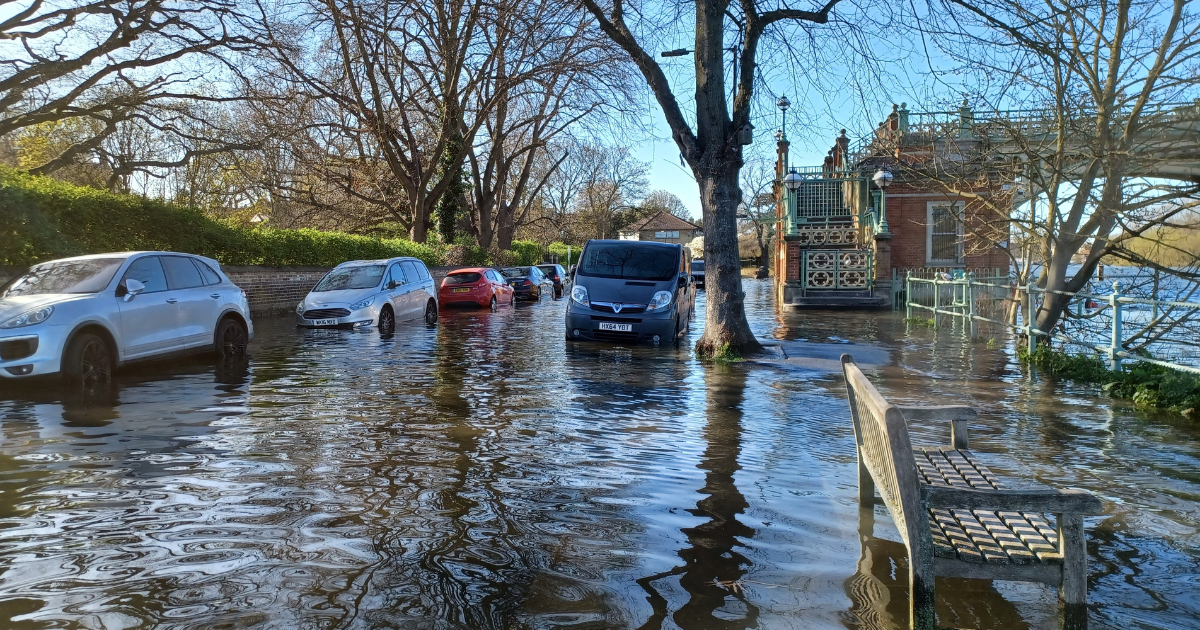
Houston floods more often and across more of its footprint than almost any other large American city because of how and where it was built. The city sits on a flat coastal plain of dense clay soil that sheds water instead of absorbing it, drains through a bayou system that backs up in heavy rain, and lies directly in the path of Gulf tropical storms. When a major system stalls over Harris County, the water has nowhere to go but into streets and houses.
Hurricane Harvey in August 2017 remains the defining event. Harvey caused roughly $125 billion in damage, one of the costliest disasters in United States history (NOAA National Centers for Environmental Information, 2018), and it flooded neighborhoods far outside any mapped flood zone, including areas soaked by the Addicks and Barker reservoir releases. Since then, repeated storms have reflooded parts of the city, and Texas lawmakers responded by tightening what sellers must tell buyers.
The practical consequence for owners is that flood history follows the house. Once a house has taken on water, that fact must be disclosed at every future sale, insurance pricing reflects it, and buyers using bank financing treat it with caution. That does not make the house unsellable. It changes which selling path fits.
What You Must Disclose Under Texas Law
Texas requires most home sellers to complete a seller's disclosure notice under Texas Property Code Section 5.008, and Senate Bill 339, effective September 1, 2019, expanded that notice to ask detailed flood questions. The change came directly out of Harvey, after buyers across the region discovered they had unknowingly purchased houses with serious flood histories.
The Flood Questions on the Disclosure Notice
Under the expanded disclosure rules, a Houston seller must state:
- Floodplain status: Whether the property sits wholly or partly in a 100-year floodplain, a 500-year floodplain, a floodway, a flood pool, or a reservoir.
- Prior flooding: Whether water has previously entered the structure, whether from a natural flood event or a reservoir release.
- Disaster assistance: Whether you have received FEMA disaster assistance or an SBA disaster loan for flood damage to the property.
- Insurance claims: Whether flood insurance claims have been filed on the property, and whether the property currently carries flood insurance.
Selling As-Is Does Not Exempt You
An as-is clause does not remove the disclosure obligation. As-is means the buyer accepts the house in its current condition and you are not paying for repairs. It does not mean you can stay silent about flood history you know about. If you know the house flooded, you disclose it, whether you sell to a neighbor, through an agent, or to a cash buyer.
Skipping or shading the disclosure is not worth it. A buyer who later discovers concealed flood history can pursue legal remedies under Texas law, which can include unwinding the sale or seeking damages. Talk to a Texas real estate attorney if you are unsure what your situation requires.
Full disclosure tends to work in your favor with a cash buyer. Cash buyers who purchase flood-history houses expect these disclosures, price the condition in from the start, and close with complete knowledge of the house, which leaves little to argue about after the sale.
What Flood Repairs Involve
Repairing a flooded house usually means far more than replacing carpet, because water reaches wiring, insulation, ductwork, and framing that you cannot see behind the walls. A typical remediation involves cutting out drywall above the water line, removing flooring and lower cabinets, drying the structure, treating for mold, then rebuilding, with electrical, HVAC, and appliance work layered on top for deeper flooding.
Mold is the clock you are racing. Federal flood-cleanup guidance warns that mold can begin growing within 24 to 48 hours of water intrusion (FEMA), and Houston's humidity gives it ideal conditions. A house that sat wet for days almost always needs professional mold remediation before a lender or an insurer will treat it as sound.
Then there is the calendar. A full restoration runs through contractor scheduling, permits, and inspections, and every month of that timeline you continue paying property taxes at Harris County's combined rate of about 2.03% (Ballard Property Tax Protest, 2026), plus insurance and any mortgage, on a house you may not be able to live in or rent out. For owners without insurance proceeds that cover the full scope, funding the repair out of pocket often makes less sense than selling the house as it stands.
Houses along Houston's bayous have flooded more than once in the past decade. Each new event adds damage on top of prior repairs and restarts the remediation clock, which is why many owners of repeat-flooded houses eventually stop rebuilding and sell as-is instead.
Flood Zones, Insurance, and Financed Buyers
Flood zone status matters at sale time mainly because of financing. Federally backed mortgages require flood insurance on houses in high-risk FEMA zones, and FEMA's Risk Rating 2.0 methodology now prices each property on its own characteristics, such as distance to water, elevation, and rebuild cost (FEMA). For many Houston properties near bayous, that insurance cost has become a real part of a buyer's monthly payment, which shrinks the pool of financed buyers who can afford the house.
| FEMA Zone | Risk Level | Flood Insurance for Mortgaged Buyers |
|---|---|---|
| Zone A / AE | High risk (100-year floodplain) | Required on federally backed loans |
| Zone X (shaded) | Moderate risk (500-year floodplain) | Not required, often recommended |
| Zone X (unshaded) | Lower risk (outside the 500-year floodplain) | Not required |
Treat the map as a starting point, not a promise. Harvey flooded a large number of Houston houses that sat outside any mapped high-risk zone, which is exactly why the Texas disclosure notice now asks about actual flooding history, not just zone status. A cash buyer purchasing without a lender faces no mandatory insurance condition, which is one reason flood-history houses so often sell for cash.
Where Flood History Comes Up Most in Houston
Flood history questions come up most often along Houston's bayous, its reservoir zones, and the low-lying areas near Galveston Bay. If your house is in one of these areas, expect buyers to ask early and expect the disclosure notice to do real work in the sale.
- Meyerland and the Brays Bayou corridor: Southwest Houston along Brays Bayou saw repeated flooding through the mid-2010s and Harvey, and flood history remains a central issue in sales there, including in Bellaire and toward the Texas Medical Center.
- Kingwood and the Lake Houston area: Northeast Houston near the San Jacinto River took severe water in Harvey and again in later storms, and river-driven flooding remains a live risk.
- Spring Branch and the reservoir zones: Neighborhoods downstream of the Addicks and Barker reservoirs, including Spring Branch and Bear Creek, flooded during Harvey's controlled releases even where FEMA maps showed lower risk.
- Greenspoint: North Houston along Greens Bayou deals with recurring street and structure flooding in older housing stock.
- Clear Lake and the bay-area communities: Near Galveston Bay, houses face both heavy-rain flooding and hurricane storm surge, a combination that keeps insurance costs high.
Flooding is not limited to this list. Houston's flat terrain means a stalled storm can put water into almost any neighborhood, which is why the disclosure rules apply citywide.
FEMA Buyout, Listing, or Cash Sale: Which Path Fits?
A Houston owner with a flood-damaged house has four realistic paths, and the right one depends on your budget, your timeline, and how much of the repair burden you want to carry. Here is how they compare.
| Path | Typical Timeline | Repairs Needed First | Main Constraint |
|---|---|---|---|
| Repair, then list | Many months: remediation plus a 64-day median market time (Redfin, March 2026) | Full remediation | Upfront repair cost and contractor scheduling |
| List as-is with an agent | Months, often longer than the citywide median | None | Small pool of buyers who can finance or pay cash |
| FEMA buyout program | Often years, on a government schedule | None | Limited funding and eligibility; long carrying period |
| Direct cash sale | As few as 7 to 14 days after accepting an offer | None | Offer reflects the as-is condition |
The FEMA Buyout, in Brief
After major floods, government buyout programs such as FEMA's Hazard Mitigation Grant Program purchase the hardest-hit properties, typically based on pre-flood fair market value, then demolish the structure and keep the land as open space. The catch is the wait: funding rounds are limited, not every house qualifies, and the process routinely takes years from application to closing. During that entire stretch you keep paying taxes, insurance, and any mortgage. A buyout can be the right answer for a repeatedly flooded house if you can afford the wait. Most owners cannot.
When Listing Still Makes Sense
Honesty matters here: if your house took on minor water, has been professionally remediated with documentation, and you have the time and money to present it well, listing with an agent may net you more than a cash sale. Propcash will tell you that plainly if it is true for your house. The cash path earns its place when the damage is unrepaired, the carrying costs are piling up, or you simply want the house off your hands without funding a renovation. For a broader comparison of selling routes, see the best ways to sell a house for cash in Texas.
What Is a Flood-History House Worth in Houston's 2026 Market?
Houston is a soft, slow market in 2026, which affects every seller and weighs heaviest on houses with complications. The median sale price inside the city was $345,000 in March 2026, down 2.8% year over year, and the median house took 64 days to sell (Redfin, March 2026). Zillow's measure of the typical Houston home value, which covers the whole housing stock rather than just recent closings, sat at $265,062 in April 2026, down 2.7% year over year (Zillow ZHVI, April 2026). The two figures differ by design, but both point the same direction: down.
Volume tells the same story of a big but cooling market. The Houston metro recorded 89,012 home sales in 2025 (Texas Realtors via iBuyer.com, 2025), one of the most active totals in Texas, yet buyers now have leverage, and houses that need work sit longest. A flood-history house competes against fully renovated inventory in a market where buyers can afford to be picky. There is no honest way to put a universal number on what any flood-damaged house is worth. Value depends on location, damage scope, and what the house would be worth restored, which is exactly what a walkthrough is for.
How to Sell a Flood-Damaged House in Houston for Cash
Selling a flood-damaged house for cash means selling directly to a buyer that uses its own funds, buys the house as-is, and closes without a lender, which removes the financing and insurance conditions that sink traditional sales of flooded houses. Propcash is a direct cash homebuyer: we buy houses across America, including flood-history houses in Houston, and the process is built to be simple.
- Tell us about the house. Address, condition, and what you know about the flood history. It takes about two minutes, and disclosure works the same way it would in any Texas sale.
- We evaluate it. We look at the damage, the neighborhood, and local market data, and we factor the repair scope into our number instead of asking you to fix anything.
- You get a straight cash offer. We show you how we got to the number. No fees, no commissions, and no obligation to accept.
- You pick the closing date. Closings run through a licensed Texas title company and can happen in as few as 7 days, or on whatever timeline suits you.
Our offer stands while you decide. There is no countdown and no follow-up pressure, so you can show the number to your attorney or your family and take the time you need. And if a cash sale is not your best move, we will say so and point you to a local agent who fits.
The Bottom Line
Texas law lets you sell a flooded house, it just insists the buyer knows the history. The hard part is not legality but logistics: repair costs you may not want to fund, insurance requirements that scare off financed buyers, and a soft 2026 market that punishes houses needing work. If you would rather not spend months and a renovation budget getting the house lender-ready, a direct as-is cash sale trades the top of the price range for speed, certainty, and zero repair spending. See current Houston cash home buyer options to compare what a direct sale could look like for your house.
Why wait? Sell your house “as is” for cash today
Tell us about your house. We'll make you a cash offer based on local market data.
Let's chatFrequently Asked Questions
Can I sell a house that has flooded in Houston?
Yes. Texas law does not stop you from selling a house with flood history, it only requires you to disclose that history to the buyer. A financed sale can be difficult because lenders hesitate on unrepaired water damage and require flood insurance in high-risk zones, which is why many Houston owners with flooded houses sell as-is to a cash buyer instead.
Do I have to disclose flood history when selling a house in Houston?
Yes. Under Texas Property Code Section 5.008, expanded by Senate Bill 339 in 2019, the seller's disclosure notice asks whether the property sits in a 100-year or 500-year floodplain, whether it has flooded before, whether you received FEMA or SBA disaster assistance, and whether flood insurance claims were filed. Selling as-is does not remove any of these obligations.
Do I have to make repairs before selling a flood-damaged house in Houston?
No. You can sell a flood-damaged house in Houston as-is, with no repairs, no cleanout, and no remediation completed first. A cash buyer evaluates the damage during a walkthrough and factors the repair scope into its offer, while you remain responsible only for disclosing what you know about the flood history.
What if my Houston house is in a flood zone but has never flooded?
You still have to disclose the floodplain designation on the Texas seller's disclosure notice. A house in a mapped flood zone with no flooding history is generally easier to sell than one that has taken on water, but buyers using a mortgage face mandatory flood insurance in high-risk zones, which affects what they can afford to pay. A cash buyer is not subject to a lender's insurance requirement, so zone status matters less in a cash sale.
How fast can I sell a flood-damaged house in Houston?
A cash sale can close in as few as 7 to 14 days once you accept an offer, because there is no lender approval, appraisal, or flood insurance condition to clear. On the open market, the median Houston house took 64 days to sell in March 2026 (Redfin), plus roughly another month for the buyer's financing to close, and flood-history houses often take longer than the median.
Is a FEMA buyout better than selling a flooded house for cash?
It depends on how long you can wait. A buyout through the Hazard Mitigation Grant Program is based on pre-flood fair market value, but funding is limited, not every house qualifies, and the process often takes years while you keep paying taxes, insurance, and any mortgage. A cash sale closes in days rather than years, so owners who cannot afford to carry the house usually come out ahead selling now.
Data Sources: Redfin Houston housing market data (March 2026), Zillow Home Value Index for Houston (April 2026), Texas Realtors metro sales data via iBuyer.com (2025), Ballard Property Tax Protest Harris County rate data (2026), NOAA National Centers for Environmental Information (Hurricane Harvey damage estimate), FEMA flood zone and Risk Rating 2.0 program materials, Texas Property Code Section 5.008 and Senate Bill 339 (2019). This article is general information, not legal, tax, or insurance advice. Propcash is a direct cash homebuyer, not a law firm or insurance advisor. Consult a licensed Texas real estate attorney about your disclosure obligations.