
Key Takeaways
- In Birmingham's lower-value core, repair cost is measured against the block, not against the city. A repair list that is routine on a $300,000 house can absorb most of the sale price on a house worth far less.
- FHA condition rules, not seller preference, are what shrink the buyer pool. HUD requires every FHA-insured house to be safe, sound, and secure, and the appraiser must condition the appraisal on repairs (HUD Handbook 4000.1).
- Roof life, defective paint on pre-1978 houses, and non-working systems are the usual triggers. A roof needs a remaining physical life of at least two years, and defective paint on an older house must be repaired under 24 CFR Section 200.810(c).
- Renovation financing has a ceiling. FHA's Limited 203(k) caps total rehabilitation costs at $75,000 and the work at nine months (HUD Mortgagee Letter 2024-13, July 2024); anything structural needs the Standard 203(k).
- As-is does not switch off Alabama law. Caveat emptor is the default, but a direct question, a hidden health or safety defect, and federal lead paint rules all still apply.
- The core is not one place. Avondale, Crestwood, and parts of Woodlawn are seeing genuine renovation demand, and a sound house there may well net more on a listing.
If you own an older house in Birmingham and the repair list has gotten longer than the budget, the question is rarely whether the house can be fixed. It is whether fixing it makes any financial sense at the price your block actually supports. In much of Birmingham's core, the honest answer is no, and that is why so much of the city's older housing stock changes hands as-is.
This guide is about the practical decision rather than the valuation debate. It covers the repair-cost arithmetic on lower-value Birmingham houses, the federal appraisal rules that decide whether an ordinary financed buyer can even reach your house, what Alabama's caveat emptor doctrine still requires of you in an as-is sale, and how listing compares with a direct cash sale on time, cost, and certainty.
Redfin reported a Birmingham median sale price of $192,000 in March 2026, up 13.1 percent year over year, with a median 55 days on market, up from 48 a year earlier (Redfin, March 2026). Zillow reported a typical Birmingham house value of $104,605 in April 2026, down 3.1 percent year over year (Zillow ZHVI, April 2026). The two figures come from different companies measuring different things and are reported separately here. Statewide, 23.2 percent of Alabama listings took a price drop in March 2026 and the median house needed 69 days to sell (Redfin, March 2026). FHA condition rules for existing houses sit in HUD Handbook 4000.1, Section II.D.3. Alabama follows caveat emptor for used residential real estate and mandates no statewide seller disclosure form.
Why Birmingham core houses so often sell as-is
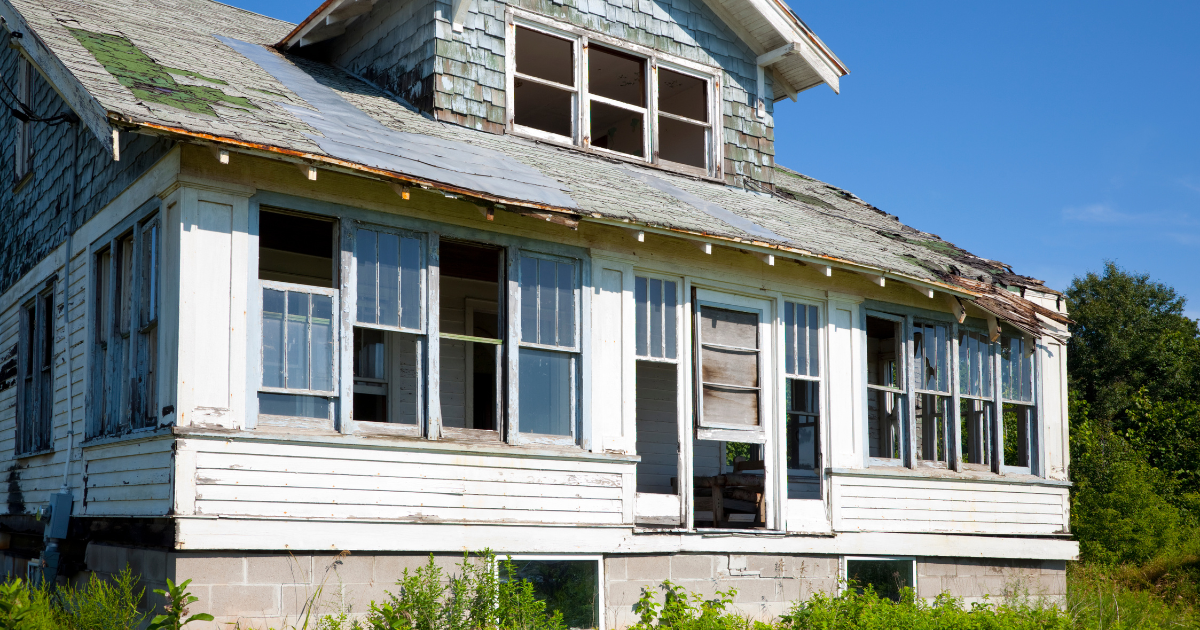
Houses in Birmingham's core neighborhoods sell as-is more often than in most American markets because the cost of the work a house needs frequently approaches, and sometimes passes, what the finished house is worth on its own block. That is an arithmetic problem, not a comment on the house or the people who live around it.
Birmingham's two most-quoted price figures point in opposite directions, which makes the arithmetic easy to get wrong. Redfin reported a median sale price of $192,000 in March 2026, up 13.1 percent year over year, while Zillow reported a typical house value of $104,605 in April 2026, down 3.1 percent (Redfin, March 2026; Zillow ZHVI, April 2026). Our guide to why Birmingham value estimates disagree covers that split in full. For a core seller the practical consequence is one line: price to the citywide median and the house will sit.
Time is the second pressure. Birmingham houses took a median of 55 days on market in March 2026, up from 48 a year earlier (Redfin, March 2026), and that clock starts before a financed buyer's lender has ordered an appraisal.
None of this means a house is beyond saving. Plenty of Birmingham core houses are structurally sound, well built, and worth renovating. The question an owner has to answer is narrower: whether you should be the one paying for that renovation before you sell.
The repair-cost math on a lower-value Birmingham house
The math that decides an as-is sale is the ratio between the repair list and the finished value on your own block, not the size of the repair list on its own. A $40,000 scope of work on a house that would be worth $70,000 finished is a very different proposition from the same $40,000 on a house that would be worth $300,000, and Birmingham has a great deal of housing stock in the first category.
Every figure below is invented to show the arithmetic. It is not an offer from Propcash, not a contractor quote, and not a prediction for any specific house. Suppose a 1,100 square foot house built in 1949 in a Birmingham core neighborhood, where sound houses on the same street have recently sold around $70,000. The house needs a full roof replacement, an HVAC system, an updated electrical service and panel, exterior paint stabilization on pre-1978 siding, and pier work under a settled corner. Assume those five items come to $40,000 together. That scope is roughly 57 percent of the finished value, and spending it does not create a $110,000 house. It creates a house worth about what the block supports, which was $70,000 before a dollar was spent.
Three costs sit on top of that and are easy to leave out. Carrying the house through the work means months of taxes, insurance, utilities, and any mortgage payment. A traditional sale then carries agent commission and seller-side closing costs. And the finished house still has to satisfy an appraiser, so an optimistic renovation budget can end with a contract price the appraisal will not support.
Comparable sales are the ceiling, and receipts do not raise it. This is the single most expensive misunderstanding in a lower-value market: an owner spends real money on real improvements and recovers only the part the block will pay for. Renovating past the top of the street is money spent for the next owner's benefit.
The conclusion is not that repairs are pointless. It is that the decision has to be made against your own comparable sales rather than against the size of the problem. Where one item stands between the house and a financeable condition, fixing it can be the right call. Where five items stand in the way and the finished value is modest, an as-is sale usually leaves more in your pocket and far less risk on your side of the table.
Why an older Birmingham house may fail an FHA appraisal
An older Birmingham house can fail an FHA appraisal on condition alone, because FHA requires that every insured house be safe, sound, and secure. HUD defines its Minimum Property Requirements as "general requirements that all homes insured by FHA be safe, sound, and secure" (HUD Handbook 4000.1, Glossary), and where an existing house does not comply, the appraiser "must report the repairs necessary to make the Property comply, provide an estimated cost to cure, provide descriptive photographs, and condition the appraisal for the required repairs" (HUD Handbook 4000.1, Section II.D.3).
That is why an as-is sale in the core is a rational response to the rules rather than a concession by the seller. The federal appraisal standard, not the seller's attitude, is what removes an ordinary financed buyer from the picture. The items below are the ones that come up most often on pre-1978 Birmingham stock.
| Condition item | What HUD Handbook 4000.1 requires | Effect on a financed sale |
|---|---|---|
| Roof covering | The appraiser must notify the lender of a deficiency if the roof does not prevent moisture entry or provide reasonable future utility and does not have a remaining physical life of at least two years, and must make the appraisal subject to inspection by a professional roofer where life is under two years (II.D.3.g). | Usually stops the loan until the roof is repaired or replaced. Roof age alone can end a financed contract. |
| Defective paint, houses built before 1978 | The appraiser must note the condition and location of all defective paint, observing interior and exterior surfaces including stairs, decks, porches, railings, windows, and doors, and require repair in compliance with 24 CFR Section 200.810(c) (II.D.3.m). | Cracking, scaling, chipping, peeling, or loose paint becomes a required repair, and lead-safe work practices add cost. |
| Heating, plumbing, and electrical | The appraiser must observe and operate the systems, and must condition the appraisal for repair or further inspection where they appear damaged or do not function properly. Heating must be adequate for healthful and comfortable living conditions (II.D.3.f). | A dead furnace or an unsafe panel is a repair condition, not a price adjustment. |
| Foundation and structure | The appraiser must examine the foundation for readily observable safety or structural deficiencies and report necessary repairs, alterations, or required inspections (II.D.3.h and II.D.3.k). | Commonly triggers a specialist inspection, which adds weeks and can end the contract. |
| Missing handrails and similar items | Treated as cosmetic where they do not pose a threat to safety, alongside cracked window glass and minor leaks that cause no damage (II.D.3.n). | Not automatically a required repair. Where the appraiser judges a safety threat, it becomes one. |
| Utilities off in a vacant house | Where systems cannot be operated, the appraiser must render the appraisal subject to reobservation once utilities are restored, and must note that reobservation may produce additional repair requirements (II.D.3.f). | Delays the loan and leaves the repair list open until the utilities are back on. |
Once an appraisal is conditioned, the practical buyer pool narrows to two kinds of purchaser: someone paying cash, and someone using a renovation mortgage. Renovation loans have ceilings of their own. FHA's Limited 203(k) caps total rehabilitation costs at $75,000 and requires the work to finish within nine months, and it cannot be used for major structural work, which pushes anything involving the foundation into the Standard 203(k) with its consultant, work write-up, and longer timeline (HUD Mortgagee Letter 2024-13, July 2024).
Conventional, VA, and USDA lenders apply their own property condition standards, and while the details differ, safety and structural items are generally treated the same way. A seller who has watched two financed contracts fall apart on the appraisal is not unlucky. That seller is running into a rule.
Can you sell a house as-is in Birmingham without making repairs?
Yes. Selling as-is is legal and routine in Alabama, and an as-is sale simply means the buyer accepts the house in its current condition and you make no repairs. There is no special filing, no permission required, and no change to your ownership rights. The clause is a term about repairs and price, and it belongs in the purchase agreement.
What it does not do is worth being precise about, because as-is is one of the most over-read phrases in residential real estate.
- It does not waive your obligations under Alabama law. Caveat emptor is the default rule, and the exceptions to it survive an as-is clause.
- It does not mean the buyer skips the inspection. Most buyers still inspect or walk the property. The difference is that they are deciding whether to proceed, rather than assembling a repair request.
- It does not bind a lender. An as-is contract has no effect on an FHA appraiser's duty to report deficiencies and condition the appraisal.
- It does not override federal lead-based paint rules. Houses built before 1978 carry disclosure duties in every state (42 U.S.C. Section 4852d).
- It does not commit you to a low price. As-is describes condition and who pays for repairs. The price is still negotiated.
Condition is often not the only complication on a core house. If the house sits vacant, carries city demolition or weed abatement charges, has an unpaid Jefferson County sewer balance, or came to you through an estate, each of those has its own guide: Birmingham's vacant property registry, Birmingham demolition and weed abatement liens, Jefferson County sewer liens, and selling an inherited Birmingham house. Any of them can slow a closing if they surface in title work rather than beforehand.
What Alabama's caveat emptor rule means for an as-is seller
Alabama follows caveat emptor for sales of used residential real estate, so a seller generally has no duty to volunteer information about the condition of the house (Ray v. Montgomery, 399 So. 2d 230 (Ala. 1980)). Alabama is also one of the few states with no mandatory statewide seller disclosure form, which surprises most people who ask.
The doctrine is narrower than that summary suggests. Alabama courts recognize exceptions where a fiduciary or confidential relationship exists between the parties, where the seller knows of a material defect affecting health or safety that is not known to or readily observable by the buyer, and where the buyer asks a direct question about a material defect or condition (Nesbitt v. Frederick, 941 So. 2d 950 (Ala. 2006); Ala. Code Section 6-5-102). Caveat emptor also does not apply to new construction sold by the builder.
The working rule for a seller is short. You may decline to volunteer. You may not answer falsely, and you may not hide a problem on purpose. Painting over an active leak before a showing sits outside the doctrine's protection, and an as-is clause does not make a false answer true. Federal lead-based paint disclosure applies on top of all of it for pre-1978 houses (42 U.S.C. Section 4852d), which covers a large share of Birmingham's core stock.
Our guide to Alabama seller disclosure rules covers the exceptions, the agent's separate duties, and the lead paint procedure in full. In practice, disclosure and a fast sale pull in the same direction. A buyer who is told about the foundation before signing is a buyer who does not come back after the inspection.
Birmingham neighborhoods where as-is selling is routine
As-is sales are most common in Birmingham's older core neighborhoods, including North Birmingham (35207), Ensley (35218), Pratt City (35214), East Lake (35206), West End and Bush Hills (35211 and 35208), and Titusville (35211), where the housing stock is older and values sit well below the citywide median. Much of it predates 1978 by decades, which puts the defective paint rule in play on almost every financed transaction.
Searches for "we buy houses North Birmingham" run all year, and the reason is structural rather than seasonal. When a large share of a neighborhood's houses carry condition items that condition an appraisal, cash and renovation-loan purchasers become the working buyer pool by default, and owners find them by searching for them.
Flattening the whole core into one category would be wrong, and it would cost sellers money. Avondale (35222) and Crestwood have seen sustained renovation and reinvestment, Woodlawn (35212) has an active revitalization effort with real renovated comparable sales, and Norwood (35234) is a historic neighborhood with a mixed picture block by block. A structurally sound house in those areas can attract financed buyers and may well do better on a traditional listing.
Two houses four streets apart in the same zip code can belong to different markets, which is why a citywide figure cannot answer a specific repair-or-sell question. Work from recent sales within half a mile of your own house, and note which of them closed with financing, because those had to satisfy an appraiser.
Listing versus selling as-is in Birmingham
A traditional listing usually produces a higher headline price, and an as-is cash sale usually produces a faster, more certain close with no repair spending, so which one leaves you better off depends on the size of the repair list and how long you can carry the house. The table below sets the two paths against each other on the variables that actually move the outcome.
If you have already decided against listing, the next question is which cash buyer to use. Our guide to the best ways to sell your house for cash in Birmingham ranks twelve options, including nine named local buyers, on speed, fees, and certainty.
| Variable | Traditional listing | As-is cash sale |
|---|---|---|
| Time to a signed contract | A median of 55 days on market in Birmingham, up from 48 a year earlier (Redfin, March 2026), plus repair time before listing. | Days. There is nothing to prepare and no showing schedule to fill. |
| Time from contract to closing | Adds the buyer's appraisal and underwriting, and restarts if an appraisal condition sends the file back. | No lender appraisal and no underwriting. Closings can happen in as few as 7 days once title is clear. |
| Repairs | Paid by you, up front, before the money arrives. FHA-conditioned items generally have to be cured before closing. | None. No repairs, no cleaning, no cleanout. |
| Costs to the seller | Agent commission, seller-side closing costs, carrying costs across the listing period, and the repair budget. | No agent commissions and no closing costs charged to you by Propcash. Propcash is free for sellers. |
| Certainty | Lower on a house with condition items. Statewide, 23.2 percent of Alabama listings took a price drop in March 2026 (Redfin, March 2026). | Higher. The condition is priced in at the start, so there is no repair renegotiation and no financing contingency. |
| Best suited to | Sound houses, sellers with time and a repair budget, and revitalizing pockets with renovated comparable sales. | Houses with a large repair list relative to value, vacant or inherited houses, and sellers on a deadline. |
Run the comparison on net proceeds and on your own tolerance for a deal falling through, rather than on the list price. A listing that produces a higher number on paper can end lower after two failed financed contracts, several months of carrying costs, and a price drop. A cash sale trades some of the headline number for speed and for the certainty that the closing happens.
We buy houses in North Birmingham and across the core
Propcash is a direct cash homebuyer, and we buy houses in North Birmingham, Ensley, Woodlawn, East Lake, Pratt City, West End, Bush Hills, Titusville, Norwood, and the rest of Jefferson County with our own funds, in current condition. As-is means as-is here: no repairs, no cleaning, no cleanout. Take what you want and leave the rest.
Sellers pay no agent commissions, no closing costs to Propcash, and no fees, and Propcash is free for sellers. Our offers are based on local market data, and we will show you how we got to our number, including the comparable sales we used. Cash transactions can close in as few as 7 days, and you pick the closing date. Our offer stands, so you can take it to an attorney, a family member, or an agent before you decide, and there is no obligation to accept.
We will also tell you when we are not the right buyer. If your house is in Avondale or Crestwood, is structurally sound, is close to satisfying an appraiser, and you have the time to wait, listing with a local Birmingham agent will most likely net you more, and we will say so and point you to someone local. Speed and certainty are what a cash sale buys, and they are only worth paying for when you need them. For city-level and statewide detail, see our Birmingham cash buyer options and our Alabama cash home buyer page.
Why wait? Sell your house “as is” for cash today
Tell us about your house and Propcash will make you a cash offer based on local market data.
Let's chatOr call or text (615) 552-4296 to speak with the decision-maker. There is no pressure and no follow-up calls unless you want them.
Frequently Asked Questions
Can I sell my house as-is in Birmingham?
Yes. Selling as-is is legal and routine in Alabama, and it is the ordinary way older houses trade in Birmingham's core neighborhoods. An as-is sale means the buyer accepts the house in its current condition and you make no repairs. It does not require any special filing, and it does not change your ownership rights. What it does change is the buyer pool, because a house with open condition items is usually reachable by cash buyers and renovation-loan buyers rather than by an ordinary financed buyer.
Do I have to disclose problems if I sell a house as-is in Alabama?
Alabama follows caveat emptor for sales of used residential real estate, so a seller generally has no duty to volunteer information about condition (Ray v. Montgomery, 399 So. 2d 230 (Ala. 1980)). Alabama courts recognize narrow exceptions, including where a fiduciary or confidential relationship exists, where the seller knows of a material defect affecting health or safety that the buyer cannot readily observe, and where the buyer asks a direct question (Nesbitt v. Frederick, 941 So. 2d 950 (Ala. 2006); Ala. Code Section 6-5-102). Federal lead-based paint disclosure also applies to housing built before 1978 (42 U.S.C. Section 4852d). An as-is clause is a term about repairs and price, and it does not make a false answer true.
Why will a lender not finance my older Birmingham house?
FHA requires that every insured house be safe, sound, and secure, which HUD calls the Minimum Property Requirements (HUD Handbook 4000.1, Glossary). The appraiser must report deficiencies and condition the appraisal on the repairs needed to fix them. Common triggers on older Birmingham stock include a roof without a remaining physical life of at least two years, defective paint on a house built before 1978, heating or electrical systems that do not operate properly, and readily observable foundation or structural problems. Once the appraisal is conditioned, the repairs generally have to happen before the loan can close.
Who buys houses as-is in North Birmingham?
Direct cash buyers and renovation-loan buyers purchase most of the as-is inventory in North Birmingham (35207) and the surrounding core neighborhoods, because a house with open condition items is hard to finance with an ordinary mortgage. Propcash is a direct cash homebuyer and buys houses in North Birmingham with our own funds, in current condition, with no repairs, no cleaning, and no cleanout. Cash transactions can close in as few as 7 days, and sellers pay no agent commissions and no fees to Propcash.
Does selling as-is mean the buyer skips the inspection?
No. As-is describes who pays for repairs, not whether anyone looks at the house. Most buyers, including cash buyers, still inspect or walk the property before closing, and many purchase agreements keep an inspection period. The practical difference is what happens next: in an as-is sale the buyer is deciding whether to proceed at the agreed price rather than assembling a repair request. A buyer who is told about the roof before signing is a buyer who is far less likely to renegotiate afterward.
Should I replace the roof before selling a house in Birmingham's core?
Often no, and the deciding factor is what the finished house would be worth on your own block rather than what the roof costs. In neighborhoods where sound houses trade well below the citywide median, a major repair can absorb a large share of the sale price without lifting the value above what comparable sales support. Where the house is close to financeable and one item is the only thing standing in the way, fixing it can be worth doing. Get written estimates from local contractors and compare them against recent sales within half a mile before committing.
How fast can an as-is sale close in Birmingham?
A cash transaction can close in as few as 7 days once title work is clear, because there is no lender appraisal and no underwriting in the chain. A financed sale runs on a different clock: Birmingham houses took a median of 55 days on market in March 2026, up from 48 a year earlier (Redfin, March 2026), and a lender's appraisal and underwriting come after that. Title problems, an open estate, or unpaid municipal charges can extend either path, so it is worth checking those early.
Propcash is a direct cash homebuyer, not a law firm, a tax advisor, or a mortgage lender, and does not provide legal, tax, or financial advice. Alabama disclosure law turns on case law and on the specific facts of your sale, and FHA appraisal policy is updated periodically in HUD Handbook 4000.1 and by mortgagee letter. Repair costs and market figures change. Confirm your position with a licensed Alabama attorney, get written estimates from local contractors, and verify current FHA policy with your lender before acting.