
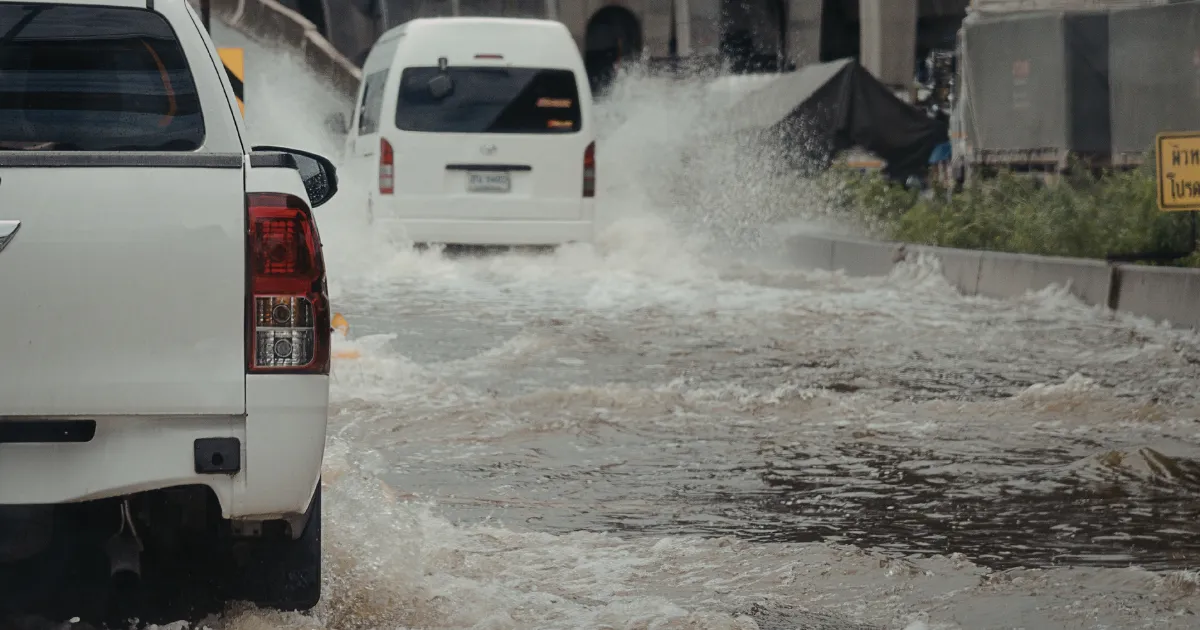
You can sell a Flagstaff house in a post-wildfire flood area, but you disclose known flooding and check the FEMA map first.
The City of Flagstaff announced on June 1, 2026, that the Spruce Wash flood projects are complete, but neither city page says FEMA has revised a flood map. Lenders require flood insurance in high-risk zones, while a cash buyer brings no lender.
This is general information, not legal advice. State rules vary.
Jump to a section
Has your house ever had flood water or a flood claim?
Free. No obligation. You choose the closing date.
Selling a house in a flood zone in Flagstaff, Arizona, has a new starting point in 2026. On June 1, 2026, the City of Flagstaff announced the completion of its Spruce Wash Flood Mitigation Suite of Projects. The city says the work will reduce the impact of post-wildfire flooding in the Paradise, Grandview, and Sunnyside neighborhoods (City of Flagstaff, June 2026).
Finished flood work does not erase a house's history. Past flooding, insurance claims, and repairs still belong in your disclosure, and your FEMA flood zone stays what the official map says. This guide covers what changed, what to check, and what to disclose. Propcash buys houses for cash in Flagstaff, and the guide is written for owners weighing a sale.
What did the Spruce Wash projects change in 2026?
The projects rebuilt the streets, channels, crossings, and basins that carry Spruce Wash storm runoff through Flagstaff neighborhoods. The city's project page says the goal was to reduce post-wildfire flooding.
Why Spruce Wash needed the work
The Museum Fire started on July 21, 2019, in the Dry Lake Hills area just above Flagstaff, inside the Coconino National Forest. It burned 1,961 acres, including a significant portion of the Spruce Wash watershed (City of Flagstaff, Spruce Wash project page, 2026). Flood modeling after the fire showed potential flood risk to neighborhoods in both Coconino County and the city.
The City of Flagstaff and the Coconino County Flood Control District both took steps right away. Then, in the summer of 2021, the city says unprecedented rain on the burn scar caused multiple rounds of flash flooding in Flagstaff neighborhoods.
What was built
The project page lists this work, designed and built from 2021 to 2026:
- Grandview Drive, rebuilt as an inverted-crown street with vertical curbs, plus new water and sewer mains
- "The Wedge," a detention basin that receives flows diverted from Spruce Wash
- A new box culvert crossing at Linda Vista Drive in place of corrugated metal pipes
- A rebuilt channel and an upsized box culvert at Cedar Avenue
- Regraded, hardened channels from Cedar Avenue to Linda Vista Drive and from Arroyo Seco Drive to Dortha Avenue
- A rebuilt inlet at Arroyo Seco Drive to capture more stormwater and a secondary outlet from the Killip School Regional Detention Basins
- A Killip Basins inlet and the Park Way basins that catch debris and sediment, funded through other sources
The page says some of the projects were funded by Proposition 441. It also says the work was built within budget and on schedule.
| When | What happened | Source |
|---|---|---|
| July 21, 2019 | The Museum Fire starts in the Dry Lake Hills and burns 1,961 acres, including much of the Spruce Wash watershed | City of Flagstaff project page |
| After the fire | Flood modeling shows potential risk to county and city neighborhoods; the city and the Coconino County Flood Control District act | City of Flagstaff project page |
| Summer 2021 | Rain on the burn scar causes multiple rounds of flash flooding in Flagstaff neighborhoods | City of Flagstaff project page |
| 2021 to 2026 | Design and construction of the projects | City of Flagstaff project page |
| June 1, 2026 | The city announces the suite of projects is complete | City of Flagstaff news release |
| FEMA map status | Neither city page names a FEMA map revision; check the address on the FEMA Flood Map Service Center | City of Flagstaff pages; FEMA |
What the projects mean for a seller
Completed flood work is a public fact you can share with buyers in the city's own words. It does not promise that any one street will stay dry, and a seller should not promise that either. A link to the city's project page often answers a buyer's first questions better than a summary.
How do you check a Flagstaff house's FEMA flood zone?
You check it on the FEMA Flood Map Service Center, which FEMA calls the official public source for flood hazard information for the National Flood Insurance Program. Enter the house's address to find the official flood map for that spot.
Reading the zone letters
FEMA marks high-risk areas, called Special Flood Hazard Areas, with zones beginning A or V. These areas face a 1-percent annual chance flood, also called the base flood or 100-year flood. Zone B or shaded Zone X marks moderate risk. Zone C or unshaded Zone X marks minimal risk.
Did the projects change the map?
The city's public pages do not say so. Neither the June 2026 announcement nor the project page mentions a FEMA map revision after the work. FEMA changes an effective map through a Letter of Map Revision, which is generally based on physical measures that affect how a flooding source behaves.
The Map Service Center also links map products for your community and Letter of Map Change files. A check there before you list shows the zone a buyer's lender will see.
Elevation certificates
The City of Flagstaff posts completed elevation certificates on its website and adds more as it receives or scans them. Older certificates may use an older elevation datum, so a surveyor can confirm the figures. A certificate on file for your house is worth printing for the sale folder.
What must a Flagstaff seller disclose about past flooding?
Arizona sellers must disclose known facts that materially affect a house's value and that the buyer does not know. The Arizona Court of Appeals recognized that duty in a 1986 termite decision (151 Ariz. 81, 725 P.2d 1115; Arizona Court of Appeals, March 1986).
The court treated a fact as material when a reasonable person would attach importance to it in deciding what to do in the deal. Known flooding, flood claims, and flood repairs can meet that test. Our guide to Arizona seller disclosure requirements covers the rest of the form.
The SPDS and the as-is question
Most Arizona sellers complete a Seller's Property Disclosure Statement, or SPDS. The Buyer Advisory comes from the Arizona Department of Real Estate and Arizona REALTORS. It describes the SPDS as a document with a variety of questions about the house and its condition (Arizona Department of Real Estate, January 2025). An as-is sale does not end the duty, and neither does skipping the form.
"A seller’s disclosure obligation remains even [i]f the buyer and seller agree that no Seller’s Property Disclosure Statement will be provided."
Buyer Advisory, Arizona Department of Real Estate and Arizona REALTORS, January 2025
What a clear flood disclosure can include
- When water reached the house, the yard, or the crawl space, and how far it came
- Any flood insurance claims and what they paid for
- Repairs, with dates and invoices
- Any FEMA or other federal disaster aid
- The FEMA flood zone and any elevation certificate
Plain dates and paperwork usually read better to a buyer than a vague note about "past water." The same advisory tells buyers to hire an inspector when a past flood is disclosed, so a repair record can answer that inspector's questions early.
Land outside city limits
The city's project page says the post-fire flood risk reached neighborhoods in Coconino County as well as the city. In an unincorporated area, a seller of five or fewer parcels of unsubdivided land must give the buyer a written affidavit of disclosure. It is due at least seven days before the transfer (A.R.S. § 33-422). The affidavit asks whether any part of the land sits in a FEMA designated regulatory floodplain.
Federal disaster aid adds a written notice
If the house received federal disaster aid that required flood insurance, federal law adds a notice. By the transfer date, the seller must tell the buyer in writing about the duty to obtain and maintain flood insurance (42 U.S.C. § 5154a). The notice goes in the documents that transfer ownership.
Skipping it carries a cost. If the buyer later lets coverage lapse and federal aid pays for flood damage, the seller can owe that amount back to the federal government.
Propcash is a direct cash homebuyer, not a law firm. For a question about your own disclosure, an Arizona real estate attorney can review your facts.
Which flood records should you gather before you sell?
Gather the records that show what happened, what was paid, and what was fixed. A buyer, an inspector, or an insurer may ask for any of them.
| Record | Where it comes from | Why it helps |
|---|---|---|
| FEMA flood zone printout | FEMA Flood Map Service Center | Shows the official zone a lender will check |
| Elevation certificate | City of Flagstaff posted certificates, or your own files | May be needed for flood insurance where floodplain data is missing |
| Five-year claims history | Your insurer, an insurance support organization, or a consumer reporting agency | Lists past claims a buyer's insurer may see |
| Flood insurance policy papers | Your policy file | Helps a buyer ask whether your policy may be assumed |
| Repair invoices and permits | Your files | Backs up each SPDS answer with dates |
| Federal disaster aid letters | Your FEMA file | Shows whether the 42 U.S.C. § 5154a buyer notice applies |
| Spruce Wash project page | City of Flagstaff | Describes the completed work in the city's words |
The claims history and elevation certificate rows come from the Arizona Buyer Advisory. It says owners may request a five-year claims history from their insurance company, an insurance support organization, or a consumer reporting agency.
How do flood insurance rules shape a Flagstaff flood area sale?
Flood insurance rules mostly affect buyers who borrow. FEMA says houses in high-risk flood areas with mortgages from government-backed lenders require flood insurance.
FEMA's agent guide adds that federally regulated lenders require it in Special Flood Hazard Areas, and that the premium must be escrowed where coverage is required. FEMA also notes that most homeowners insurance does not cover flood damage.
The 30-day wait and its exceptions
A new National Flood Insurance Program policy typically takes effect after a 30-day waiting period, according to FEMA. FEMA lists exceptions for coverage a lender requires and for coverage related to a community flood map change. For a buyer whose policy is bought when a loan is made, increased, extended, or renewed, the 30-day wait generally does not apply.
The post-wildfire exception
The program also has a post-wildfire exception. Coverage can start sooner when three things are true:
- The insured property is privately owned.
- Flooding is caused or worsened by a wildfire on federal land.
- The new, added, or increased coverage was bought on or before containment, or within 60 days after it.
The federal agency in charge of the land sets the containment date, and an NFIP adjuster reviews whether the exception applies when a claim is made. The window is tied to one fire's containment date, so it is not an open door for every later policy.
What buyers often ask
The Arizona Buyer Advisory tells buyers to ask flood insurance carriers about coverage, current and future premiums, and whether the prior owner's policy may be assumed. It also warns that premiums paid before a sale may not show what the next owner will pay. Your policy papers help a buyer get those answers quickly.
What are your options for selling in a Flagstaff flood area?
Most sellers choose between a listed sale and a direct sale to a cash buyer. Both work with a flood history on record, and the disclosure duty applies to both.
Listing with an agent
A listing reaches buyers who use mortgages. If the house sits in a Special Flood Hazard Area, a federally regulated lender will require flood insurance before closing. In a moderate- to low-risk area, FEMA notes that a lender may still require flood insurance. If the house shows well and the buyer pool is wide, a listing may net you more.
Selling as-is for cash
A cash buyer uses no mortgage lender, so no lender flood insurance requirement applies to that purchase. As-is means as-is: no repairs, no drywall work, and no cleanup before closing. You still disclose what you know.
Other rules that can shape the sale
An inherited house adds probate timing; see our guide to selling an inherited house in Flagstaff. A house on septic adds a state transfer inspection, covered in our guide to selling a Flagstaff-area house on septic.
How can Propcash help you sell a house in a Flagstaff flood area?
Propcash is a direct cash homebuyer, and we buy houses in Flagstaff as-is: no repairs, no cleaning, and no showings.
A past flood, a claim, or a FEMA zone does not have to rule out an offer. We'll make you one cash offer based on local market data and show you how we got to our number. Sellers pay no fees or commissions, and cash sales can close in as few as 7 days on the date you pick.
An offer is one option to compare with a listing, and our offers don't expire. If a cash sale isn't your best move, we'll tell you and point you to a local agent who is. When you're ready, you can get a cash offer on your Flagstaff house with no obligation.
Frequently Asked Questions
Do I have to tell a buyer that my Flagstaff house flooded in 2021?
If you know about it, past flooding is the kind of fact Arizona's disclosure duty can reach. A 1986 Arizona Court of Appeals decision recognized a seller's duty to disclose known facts that materially affect value and that the buyer does not know. A fact is material if a reasonable person would attach importance to it in the deal. Dates, claims, and repair records make that disclosure clear.
Did the Spruce Wash projects take my house out of the flood zone?
Not on their own. FEMA changes an effective flood map through a Letter of Map Revision. Neither the City of Flagstaff's June 2026 announcement nor its project page says FEMA has revised a map after the work. The FEMA Flood Map Service Center shows the official map and lists map changes, so it is the place to confirm a house's current zone.
Can a buyer get a mortgage on a Flagstaff house in a FEMA flood zone?
Yes, but the buyer will usually need flood insurance. FEMA says federally regulated lenders require flood insurance for houses in Special Flood Hazard Areas and that the premium must be escrowed. When the policy is bought as the loan is made, FEMA's usual 30-day waiting period generally does not apply.
Does an as-is sale let me skip the flooding questions?
No. The Arizona Department of Real Estate and Arizona REALTORS address this in their Buyer Advisory. It says a seller's disclosure obligation remains even if the buyer and seller agree that no Seller's Property Disclosure Statement will be provided. As-is means the buyer takes the house without repairs. It does not change what the seller must disclose.
What if FEMA disaster aid paid for flood repairs on my house?
If that aid required you to carry flood insurance, federal law requires a written notice to the buyer. Under 42 U.S.C. 5154a, the seller must tell the buyer in writing, by the transfer date, about the duty to obtain and maintain flood insurance, and the notice goes in the transfer documents. A seller who skips it can owe the federal government later flood aid paid on the house if the buyer lets coverage lapse.
Where can I find an elevation certificate for a Flagstaff house?
The City of Flagstaff's elevation certificate page lists completed certificates the city has uploaded, and the city adds more over time. The city notes that older certificates may use an older elevation datum than newer ones. If no certificate exists, the Arizona Buyer Advisory notes that an elevation survey may be needed to get flood insurance where community floodplain information is not available.
Reviewed by the Propcash Editorial Team under our editorial standards. Published by Propcash, a direct cash buyer of houses. This guide is general information. Laws, fees, and market figures change, so check the current rules for your state.
