

In Fayetteville, AR, delinquent property taxes pass from the Washington County Collector to the Commissioner of State Lands.
A parcel can be redeemed only until 4 p.m. on the last business day before the state tax sale. The Commissioner's calendar listed the 2026 Washington County sale for August 11, 2026, and since July 1, 2023, a sold parcel cannot be redeemed.
This is general information, not legal advice. State rules vary.
Jump to a section
Has your parcel been certified to the Commissioner of State Lands yet?
Free. No obligation. You choose the closing date.
If you owe delinquent property taxes in Fayetteville, AR, the debt follows a set state path. It sits with the Washington County Collector, then the Commissioner of State Lands, then goes to a public tax sale. The Commissioner's calendar listed the 2026 Washington County sale for August 11, 2026. Its notice is blunt: effective July 1, 2023, parcels sold through the office cannot be redeemed.
That makes the day before the sale the real deadline. This guide covers the calendar, the cost, and how a sale before the cutoff can pay what is owed.
How long can Fayetteville property taxes stay delinquent?
Fayetteville property taxes can stay delinquent for several years before a state tax sale, because each stage has its own waiting period. The county holds the parcel for a year, and the state then waits at least another year before it may sell.
Three statutes set the steps. Taxes unpaid after October 15 are delinquent (Ark. Code Ann. § 26-36-201). The collector holds delinquent land for one year, then certifies it to the state no later than July 1 of the following year (Ark. Code Ann. § 26-37-101). The sale date must be no earlier than one year after certification (Ark. Code Ann. § 26-37-301).
In plain terms, certification usually follows a second missed October deadline. Tax-delinquent land is never sold at the county level in Arkansas. Once the Washington County Collector certifies it, title vests in the State of Arkansas, in care of the Commissioner of State Lands.
The Washington County calendar, from October 15 to the tax sale
For a bill due October 15, 2026, the earliest state sale lands in late 2028 or later. The table follows that one bill through each stage under the statutes above.
| Stage | Date for a bill due October 15, 2026 | Who holds it | How the owner can pay |
|---|---|---|---|
| Due date | October 15, 2026 (next business day if a weekend or holiday) | Washington County Collector | Pay in full; partial payments are generally accepted up to the deadline |
| Delinquent | October 16, 2026: penalty and interest begin | Collector | Pay the Collector, or sell and pay at closing |
| County hold | One year after delinquency, through October 2027 | Collector | Pay the Collector |
| Certification | After the hold, and no later than July 1, 2028 | Commissioner of State Lands | Redeem with the Commissioner; the owner keeps the house |
| Notices | Certified mail; personal service at least 60 days out for an unconfirmed homestead; a regular-mail reminder at least 30 days out | Commissioner | Redeem; inside 30 days, cash or certified funds only |
| Redemption cutoff | 4 p.m. on the last business day before the sale | Commissioner | Last moment to redeem, or for a closing to deliver the payoff |
| State tax sale | At least one year after certification, on the date the Commissioner sets (the 2026 Washington County sale was August 11, 2026) | Commissioner | None once sold; the sale is final |
| Excess proceeds | One year after the sale | Commissioner | A former owner may apply for any surplus |
The Collector can confirm the certification date for a specific parcel. Washington County's offices are at 280 N. College Ave. in Fayetteville, and the Collector's line is (479) 444-1526 (Association of Arkansas Counties directory).
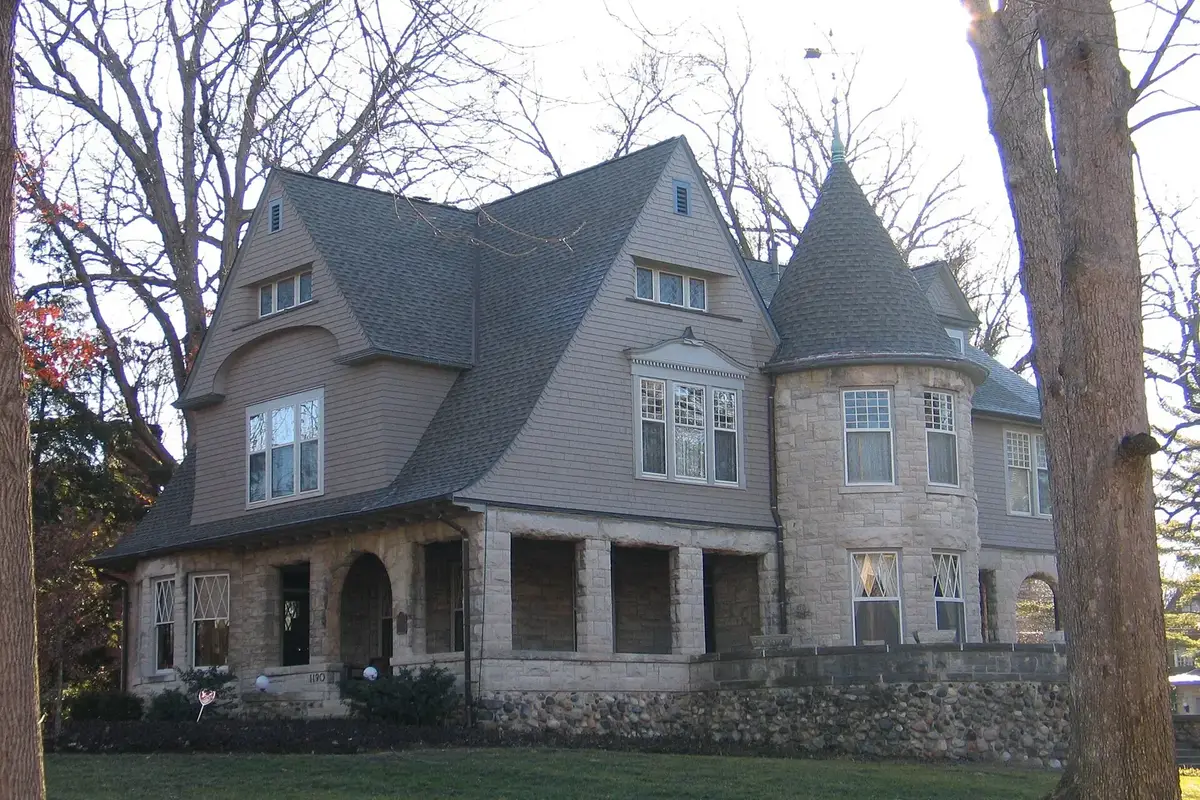
What delinquent property taxes cost in Washington County
Delinquent property taxes in Washington County carry a 10% penalty and 10% simple interest for each year of delinquency, plus county and state costs. Both start on October 16 of the year the bill goes unpaid (Act 241 of 2023, amending § 26-37-302).
Here is an illustrative example, not your figures. On a $3,000 bill, one year of delinquency adds a $300 penalty and $300 of interest. The real number comes from the Collector before certification, or from the Commissioner after it.
Another charge can land on the same tax books. A Fayetteville clean-up or demolition lien can be certified to the county collector and collected as delinquent taxes, plus a 10% collection penalty (Ark. Code Ann. § 14-54-904). Our guide to selling a house with code violations in Fayetteville covers how those liens start.
State law waives the late penalty for members of the U.S. Armed Forces, their reserve components, and the National Guard during a deployment and for one tax year after it ends (Ark. Code Ann. § 26-36-201). The tax itself is still owed.
What changes once the parcel is certified to the state?
Once a Washington County parcel is certified, you pay the Commissioner of State Lands instead of the Collector, but you still live in the house and can still redeem it. Redemption stays open until the state disposes of the parcel (Act 241 of 2023, amending § 26-37-310).
The notices the Commissioner sends
The Commissioner mails notice by certified mail to the owner at the last known address the county certified. Each interested party gets notice too, which includes anyone holding a recorded interest such as a mortgage (Ark. Code Ann. § 26-37-301). If certified mail comes back unclaimed or refused, the office resends by regular mail.
For a homestead, the rule goes further. If the office gets no proof the owner received the certified letter, it must arrange personal service at least 60 days before the sale. A regular-mail reminder of the right to redeem follows at least 30 days before an in-person sale.
How redemption works while certified
- Petition and payment: a signed, verified petition and the full balance of taxes, penalties, interest, fees, and costs.
- A 30-day quote: the total holds for 30 days unless the parcel sells, the county amends its records, or new costs are added.
- Certified funds near the end: within 30 days of the sale, payment must be cash or certified funds, including a card, an electronic check, or a cashier's check.
- A recorded receipt: the Commissioner issues a redemption deed, filed with the county circuit clerk, and it does not change who owns the house.
Anyone may redeem. State law treats a person with no ownership interest who pays the full amount as a redeemer, so an heir or a relative can step in. Our guide to selling an inherited Fayetteville house covers who can sign a deed after a death.
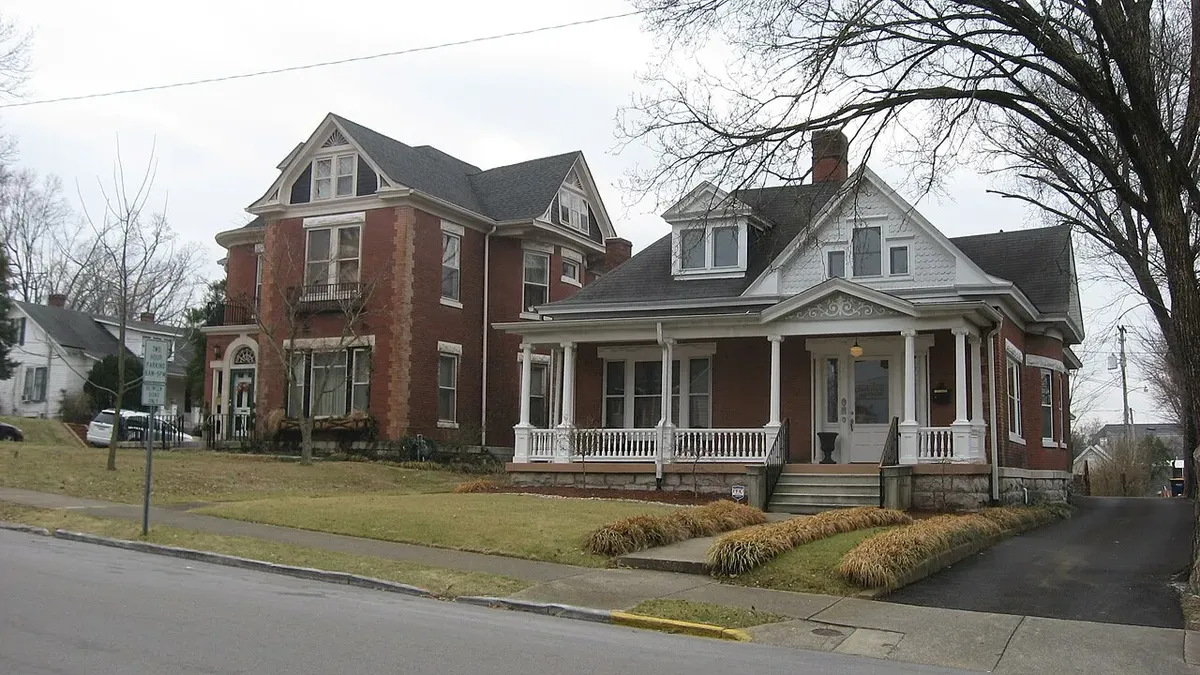
How the Washington County Arkansas tax sale works
The Washington County Arkansas tax sale is a public sale held by the Commissioner of State Lands for certified parcels nobody redeemed. The 2026 sale was set for August 11, 2026, at 10:00 a.m. in Springdale, alongside Benton County (COSL sale calendar, read November 27, 2026).
The venue was the Holiday Inn and NWA Convention Center, 1500 S. 48th St. No 2027 Washington County date was posted yet, and the 2026 statewide schedule ran from July 9 to November 10.
"Effective July 1, 2023, parcels sold through the Commissioner of State Lands office cannot be redeemed."
Arkansas Commissioner of State Lands, notice on the public sale calendar
Before 2023, an owner had 10 business days after a sale to redeem. Act 241 of 2023 rewrote § 26-37-202 and moved the deadline to 4 p.m. Central on the last business day before the sale. The Commissioner adds that the payment must be received by then, and postmarks are not accepted.
The deed and the liens that stay
A parcel that sells goes to the buyer by a limited warranty deed. The Commissioner says that deed does not insure or warrant clear or marketable title (COSL Buyers Guide). It also says liens held by cities and improvement districts are most likely not extinguished by the sale.
Parcels that do not sell
Thirty days after the public sale, parcels offered but not sold become available for sale through the Commissioner's office. An owner can still redeem one of those parcels. When the first offer to buy it arrives, the Commissioner sends certified mail with the sale date, and the same 4 p.m. cutoff applies.
Can you sell a Fayetteville house with back taxes?
Yes, you can sell a Fayetteville house with back taxes, and the title company typically pays the balance from the sale proceeds at closing. The one hard limit is timing: once a sale date is set, the payoff must reach the Commissioner before the 4 p.m. cutoff.
What a title company needs
| Item | Before certification | After certification |
|---|---|---|
| Payoff source | Washington County Collector | Commissioner of State Lands redemption total |
| Parcel identity | Parcel number and owner of record | Parcel number and the legal description on the notice |
| Paperwork | The Collector's balance | A verified redemption petition; the quote holds 30 days |
| Form of payment | Per the Collector | Cash or certified funds within 30 days of the sale |
| Deadline | Before certification | Received by 4 p.m. the last business day before the sale |
| Other liens | Mortgage, city liens, and judgments, paid or released at closing | The same, plus the recorded redemption deed |
Why the equity matters
A sale before the cutoff keeps the difference between the house's value and what is owed with the owner. Fayetteville's typical home value was $379,540 in October 2026, up 3.0% from a year earlier (Zillow ZHVI, October 2026). That is a Zillow index of all houses, not a sale price, so compare your own house's value with the payoff on your statement.
A lender with a recorded mortgage is an interested party entitled to notice. If the loan itself is behind, our Fayetteville foreclosure timeline covers that separate clock.
What can a former owner claim after the sale?
After a Washington County tax sale, a former owner cannot redeem but may claim excess proceeds, the money paid above the taxes, penalties, interest, and costs. The Commissioner says excess proceeds may be claimed one year after the sale (COSL Buyers Guide).
The U.S. Supreme Court treats that surplus as the owner's. In Tyler v. Hennepin County, 598 U.S. 631 (2023), the Court held that a county that kept the surplus from a tax sale took the owner's property. Arkansas already sets out a claim process in its distribution statute.
- Who can claim: the record owners on the sale date; heirs beyond the first degree of kinship are excluded (Ark. Code Ann. § 26-37-205).
- What to file: an application proving ownership and authority, plus a signed release deed giving up any claim to the parcel.
- The state's share: the Commissioner first keeps 10% of the remaining funds, up to $500.
- Finder fees: a fee agreement to locate or recover the money must be in writing and is capped at 10% of the recovery.
- The time limit: escrowed funds left undistributed two years from deposit pass to the county.
A surplus depends on what a buyer pays that day, and it arrives a year later. For a specific claim or notice, an Arkansas attorney can help. The Little Rock tax sale guide covers the same state process from Pulaski County.
How can Propcash help before the Washington County sale?
Propcash can help by buying a Fayetteville house as-is for cash, with the back taxes typically paid from the proceeds at closing. We make one cash offer based on local market data and show you how we got to our number.
There are no agent commissions, no fees, and no closing costs charged to you, and the closing follows the Collector's or the Commissioner's payoff. Paying the balance yourself costs less than any sale, and listing may net more if time allows. If a cash sale is not your best move, we will tell you. You can see how Propcash buys houses in Fayetteville or get a cash offer to compare with paying the Commissioner.
Frequently Asked Questions
When is the next Washington County tax sale?
The Commissioner of State Lands sets each county's date and posts it on cosl.org. The 2026 Washington County sale was held August 11, 2026, at 10:00 a.m. at the Holiday Inn and NWA Convention Center in Springdale, the same day as Benton County. As of November 27, 2026, no 2027 Washington County date was posted, so check the calendar again in the spring.
Who can pay the back taxes on a certified Washington County parcel?
Anyone can pay. Arkansas law defines a redeemer as either an owner or any other person who pays the full amount due, so a relative, an heir, or a lender can redeem. A redemption by someone other than the owner earns that person a receipt, not the house, and does not change who owns it.
Does a mailed payment count if it is postmarked before the cutoff?
No, a postmark does not count at the Commissioner of State Lands. The office says it must receive the payment by 4 p.m. on the last business day before the sale, and postmarks are not accepted. Within 30 days of the sale, state law also requires cash or certified funds, such as a cashier's check, a card, or an electronic check.
Do city liens go away when a Fayetteville parcel goes through the tax sale?
Usually not. The Commissioner of State Lands says liens held by cities and improvement districts are most likely not extinguished by its sale. A city clean-up or demolition lien can also be put on the tax books as delinquent taxes, plus a 10% collection penalty, under Ark. Code Ann. 14-54-904.
Should a former owner pay a company to recover excess proceeds?
A former owner can apply to the Commissioner of State Lands directly, with proof of ownership and a signed release deed. Arkansas law caps a written fee agreement to locate or recover the money at 10% of the recovery. The Commissioner's office says excess proceeds may be claimed one year after the sale.
Is there any penalty relief for deployed service members?
Yes. Ark. Code Ann. 26-36-201 waives the late penalty for members of the U.S. Armed Forces, their reserve components, and the National Guard during a deployment and for one tax year after it ends. The tax itself is still owed, so the Washington County Collector can confirm the balance and what proof of deployment the office needs.
Propcash is a direct cash homebuyer, not a law firm or tax advisor. Confirm your balance with the Washington County Collector or the Commissioner of State Lands, and your options with an Arkansas attorney or CPA.
Reviewed by the Propcash Editorial Team under our editorial standards. Published by Propcash, a direct cash buyer of houses. This guide is general information. Laws, fees, and market figures change, so check the current rules for your state.
