
Not automatically: a Eureka Springs B&B's status can continue after a sale only if the buyer lives there and wins conditional use approval at a public hearing.
Residential zones have been closed to new lodging permits since 2021, so many owners sell to a buyer who will live on site or sell it as a house. The city planning office can confirm the status of your parcel.
This is general information, not legal advice. State rules vary.
Jump to a section
Does your house have a lodging permit today?
Free. No obligation. You choose the closing date.
If you plan to sell a house in Eureka Springs that has run as a bed and breakfast or tourist lodging, the permit is usually the first thing a buyer asks about. Under the city's rules, the right to host overnight guests generally does not pass automatically with the deed. A buyer who wants to keep the guest rooms open typically has to apply, live on the property, and go before the planning commission.
This guide is for the operator who is tired of the turnover, and for the owner of an older Victorian deciding what comes next. It lays out what the city's published rules say, where they are still unclear, and the three paths most owners weigh. It is general information, not legal advice. The city planning office or an Arkansas attorney can confirm the facts for your parcel.
Does a tourist lodging conditional use permit transfer when you sell?
Not automatically. Per the city's published ordinance text, a B&B's status may continue after a sale only if the buyer completes the conditional use application, including a public planning commission hearing, and the new owner lives on the property.
That wording comes from Ordinance 2364, which amends the city's zoning chapter, Title 14.08. The city's ordinance list dates it December 9, 2024. We could not load the full ordinance page while writing this guide, so the wording here comes from the text the city publishes, and the planning office has the final version.
Conditional use permit B&Bs
A conditional use permit, or CUP, is a city approval for a use that a zone allows only case by case. The city's codified zoning chapter says a conditional use goes to a specific applicant, for a specific use, at a specific property, and is not transferable. It also says approval of a conditional use is not a matter of right.
The copy of that chapter we read online predates Ordinance 2364, so the newer ordinance controls where the two differ. Both point the same way: a buyer applies, and the planning commission decides.
Legal nonconforming B&Bs
A legal nonconforming, or LNC, B&B is one that ran before the rules changed and was allowed to keep going. The codified chapter says a nonconforming use may continue even with a change of title, until it is abandoned or stops for 180 days. For B&Bs and tourist lodging, it counts continual operation as being open, showing revenue, and paying taxes, with no lapse over 180 consecutive days.
Ordinance 2364 adds a condition, per the city's published text. On transfer of an LNC B&B, the owner or owners must reside on the property. A buyer who plans to live somewhere else may not be able to keep the B&B status.
Stand-alone tourist lodging
The codified chapter says a tourist lodging permit's status may be transferable upon sale, provided the buyer goes through the conditional use process with a public planning commission hearing. Whole-house lodging in residential zones has been closed to new permits since 2021, so a grandfathered permit is an unusual asset. Whether Ordinance 2364 changed this path is a question for the planning office.
| Your house today | What the published rules say about a sale | What a buyer generally has to do |
|---|---|---|
| B&B with a conditional use permit | The permit is not transferable (codified chapter). Status may continue on sale (Ordinance 2364). | Apply for conditional use, attend a public hearing, and live on the property |
| Legal nonconforming B&B | The use continues with a change of title unless abandoned or stopped for 180 days (codified chapter). | Live on the property (Ordinance 2364) |
| Stand-alone tourist lodging permit | Status may be transferable upon sale (codified chapter). Confirm whether Ordinance 2364 changed this. | Apply for conditional use and attend a public hearing |
| House rented for stays longer than 30 days, or lived in | No special lodging permit is required for rentals over 30 days (Arkansas Nonprofit News, April 2022). | Nothing lodging-related |
What does a buyer have to do to keep the B&B open?
A buyer who wants to keep the B&B running typically files a conditional use application, waits for a public hearing, and needs a planning commission vote. Approval is not automatic, and neighbors get notice first.

The steps below come from the codified zoning chapter as published before Ordinance 2364. The newer ordinance may have changed some details, so the planning office can confirm the current process.
- Application. The application states the number of lodging units and the parking spaces available.
- Hearing date. Once the application and fee are complete, the commission schedules a public hearing at its next scheduled meeting.
- Newspaper notice. Notice runs in a local newspaper at least 15 days before the hearing.
- Neighbor notice. Owners within 200 feet get certified mail at least 10 days before the hearing.
- Protest rule. If more than 20% of adjacent owners object in writing, approval needs three-fourths of the full commission, and never fewer than four votes.
- Decision. The commission grants or denies the permit and may attach conditions.
- Appeal. An appeal goes to the city council if filed within 15 days of the decision.
- After a denial. The same request generally cannot be reconsidered for 12 months, with some exceptions.
On top of these steps, Ordinance 2364 requires the new owner to reside on the property. The older chapter allowed an owner or a resident manager to live on site, so this is a real change for buyers who hoped to hire a manager.
How the hearing fits a sale contract
Because the hearing comes after a complete application and published notice, its timing rarely lines up neatly with a typical closing. Some sellers and buyers make the sale contingent on the permit. Others price the house as a residence and treat a permit as a bonus. An Arkansas real estate attorney can explain how a permit contingency would work in your contract.
Why is the buyer pool narrower in R-1, R-2 and R-3?
New lodging permits in the residential zones have been closed for years, so the only lodging businesses left there are the ones already permitted. A buyer generally cannot plan to open a new B&B or short-term rental in a residential-zone house.
The city's published text of Ordinance 2364 says B&Bs, except existing LNC properties and CUPs at the time of the ordinance, are not permitted in R-1, R-2 and R-3. Earlier, in October 2021, the council passed Ordinance 2311 by unanimous vote, Arkansas Nonprofit News reported, and the city stopped issuing tourist lodging permits in residential areas. That ordinance exempted about two dozen residential properties that already held a permit and business license.
| When | What the city did | Source |
|---|---|---|
| August 2021 | Approved a nine-month moratorium on conditional use applications for tourist lodging in R-2 and R-3 | KY3, August 6, 2021 |
| October 2021 | Passed Ordinance 2311: no new tourist lodging permits in residential areas, about two dozen properties grandfathered | Arkansas Nonprofit News, April 2022 |
| July 22, 2024 | Resolution 865: moratorium on new B&B conditional use permits, or changes to existing ones, in R-1, R-2 and R-3, through December 31, 2024 | City resolution text |
| December 9, 2024 (city list date) | Ordinance 2364: B&Bs not permitted in R-1 to R-3 except existing LNC and CUP properties; owner must reside on transfer | City ordinance text |
KY3 reported that the council approved the nine-month moratorium in early August 2021, after neighbors complained about overnight renters. The rules also carry a penalty: unpermitted short-term operators face a $250 fine for each offense in every 24-hour period, according to the 2022 Arkansas Nonprofit News report.
Is the B&B moratorium still in effect?
The status of Resolution 865 today is unclear. The city's published text describes a moratorium from July 22, 2024 through December 31, 2024, and we found no primary source showing an extension or an end. The city clerk can say whether it still applies, which matters to a buyer who wants to change the number of units.
The 200-foot rule in R-1
The codified chapter bars a new conditional use permit in R-1 within 200 feet of an existing conditional or LNC use offering the same or similar services. For a Victorian on a street with other inns, that rule can narrow what a future owner may add.
Can a lodging permit lapse or be revoked before the sale closes?
Yes. The codified chapter lets the city revoke a conditional use permit for violating any permit condition, and an LNC B&B can lose its status after a lapse of more than 180 consecutive days.
Before revoking, the city notifies the permit holder, who may be heard at the commission meeting. If the holder does not appear or show good cause, the permit is revoked and the use must stop. Owners winding down sometimes close the guest rooms early. For an LNC B&B, a long closure could put the status at risk, and the planning office can say how the city counts a lapse for your B&B.
Which historic district rules follow the house to a buyer?
In the historic district, exterior work generally needs a Certificate of Appropriateness from the Historic District Commission, and that rule applies to every owner. The sale itself is not an exterior change, but the buyer's plans for the house often are.
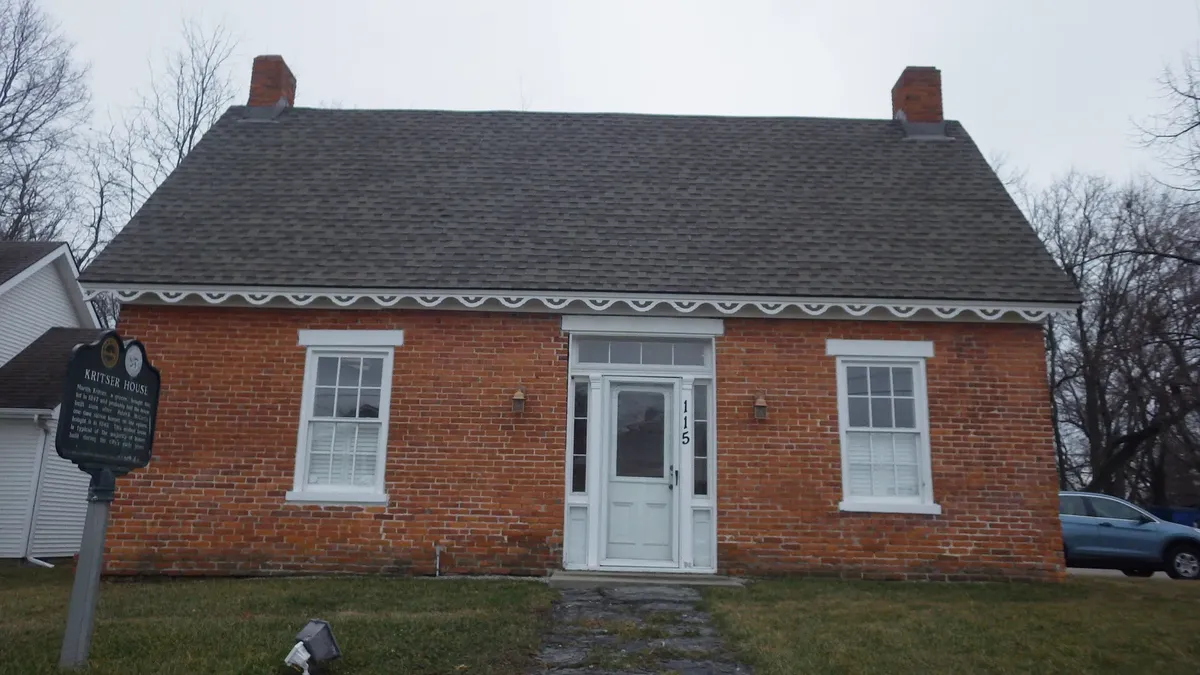
The city's Historic District FAQ says a certificate is required for any work on the exterior of a building or on built site improvements. It describes three levels of work:
- Level I, minor: maintenance such as roof repair and painting. Level I work with no material or color change may get administrative approval at City Hall.
- Level II: changes that do not alter the building's shape, contour, or size.
- Level III, major: changes to size, roofline, or footprint, and demolition.
The city's page also says approved work must be finished within 12 months of approval, with one six-month extension available. Separately, the codified chapter says a house modified for use as a bed and breakfast must meet commercial wiring and plumbing requirements. A buyer turning an inn back into a single house, or the other way, may face both reviews.
Arkansas sellers still cannot hide a known defect. Our guide to what Arkansas sellers must disclose covers those rules, and they apply in Carroll County the same way they do in Pulaski County.
What are your options to sell a house in Eureka Springs that ran as a B&B?
Most owners weigh three paths: sell to a buyer who will live there and seek the permit, sell it as a house, or keep running it. Each path has a different buyer pool and a different clock.
| Path | Who can buy or run it | What the city requires | What sets the timing |
|---|---|---|---|
| Sell as a lodging business | A buyer who will reside on the property | Conditional use application and a public hearing | Hearing at the next scheduled meeting, after 15 days' newspaper notice |
| Sell as a house | Owner-occupants, long-term landlords, cash buyers | No lodging approval for stays over 30 days; exterior work still needs a certificate in the historic district | The buyer's financing and your chosen closing date |
| Keep running it | You | Keep meeting permit conditions; for an LNC B&B, no lapse over 180 consecutive days | Your own plans |
Selling as a lodging business
This path may suit an operator whose guest book and reviews carry real value. The buyer has to qualify, live there, and get through the hearing, so the pool is small and the closing date is less certain. Some sellers find that a good fit is worth the wait.
Selling it as a house
Zillow's Home Value Index put the typical Eureka Springs house at about $312,800 in September 2026, up 3.7% from a year earlier. A house sale skips the permit question entirely. The buyer still inherits the historic district rules, the steep lot, and any repairs an older Victorian needs.
Propcash is a direct cash buyer, and we buy houses as-is. Our offer typically prices the house as a house, so the permit hearing does not hold up the sale, and you pick the closing date. Our Eureka Springs cash offer page covers how that works in town.
Keeping it running
If the business still covers its costs and you still want to host, keeping it is a real option. The residency rule and the residential-zone limits make an existing permit hard to replace once it is gone. If you rent rooms or the whole house for longer than 30 days instead, our guide to selling a rental with tenants in place covers how Arkansas leases carry over in a sale.
Whichever path you take, Propcash can put a cash number next to your other options, with no obligation. You can request a cash offer online, or browse more Arkansas seller resources.
Common questions about selling a Eureka Springs B&B
Can a buyer run my Eureka Springs house as a short-term rental after I sell?
In the R-1, R-2 and R-3 zones, generally no. Since Ordinance 2311 in October 2021, the city has not issued new tourist lodging permits in residential areas, and unpermitted operators can face a $250 fine for each 24-hour period. Rentals longer than 30 days do not need a special lodging permit.
Does the new owner of a Eureka Springs bed and breakfast have to live there?
Per the city's published text of Ordinance 2364, yes. On transfer of an LNC B&B, or continuance of a conditional use permit under new ownership, the owner or owners must reside on the property. The older zoning chapter allowed an owner or a resident manager to live on site.
How long does a conditional use hearing take in Eureka Springs?
No fixed total appears in the code we read. Once the application and fee are complete, the planning commission schedules a hearing at its next scheduled meeting. Notice must run in a newspaper at least 15 days before, and neighbors within 200 feet get certified mail at least 10 days before.
Can a Eureka Springs bed and breakfast for sale include the permit in the price?
A buyer can pay for a going business, but the permit itself does not pass automatically with the deed. Under the city's rules, the buyer generally has to apply for conditional use, attend a public hearing, and live on the property. Some contracts make the sale contingent on that approval, which an Arkansas attorney can explain.
Does the Historic District Commission have to approve a sale?
Nothing we read requires commission approval for a sale itself. The commission reviews exterior work, and the city requires a Certificate of Appropriateness for any work on a building's exterior or built site improvements. A buyer who plans exterior changes would apply after closing, or earlier if the contract allows it.
Can I sell my Eureka Springs inn as-is without a lodging permit?
Yes, you can sell it as a house, without any lodging permit going along. A cash buyer such as Propcash typically prices it as a house and can buy it as-is. You still cannot hide a known defect, and the historic district rules stay with the house.
Reviewed by the Propcash Editorial Team under our editorial standards. Published by Propcash, a direct cash buyer of houses. This guide is general information. Laws, fees, and market figures change, so check the current rules for your state.