

Yes, you can usually sell a condemned house in Little Rock until the city demolishes it, and in 2019 the city took one sold house off its demolition list.
Little Rock condemns unsafe houses by Board of Directors ordinance, can raze them, and files a lien for the cost. Recent ordinances budgeted roughly $7,500 to $9,500 per house.
This is general information, not legal advice. State rules vary.
Jump to a section
Has the city sent you a notice about the house?
Free. No obligation. You choose the closing date.
If the City of Little Rock has cited or condemned a house you own or inherited, you may still be able to sell it. Many owners try to sell a condemned house in Little Rock before the city's demolition crew arrives, because the city can raze the structure and file a lien for the cost.
This guide walks through how Little Rock condemns a house, what the city's own ordinances show about demolition costs and liens, and the choices an owner usually has: repair, demolish, let the city act, donate, or sell.
What does condemned mean in Little Rock?
In Little Rock, a condemned house is one the Board of Directors has declared, by ordinance, a structural, fire, and health hazard and a public nuisance. The same ordinance usually authorizes city staff to raze the structure and file a lien for the cost.
A typical residential condemnation ordinance from December 2020 says the structures were "run-down, dilapidated, unsightly, dangerous" and that the owners had received legal notice "to either rehabilitate or remove" them. It then directs the Housing and Neighborhood Programs Department to raze them and lien the property under Little Rock Rev. Code §20-29.
How a house gets on the list
The process starts with Code Enforcement. According to the city's Code Enforcement Division, officers enforce the Minimum Housing Code, including houses in disrepair and houses that have sustained fire damage. Structures declared unsafe for occupancy go to the Board of Directors for condemnation approval.
Once a structure is condemned, the department awards demolition contracts and supervises the work. Residents can report a vacant, unsecured, or dilapidated structure to a Neighborhood Resource Center or by calling 311, so a citation can start with a neighbor's call.
- Complaint or inspectionA 311 call or a Code Enforcement officer flags the house
- Declared unsafeCode Enforcement finds the structure unsafe for occupancy
- Notice to the ownerThe owner is told to rehabilitate or remove the structure
- CondemnationThe Board of Directors condemns it by ordinance as a public nuisance
- Demolition approvedA Board ordinance funds demolition from the city's demolition account
- After demolitionThe city files and enforces a lien for the cost
The code sections behind it
The city's one-page list of code enforcement sections groups unsafe housing under Chapter 20, Article 2. It names failure to repair or demolish an unsafe structure (§20-24), failure to vacate one (§20-30(a)), occupying one (§20-30(b)), and failure to board and secure.
Fire damage, a failing roof, or years of vacancy can all lead to a citation. The label is about the structure's condition, not about the owner. A cited house may belong to an heir, to an owner who moved away, or to someone who could not afford a large repair.
What happened when a condemned Little Rock house was sold?
In at least one recorded case, the city took a condemned house off its demolition list after it was sold. An October 2019 ordinance removed 7911 Woodhaven Drive from a June 2019 condemnation list.
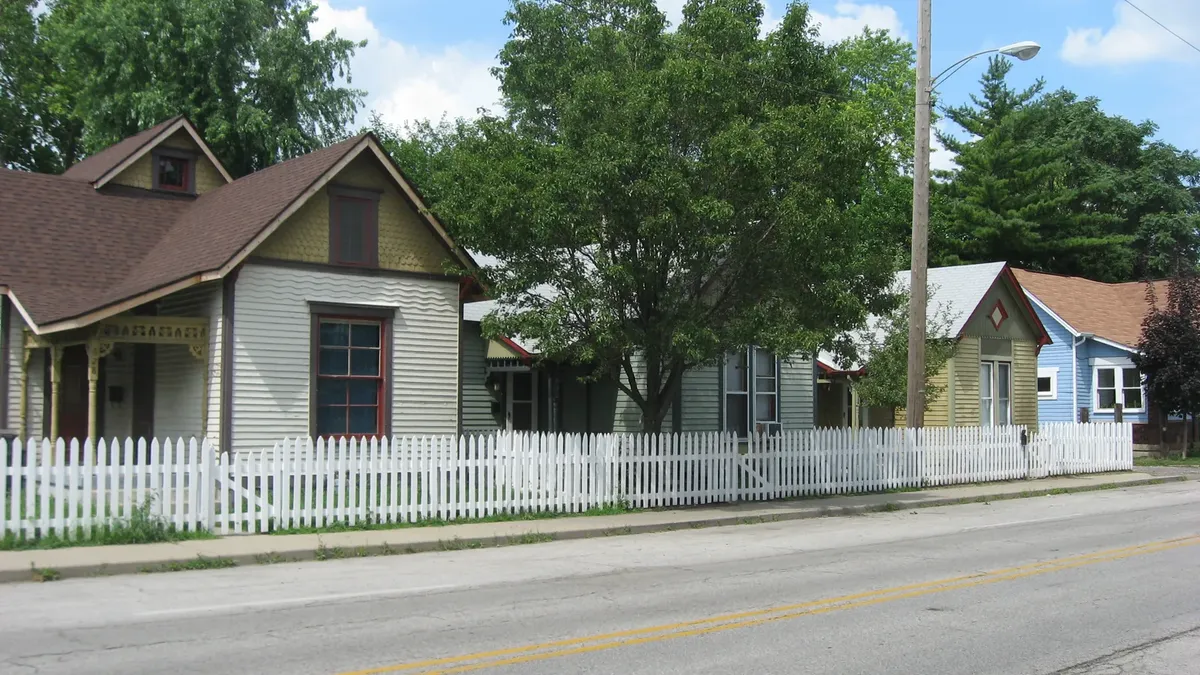
The ordinance gives the reason in one line: the house "has been sold and the new owner approved to apply for a permit." It also notes that the estimated $4,800 cost to demolish and remove the structure would not be charged to the city's demolition account. The two other houses on that list stayed condemned.
One case does not set a rule, and the city's ordinance does not say how long the new owner had to finish the work. It does show the path many owners never hear about. A buyer who plans to repair a condemned house can work with the city on permits, and the demolition may never happen.
What does demolition cost an owner in Little Rock?
Little Rock's recent demolition ordinances budget roughly $7,500 to $9,500 per house, and the city can recover those costs from the property through a lien. The exact charge for a given lot depends on the contract, so the figures below are city estimates, not bills.
The Board's June 3, 2025 agenda carried an ordinance for ten severely dilapidated residential structures, capped at $95,000. The staff memo described them as "severely dilapidated, deteriorated, burned" and said the owners had abandoned them or asked the city to demolish them.
The August 5, 2025 agenda added six more structures at up to $45,000. The ordinance on the August 18, 2026 agenda listed twelve, with a cap of $90,000, and authorized the city "to assess all costs, including administrative and lien amounts" against each property.
| Board agenda | Structures | Cost cap | First declared unsafe | Outstanding liens listed |
|---|---|---|---|---|
| June 3, 2025 | 10 | Up to $95,000 | November 2005 to November 2024 | $0 to $1,555.40 per property |
| August 5, 2025 | 6 | Up to $45,000 | June 2014 to March 2024 | None to $996.74 per property |
| August 18, 2026 | 12 | Up to $90,000 | May 2008 to July 2025 | None to $2,729.30 per property |
Sources: the City of Little Rock Board of Directors ordinances and Exhibit A property lists linked above. Per-house figures are the cost cap divided by the number of structures.
How long the city waits
The exhibits show that the gap between an unsafe finding and demolition varies widely. One house on the June 2025 list was first declared unsafe in November 2005, while another was declared unsafe in November 2024. The exhibits do not show a fixed countdown between the two.
The city also tracks the volume. Its 2022 Code Enforcement numbers show 23,080 service requests opened, 68 structures boarded and secured, and 66 demolitions across the city's seven wards. Most of the 2025 and 2026 demolition addresses sit in Ward 1.
What are your options with a Little Rock unsafe structure?
An owner of a Little Rock unsafe structure usually has five paths: repair it, demolish it privately, let the city demolish it and carry the lien, offer it to the Land Bank, or sell it. Each one trades money, time, and effort differently.
Repair and pull permits
Rehabilitation is the outcome the city's notices ask for. If you have the money and the time, repairing a house can keep it in the family or restore its value. It usually means permits and inspections, and a cited house often needs the most expensive systems work first.
Demolish it yourself
The condemnation notices give owners the choice to "remove" the structure themselves. You would pay a contractor directly, and the lot that remains is often worth less than a repaired house would be.
Let the city demolish it
Some owners ask the city to demolish. The 2025 and 2026 ordinances say each listed structure was abandoned or that the owners "requested the city to demolish them." That route can end the safety problem, but the cost follows the property as a lien, and the house is gone.
Offer it to the Land Bank
The Land Bank Commission was created in 2008 to acquire vacant, abandoned, tax-delinquent, and city lien property. Its May 2023 policies list donations by private owners and houses under a demolition order among the properties it may consider.
The same policy limits donations. The commission accepts donated property only in its focus neighborhoods, wants a funding source for any immediate maintenance, does not set a donation value for taxes, and may refuse any property.
Sell before the city acts
A sale moves the house, and the repair decision, to a new owner. The Woodhaven Drive ordinance shows how that can work when the buyer is approved to apply for a permit. The next section covers who usually buys a condemned house and how the sale tends to go.
How do you sell a condemned house in Little Rock?
Most owners who sell a condemned house in Little Rock sell it as-is to a cash buyer who plans to repair it. A financed buyer is often a poor fit, because a lender generally wants a house that is safe to live in before it will make a loan.

Our guide to selling a house as-is in Little Rock explains why financed sales of older houses stall over repairs, and what Arkansas does and does not require a seller to disclose. A condemnation is a public ordinance with the address and parcel number on it, so a buyer can usually find it.
What helps a sale go smoothly
- The city's notices. Any letter from Code Enforcement, plus the Board ordinance that lists the house, shows a buyer exactly where things stand.
- The current status. Code Enforcement can say whether demolition has been approved or scheduled. Its manager is listed at City Hall, 500 West Markham Street.
- Lien payoffs. Any city lien on the property generally has to be paid or cleared at closing, often from the sale proceeds.
- Who can sign. If the owner of record has died, the heirs may need probate before they can sell. Our guide to selling an inherited house in Little Rock covers Pulaski County probate.
Where a direct cash sale fits
Propcash is a direct cash buyer that buys houses as-is, and an open code case or a condemnation does not, by itself, keep a house from getting a cash offer. We can make you a cash offer based on local market data and show you how we got to our number. There are no repairs, no cleanout, and no fees to you.
A cash sale can often close in as few as 7 days, which may matter when a demolition date is close. If you have the money to repair and want to keep the house, that may serve you better, and we'll say so. You can get a cash offer to compare against your other choices, or read more on our Little Rock cash sale page.
Selling a Little Rock code violation house before condemnation
A Little Rock code violation house that has not been condemned usually has more room to sell, because the Board of Directors has not voted on it. The earlier the sale, the more choices an owner tends to keep.
Code Enforcement handles far more than condemnations. Officers investigate trash, high grass, unsecured vacant houses, and Minimum Housing Code problems such as disrepair and fire damage. A notice for one of those is a warning, and many owners use the time to decide whether to fix the house or sell it.
If your house is in the value-tier corridors of southwest Little Rock, that page covers the local picture. Our Arkansas cash sale page covers the rest of the state, and the Little Rock tax sale guide explains what happens when back taxes pile up on a vacant house too.
Common questions about condemned houses in Little Rock
Can you live in a condemned house in Little Rock?
Generally not. The City of Little Rock lists failure to vacate an unsafe structure and occupying an unsafe structure as code violations under Chapter 20 of its code. If the house has been declared unsafe for occupancy, Code Enforcement at City Hall or by phone at 311 can confirm its status and what the city expects next.
How much does Little Rock charge to demolish a condemned house?
The city does not publish a flat fee. Recent Board of Directors ordinances budgeted up to $95,000 for ten structures in June 2025, up to $45,000 for six in August 2025, and up to $90,000 for twelve in August 2026, which works out to roughly $7,500 to $9,500 per structure. Condemnation ordinances direct the city to file and enforce a lien against the property for the cost of razing and removing the structure.
Will a demolition lien stop a sale of the lot?
A lien usually does not stop a sale, but it generally has to be paid or cleared before a buyer gets clear title, often from the sale proceeds at closing. The city's 2026 demolition ordinance authorizes it to assess all costs, including administrative and lien amounts, against each property and to recover them under Arkansas law. A title company or a real estate attorney can confirm the payoff for a specific lot.
Can an owner ask the City of Little Rock to tear the house down?
Yes, the city's demolition ordinances say some structures are on the list because the owners requested that the city demolish them. That route still ends with a city demolition, and the condemnation ordinances tie a lien for the cost to the property. Code Enforcement can explain how a request works and what it may cost.
Can you donate a condemned house to the Little Rock Land Bank?
Sometimes. The Little Rock Land Bank Commission lists properties offered by a private owner, properties with a city lien for code violations, and properties under a demolition order among those it may consider. Its May 2023 policy says it accepts donations only in its focus neighborhoods, needs a funding source for any immediate maintenance, and may refuse any donation.
Does a buyer find out that a house is condemned?
Usually, yes. Little Rock condemns houses by public ordinance of its Board of Directors, and each ordinance names the street address, owner, and parcel number. A buyer's title search or a call to Code Enforcement can turn it up, so many sellers raise it at the start.
Reviewed by the Propcash Editorial Team under our editorial standards. Published by Propcash, a direct cash buyer of houses. This guide is general information. Laws, fees, and market figures change, so check the current rules for your state.