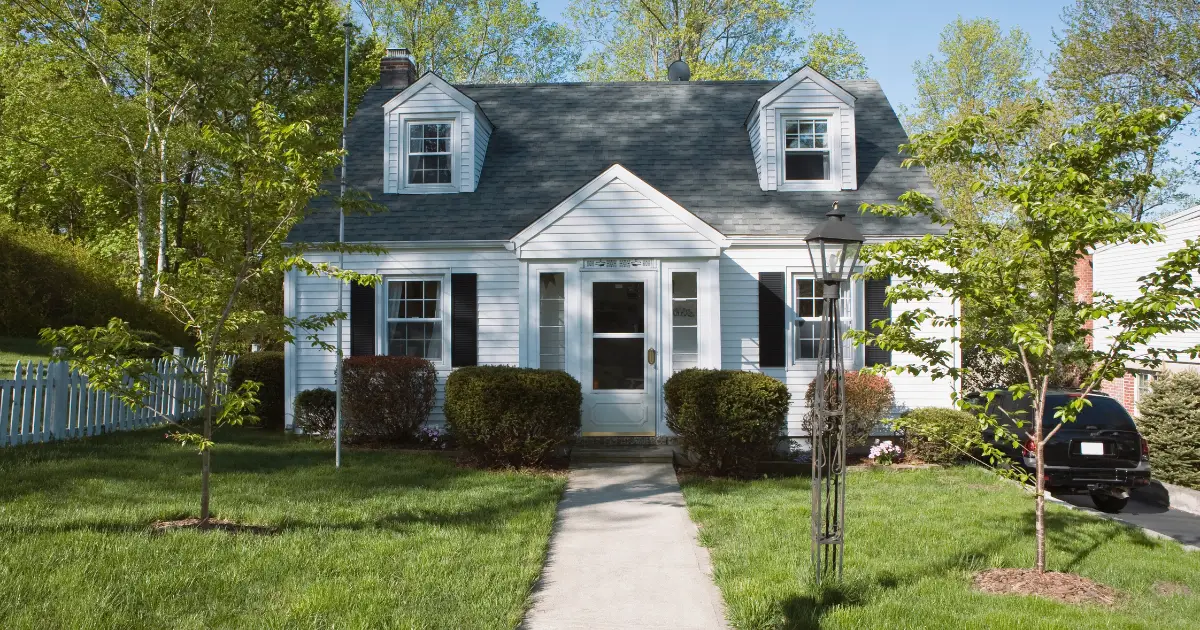
Often you can skip full probate: a parent's main Redding house worth $750,000 or less can pass to heirs by one court petition.
The Shasta County court's probate page still lists older $166,250 and $150,000 figures, but the Judicial Council lists $750,000 for deaths on or after April 1, 2025. Redfin's Redding median sale price was $399,810 for the three months ending September 2026.
This is general information, not legal advice. State rules vary.
Jump to a section
Did your parent live in the Redding house?
Free. No obligation. You choose the closing date.
Selling an inherited house in Redding, California often starts with a smaller court step than families expect. The catch is a detail on the court's own website. Its probate page still lists a $166,250 threshold and a $150,000 figure, while the Judicial Council's self-help page lists $750,000 for deaths on or after April 1, 2025.
This guide is written for heirs, including heirs who live far from Shasta County. It is general information, not legal advice, and there's no rush to decide.
Do you need probate to sell an inherited house in Redding?
Often not, when the house was your parent's primary residence in California and its gross value is $750,000 or less. An heir can then ask the Shasta County Superior Court for one order saying the house passes to them, once 40 days have passed since the death (Cal. Prob. Code § 13151).
For the house itself, some legal step is usually needed either way. Title passes at death to the people named in the will, or to the heirs under intestate succession (Cal. Prob. Code § 7000). The house stays subject to administration, though, unless the law provides otherwise (Cal. Prob. Code § 7001).
Here are four common routes when the house is not in a trust. The Judicial Council's limits below apply to deaths on or after April 1, 2025.
| Route | What it moves | Limit | Earliest start |
|---|---|---|---|
| Small estate affidavit (§ 13100) | Money, belongings, and other personal property. No court case. | $208,850 gross estate, not counting a house in a § 13151 petition | 40 days after the death |
| Primary residence petition (§ 13151) | The parent's main house in California, by court order | $750,000 gross value of that house | 40 days after the death |
| Real property affidavit (§ 13200) | Real property of small value, filed with the court | $69,625 of California real property | Six months after the death |
| Full probate | Any estate, including a rental, a second house, or a house over the cap | No limit | A petition for probate; the court sets the hearing |
The date of death sets the cap
The $750,000 figure covers deaths from April 1, 2025 through March 31, 2028 (Cal. Prob. Code § 13152(f)). For deaths from April 1, 2022 through March 31, 2025, the Judicial Council lists a house cap of $184,500. Redfin's Redding median sale price of $399,810 is more than twice that number. A family still settling a parent's 2023 or 2024 death may need full probate after all.
Why does the Shasta County court page list different numbers?
The court's probate page still prints dollar figures from before the 2025 change, while the statute and the Judicial Council print the current ones. Here is how the Shasta County Superior Court's probate page describes the threshold today:
"If an estate exceeds $166,250.00, and if the assets are in the name of the deceased person, only, a probate will generally be required."
Shasta Superior Court, Probate Division page
The same page lists "estates not exceeding $150,000.00" among the cases that need no probate. The $166,250 amount is the Judicial Council's limit for deaths before April 1, 2022, for both the affidavit and the house petition.
| Date of death | Affidavit limit (§ 13100) | House petition limit (§§ 13151-13154) |
|---|---|---|
| Before April 1, 2022 | $166,250 | $166,250 |
| April 1, 2022 to March 31, 2025 | $184,500 | $184,500 |
| On or after April 1, 2025 | $208,850 | $750,000 (main house only) |
The house petition jump came from Assembly Bill 2016, which raised that limit to $750,000 and limited it to the decedent's main home in California, according to the Judicial Council. The affidavit limit rose to $208,850 in the council's April 1, 2025 adjustment. The council adjusts these amounts every three years, and its next update is April 1, 2028. A house petition must attach the council's list of adjusted amounts in effect on the date of death (Cal. Prob. Code § 13152(e)).
The court page also makes a point that still holds. It notes that some legal process is often needed even without probate, "especially true when an estate owns an interest in real property."

How do Redding prices compare with the $750,000 cap?
Redding's typical sale price sits about $350,000 under the cap. Redfin reports a median sale price of $399,810 for the three months ending September 2026, up 3.9% from a year earlier (Redfin, September 2026).
Zillow measures something else: a smoothed typical value for all houses, not just the ones that sold. Its Redding value was $385,253 in September 2026, down about 0.4% from a year earlier (Zillow ZHVI, September 2026). Our Redding market report has more.
A citywide median is not your parent's house, so three limits still matter:
- Gross value counts. The Judicial Council says the debts or mortgages of the person who died are not subtracted when you value an estate.
- A probate referee sets the number. The petition attaches an inventory and appraisal by a referee the State Controller appointed for the county where the house sits (Cal. Prob. Code § 13152(b)).
- Only the main house qualifies. A Redding rental or a second house goes through full probate or a trust. The main house need not be where your parent lived at death, so a move to care may not rule it out (Cal. Prob. Code § 13150).
Where is Shasta County probate filed?
Shasta County probate cases are filed with the Superior Court's Civil Division at the Main Courthouse, 1515 Court Street, Redding. The court's probate page states plainly that "Probate matters are filed in the Civil Division."
The case belongs in Shasta County when your parent was domiciled here, wherever the death happened (Cal. Prob. Code § 7051). The house petition goes to the court of that same county (Cal. Prob. Code § 13151).
The original will
Whoever holds the original will must deliver it to the court clerk within 30 days of learning of the death, unless a petition for probate is filed first (Cal. Prob. Code § 8200).
How long it takes
The court's page says "a probate can be completed in six months or less" in a simple estate where property does not need to be sold. It adds that a complicated estate, or heirs who cannot work together, could take much longer. A house petition runs on the court's calendar too, so no family can promise a closing date before the judge rules.
How does the 40-day house petition work?
The petition follows a fixed order: wait 40 days, get the referee's appraisal, file, give notice, and attend the hearing. After filing, the court's calendar sets the pace.
| Step | When | Rule |
|---|---|---|
| Wait out the 40 days | At least 40 days after the death | § 13151(a) |
| Inventory and appraisal by a probate referee appointed for Shasta County | Before filing | § 13152(b) |
| Attach any will you claim under, any consent from a personal representative, and the Judicial Council's list of amounts | With the petition | § 13152(c)-(e) |
| File the verified petition with the Civil Division, 1515 Court Street | Filing day | § 13152(a); court page |
| Deliver notice of the petition to each heir and devisee named in it | Within five business days of filing | § 13151(b) |
| Give notice of the hearing to the same people | Before the hearing | § 13153 |
| Court order that the house passes to the petitioners | When the judge rules | § 13154 |
The judge issues the order only after finding four things (Cal. Prob. Code § 13154):
- The house's gross value is $750,000 or less.
- At least 40 days have passed since the death.
- No estate case is open or was held, or the personal representative consented in writing.
- The house passes from the parent to the petitioners.
Once the order is signed, the heirs it names hold the house and can sell it. The closing follows that order. One cost comes with the shortcut: an heir who takes the house this way is personally liable for the parent's unsecured debts, up to the house's value at death minus liens (Cal. Prob. Code § 13156).
How does a sale work if the estate needs full probate?
In full probate, a personal representative with full authority under the Independent Administration of Estates Act can sell the house without a court confirmation hearing. The statute gives that person "the power to sell or exchange real property of the estate" (Cal. Prob. Code § 10511).
A sale under that authority skips the court confirmation rules, including published notice of sale and the floor of 90 percent of appraised value (Cal. Prob. Code § 10503). A representative with only limited authority needs court supervision to sell real property (Cal. Prob. Code § 10501).
The notice of proposed action
Before an independent sale, the personal representative sends a notice of proposed action. Here is what the statutes require of it:
- Who receives it: each known heir and devisee whose interest the sale affects, plus anyone who asked for special notice (§ 10581).
- What it states: the material terms, including the sale price and any agent or broker commission (§ 10585).
- When it goes out: at least 15 days before the date in the notice (§ 10586).
- What an objection does: a written objection moves the sale into the court-supervised process (§ 10589).
An heir who gets the notice and does not object generally waives the right to have the court review the sale later (Cal. Prob. Code § 10590). Without independent authority, every sale of real property is reported to the court and confirmed before title passes (Cal. Prob. Code § 10308). The closing then follows that confirmation.
Will Prop 19 change the tax bill on an inherited Redding house?
Usually it does, unless a child moves in. The State Board of Equalization says the parent-child exclusion holds when a child "resides in the residence and applies for either the homeowners' or disabled veterans' exemption within one year of the transfer."
The break has limits even for an heir who moves in. The value limit is the current taxable value plus $1,000,000, as biennially adjusted. The claim form, BOE-19-P, is due within 3 years from the date of death, or before a transfer to a third party, whichever comes first. A rental house does not qualify, because the exclusion covers only a family home or a family farm.
An heir who later moves out loses the exclusion. The BOE says the new taxable value is then the house's fair market value on the date it was inherited, adjusted for inflation each year after. Claims go to the county assessor's office where the house sits. Our guide to Prop 19 and inherited California houses covers the forms in more detail.
What must an heir disclose when selling a Redding house?
It depends on who signs as seller. California's transfer disclosure rules do not apply to sales ordered by a probate court, or to sales by a fiduciary administering a decedent's estate (Cal. Civ. Code § 1102.2).
An heir who took title by a petition order and then sells is selling as an owner, so those exemptions may not reach the sale. The same section exempts a sale from one co-owner to another, so one sibling buying out the others is treated differently. Any waiver of the disclosure rules is void (Cal. Civ. Code § 1102).
The fire hardening notice
An owner selling a house in a high or very high fire hazard severity zone owes an extra notice if the house was built before January 1, 2010 (Cal. Civ. Code § 1102.6f). The notice lists features the seller knows of that can make a house vulnerable to embers:
- Vents with openings over one-eighth of an inch, or vents that are not flame and ember resistant
- Roofs of untreated wood shingles or shakes
- Combustible landscaping or materials within five feet of the house
- Single pane or nontempered glass windows
- Loose bird stopping or flashing, and gutters without noncombustible covers
Since July 1, 2025, the notice also carries a list of low-cost retrofits and says which were done while the seller owned the house. A seller in those zones also provides defensible space documentation, or signs an agreement that the buyer will obtain it (Cal. Civ. Code § 1102.19). Our guide to selling a Redding house in a fire hazard severity zone covers the maps and the paperwork.
While the house sits empty
An empty house still needs care while the court step runs: locked doors, intact windows, and a tended yard. Some out-of-area heirs ask a neighbor or relative to check on it.
How can Propcash help with an inherited Redding house?
Propcash is a direct cash homebuyer, and we buy Redding houses as-is: no repairs, no cleaning, and no cleanout. Take what you want, leave the rest. Our offers are based on local market data, and we'll show you how we got to our number.
Our offers don't expire, so the family can set one beside a listing while the petition or the probate case moves along. You pick the closing date, and the closing follows the court's order or the personal representative's authority. If a cash sale isn't your best move, we'll tell you. You can get a no-obligation cash offer or read more about selling a Redding house for cash.
Frequently Asked Questions
Can the $208,850 affidavit move my parent's Redding house?
Usually not. The affidavit under Probate Code section 13100 lets a successor collect money and other personal property when the California estate is $208,850 or less, for deaths on or after April 1, 2025. A separate real property affidavit under section 13200 covers only $69,625 and waits six months, well under Redding prices. A parent's Redding house usually passes by the section 13151 petition or by full probate.
My parent lived in Redding but died in another county. Where is the case filed?
In Shasta County, in most cases. Probate Code section 7051 makes the county where the parent was domiciled the proper county, regardless of where the death happened. A Redding resident who died at a hospital or a relative's house elsewhere still has a Shasta County estate. The filing goes to the Civil Division at 1515 Court Street.
Am I liable for my parent's debts after a petition order?
To a limit. Probate Code section 13156 makes an heir who receives the house by petition order personally liable for the parent's unsecured debts. That liability cannot exceed the house's fair market value on the date of death, minus any liens and encumbrances. The heir may also raise any defense the parent could have raised.
Can one heir stop a sale during full probate?
An heir can stop the shortcut, though not always the sale. Under the Independent Administration of Estates Act, an heir who gets a notice of proposed action can deliver a written objection. If the personal representative has notice of it, the sale can go ahead only under court supervision, with a confirmation hearing (Probate Code section 10589).
Do we need to clear out the house before a cash offer?
No. We buy inherited houses as-is, with no repairs, no cleaning, and no cleanout. Take what you want, leave the rest. There's no rush to decide, so the family can sort through belongings on its own schedule.
What does Propcash charge Redding heirs?
Nothing. There are no agent commissions, no closing costs charged to you, and no fees, so the sale is 100% free for sellers. If our offer doesn't work for the family, you can walk away, with no follow-up calls unless you want them.
Data Sources: Shasta County Superior Court, Judicial Council of California, California Probate Code and Civil Code, State Board of Equalization, Redfin, Zillow. We are a direct cash homebuyer, not a law firm. Heirs may want to talk with a California probate attorney about their own case.
Reviewed by the Propcash Editorial Team under our editorial standards. Published by Propcash, a direct cash buyer of houses. This guide is general information. Laws, fees, and market figures change, so check the current rules for your state.