
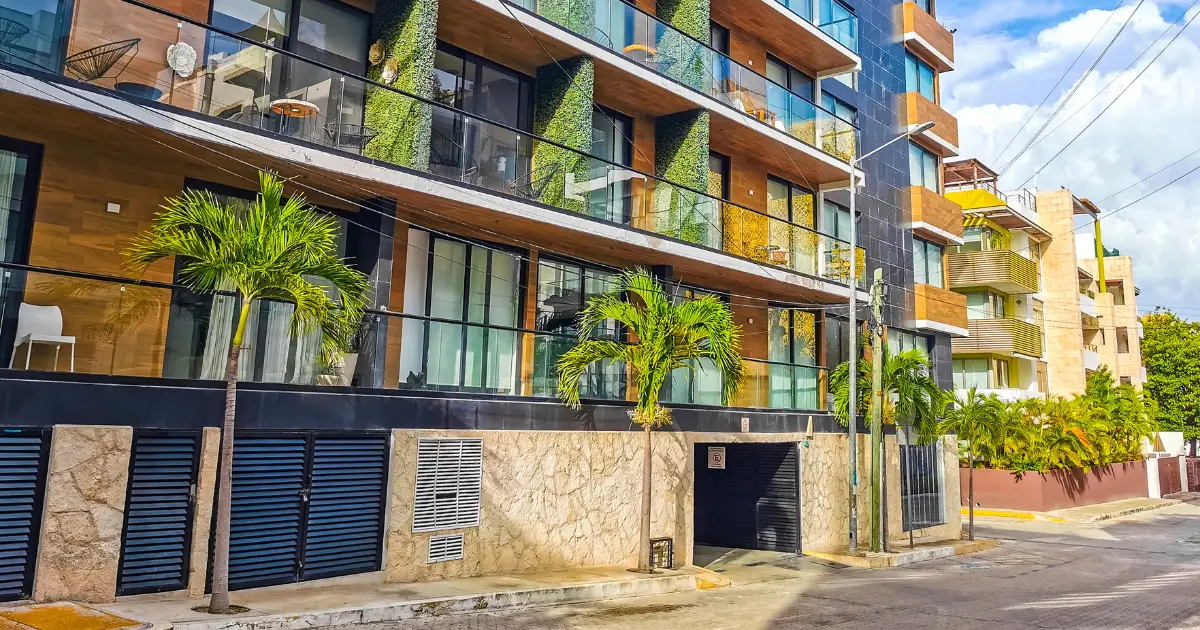
Yes, you can sell a Naples condo before, during, or after its milestone inspection. The buyer's paperwork changes with each stage.
Inside the City of Naples, condo buildings three stories or taller within three miles of the coastline need their first inspection at 25 years from the certificate of occupancy, then every 10 years. A buyer under contract gets the inspector's summary and the latest reserve study at the seller's expense (Fla. Stat. 718.503).
This is general information, not legal advice. State rules vary.
Jump to a section
Where is your building in the milestone process?
Free. No obligation. You choose the closing date.
You can sell a condo in Naples, FL whether your building's milestone inspection is coming up, underway, or finished. Inside the City of Naples, condo and co-op buildings three stories or taller within three miles of the coastline need a first milestone inspection at 25 years. The clock runs from the certificate of occupancy, and the inspection repeats every 10 years. Buildings farther inland follow a 30-year schedule.
The inspection itself is the association's job. What changes for you as a seller is the paperwork. Florida law gives a buyer under contract the inspector's summary and the latest reserve study at your expense, and that shapes your timeline. This guide covers the rule, the documents, and the timing choices for older owners, second-house owners, and heirs.
When does a Naples condo building need its milestone inspection?
Inside the City of Naples, a condo or co-op building within three miles of the coastline needs its first milestone inspection at 25 years. A building farther inland waits until 30 years, and both repeat every 10 years.
Florida's milestone statute sets the default at 30 years from the certificate of occupancy, with an inspection by December 31 of that year (Fla. Stat. § 553.899(3)(a)). The same statute lets a local building agency choose 25 years when local conditions, including closeness to salt water, call for it (Fla. Stat. § 553.899(3)(b)). The City of Naples Building Department uses that option for coastal buildings, according to its milestone inspections page.
The city page says the program covers condominium and cooperative buildings three stories or more in height. Each building of three or more stories gets its own report, prepared by a Florida-licensed architect or engineer. Buildings already past their milestone year had a deadline of December 31, 2024.
| Building | First milestone inspection | Who runs the program |
|---|---|---|
| Condo or co-op, 3+ stories, inside the City of Naples, within 3 miles of the coastline | 25 years from the certificate of occupancy, then every 10 years | City of Naples Building Department |
| Condo or co-op, 3+ stories, inside the city, more than 3 miles from the coastline | 30 years, then every 10 years | City of Naples Building Department |
| Condo or co-op, 3+ habitable stories, unincorporated Collier County, within 3 miles of salt water | 25 years, then every 10 years | Collier County Growth Management |
| Condo or co-op, 3+ habitable stories, unincorporated Collier County, more than 3 miles from salt water | 30 years, then every 10 years | Collier County Growth Management |
| Single-family to four-family dwelling with three or fewer habitable stories | Not required | Exempt under Fla. Stat. § 553.899(4) |
How can you find your building's certificate of occupancy date and milestone year?
Your association is the most direct source. It must tell owners about a required inspection, with the completion date, within 14 days of the building department's notice (Fla. Stat. § 553.899(5)). The building department holds the certificate of occupancy record itself.
The year on a tax record can mislead. The Collier County Property Appraiser lists a year built for each parcel, but that year may not be the date the certificate of occupancy was issued. A building finished late in one year can carry a certificate dated the next. If no certificate date is available, the statute uses the date of occupancy shown in any record of the local building official (Fla. Stat. § 553.899(3)(a)).
A few places to check:
- The association's notice to owners, and its website if it is required to have one.
- Board meeting minutes and the annual budget, which often mention inspection and reserve plans.
- The City of Naples Building Department, for a building inside the city limits.
- Collier County's milestone status search, for a building in unincorporated Collier County.

Is your condo inside the City of Naples or in unincorporated Collier County?
Many condos with a Naples mailing address sit outside the city limits, so the answer decides which building department runs your inspection. A Naples address alone does not prove a building is inside the city.
Golden Gate, East Naples, North Naples, and Pelican Bay are unincorporated Collier County. Buildings there follow Collier County's program. Marco Island and Everglades City are separate cities with their own offices. Collier County's own floodplain FAQ sends City of Naples owners to the city's Building Department, which shows how the two systems split.
The county program reads much like the city's. Collier County mails certified letters to associations at the start of the year an inspection is due. Inspections are then due within 180 days of receipt unless the county sets another date. Its public portal shows each building's status, from "MI Phase 1" to "Milestone Completed". Countywide offices, such as the Property Appraiser and the Clerk of the Circuit Court, serve condos on both sides of the city line.
What happens in phase one and phase two of the inspection?
Phase one is a visual examination of the building by a licensed architect or engineer, and phase two follows only if phase one finds substantial structural deterioration (Fla. Stat. § 553.899(7)). If phase one finds none, phase two is not required.
Phase one
The inspector looks at habitable and nonhabitable areas, including the major structural parts, and gives a qualitative assessment. Phase one is complete when the inspector submits the report to the building department, within 180 days after the owners receive the written notice (Fla. Stat. § 553.899(6)).
Phase two
Phase two may involve destructive or nondestructive testing at the inspector's direction, and the inspector recommends a program for assessing and repairing damaged areas (Fla. Stat. § 553.899(7)(b)). Surface issues such as cracks or peeling finishes do not count as substantial structural deterioration unless the inspector finds they signal it (Fla. Stat. § 553.899(2)(b)).
- NoticeThe building department notifies the association by certified mail
- Within 14 daysThe association tells unit owners and gives the completion date
- Within 180 days of noticeThe phase one report goes to the building department
- Within 180 days of phase oneIf phase two is required, a progress report with a completion timeline
- Within 45 days of the reportThe association sends every owner the inspector's summary
- Within 365 days of phase twoRepairs for substantial structural deterioration must begin
What can a milestone report lead to for Naples condo owners?
A milestone report can lead to repairs, and repairs can lead to special assessments or higher regular assessments. The amount depends entirely on the building and its findings, so no general figure applies to your unit.
Within 45 days of receiving a report, the association must send every owner the inspector's summary and post a copy where owners can see it (Fla. Stat. § 553.899(9)). If phase two finds substantial structural deterioration, local rules set a repair schedule, and repairs must begin within 365 days of the phase two report (Fla. Stat. § 553.899(11)).
The reserve study runs alongside the inspection. A residential association must have a structural integrity reserve study at least every 10 years for each building of three habitable stories or more (Fla. Stat. § 718.112(2)(g)). It covers items like the roof, structure, plumbing, electrical systems, and waterproofing. For budgets adopted on or after December 31, 2024, owners in those associations generally may not vote to skip or reduce reserves for those items (Fla. Stat. § 718.112(2)(f)). Reserves can be funded by regular assessments, special assessments, lines of credit, or loans.
What paperwork does a Naples condo buyer receive under Florida law?
A buyer under contract is entitled, at your expense, to the inspector's milestone summary (if one applies). The buyer also gets the association's latest structural integrity reserve study, or a statement that none has been done. These sit beside the declaration, bylaws, rules, budget, and financial statement.
"Each prospective purchaser who has entered into a contract for the purchase of a condominium unit is entitled, at the seller’s expense, to a current copy of all of the following"
Section 718.503(2)(a), Florida Statutes, Florida's nondeveloper disclosure rule for condo resales
The contract itself also changes with the building's status. For contracts entered into after December 31, 2024, Fla. Stat. § 718.503(2)(e) works like this:
- Inspection required but not done: the contract states in conspicuous type that the association must have one and has not completed it.
- Not required: the contract says so.
- Completed: the contract carries a clause letting the buyer cancel within 7 days, excluding weekends and legal holidays, after signing and receiving the summary and reserve study.
For your timeline, that means gathering these documents early can help. A buyer's 7-day window does not start until the buyer has them. Your association or its manager usually supplies copies, and a Florida real estate attorney can review the contract language.
What does the estoppel certificate show a buyer?
The estoppel certificate is the association's signed statement of what a unit owes, and it lists special assessments already due and those scheduled to come due (Fla. Stat. § 718.116(8)). It is how a milestone-related assessment shows up at closing.
The association must issue it within 10 business days of a request from the owner or the owner's designee. It is good for 30 days when delivered by hand or electronically, and 35 days by regular mail. It also states any open rule violations and whether the board must approve the transfer.
Unpaid assessments follow the unit. A new owner is jointly and severally liable with the previous owner for unpaid assessments that came due before the transfer (Fla. Stat. § 718.116(1)(a)). That is why closings lean on the estoppel certificate. An association waives amounts above the certificate's figures against anyone who relies on it in good faith (Fla. Stat. § 718.116(8)(c)).
Should you sell a Naples condo before or after the milestone report?
Either can work, and the better choice depends on your plans, your budget, and how long you want to wait. Selling before the report means the buyer accepts unknown findings. Selling after means the buyer reads them.
| Building status | What the buyer gets or signs | What a seller may weigh |
|---|---|---|
| Inspection required, not completed | A contract statement that the inspection is required and not done; the reserve study or a statement that none exists | Findings and any assessment are still unknown to both sides |
| Phase one done, no phase two | The inspector's summary, the reserve study, and the 7-day cancellation clause | The report is on paper, and the next one is 10 years out |
| Phase two required or repairs underway | The same documents, plus an estoppel certificate listing assessments due and scheduled | Repair timing, assessment payments, and who pays what at closing |
What the Naples numbers show
Naples prices have softened in 2026. Redfin's September 2026 data puts the City of Naples median sale price at about $1.1 million for the three months ending September 2026, down 15.1% from a year earlier. Houses spent a median of 139 days on the market, down from 159 a year before (Redfin, September 2026).
Zillow measures something different. Its typical value index for Naples was about $545,587 in September 2026, down about 1.4% over the year (Zillow ZHVI, September 2026). For ZIP 34102 the index was $1,284,426 and for ZIP 34103 it was $1,095,782 (Zillow ZHVI, August 2026).
Three Naples sellers in this spot
- An older owner on a fixed income may prefer a known sale price to an open-ended assessment schedule.
- A second-house owner may be out of state when notices arrive. Our guide to selling a second house in Naples covers selling from a distance.
- An heir may need court authority before signing. Our guide to selling an inherited house in Naples walks through Collier County probate.
For the statewide picture on assessments and reserves, see our guide to Florida's condo crisis.
How can Propcash help with a condo in a milestone building?
Propcash is a direct cash homebuyer, and we can buy a Naples condo as-is, before or after a milestone report. We review your unit's details and local sales data, then make one cash offer and show you how we got to our number. You pick the closing date, and there are no agent commissions or fees.
A Propcash cash offer is one option to set next to paying an assessment, waiting for repairs, or listing with an agent. If a cash sale is not your best move, we will tell you. You can get a no-obligation cash offer for your Naples condo, and see more on our Naples cash sale page.
Common questions about selling a Naples condo in a milestone building
Who pays for the milestone inspection on a Naples condo building?
The condominium association pays for the inspection of the parts of the building it maintains under its governing documents (Fla. Stat. 553.899(4)). A unit owner usually feels that cost later, through the budget or an assessment. The seller's direct cost at a sale is supplying the buyer with the documents Fla. Stat. 718.503(2)(a) lists, which the statute puts at the seller's expense.
How long does a condo buyer have to cancel after getting the milestone summary?
Under Fla. Stat. 718.503(2)(e), a resale contract signed after December 31, 2024 in a building with a completed milestone inspection carries a cancellation clause. The buyer may cancel within 7 days, excluding Saturdays, Sundays, and legal holidays. The clock starts after the buyer signs and receives the inspector's summary and the reserve study. The right ends at closing.
Do single-family houses in Naples need a milestone inspection?
No. Fla. Stat. 553.899(4) says the section does not apply to a single-family, two-family, three-family, or four-family dwelling with three or fewer habitable stories above ground. The requirement reaches condominium and cooperative buildings of three habitable stories or more.
What must the contract say if the association has not finished its milestone inspection?
For contracts entered into after December 31, 2024, Fla. Stat. 718.503(2)(e) requires a statement in conspicuous type that the association is required to have a milestone inspection and has not completed it. The same rule covers a missing structural integrity reserve study. A Florida real estate attorney can confirm the exact wording for your contract.
How long is a Naples condo estoppel certificate good for?
An estoppel certificate delivered by hand or electronically has a 30-day effective period, and one sent by regular mail has a 35-day period (Fla. Stat. 718.116(8)(b)). The association must issue it within 10 business days of a request. If a closing date moves past the effective period, a new certificate may be needed.
Can an heir sell a Naples condo while the estate is still in probate?
Often, yes. When the will gives the personal representative a power to sell, the representative may sell real property without court authorization (Fla. Stat. 733.613(2)). Without that power, title does not pass until the court authorizes or confirms the sale (733.613(1)). A Florida probate attorney can explain which path fits the estate.
Reviewed by the Propcash Editorial Team under our editorial standards. Published by Propcash, a direct cash buyer of houses. This guide is general information. Laws, fees, and market figures change, so check the current rules for your state.
