
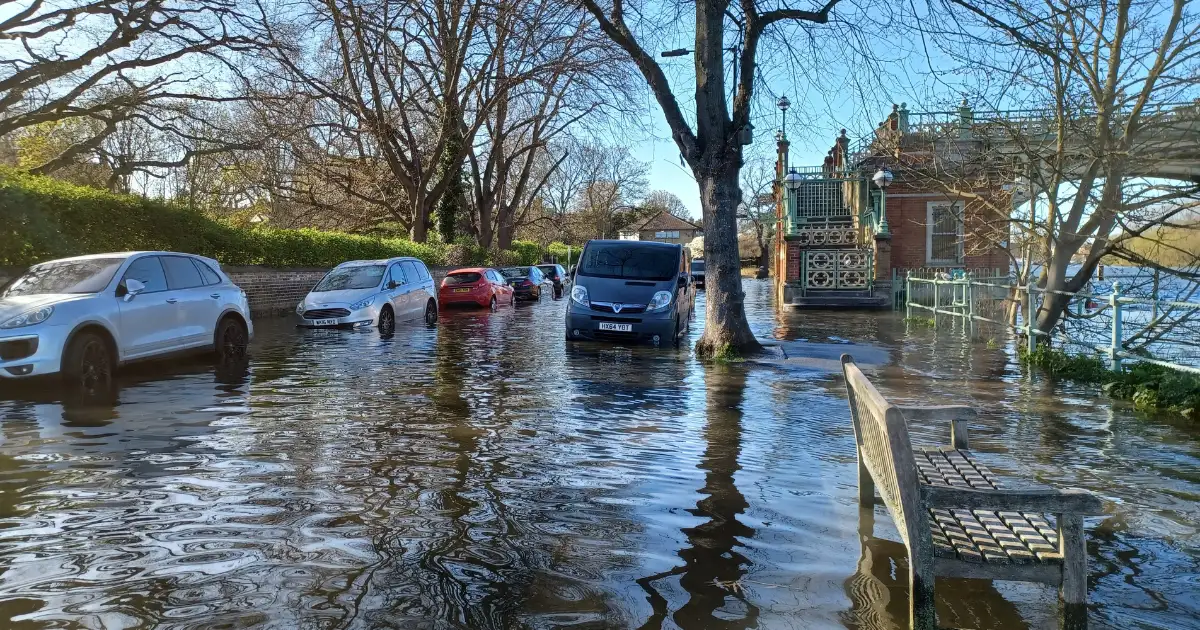
Naples compares flood repair costs to the structure's value alone; at 50%, the house must meet flood rules, including elevation.
The City uses the Collier County Property Appraiser's structure value, with land and pool left out, or a licensed appraisal no more than six months old. On a valuable lot, a repair bill that looks modest next to the sale price can cross the line.
This is general information, not legal advice. State rules vary.
Jump to a section
Do you have a contractor's signed repair estimate for your house yet?
Free. No obligation. You choose the closing date.
The 50 percent rule in Naples, FL decides whether a flooded house can be repaired as it stands or must be raised first. If you plan to sell a house that took water in Ian, Helene, or Milton, this test shapes every option. Inside the city limits, the City compares the repair bill to the value of the structure alone, using the Collier County Property Appraiser's assessed value. The land, the pool, and the spa are left out.
That method matters more in Naples than in most Florida cities. Land here is expensive and only the building counts. An older house on a valuable lot can reach 50% with a repair bill that looks modest next to its sale price.
What is the 50 percent rule in Naples, FL?
The 50 percent rule is the City of Naples test for substantial damage. If restoring a structure would cost 50% or more of its value before the damage, the building must meet the City's flood rules, including elevation to or above the base flood elevation.
The City's floodplain development page defines substantial damage as damage "of any origin." The test compares the cost of restoring the structure to its pre-damaged condition with the structure's market value or replacement cost before the damage. At 50% or more, the building "must be brought into compliance" with the City's flood damage prevention regulations.
The base flood elevation, or BFE, is the level floodwater is expected to reach in the 100-year flood. Collier County's floodplain FAQ defines it that way, and the 50% rule is aimed at houses whose lowest floor sits below it.
The code text states no look-back period
The Naples code, as published on Municode, does not state a look-back period for adding up repairs. Sec. 16-146(4) compares the structure's value with "the combined costs of improvements and repairs, if applicable." Fort Myers works differently: it adds up repairs and improvements over 12 months, as our guide to the Fort Myers 50% rule explains. The City of Naples Building Department can explain how it treats earlier permits on a given house.
How does the City of Naples value the structure?
The City uses the assessed value of the structure recorded by the Collier County Property Appraiser's Office. That value leaves out the land, the pool or spa, and any item that is not a permanent part of the structure.
Naples Code Chapter 16 agrees. Sec. 16-144 defines market value as the building value, excluding the land and "detached accessory structures and other improvements on site." It also allows a recent independent appraisal, or the Property Appraiser's assessment adjusted by a factor the Property Appraiser provides.
| Step | What the City uses | Source |
|---|---|---|
| Starting value | Assessed value of the structure recorded by the Collier County Property Appraiser | City floodplain page |
| Left out of the value | Land, pool or spa, and items not a permanent part of the structure | City floodplain page |
| Owner's alternative | Depreciated replacement cost (actual cash value) appraisal by a Florida-licensed appraiser | City floodplain page |
| Appraisal age | No more than six months before permit submittal | City floodplain page; Sec. 16-144 |
| Repair estimate | Prepared and signed by a licensed contractor | City floodplain page |
| Affidavit | The estimate includes all damage, not just structural work | City floodplain page |
| Who decides | The floodplain administrator, with the building official | Sec. 16-146(4) |
| At 50% or more | Compliance with flood rules, elevation to or above the BFE, and an Elevation Certificate | City floodplain page |
Why land-heavy Naples lots can reach 50% sooner
The City measures against the building, not the whole parcel. In a city where land carries much of a house's price, the structure value on record can be a small share of what the house would sell for. The smaller that structure value, the smaller the repair bill needed to reach 50%.
An older house on a large or waterfront lot is the clearest case. Its building value may reflect age and wear, while the land holds most of the price. A repair estimate that looks modest next to the sale price can still cross the line.
Challenging the value with an appraisal
An owner who disagrees with the Property Appraiser's figure may hire a State of Florida licensed property appraiser. The appraisal states the depreciated replacement cost, also called actual cash value, of the structure. The City warns that "An insurance appraisal may not be valid if it does not include depreciation."
Timing matters. The appraisal must be dated no later than six months from the date of permit submittal. An appraisal ordered soon after a storm can go out of date if the permit filing slips.

What goes into the repair cost estimate?
The City counts the full cost of restoring the structure, not only the structural work. A licensed contractor must prepare and sign the estimate, with an affidavit that it covers all damage to the structure.
Under Sec. 16-146(4), the floodplain administrator and the building official estimate market value "before the damage occurred and before any repairs are made." They compare it with the combined costs of improvements and repairs, then make the determination and notify the owner.
One line in Sec. 16-144 often surprises owners. Substantial improvement "includes structures that have incurred substantial damage regardless of the actual repair work performed." Under that wording, a house found substantially damaged is treated as a substantial improvement, whatever repair scope the owner picks.
What happens when a Naples house crosses 50%?
A house that crosses 50% must be brought into compliance with the City's flood damage prevention regulations. For most flooded houses, that means raising the building to or above the base flood elevation before it is rebuilt.
The City's floodplain page adds three points:
- A substantially damaged or substantially improved structure needs an Elevation Certificate.
- Floodproofing the areas below the BFE is not permitted in residential buildings.
- Flood panels are a voluntary measure. The City's flood panels page says they need a permit and do not bring a building into compliance.
Some help exists for the added cost. FEMA says National Flood Insurance Program policyholders in high-risk areas may receive up to $30,000 toward compliance. This compliance coverage, called Increased Cost of Compliance, applies once the community finds the building substantially damaged or repeatedly flooded (FEMA, January 2026).
Historic buildings can be exempt
Naples Code Sec. 16-116(f) says historic buildings "will not be subject to the substantial improvement or substantial damage requirements for floodplain management purposes" when the conditions in subsection (g) are met. Those conditions start with a review by the Florida State Historic Preservation Office. Sec. 16-116(c) notes that a historic district in the City of Naples is listed in the National Register of Historic Places.

How much of Naples sits in the flood zone?
Over 90% of addresses inside the City of Naples sit in the Special Flood Hazard Area. The City's flood panels page puts it plainly: "over 90 percent of the addresses within the City of Naples are within the SFHA."
The City's floodplain information page says Naples joined the National Flood Insurance Program in 1971. It also says 2024 Flood Insurance Rate Maps are in effect.
The storms of 2022 and 2024 tested those maps. The National Hurricane Center's Hurricane Ian report records maximum inundation of 6 to 9 feet above ground in Naples (National Hurricane Center, March 2026). The Naples Pier tide gauge measured 6.18 feet above mean higher high water before the station was destroyed.
The same report counts 33 buildings destroyed and over 3,500 with major damage in Collier County. Its higher 8 to 12 foot figures belong to North Naples, which sits outside the city. The City's storm facts page says Helene brought "30+ inches of flood depth" to some areas, and Milton brought depths "from inches to near 4'."
- 1971The City joins the National Flood Insurance Program
- September 28, 2022Hurricane Ian: 6 to 9 feet of inundation in Naples
- September 27, 2024Helene: some areas see 30+ inches of flood depth
- October 10, 2024Milton: flooding from inches to near 4 feet
- Today2024 Flood Insurance Rate Maps in effect
- At permit timeThe City runs the 50% test on the repair estimate
Sources: National Hurricane Center Hurricane Ian report; City of Naples floodplain, storm facts, and Development in the Floodplain pages.
Is your Naples house inside the city or in Collier County?
A Naples mailing address does not mean a house is inside the City of Naples. Golden Gate, East Naples, North Naples, and Pelican Bay are unincorporated Collier County, where County floodplain rules apply instead of the City's.
Collier County's floodplain FAQ says its 50% rule "is applicable when a building is in the SFHA and the lowest floor of the building is below the BFE." It adds that the County "has no waiting period once an existing building permit has been finalized through the Certificate of Occupancy process."
The County's substantial damage page also leaves land value out and points to the improved values on the Property Appraiser's website. The FAQ sends owners inside the City of Naples to the City Building Department at (239) 213-5039. Marco Island and Everglades City are separate cities with their own offices.
What must you disclose when selling a flooded Naples house?
Florida requires the seller of residential real property to give the buyer a flood disclosure at or before the time the sales contract is signed. The rule applies whether the house is listed or sold directly for cash.
"A seller must complete and provide a flood disclosure to a purchaser of residential real property at or before the time the sales contract is executed."
Fla. Stat. 689.302, Florida's flood disclosure statute
The form asks three questions:
- Whether the seller knows of flooding that damaged the house during the seller's ownership.
- Whether the seller filed a flood damage claim with an insurance provider, including the National Flood Insurance Program.
- Whether the seller received flood damage assistance, including from FEMA.
The statute's definition of flooding covers the overflow of inland or tidal waters, a rapid buildup of runoff from an established water source, and sustained standing water from rainfall. An owner who filed a flood claim or received FEMA help after Ian, Helene, or Milton answers yes to the related question. Our guide to the Florida insurance crisis covers how coverage questions can shape a sale.
Repair, elevate, rebuild, or sell the Naples house as-is?
The choice usually turns on where the signed estimate lands against the structure value, and on how much time and cash you can put in. Some owners repair below 50%, some elevate or rebuild, and some sell as-is.
| Path | When it can fit | What it involves |
|---|---|---|
| Repair below 50% | The signed estimate stays under half the structure value | Permit, contractor-signed estimate, and affidavit; the rule does not require elevation |
| Elevate the house | The estimate reaches 50% and the building can be raised | Elevation to or above the BFE and an Elevation Certificate; NFIP coverage may pay up to $30,000 |
| Rebuild | Raising the existing building is not practical | The new building must meet the City's flood rules, including the BFE |
| Historic exemption | The building qualifies as historic | Review by the State Historic Preservation Office first (Sec. 16-116) |
| Sell as-is | You would rather not manage appraisals, permits, or construction | The flood disclosure under Fla. Stat. 689.302; the buyer takes on the City's review |
What the Naples market shows right now
Market timing is part of the choice. Redfin's September 2026 data puts the Naples median sale price at $1,099,476 over three months, down 15.1% from a year earlier. Houses took a median of 139 days to sell, down from 159 (Redfin, September 2026).
Zillow measures something different. Its typical value figure, the Zillow ZHVI for Naples, stood at $545,587, down about 1.4% over the year (Zillow ZHVI, September 2026). Neither figure says what a flooded house will bring, since condition and the 50% review weigh on each sale.
How can Propcash help with a flooded Naples house?
Propcash can buy a flooded Naples house as-is, so you don't repair, elevate, clean out, or show it first. We make one transparent cash offer based on local market data and show you how we got to our number.
Our offer can sit next to your contractor's estimate, an elevation quote, or a listing plan, so you can compare them. You pick the closing date, a sale can close in as few as 7 days after the contract is signed, and there are no fees or commissions. If a cash sale is not your best move, we will tell you. You can get a no-obligation cash offer or read more about selling a Naples house fast for cash.
Common questions about the Naples 50% rule
Does the Naples 50% rule count the value of my lot?
No. The City of Naples measures repair costs against the value of the structure alone, using the assessed value the Collier County Property Appraiser records. The land, a pool or spa, and anything that is not a permanent part of the structure are left out. That is why an older house on a valuable lot can reach 50% with a repair bill that looks small next to its sale price.
Can I sell a flooded Naples house without repairing it?
Yes. The City runs its 50% test when someone applies to repair or improve the building, so a flooded house can change hands as-is. The seller must still give the buyer the flood disclosure in Fla. Stat. 689.302 at or before the contract. A buyer who takes the house as-is also takes on the City's 50% review for any later repairs. Some owners list with an agent, and others sell directly to a cash buyer.
Does the City of Naples add up repairs from earlier years?
The Naples code text does not state a look-back period for adding up repairs. Sec. 16-146(4) compares the structure's value to the combined costs of improvements and repairs, if applicable. Fort Myers, by contrast, adds up work over 12 months. The City of Naples Building Department can explain how it treats earlier permits on a specific house.
Will an insurance appraisal work to challenge the structure value?
It may not. The City of Naples warns that an insurance appraisal may not be valid if it does not include depreciation. The City accepts an appraisal of the structure's depreciated replacement cost, also called actual cash value, from a State of Florida licensed property appraiser. That appraisal must be dated no more than six months before the permit is submitted.
Does the City's 50% method apply in Golden Gate or North Naples?
No. Golden Gate, East Naples, North Naples, and Pelican Bay are unincorporated Collier County, so County floodplain rules apply there. Collier County's floodplain FAQ says its 50% rule applies when a building is in the Special Flood Hazard Area and its lowest floor is below the base flood elevation. Marco Island is a separate city with its own office.
Who pays to elevate a substantially damaged Naples house?
The owner who rebuilds pays for elevation, though flood insurance can help. FEMA says National Flood Insurance Program policyholders in high-risk areas may receive up to $30,000 in Increased Cost of Compliance coverage after the community finds the building substantially damaged or repeatedly flooded. An owner who sells as-is passes the elevation decision to the buyer.
Reviewed by the Propcash Editorial Team under our editorial standards. Published by Propcash, a direct cash buyer of houses. This guide is general information. Laws, fees, and market figures change, so check the current rules for your state.
