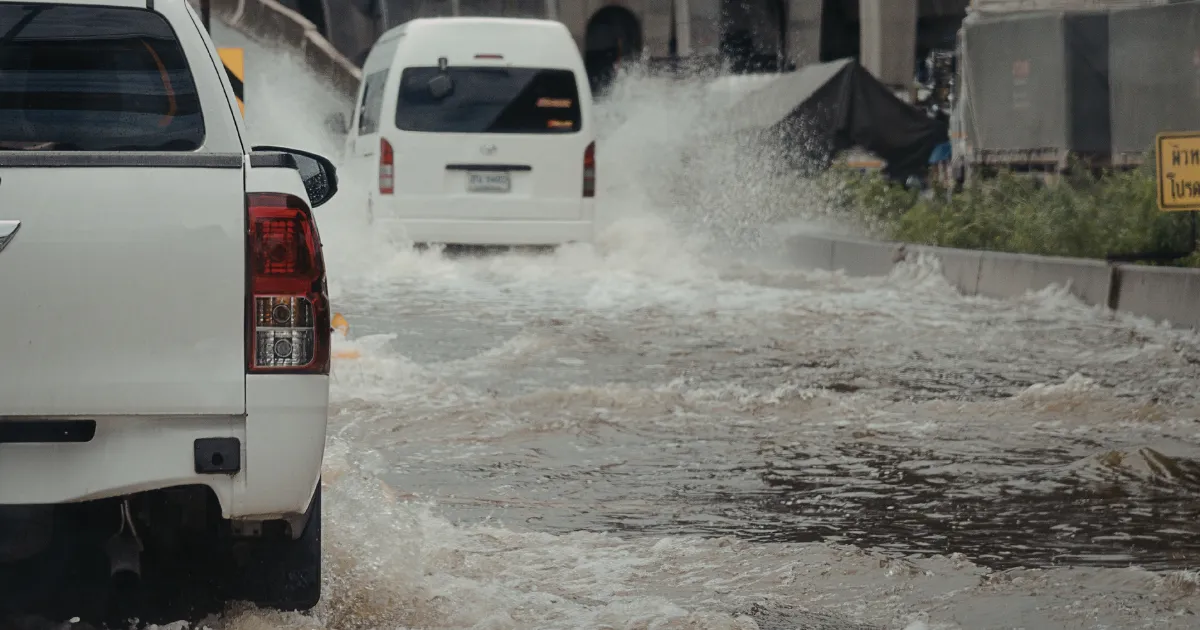
To sell a hurricane-damaged house in Sarasota, start with the City's 50% rule, which decides whether the house can be repaired as it stands.
The City's flood outreach page counts work that "equals or exceeds 50% of the fair market value of the structure ... before the damage occurred" as substantial. Those buildings must sit "at least 1 foot above the base flood elevation."
This is general information, not legal advice. State rules vary.
Jump to a section
Has the City of Sarasota reviewed your repair estimate yet?
Free. No obligation. You choose the closing date.
If you plan to sell a hurricane-damaged house in Sarasota, one City rule shapes every option. The City's flood outreach page defines "substantial improvement" as work that "equals or exceeds 50% of the fair market value of the structure ... before the damage occurred." Past that line, it says, "the City of Sarasota requires that new or substantially improved buildings be built at least 1 foot above the base flood elevation."
That test decides whether a house hit by Helene's surge or Milton's wind and rain can be fixed as it stands or has to be rebuilt to new-building rules. This guide covers who makes the call, how the two numbers are set, what a buyer sees, and the paths owners take, including an as-is sale. It applies to houses inside the city limits.
Who decides the 50% question for a Sarasota house?
For a house inside the City of Sarasota, the City's Building Division decides whether it is substantially damaged. The Sarasota County Property Appraiser supplies a value, but it does not make the call.
The City's substantial improvement package, updated in August 2024, states the duty plainly.
"The City of Sarasota, following the National Flood Insurance Program requirements, has the responsibility to determine "substantial damage" and "substantial improvement"..."
Building Division, City of Sarasota, Substantial Improvement or Substantial Damage notice to property owners
The Property Appraiser plays a supporting part. Its 50% rule page says the office "has no role in issuing building permits or determining flood zones." It adds that its values "may be used in calculating the FEMA 50% rule," and that "the best option is a private appraisal."
Inside the city limits or outside them
A Sarasota mailing address does not by itself put a house inside the city. The city covers the mainland from Newtown south to Arlington Park, plus St. Armands Key, Bird Key, and Lido Key. Siesta Key, where Milton came ashore, is unincorporated Sarasota County. A house outside the city limits follows Sarasota County rules instead of the City's.
Why do Helene and Milton complicate the count?
Milton struck the same stretch of coast two weeks after Helene, and the National Hurricane Center says that overlap "complicates damage assessments." One house can carry damage from both storms in a single structure.
The Helene report says the storm brought dangerous surge to "densely populated areas such as Tampa Bay and Sarasota" (National Hurricane Center, February 2026). Peak surge reached 5 to 7 feet above ground level from the Anclote River southward to Longboat Key. Then, the Milton report says the center "made landfall on Siesta Key" at 0030 UTC October 10, which was 8:30 p.m. EDT on October 9, 2024 (National Hurricane Center, March 2025).
Milton brought "hurricane conditions ... southward across Sarasota to near Venice," the NHC found, with surge inundation of 4 to 6 feet near landfall, from Longboat Key to Venice. The Sarasota Airport reported a pressure of 959.7 mb.
The City's package does not split damage by storm. It asks for an estimate covering "all the damages sustained by your home." Owners whose house took surge water in September and wind or rain in October may want to ask the Building Division how it treats the two events before pricing repairs.
How does the City build the 50% test?
The City divides a full repair estimate by the value of the structure alone, measured before the damage. If the result is 50% or more, the house is substantially damaged.
The structure value
The package says the City "will use the assessed value of your structure (excluding the land)" from the Property Appraiser's Office. An owner who disagrees can hire a Florida-licensed appraiser to submit a market value report for the structure. The application form carries a checkbox for each choice.
The Property Appraiser's page also describes a rough tax-roll estimate. That method takes the most recent pre-damage improvement value, multiplies it by 1.2, and sets the limit at half the result. The office cautions that its values are "ONLY for the purpose of ad valorem taxation," which is why it points owners to a private appraisal.
The repair estimate
The estimate must be detailed, complete, and signed by a licensed general contractor. The contractor also signs a notarized affidavit that it covers all the work. The City then checks that the costs are "fair and reasonable," and for storm repairs, "pre-storm prices and rates will be utilized."
- Counted: structural work, roofing, drywall, cabinets, flooring, HVAC, plumbing, electrical, demolition labor, and overhead and profit.
- Also counted: donated materials and volunteer labor, valued at pre-storm retail prices and normal hourly rates.
- Left out: plans, surveys, permit fees, debris removal, and clean-up such as mud removal and dry-out.
- Also left out: pools, docks and davits, seawalls, fences, driveways, sheds, and detached garages.
| Item the City asks for | Who prepares or signs it |
|---|---|
| 1. Application for substantial damage or improvement review | Owner and contractor |
| 2. Elevation certificate, if the house sits above base flood elevation | A licensed surveyor |
| 3. Owner's affidavit, signed, notarized, and dated | Owner |
| 4. Contractor's affidavit, signed, notarized, and dated | Contractor |
| 5. Cost estimate form with sub-contractor price quotes and itemized backup | Contractor, or the owner acting as contractor |
| 6. The City's checklist | Owner |
What changes when repairs reach 50% or more?
A substantially damaged Sarasota house has to meet the same construction rules as a new building. That includes the City's requirement that the building sit at least 1 foot above base flood elevation.
The City's package spells out what that means on the ground:
- An elevation certificate goes to the City to set the lowest floor. Garages and carports do not count as the lowest floor.
- If the lowest floor is below the 100-year flood level, the building must be raised.
- Electrical and mechanical equipment, bathrooms, and laundry rooms go up as well.
- Below the design flood level, only parking, building access, and limited storage are allowed.
- In a V-zone or Coastal High Hazard Area, a registered engineer or architect certifies the plans.
One exception matters a great deal. If the lowest floor, the equipment, and the bathrooms already sit above the 100-year flood level, the package says the building can be repaired without having to comply with the 50% rule.
| Under 50% versus 50% or more | Repair cost under 50% | Repair cost at 50% or more |
|---|---|---|
| What the City requires | Permitted repairs to the house in its current form, after the City reviews the estimate | New-building rules: at least 1 foot above base flood elevation, with equipment, bathrooms, and laundry raised |
| What the owner submits | The six-item package, with both affidavits | The same package, an elevation certificate, and elevation plans |
| What a buyer faces | A house that can be repaired as it stands; later work is tested against value before construction starts | The same new-building rules for any restoration; the test measures the structure and the work, not the owner |
| What the seller discloses | The Florida flood disclosure form, at or before the contract | The same form, whether or not any repair started |
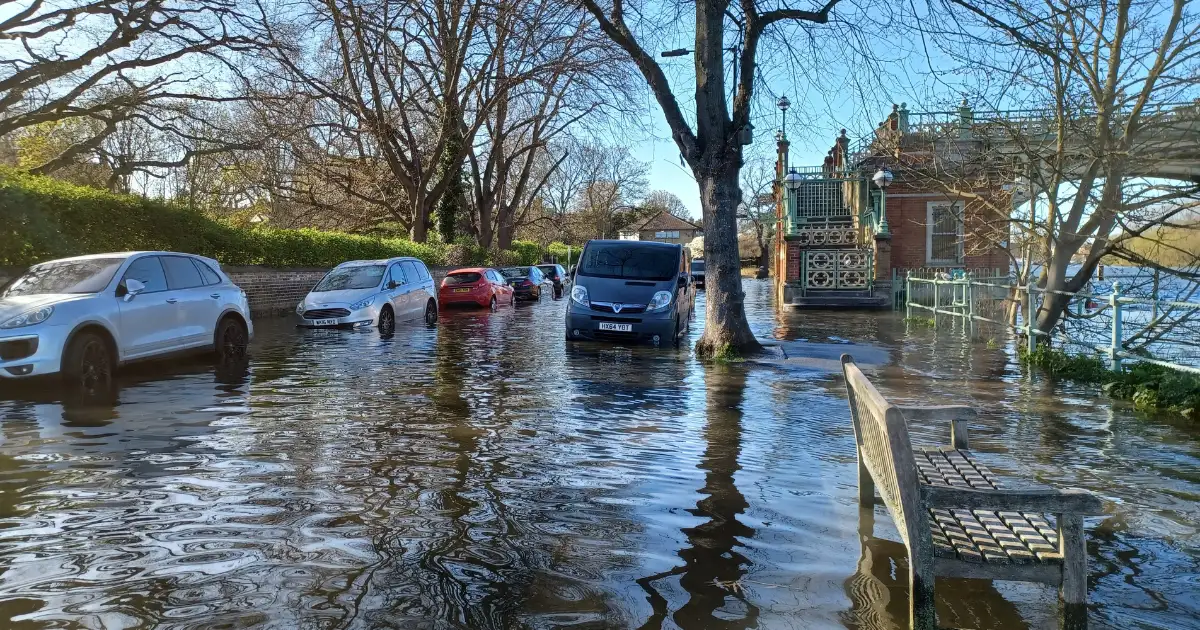
What does a buyer see on a storm-damaged Sarasota house?
A buyer of a storm-damaged Sarasota house typically sees the Florida flood disclosure, the elevation certificate if one exists, and the flood zone. Each one shapes what the buyer thinks the repair path will be.
The Florida flood disclosure
Under Fla. Stat. § 689.302, a seller of residential real property "must complete and provide a flood disclosure to a purchaser ... at or before the time the sales contract is executed." The form asks three questions:
- Do you know of flooding that damaged the house while you owned it?
- Did you file a flood damage claim, including one with the National Flood Insurance Program?
- Did you receive flood assistance, including from FEMA?
The form's definition of flooding covers the "overflow of inland or tidal waters." It also covers "sustained periods of standing water resulting from rainfall," so it reaches beyond surge. The statute's text has no exception for an as-is sale.
The elevation certificate and the flood zone
The City's elevation certificates page tells buyers to "ask the sellers" for theirs. The City "does not prepare elevation certificates"; licensed surveyors do. It keeps certificates completed for building compliance since the late 1970s, and the Florida Division of Emergency Management holds copies submitted since 2017.
The City's outreach page also tells anyone buying that "it is a good idea to check out the possible flood hazards before you buy." Its flood information line, 941-263-6354, answers questions on flood zones and elevation certificates.
What are the three paths after Helene and Milton damage?
Owners of a damaged Sarasota house generally choose among three paths: keep repairs under 50%, rebuild to new-building rules, or sell the house as it stands. Each carries a different load of time, money, and paperwork.
Repairs that stay under 50%
If the City's review lands under the line, the house can be repaired in its current form. The estimate still has to cover all the damage. Both affidavits say the signer faces enforcement action, which may include fines, if an inspection finds work that was not on the approved list.
Rebuilding to new-building rules
At 50% or more, the job becomes a raise-or-rebuild project with elevation plans and raised equipment. The City's Flood Zone Specialist takes calls before construction planning at 941-263-6491. The Building Division also offers a free visit to review flooding concerns, at 941-263-6455.
Selling the house as it stands
An as-is sale hands the repair decision to the buyer. As-is means as-is: the house sells with its damage, its history, and its disclosure form. Some owners choose this path when they cannot face a rebuild, now live elsewhere, or want to stop carrying a damaged house. Our guide to selling a house that needs major repairs covers the general steps, and the Florida insurance crisis guide covers coverage costs.
What does the Resilient SRQ program offer?
Resilient SRQ is a Sarasota County program that helps repair or rebuild houses damaged by Ian, Debby, Helene, or Milton, or reimburses eligible out-of-pocket repairs. The City of Sarasota announced its opening on May 28, 2025.
The County received two HUD disaster recovery allocations totaling $411.6 million (City of Sarasota, May 2025). The announcement lists who qualifies:
- You own the damaged house now and owned it at the time of the storm.
- It is your primary residence now and was then.
- Your mortgage is in good standing, or you are on a payment plan in good standing.
- Household income is at or below 120% of Sarasota County's area median income.
Applications are accepted "as long as funding is available," and the first step is an online interest survey at ResilientSRQ.net. The program takes calls for help at 941-861-5309. The announcement does not address what an award means for a later sale. Owners thinking about selling may want to ask program staff, and to confirm the program's current status, since the notice dates from 2025.
How can Propcash help with a Sarasota house damaged by Helene or Milton?
Propcash is a direct cash homebuyer, and we buy houses as-is. No repairs, no cleaning, and no showings. We'll make you a cash offer based on local market data and show you how we got to our number. You pick the closing date, and closing can happen in as few as 7 days after the contract is signed.
A cash offer can sit next to a repair estimate, a rebuild plan, or a listing on the Sarasota sell-house-fast page. If a cash sale is not your best move, we will tell you. When you want a number to compare, you can get a cash offer from Propcash at no cost and with no obligation.
Frequently Asked Questions
Does the Sarasota County Property Appraiser decide whether a city house is substantially damaged?
No. The Property Appraiser's 50% rule page says the office has no role in issuing building permits or determining flood zones, although its values may be used in the calculation. For a house inside the City of Sarasota, the City's substantial improvement package says the City has the responsibility to make the substantial damage determination.
Do a pool, dock, or seawall repair count toward the City of Sarasota's 50% total?
No. The City's package lists swimming pools and spas, docks and davits, seawalls, screened pool enclosures, fences, driveways, sheds, and detached garages among the outside items excluded from the cost. Repairs to the house itself, including roofing, drywall, cabinets, HVAC, plumbing, and electrical work, are counted.
Does standing rainwater from Milton count as flooding on the Florida disclosure form?
It can. Fla. Stat. 689.302 defines flooding to include sustained periods of standing water resulting from rainfall, along with the overflow of inland or tidal waters. Whether a particular event fits the definition is a question for a Florida real estate attorney, since the form asks about flooding that damaged the house during the seller's ownership.
Where can a Sarasota owner find an existing elevation certificate?
The City of Sarasota keeps elevation certificates completed for building compliance since the late 1970s and points owners to an online availability map. The Florida Division of Emergency Management holds copies that surveyors submitted since 2017. The City does not prepare new certificates; a licensed surveyor does.
Does the City's 50% rule apply to a house on Siesta Key?
Not the City's version. Siesta Key is unincorporated Sarasota County, so a house there follows Sarasota County rules rather than the City of Sarasota's flood regulations. The City's determinations cover houses inside the city limits, including St. Armands Key, Bird Key, and Lido Key.
Can a substantially damaged Sarasota house be sold without the repairs?
Yes, an owner can sell a damaged house as-is. Nothing in the City's flood pages requires an owner to repair before selling; the rules apply when someone applies to repair, rebuild, or improve the structure. The seller still completes the Florida flood disclosure at or before the contract, and the buyer takes on the City's requirements for any work the buyer chooses to do.
Reviewed by the Propcash Editorial Team under our editorial standards. Published by Propcash, a direct cash buyer of houses. This guide is general information. Laws, fees, and market figures change, so check the current rules for your state.