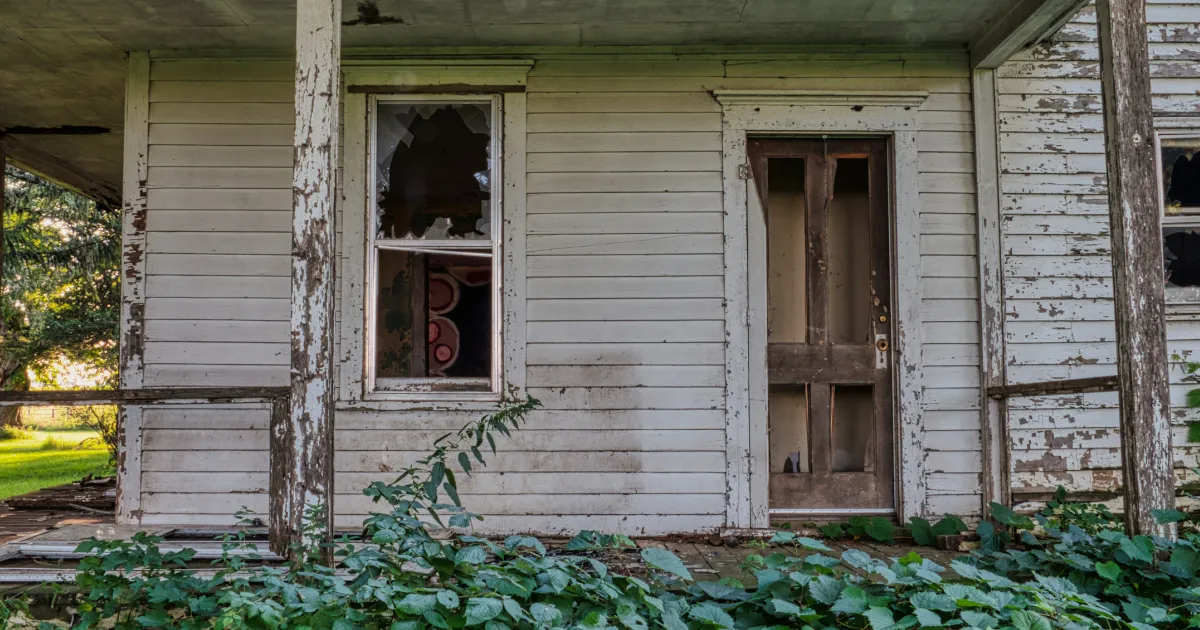
Yes, you can sell a Fort Lauderdale house with a code lien or open case, but the lien stays with the land until it is paid or released.
Fort Lauderdale fines can reach $1,000 a day for a first violation, and a sale before the hearing needs written disclosures to the buyer (Fla. Stat. 162.06(5)).
This is general information, not legal advice. State rules vary.
Jump to a section
Where does your code case stand?
Free. No obligation. You choose the closing date.
You can sell a house with a code lien in Fort Lauderdale, Florida, but the lien and any open case come along into the sale. The stakes run higher here than in many towns. Fort Lauderdale uses the larger fine caps that Fla. Stat. 162.09(2)(d) lets cities of 50,000 or more adopt. Under City Code Sec. 11-12, those caps reach $1,000 a day per violation for a first violation and $5,000 a day for a repeat. An irreparable or irreversible violation can draw up to $15,000. The state's base caps are $250 and $500 a day.
This guide follows a case from the first notice to a recorded lien. It covers what you owe a buyer while a case is open, how the lien turns up at closing, and how it can be reduced or paid. For the wider picture of selling in the city, see our Fort Lauderdale cash house buyer page.
Can you sell a house with a code lien in Fort Lauderdale?
Yes, a Fort Lauderdale house with a code lien or an open case can be sold, as long as the lien is paid, reduced, or accepted by the buyer. Nothing in Chapter 162 of the Florida Statutes stops a transfer.
What changes is the paperwork and the payoff. A recorded lien shows up on the title search, and a title company will often want it cleared before it insures the buyer. An open case with a pending hearing triggers a set of written disclosures. Each of those pieces is covered below.
Code case and code lien are two different stages
A code case is the city's file on a violation. A code lien exists only after a board or special magistrate orders a fine and a certified copy of that order is recorded. Many cases close long before that point, once the owner fixes the problem. The difference matters, because a case that never reached a recorded order may not appear in the county's public records at all.
How does a Fort Lauderdale code case turn into a lien?
A Fort Lauderdale code case moves from an inspector's notice, to a hearing, to an order with a compliance date, to a daily fine, and finally to a recorded lien. Each step comes from Chapter 162 of the Florida Statutes.
| Step | What happens | Source |
|---|---|---|
| 1. Complaint | A person reporting a violation must give a name and address. An anonymous complaint cannot start a case unless the inspector sees an imminent threat. | Fla. Stat. 162.06(1)(b) |
| 2. Notice of violation | The inspector notifies the owner and gives a reasonable time to correct. For a repeat violation, the inspector need not give time to correct. | Fla. Stat. 162.06(2) and (3) |
| 3. Hearing | If the violation continues, a hearing is scheduled with written notice. The case can still be heard if the owner corrected it late. | Fla. Stat. 162.06(2); 162.07 |
| 4. Order | The board issues findings and an order that can set a compliance date. A recorded order is notice to later buyers and binds them. | Fla. Stat. 162.07(4) |
| 5. Daily fine | If the compliance date passes, a fine can run for each day the violation continues. | Fla. Stat. 162.09(1) |
| 6. Recorded lien | A certified copy of the fine order is recorded and becomes a lien. The fine keeps accruing until compliance or a court judgment. | Fla. Stat. 162.09(3) |
| 7. Collection | After 3 months unpaid, the board may authorize foreclosure or a suit for a money judgment plus accrued interest. A homestead cannot be foreclosed. | Fla. Stat. 162.09(3) |
Two details in Fla. Stat. 162.07 affect a sale. If the city wins its case, its prosecution costs can be added to the lien. And if a recorded order is complied with by its date, the board issues an order acknowledging compliance, which is also recorded. That second order is useful paper to hand a buyer.

How high can Fort Lauderdale code violation fines go?
Fort Lauderdale code violation fines can reach $1,000 a day per violation for a first violation and $5,000 a day for a repeat one. An irreparable or irreversible violation can draw up to $15,000. These are ceilings, and the board or special magistrate sets the actual amount.
| Violation type | Florida base cap | Fort Lauderdale cap |
|---|---|---|
| First violation | $250 per day (Fla. Stat. 162.09(2)(a)) | Up to $1,000 per day per violation (City Code Sec. 11-12; Fla. Stat. 162.09(2)(d)) |
| Repeat violation | $500 per day (Fla. Stat. 162.09(2)(a)) | Up to $5,000 per day per violation (City Code Sec. 11-12; Fla. Stat. 162.09(2)(d)) |
| Irreparable or irreversible violation | Up to $5,000 per violation (Fla. Stat. 162.09(2)(a)) | Up to $15,000 per violation (City Code Sec. 11-12; Fla. Stat. 162.09(2)(d)) |
| Extra charges | Costs of repairs the local government makes (Fla. Stat. 162.09(1) and (2)(a)) | Enforcement costs and repair costs may be added (Fla. Stat. 162.09(2)(d)) |
State law tells the board what to weigh when it sets a fine. Under 162.09(2)(b), it considers:
- The gravity of the violation
- Any actions the violator took to correct it
- Any previous violations by the same violator
The daily structure is what makes a lien grow. A $1,000 daily cap means a balance can climb fast while a violation sits unfixed. Fixing the violation is what stops the clock under 162.09(3).
What do you owe a buyer if the code case is still open?
If you sell after the initial pleading is served but before the hearing, Florida requires written disclosures to the buyer and a notice to the code enforcement official within 5 days after the transfer. These duties come from Fla. Stat. 162.06(5).
Before the transfer, the seller must:
- Disclose in writing that the proceeding exists and what it is about.
- Give the buyer copies of the pleadings, notices, and other case papers the seller received.
- Disclose in writing that the new owner will be responsible for compliance with the code and with orders in the case.
Within 5 days after the transfer, the seller must file a notice of the transfer with the code enforcement official. It names the new owner, gives the new owner's address, and attaches copies of the disclosures. The statute treats a skipped disclosure seriously:
"A failure to make the disclosures described in paragraphs (a), (b), and (c) before the transfer creates a rebuttable presumption of fraud."
Fla. Stat. 162.06(5), Florida Statutes
The sale does not end the case. The statute says the proceeding is not dismissed, and the new owner gets a reasonable time to correct the violation before the hearing. Fort Lauderdale's Community Enhancement and Compliance customer service team takes case questions at 954-828-5207, per the city's Administrative Services page. The city asks callers to have the address or case number ready.
How does a lien search find a code enforcement lien in Broward?
A code enforcement lien in Broward County shows up two ways: in the recorded public records a title search covers, and in the City of Fort Lauderdale's own electronic lien report. Title companies typically check both before closing.
The recorded side comes straight from the statute. A certified fine order is recorded in the county's public records under 162.09(3). A recorded hearing order also serves as notice to any later purchaser under 162.07(4). A title examiner searching the owner's name and the parcel can find either one.
The city side covers more. The city's Lien Search page says it offers "electronic access to the City's interests against real property." It says these reports go mostly to title companies, search agencies, and escrow agents, and that one-time access can be arranged. The page lists no fee or turnaround time, and payoff questions go through the report's messaging tool.
Why an open case can slip past a title search
A case that has not reached a recorded order may live only in city files. That is one reason the city report matters. The Administrative Services division also lists lien research, payoff requests, and lien release processing among its services. A seller who wants a head start can ask about all three before listing or signing a contract.
Can a Fort Lauderdale code enforcement lien be reduced?
Yes, a Fort Lauderdale code enforcement lien can often be reduced, either by the board that imposed the fine or through the city's Lien Amnesty Program. State law says plainly that "an enforcement board may reduce a fine imposed pursuant to this section" (Fla. Stat. 162.09(2)(c)).
The city's Lien Amnesty Program for FY2027 runs from October 1, 2026 through September 30, 2027. Its main terms:
- A 50% reduction for eligible residential properties and 25% for non-residential ones.
- An extra 10% for some violation types, including nuisance, repeat, vacation rental, and irreparable or irreversible violations.
- The liened house and any other city property with the same owner must be in full compliance, with no fines owed and no current violations.
- Date-stamped photos no older than 30 days of the front, rear, both sides, and street view.
- A non-refundable $175.00 application fee.
- All fees and costs paid within 90 days of approval, after which the lien is released.
Only code fines and liens are reduced. Administrative fees, hard costs, legal expenses, demolition costs, utility liens, and recording fees are not. The city page also says the City Manager may grant more relief when the reduced lien exceeds the assessed value or the owner shows verifiable financial hardship. Applications go through the city's LauderBuild permitting portal.
Does homestead protect a Fort Lauderdale house from code lien foreclosure?
Homestead protects a Fort Lauderdale house from foreclosure of a code lien, but it does not erase the lien. The statute is direct: "No lien created pursuant to the provisions of this part may be foreclosed on real property which is a homestead" (Fla. Stat. 162.09(3)).
For a non-homestead house, such as a rental or a vacant inherited house, the city has more tools. After 3 months unpaid, the board may authorize the city attorney to foreclose or to sue for a money judgment plus interest. Heirs who find a lien on a parent's house can read our guide to selling an inherited house in Fort Lauderdale for the probate side.
Even on a homestead, the lien stays on the record and clouds title. A buyer's title company will generally require a payoff, a reduction, or a release before closing. Homestead buys time, not a clean title.
Should you pay the lien at closing or sell as-is with the case open?
Many Fort Lauderdale sellers with a code lien pay it from the sale proceeds at closing, while others sell as-is to a buyer who takes on the open case. Fixing the violation first is a third path, and it is the one that stops a daily fine.
Pay the lien from the proceeds
A recorded lien is often handled like a mortgage payoff. The closing agent gets a payoff figure from the city, pays it from the seller's side, and the city can then sign a satisfaction or release under 162.09(3). A running fine can change the number, so the payoff is usually refreshed close to the closing date.
Sell as-is with the case open
Some buyers accept a house with an open case and plan the repairs themselves. If the hearing is still pending, the 162.06(5) disclosures apply. As-is means as-is: the buyer takes the house in its current condition, and the price reflects the work. Our overview of selling a house with code violations covers the as-is route in general.
Fix first when the list is short
A short list, such as a fence repair or overgrown yard, can be simple to correct. Compliance stops the fine, and it is a condition of the Lien Amnesty Program. Waterfront owners should know a seawall citation runs on its own clock, which our Fort Lauderdale seawall guide explains.
How can Propcash help with a Fort Lauderdale code lien?
Propcash is a direct cash homebuyer, and we want to buy your house as-is, open code case included. No repairs, no cleaning, and no showings. Our offers are based on local market data, and we'll show you how we got to our number. Sellers pay no fees or commissions, and you pick your closing date.
A cash offer can sit next to your other options: fixing first, applying for amnesty, or listing. If a cash sale isn't your best move, we'll tell you. When you're ready, you can get a no-obligation cash offer from Propcash. A sale can close in as few as 7 days after the contract is signed.
Frequently Asked Questions
Does a code lien go away when a Fort Lauderdale house is sold?
No. Under Fla. Stat. 162.09(3), a recorded fine order is a lien against the land where the violation exists, so a sale does not erase it. The lien runs in favor of the city, which can sign a satisfaction or release once it is paid or resolved. In many sales the closing agent pays it from the seller's proceeds.
Can a code lien reach a different house I own in Fort Lauderdale?
It can. Fla. Stat. 162.09(3) says a recorded fine order becomes a lien on the land where the violation exists and on any other real or personal property the violator owns. That means a lien from one house can show up on the title search for a second house in the same owner's name.
Can the city foreclose a code lien on a Fort Lauderdale homestead?
No. Fla. Stat. 162.09(3) says no code lien created under Chapter 162 may be foreclosed on real property that is a homestead under the Florida Constitution. The lien still stays on the record, though, so it generally has to be paid, reduced, or released before a buyer's title company will insure a clean title.
Who pays for the city's lien report during a sale?
The City of Fort Lauderdale's Lien Search page says its electronic lien reports are typically requested by title companies, search agencies, and escrow agents as part of a real estate transaction. The city's page does not list a fee or a turnaround time, so the title or closing company is the place to ask who orders it and what it costs.
Do I have to fix every code violation before I sell?
Chapter 162 sets disclosure duties for a sale during a pending case, not a repair requirement. If a hearing is still pending, Fla. Stat. 162.06(5) requires written disclosures to the buyer and a notice to the code enforcement official within 5 days after the transfer. The new owner then takes on compliance, and the case is not dismissed.
Can the Lien Amnesty Program help if I am selling soon?
It may, if the house and any other property you own in the city are in full compliance. The FY2027 program runs from October 1, 2026 through September 30, 2027, and it offers a 50% reduction for eligible residential properties. The application carries a non-refundable $175.00 fee, and the remaining fees and costs must be paid within 90 days of approval.
Data Sources: Florida Statutes 162.06, 162.07, and 162.09 (Florida Legislature, read November 2026); City of Fort Lauderdale Code of Ordinances Sec. 11-12; City of Fort Lauderdale Lien Search, Administrative Services, and Lien Amnesty Program pages (read November 2026). Propcash is a direct cash homebuyer, not a law firm. Sellers should consult a Florida-licensed attorney for case-specific guidance.
Reviewed by the Propcash Editorial Team under our editorial standards. Published by Propcash, a direct cash buyer of houses. This guide is general information. Laws, fees, and market figures change, so check the current rules for your state.