
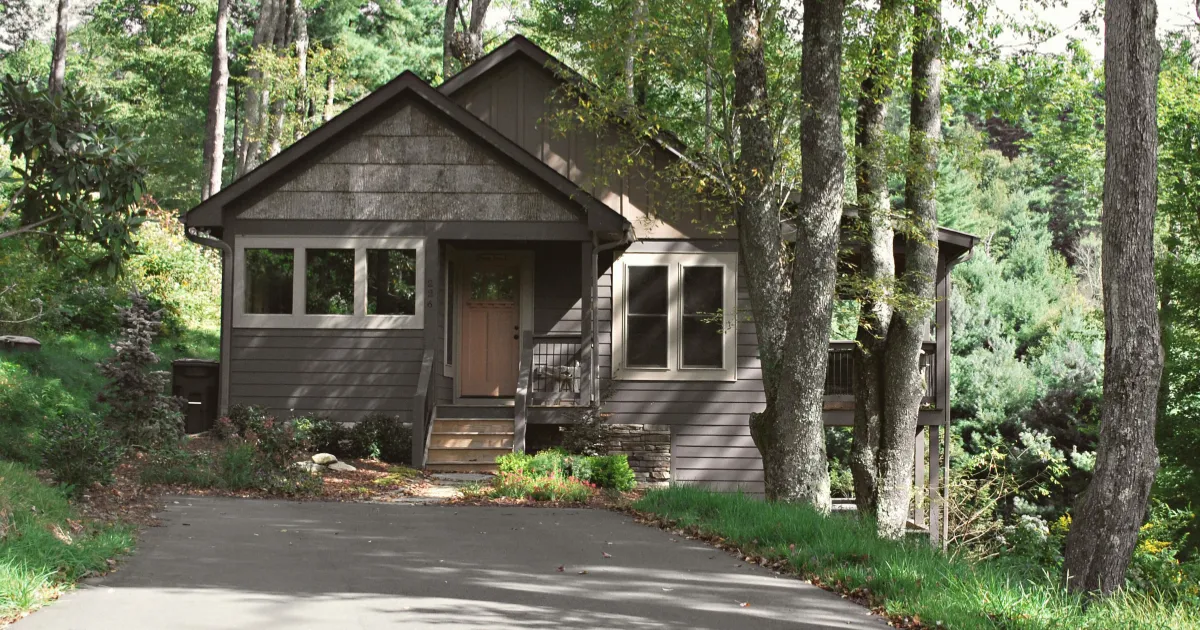
Fannin County heirs can sell family land together, have one heir buy out the rest, or file for partition.
Georgia's Uniform Partition of Heirs Property Act gives heirs who did not ask for a sale 45 days after the court's notice to elect to buy out those who did, at the court-set value. The court divides the land unless that would cause manifest prejudice to the co-owners as a group.
This is general information, not legal advice. State rules vary.
Jump to a section
Has your family talked about what to do with the land?
Free. No obligation. You choose the closing date.
Heirs property in Fannin County, GA is family land that passed down without a clean split, so several relatives now own it together. A tract near Mineral Bluff can end up with siblings, cousins, and an heir in another state all on the title. Some want to sell, and one may want to keep it. There's no rush to decide.
This guide sets out three ways a family can sell, starting with the simplest, and what Georgia's partition law does when talks stall. If the owner's estate is still open, our guides to probate for an inherited Fannin County cabin and to heirs selling with no will cover the court work that comes first.
What makes Fannin County family land heirs property?
Family land counts as heirs property when relatives own it together, no written agreement binds them all on dividing it, and at least one owner got title from a relative (O.C.G.A. § 44-6-180).
The statute adds one more test. On the day a partition case is filed, any one of these is enough:
- Co-owners who are relatives hold 20 percent or more of the interests.
- One person who took title from a relative holds 20 percent or more.
- Relatives make up 20 percent or more of the co-owners.
A grandmother's acreage outside Mineral Bluff, left to five children and now split among their children, can fit. Land two friends bought together from a stranger generally does not.
The Act covers partition cases filed on or after January 1, 2013, and the judge decides early whether the land is heirs property (O.C.G.A. § 44-6-181). If it is, the Act's rules control unless all co-owners agree otherwise in a record. The statute text here was read on FindLaw, which shows the Georgia Code current as of March 28, 2024. A Georgia real estate attorney can confirm whether anything has changed since.
Who has to agree before heirs sell Fannin County land?
A buyer of the whole tract generally needs a deed from every person on the title, so a family sale takes every heir's signature unless a court orders the sale.
That leaves three paths. The table sets them side by side, with the law behind each one.
| Path | Who must agree | What the law says | What it means for a sale |
|---|---|---|---|
| All heirs sell together | Every co-owner on the title | The Act applies only to partition actions; it covers cases filed on or after January 1, 2013 (O.C.G.A. 44-6-181) | No court sets the price or the date; one closing with deeds from each heir |
| One heir buys out the others | The buying heir and each heir who sells a share | Inside a partition case, each share's price is the court's value times that heir's fraction (O.C.G.A. 44-6-185) | The land stays in the family; the buyer needs cash or a loan |
| Partition case under the Act | No one; any one co-owner can file in the superior court of the county where the land lies (O.C.G.A. 44-6-160) | Court sets value (44-6-184), offers a buyout (44-6-185), and divides the land unless manifest prejudice (44-6-186) | A court sale is an open-market sale through a broker unless the court finds another method better for the group (44-6-187) |
When the owner's estate is still open
If the owner died and title was never cleared, the work can start at the Fannin County Probate Court, 400 West Main Street, Suite 204, in Blue Ridge. Once title rests with the heirs, a closing attorney may ask for a deed from each heir, or one deed that all of them sign.

Path one: the heirs sell together
Selling together can be the shortest path, because no court sets the price or the timing and the family keeps every decision.
What can help a family agree
- A written value or offer every heir can read, with the reasoning shown.
- A list of who holds what share, from the deed records the Clerk of Superior Court keeps.
- One closing attorney the whole family knows about from the start.
- Time for the heir who wants to keep the land to say so, and to price a buyout.
Heirs who live out of state
A cousin in Florida or Ohio may not need to drive to Blue Ridge to sign. The closing attorney can say whether papers can be signed before a notary near the heir's home, and what the deed and the title insurer require.
Can one heir buy out the others?
Yes. One heir can buy the other shares, and outside court the family sets the price and terms by agreement.
Inside a partition case, the Act fixes the math: each share costs the court's value of the whole tract times that heir's fraction (O.C.G.A. § 44-6-185). A family settling on its own can use the same formula.
As an illustrative example, picture a Mineral Bluff house and land valued at $500,000. That sits close to the 30559 ZIP's typical value of $501,585 (Zillow ZHVI, September 2026). A cousin holding one quarter would be owed $125,000. Countywide, Fannin's typical value was $496,269 that month, up from $484,667 in September 2025 (Zillow ZHVI).
A buyout can suit the heir who grew up on the land and wants to keep it. That heir needs cash or a loan, and a lender will want clear title as much as any buyer.

How does a partition action under the Georgia Uniform Partition of Heirs Property Act work?
A partition action asks a judge to divide co-owned land or order it sold, and Fannin County land goes to the Fannin County Superior Court (O.C.G.A. § 44-6-160).
Fannin belongs to the Appalachian Judicial Circuit with Gilmer and Pickens counties, and each county has its own superior court. The Clerk of Superior Court works at the courthouse, 400 West Main Street, Blue Ridge, and lists 706-632-2039 as its phone number.
The steps in order
- A co-owner files, and the court decides whether the land is heirs property (O.C.G.A. § 44-6-181).
- If heirs are served by publication, the filing heir posts a sign on the right of way next to the land within 10 days of the court's finding (O.C.G.A. § 44-6-182). The sign stays up while the case is pending.
- The court sets fair market value, and unless every co-owner agrees on a value or method, it appoints a disinterested licensed appraiser (O.C.G.A. § 44-6-184).
- Heirs who did not ask for a sale get the chance to buy out those who did (O.C.G.A. § 44-6-185).
- Any shares left over lead to a division of the land or a court-ordered sale (O.C.G.A. §§ 44-6-186 and 44-6-187).
How the court sets the value
The appraiser values the tract as if one owner held full title. Within 10 days after the appraisal is filed, the court tells each party the value and gives 30 days to object. The hearing comes no sooner than 30 days after that notice, even if no one objects.
What does the Act's buyout right give family members?
The buyout right lets any heir who did not ask for a sale buy out every heir who did, at the court-set value, before any sale happens (O.C.G.A. § 44-6-185).
"Not later than 45 days after the notice is sent under subsection (a) ..., any cotenant except a cotenant that requested partition by sale may give notice to the court that it elects to buy all the interests"
O.C.G.A. § 44-6-185(b), Georgia Uniform Partition of Heirs Property Act
If several heirs elect to buy, the shares are split in proportion to what each already owns. If no one elects, or no one pays on time, the case moves on to the choice between division and sale.
| Step in the case | Time the Act allows | Section |
|---|---|---|
| Sign posted when heirs are served by publication | Within 10 days of the court's finding | 44-6-182 |
| Court sends notice of the appraised value | Within 10 days after the appraisal is filed | 44-6-184 |
| Objections to the appraisal; value hearing | 30 days to object; hearing no sooner than 30 days after notice | 44-6-184 |
| Heir elects to buy out the heirs who asked for a sale | Within 45 days of the court's buyout notice | 44-6-185(b) |
| Electing heir pays the price | By a court deadline no sooner than 60 days after notice | 44-6-185(e) |
| Paying heirs take up a share someone failed to pay for | 20 days after the court's notice | 44-6-185(f) |
| Parties agree on a broker after a sale order | Within 10 days after the order | 44-6-187(b) |
| Broker reports an offer at or above the court's value | Within 7 days of receiving it | 44-6-188 |
When does the court divide the land or order a sale?
The Act prefers dividing the land itself, called partition in kind, and orders a sale only if division would cause manifest prejudice to the co-owners as a group (O.C.G.A. § 44-6-186).
No single factor decides it. The court weighs them together, including:
- Whether the land can practically be divided.
- Whether the pieces would be worth materially less than the whole tract sold.
- How long the family has owned or lived on the land.
- Sentimental attachment, including ancestral value.
- The current lawful use and the harm if it stopped.
- Who paid a fair share of taxes, insurance, and upkeep.
A mountain tract with one house, one well, and one steep drive may be hard to split fairly. When the court does divide, it can order payments between heirs to even out the shares. If no co-owner asked for a sale, the court dismisses the case instead of ordering one.
How a court-ordered sale works
A court sale under the Act is an open-market sale through a broker unless the court finds sealed written offers or a public sale more economically advantageous and in the best interest of the co-owners as a group (O.C.G.A. § 44-6-187). If the heirs agree on a broker within 10 days, the court appoints that broker. Otherwise the court picks a disinterested one.
The broker offers the land at no less than the court's value and reports any offer at that price within 7 days (O.C.G.A. § 44-6-188). Under § 44-6-187, if none arrives in a reasonable time, the court may, after a hearing, approve the highest outstanding offer, reset the value, or order sealed written offers or a public sale. A buyer who is entitled to a share of the proceeds gets credit for that share.
What does each path cost the family in time?
Selling together moves at the pace of the slowest signature and the title work, while a partition case runs on court deadlines that add up to months.
- All heirs sell together: the timeline depends on clearing title and gathering deeds, and the family picks the closing date.
- Private buyout: the timeline depends on the buying heir's cash or loan approval.
- Partition case: the Act's minimums alone (30 days before the value hearing, then a payment date no sooner than 60 days after the buyout notice, which includes the 45-day election window) come to about 90 days after the appraisal notice. Filing, service, hearings, and any sale come on top.
Property taxes on the land keep coming due while a case is open. Our guide to selling a Fannin County house with delinquent taxes covers what happens when those bills fall behind.
How can Propcash help heirs selling family land in Fannin County?
Propcash is a direct cash homebuyer, and we buy inherited houses and cabins as-is when the heirs on the title sign together. No repairs, no cleaning, no cleanout: take what you want, leave the rest. There are no agent commissions, no closing costs charged to you, and no fees. Our Mineral Bluff and Cherry Log cash house buyer page and our page on selling an inherited house as-is explain how it works.
There's no rush to decide. Our offers are based on local market data, and we'll show you how we got to our number, so every heir reads the same page. Our offers don't expire, and you pick the closing date. If a cash sale isn't your best move, we'll tell you. When the family is ready, you can get a cash offer to set beside a buyout or a listing.
Frequently Asked Questions
Can an heir who lives in another state sign for Mineral Bluff land without traveling?
Possibly. The closing attorney can say whether the deed and closing papers can be sent to an heir who lives elsewhere to sign before a notary near home. The attorney handling the closing can also say what the deed and the title insurer need.
Does the heir who paid the taxes on the land get a bigger share?
The Act's buyout price uses each heir's fractional share. It also lists each co-owner's contribution to property taxes, insurance, and upkeep as one factor the court weighs when deciding whether to divide the land or order a sale (O.C.G.A. 44-6-186). How past payments are settled between heirs is a question for a Georgia real estate attorney.
What happens if a cousin on the title cannot be found?
A partition case can still go forward, and when service is by publication the filing heir posts a sign next to the land within 10 days of the court's finding (O.C.G.A. 44-6-182). If the court divides the land, the shares of unknown or unlocatable co-owners stay together as one undivided piece (O.C.G.A. 44-6-186). An heir can also ask the court, within 45 days of the buyout notice, to authorize buying the interests of co-owners who were served but did not appear (O.C.G.A. 44-6-185).
Is land that siblings bought together from a stranger heirs property?
Generally not. Georgia's definition requires that at least one co-owner acquired title from a relative, living or deceased, and that no written agreement binding all co-owners governs a partition (O.C.G.A. 44-6-180). Land bought from an unrelated seller can later become heirs property once a share passes to a child or other relative.
Can a family member buy the land at a court-ordered sale?
Yes. Under O.C.G.A. 44-6-187, a buyer who is entitled to a share of the sale proceeds gets a credit against the price equal to that share. That credit can make it easier for an heir to keep the land even after the court orders a sale.
Can the heirs still sell on their own after a partition case is filed?
The Act's rules apply unless all co-owners agree otherwise in a record (O.C.G.A. 44-6-181), so a family that comes to terms in a record can choose its own path. The heirs' attorneys can explain how to tell the court and end the case. A Georgia real estate attorney can explain the steps for a specific case.
Reviewed by the Propcash Editorial Team under our editorial standards. Published by Propcash, a direct cash buyer of houses. This guide is general information. Laws, fees, and market figures change, so check the current rules for your state.
