
To sell an inherited Macon house, someone first needs authority from the Probate Court of Bibb County to sign the deed.
That is an executor under a will, an administrator without one, or the heirs together under a no-administration order. While probate runs, an empty house can enter Macon-Bibb's blight tax process, and tax bills keep going to the owner on the Tax Assessors' records.
This is general information, not legal advice. State rules vary.
Jump to a section
Has the Probate Court of Bibb County given you authority over the estate yet?
Free. No obligation. You choose the closing date.
To sell an inherited house in Macon, GA, someone first needs authority from the Bibb County Probate Court. That court has "exclusive jurisdiction over the probate of wills, the administration of estates, and the appointment of guardians." Meanwhile, the house may sit empty. In Macon-Bibb that matters, because the county's blight tax process covers only vacant houses, and property tax bills keep coming to the owner on the county's records.
This guide is for heirs to older central-Macon houses, often living out of state. It is general information, not legal or tax advice.
Who can sell an inherited house in Macon?
Only a person with legal authority over the estate, or the heirs acting together under a court order, can sign a deed for an inherited Macon house. Being named in a will, or being the oldest child, does not by itself let you sell.
Georgia gives that authority to a personal representative: an executor when there is a will, an administrator when there is not. Under O.C.G.A. § 53-7-1, the representative's duties and powers start on qualification. The same section asks the representative to settle the estate "as expeditiously and with as little sacrifice of value as is reasonable."
A house held jointly or in a trust may follow a different path. A Georgia probate attorney can read the deed.
What does the Probate Court of Bibb County need first?
The Probate Court of Bibb County first needs a petition on the right Georgia standard form, a death certificate, and, when there is one, the original will. The court uses the statewide forms published at gaprobate.gov.
Which county's court hears the case depends on where the parent lived. The court's Probate Proceedings page puts the rule this way:
"Proceedings are filed in the Probate Court of the county of the decedent's residence in Georgia or in the county where property of a non-resident is located."
Probate Court of Bibb County, Probate Proceedings page
A parent who lived in Macon lived in Bibb County, which shares one consolidated government with the city, so the case is filed in this court. Macon County is a different Georgia county with its own court.
Where the court is and how to reach it
- Office: 601 Mulberry Street, Second Floor, Macon, GA 31201 (court contact page).
- Mail: Bibb County Probate Court, PO Box 6518, Macon, GA 31208.
- Court Division: (478) 621-6494, probatecourt-courtdiv@maconbibb.us.
- Hours: Monday to Friday, 8 a.m. to 5 p.m. The court asks visitors to arrive before 4 p.m. and takes no payments after 4:30 p.m.
Filing from out of state
The court now accepts electronic filing through TrueFiling. TrueFiling charges $14.00 per petition or caveat, and the card processor adds 3.25%. The court's statutory fees stay the same.
The notice sets three rules for e-filers:
- E-filed will probates, administrations, and year's support petitions need a death certificate.
- The "Court Pages" at the back of a petition are left off; the court prepares them.
- The original will must be filed with the court within 10 days of e-filing.
The court's homepage adds that some estate and guardianship proceedings may be held wholly by video conference. One step still needs an official: under the statewide general instructions, a probate judge or clerk gives the oath before letters issue, never a notary. Form GPCSF 53 lets a court outside Georgia give it.
Court staff cannot pick the proceeding for you; the Probate Proceedings page says doing so "may constitute the unauthorized practice of law."

Will or no will: the probate paths and who signs the deed
With a will, the named executor usually signs the deed. Without one, a court-appointed administrator signs, or the heirs sign together under a no-administration order. Each path starts with its own standard form.
| Situation | Standard form that starts it | Who signs the deed | Authority to sell comes from |
|---|---|---|---|
| Will names an executor | GPCSF 4 (common form) or GPCSF 5 (solemn form) | The executor, once letters issue | Powers in the will, or court leave to sell (O.C.G.A. § 53-8-13) |
| Will, but no executor able to serve | GPCSF 7 or GPCSF 8 (administration with will annexed) | The court-appointed administrator | Powers granted by the court, or leave to sell |
| No will, estate needs administration | GPCSF 3 (letters of administration) | The administrator | Leave to sell, or powers the heirs all consent to (O.C.G.A. § 53-7-1(b)) |
| No will, no debts (or creditors consent), heirs agree | GPCSF 9 (no administration necessary) | The heirs who take title under the order | The court order and the heirs' signed agreement (O.C.G.A. § 53-2-40) |
| Surviving spouse or minor children claim support | GPCSF 10 (year's support) | The person the house is set aside to | The year's support order; GPCSF 17 covers conveying set-aside property |
When there is a will
A will can hand the executor a power of sale by reference. O.C.G.A. § 53-12-261 lists the power "to sell, exchange, grant options upon, partition, or otherwise dispose of any property," and subsection (d) lets a will adopt it. If the will is silent, the executor can ask the court for leave to sell.
When there is no will
Georgia's intestacy rule decides who the heirs are. Under O.C.G.A. § 53-2-1, a surviving spouse shares equally with the children, but "the spouse's portion shall not be less than a one-third share."
The no-administration path under O.C.G.A. § 53-2-40 skips appointing anyone. It needs a signed agreement among the heirs on how to divide the estate. A house with a mortgage can be included only if the lender consents or is served and does not object. When the order affects real property, the court files a certified copy in the deed records within 30 days.
Year's support, briefly
Under O.C.G.A. § 53-3-1, a surviving spouse and minor children may claim "property for their support and maintenance" for 12 months after the death. An award can set the house aside to them ahead of other claims. Our statewide guide to selling an inherited house in Georgia covers year's support in more depth.
What does a petition for leave to sell ask for?
A petition for leave to sell (form GPCSF 13) asks the court to approve a specific sale, so it describes the house, the purpose, the proposed price and terms, and every heir or beneficiary. Under O.C.G.A. § 53-8-13, the court then sends notice to them.
If no one files a timely written objection, the statute says the court "shall order such sale summarily in the manner and terms petitioned." An objection leads to a hearing, where the court can approve, deny, or change the terms. After closing, the representative reports the sale to the court.
- FilingThe personal representative files GPCSF 13 with the house, price, terms, and heirs
- NoticeThe court issues a citation to the heirs or beneficiaries
- No timely objectionThe court orders the sale as petitioned
- Objection filedA hearing, where the court can approve, deny, or change the terms
- After closingThe representative reports the sale to the court
What the form asks you to attach
The GPCSF 13 instructions spell out the paperwork:
- Value: a recent appraisal if there is one; otherwise the most recent ad valorem tax statement. In Macon the Tax Commissioner mails that statement.
- Price gap: if the appraisal or tax value is higher than the sale price, a sheet explaining why.
- Contract: a copy of the sales contract, if one exists, as an exhibit.
- Heirs: without a will, a definite statement that the listed heirs are all the heirs. The court and gaprobate.gov offer an Heirs Determination Worksheet for this.
- Signatures: heirs who acknowledge service sign before a notary or a Georgia probate clerk.
Without a will, there is a second route. Under O.C.G.A. § 53-7-1(b), heirs (or beneficiaries, with a will) who all consent can ask the court to grant the representative the § 53-12-261 powers. The court is not required to grant them. The court must first publish a citation in the county's official newspaper. For Macon-Bibb, that legal organ is The Macon Reporter from January 1, 2026.
What if the deed is still in a grandparent's name?
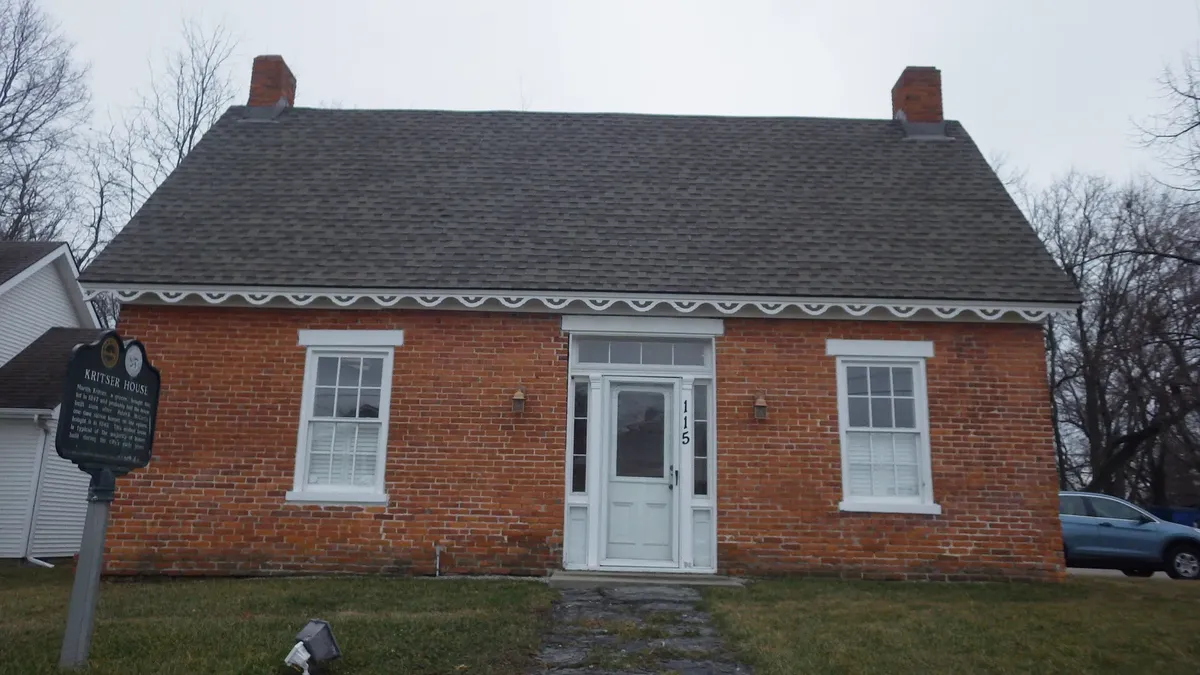
If the deed still names a parent or grandparent who died years ago, the house often needs that earlier estate settled, or every living heir's agreement, before a buyer's attorney can clear title. This is often called heirs' property or tangled title.
Historic Macon Foundation dates Pleasant Hill to 1870 to 1936, Vineville to about 1830 to 1935, and Tindall Heights to about 1870 to 1942. A house held in one family that long may never have gone through probate.
Georgia law has a name for this. O.C.G.A. § 44-6-180 defines "heirs property" as real property held in tenancy in common that meets three tests on the day a partition case is filed:
- No written agreement binds all the co-owners on how to divide it.
- At least one co-owner got title from a relative.
- Relatives hold at least 20% of the interests, or make up at least 20% of the co-owners, or one person who inherited from a relative holds 20% or more.
The court's probate records search can show whether an earlier estate was opened. A Georgia attorney can run the title.
What happens while an inherited Macon house sits empty?
An empty inherited house in Macon can enter the county's blight tax process, and tax bills keep coming to the owner of record. Neither clock waits for probate.
Macon-Bibb Code Enforcement's blight tax steps begin with a complaint and an inspection, and the page is plain: "The property MUST be vacant." Houses declared blighted without an appeal go on a list due to the Tax Commissioner each August. In October 2025, commissioners voted unanimously to raise the blight tax multiplier to 15 times the millage rate (Macon Newsroom, October 2025).
The Tax Commissioner's property tax page says bills are mailed by September 15 to the owner in the Tax Assessors' records, or the owner as of January 1 if that record was not updated. Installments are due October 15 and November 15. Garbage is billed quarterly to residential premises, "vacant or occupied."
Our guides to selling a vacant Macon house before the blight tax and to Macon-Bibb's 60-day tax sale redemption cover both clocks in detail.
Which taxes come up when the house sells?
Two kinds of tax usually come up: unpaid Macon-Bibb property tax, and federal income tax on any gain. A closing attorney typically checks the first; a tax professional can speak to the second.
Property tax in Macon-Bibb is figured on 40% of fair market value, less exemptions, times the millage rate (Macon-Bibb Tax Commissioner). An open tax bill is often paid from the sale proceeds at closing.
For income tax, IRS Publication 551 lists the house's fair market value on the date of death as one possible basis for inherited property. Basis is the starting point for figuring gain.
For a sense of scale, Zillow's typical home value for Macon was about $171,500 in September 2026, up from about $167,300 a year earlier (Zillow ZHVI, September 2026). The same index put ZIP 31204 near $120,900, and ZIP 31201 near $100,300. A ZIP figure says little about one house's condition.
Can you sell the house with everything still in it?
Yes. An inherited Macon house can often be sold as-is with the furniture and belongings still inside, once the family has taken what it wants. Take what you want, leave the rest.
The belongings are part of the estate too. The court's reports page carries the Inventory form for a decedent's estate. A list can help the family agree on who keeps what.
Sorting a parent's house takes time, and there's no rush to decide. A traditional listing often means emptying, cleaning, and repairing first; an as-is sale does not.
How can Propcash help with an inherited Macon house?
Propcash is a direct cash homebuyer that buys houses as-is, so an inherited Macon house can sell with its contents and its repairs left as they are.
Sellers pay no fees or commissions, and you pick the closing date to fit the probate schedule, which can be as few as 7 days after the contract is signed. Our offer is based on local market data, and we'll show you how we got to our number.
An offer from Propcash can sit beside your other options, including listing with an agent, while you and your attorney work through the estate. Our offer stands, with no aggressive follow-up. If a cash sale is not your best move, we will tell you. You can get a cash offer on the inherited house or see how we buy in Macon and across Bibb County.
Frequently Asked Questions
Where is the Probate Court of Bibb County, and how do you reach it?
The Probate Court of Bibb County is at 601 Mulberry Street, Second Floor, in Macon, and its mailing address is PO Box 6518, Macon, GA 31208. The Court Division answers at (478) 621-6494 and by email at probatecourt-courtdiv@maconbibb.us. Hours are Monday to Friday, 8 a.m. to 5 p.m., and the court asks visitors to arrive before 4 p.m.
Can an out-of-state heir open a Bibb County estate without traveling to Macon?
Often, yes, for much of the work. The court accepts electronic filing through TrueFiling, and its homepage says some estate and guardianship proceedings may be held wholly by video conference. The oath of office cannot be taken before a notary, but the statewide standard forms include a commission (GPCSF 53) for a court outside Georgia to give it. A Georgia probate attorney can confirm which steps fit a given estate.
What does it cost to e-file a probate petition in Bibb County?
TrueFiling charges an e-filing fee of $14.00 per petition or caveat, according to the court's e-filing announcement. The card processor adds a 3.25% convenience fee. The court says the statutory fees Bibb County collects stay the same, so the filing fee itself is separate from those two charges.
Can the probate clerk tell me which petition to file?
No. The court's Probate Proceedings page says staff may not choose the proceeding for you, because doing so may be the unauthorized practice of law. Staff can answer basic questions about the standard forms and deadlines and can schedule uncontested hearings. The page suggests talking with an attorney who practices probate or estate law.
Can an occupied inherited house in Macon get the blight tax?
Macon-Bibb Code Enforcement's blight tax process starts with an inspection, and its page says the property must be vacant. A house where a relative still lives is outside that process as the county describes it. An empty house that later draws a complaint can be inspected, so the vacancy date matters to heirs deciding whether to hold the house.
Who receives the Macon-Bibb tax bill after the owner dies?
The Macon-Bibb Tax Commissioner bills the owner shown in the Tax Assessors' records. If that record was not updated, the owner as of January 1 is billed, or the current owner if the office learns of a transfer within 90 days of the due date. Bills go out by September 15, with installments due October 15 and November 15. An estate that has not changed the record may still receive the bill in the late owner's name.
Reviewed by the Propcash Editorial Team under our editorial standards. Published by Propcash, a direct cash buyer of houses. This guide is general information. Laws, fees, and market figures change, so check the current rules for your state.