
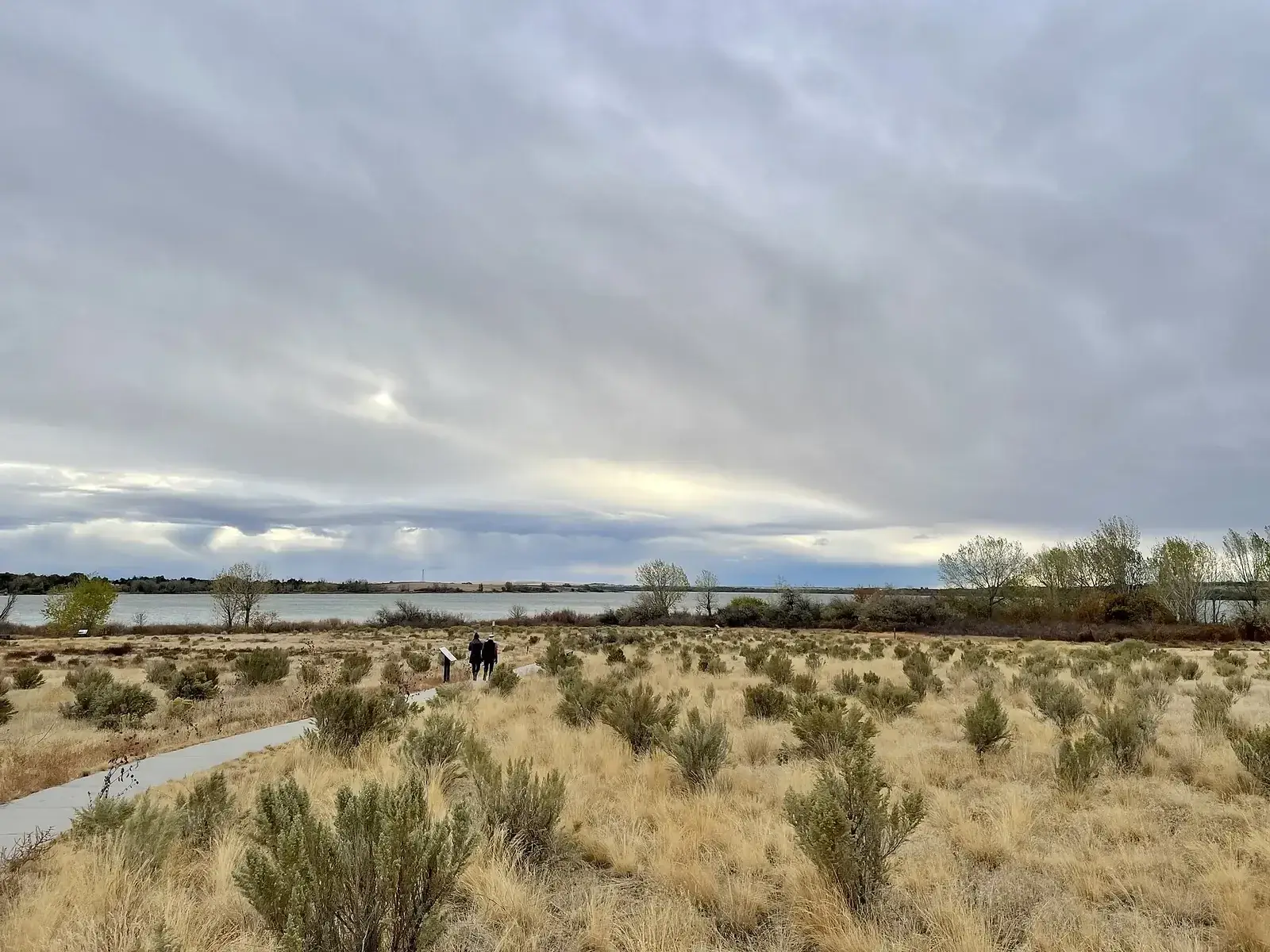
A ditch on a Nampa lot carries a right-of-way, and fences, sheds, or trees on it need the operator's written permission.
A visible ditch counts as notice to the owner (Idaho Code § 42-1102(3)), and the right-of-way stays with the land. Items placed without permission can be removed at the expense of whoever caused or permitted them, if they unreasonably or materially interfere.
This is general information, not legal advice. State rules vary.
Jump to a section
Is anything on your lot built over or next to the ditch?
Free. No obligation. You choose the closing date.
An irrigation ditch easement on a Nampa, Idaho lot gives the ditch's owner or operator the right to enter, clean, repair, and occupy the strip it needs. Idaho law also bars fences, sheds, trees, concrete, and other encroachments on that strip without the operator's written permission. For a seller, the question is simple: does anything on your lot sit inside the right-of-way, and do you have the paper that says it can stay?
This guide covers what the statute lets the operator do, which items count as encroachments, and what changes when a past owner piped the ditch. It also covers how to find who runs your lateral, what a buyer and title company will ask, and how to request a permission letter before you sell.
What an Irrigation Ditch Easement Allows on a Nampa Lot
An irrigation ditch easement lets the ditch owner or operator enter your land to inspect, operate, clean, maintain, and repair the ditch, and to occupy as much width along it as that work needs. Those rights come from Idaho Code § 42-1102(2).
Under the statute, the operator may:
- Bring crews and the equipment commonly used for ditch work onto the right-of-way.
- Remove debris, soil, and vegetation, and leave that material within the right-of-way.
- Do the work in any season of the year, without prior notice to the owner or occupant.
- Build or relocate headgates, measuring devices, roads, fences, or gates that serve the ditch.
Two more lines matter for a seller. The operator is not obliged to maintain the right-of-way or its vegetation for the landowner's benefit. And under subsection (2)(f), the landowner's permission "shall not be required" for the operator to use these rights.
The Nampa & Meridian Irrigation District's own FAQ says its canals, laterals, and drains were built in the early 1900s to carry Boise River water to farmland. Houses went up beside them as the towns grew. NMID says it delivers water to 69,000 acres through more than 500 miles of canals and drains (NMID, November 2026). That history is why older South Nampa lots and rural-edge parcels toward Lake Lowell can have an open lateral along a fence line or across the back yard.
Is a Fence, Shed, or Tree Over a Lateral an Encroachment in Idaho?
Yes, if it sits inside the right-of-way without the operator's written permission. Section 42-1102(4) lists roads, utilities, fences, gates, pipelines, structures, landscaping, trees, vegetation, and "other construction or placement of objects" as encroachments that need that permission.
"No person or entity shall cause or permit any encroachments onto the right-of-way ... without the written permission of the owner or operator of the right-of-way..."
Idaho Code § 42-1102(4), Idaho Legislature
The same subsection says that permission "shall not be unreasonably withheld." Subsection (5) covers what happens to items placed without it. If an item unreasonably or materially interferes with the right-of-way, it is removed at the expense of the person who caused or permitted it, on the operator's request. In an emergency, such as reduced water delivery or property damage, the operator may ask for immediate action. If the work is not done in time, the operator may do it and charge that person.
A parallel section covers easements held by irrigation districts, lateral ditch associations, and similar entities. Idaho Code § 42-1205 uses nearly the same list and the same written-permission rule. NMID's FAQ still cites its older number, 42-1209, which the 2026 legislature redesignated as 42-1205.
| What sits on the right-of-way | What Idaho law says | Section |
|---|---|---|
| Fence or gate along the ditch bank | Named as an encroachment; needs the operator's written permission | 42-1102(4), 42-1205(1) |
| Shed, deck, or other structure | Falls under "structures"; removed at the expense of whoever caused or permitted it if it unreasonably or materially interferes | 42-1102(4)-(5) |
| Trees, shrubs, or landscaping | Named as encroachments; the operator may also remove vegetation it reasonably deems necessary to maintain the ditch | 42-1102(2)(b), (4) |
| Concrete, driveway, or private road | Roads and "other construction" are named; needs written permission | 42-1102(4) |
| Ditch piped or moved by a landowner | Needs written permission first; increased upkeep falls on the landowner and successors | 42-1203(2)-(4) |
| Anything left in place for years | District and association easements are not subject to adverse possession | 42-1204(1) |
NMID's published standards show how it views planting near its facilities. Its May 2026 development packet says landscaping along its easements may be allowed at NMID's discretion, case by case. It limits that to grasses, small shrubs, and certain trees whose mature drip line will not hang over the facility or maintenance road.
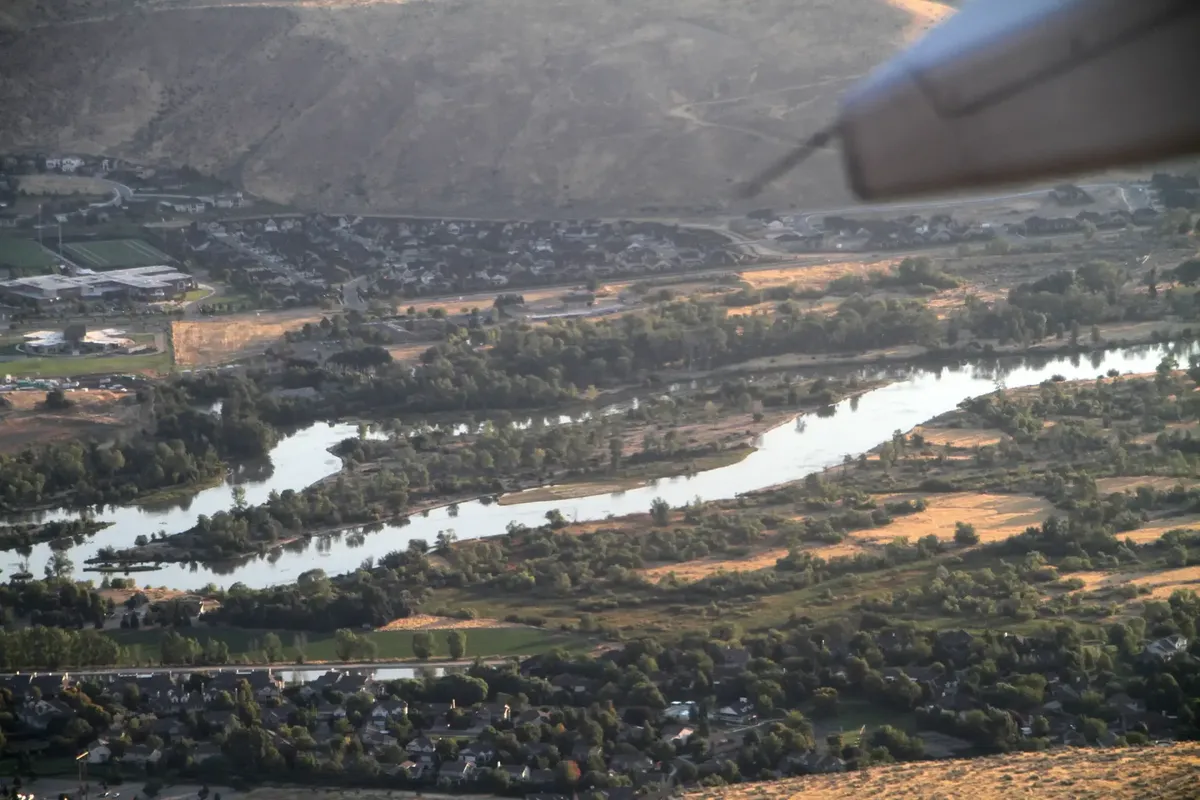
What If a Past Owner Piped or Covered the Ditch?
A piped ditch still carries the right-of-way, and Idaho law requires the operator's written permission before a landowner pipes or relocates one. Idaho Code § 42-1203 lets a landowner pipe or relocate a ditch at their own expense. A buyer or title company may ask to see that permission.
The permission exists to make sure the change will not impede the flow or block access for maintenance. It also makes provision for any added upkeep cost and documents the right-of-way. As with fences, it "shall not be unreasonably withheld." Three other rules follow the pipe:
- Operation and maintenance stay with the ditch's owner, not the landowner.
- The landowner and their "heirs, executors, administrators, successors, and assigns" carry any increased maintenance, rehabilitation, and replacement cost, unless a written agreement says otherwise.
- A ditch piped without permission can be ordered restored to its prior condition, at the expense of whoever caused or permitted it, if it unreasonably or materially interferes.
The section applies to ditches existing on or established after July 1, 2024 (§ 42-1203(6)). NMID's packet says it requires a license agreement for piping a district facility. It also sets material standards for any canal or lateral that gets piped.
NMID's encroachment review policy says the district "is not a member of Dig Line." A buried NMID pipe may not appear on a standard utility locate, so the district asks for its own locate request in advance.
Who Operates the Lateral Across Your Nampa Lot?
The operator is the entity that owns or runs the ditch, and only it can give written permission. On a Nampa lot that may be NMID, another irrigation district, a lateral water users' association, or the city, so the first job is finding out which one.
District-owned canals and laterals
NMID's FAQ says it owns the Ridenbaugh Canal and its laterals and drains, along with a strip on each side for maintenance. It says no encroachment on those facilities is allowed without written permission, which NMID gives "in the form of a legal agreement." Its district lookup page points owners to their bill and to the Idaho Department of Water Resources irrigation organizations map. That IDWR list includes both NMID and the Pioneer Irrigation District. NMID also notes that some water comes from the city instead, which the IDWR map will not show.
Private user ditches and lateral associations
Some rural-edge lots sit on a shared "user" ditch rather than a district lateral. NMID says community or user ditches belong to the individuals or associations that use them. It says they came from farm units being divided into multiple ownerships, and those landowners operate and maintain them.
Idaho law gives these ditches a formal structure. Under Idaho Code § 42-1302, water users who share a common lateral make up a lateral water users' association. The association meets each year, elects a board, and elects a lateral manager. Under § 42-1306, water users keep their laterals in good condition, and the board directs repairs and maintenance. NMID's gravity flow page says the users vote to appoint a water master, who is not a district employee.
The assessment that pays for district water is a separate topic. The guide to irrigation assessments at a sale covers how that bill works and clears. If your lot also carries a well or a decreed water right, the guide to selling Nampa acreage with a water right covers the IDWR side.
What a Buyer and Title Company Will Ask
A buyer and title company will usually want to know where the right-of-way runs, who holds it, and whether anything on the lot sits inside it without permission. Under § 42-1102(3), an owner is deemed to have notice of the right-of-way if the ditch is visible or reasonably discoverable.
Where the paper trail lives
A written easement or a recorded license agreement is the cleanest answer to the "who holds it" question. NMID's encroachment review policy says its license agreements are recorded in the county where the work happens. For Nampa that is Canyon County. The Canyon County Recorder says its index of documents from 1984 to the present is online. The images themselves are viewed at the Recorder's Office at 111 N 11th, Suite 330, in Caldwell, and older records are on microfilm.
Years of use do not move the line
A fence that has stood for decades does not shrink the easement. Idaho Code § 42-1204 says easements held by irrigation districts, lateral ditch associations, and similar entities are not subject to adverse possession. It also bars building an obstruction to try to claim one.
One more rule often comes up at closing. Under § 42-1102(6), whoever causes or permits an encroachment is responsible for keeping it from interfering with the ditch and is liable for resulting damages.
What the Idaho Disclosure Form Asks About Easements
The Idaho seller disclosure form asks you to describe conditions that may affect your ability to clear title, and it names "encroachments, easements" as examples. That is question 6 of the statutory form in Idaho Code § 55-2508. Question 8 separately asks about additions or alterations made without a building permit.
Under § 55-2509, the seller delivers the signed form within ten days of accepting the buyer's offer. Some transfers are exempt, including transfers by a fiduciary in the course of administering a decedent's estate (§ 55-2505(7)). The full timing, exemptions, and remedies are in the Idaho seller disclosure requirements guide. A licensed Idaho attorney can say how they apply to a specific ditch.
How to Get a Written Permission Letter Before You Sell
You get written permission by asking the ditch's owner or operator for it, in writing, for the specific item on the right-of-way. For NMID facilities that usually means a license agreement. For a private lateral it may be a signed letter from the association or its users.
| Who to contact | What to ask for | Why it matters at a sale |
|---|---|---|
| NMID main office, 1503 1st Street South, Nampa, (208) 466-7861 | Whether the ditch is an NMID facility, the easement width, and any license agreement on file | NMID grants permission through a legal agreement (NMID FAQ) |
| NMID Water Superintendent, (208) 466-0663 | A pre-application meeting about a license agreement (NMID's packet describes it for development projects, so ask whether it applies to an existing fence or pipe) | NMID's packet routes license agreements through this office |
| Water master or lateral association board | A signed letter allowing the item, and the lateral and tap report | The association runs a private lateral (§§ 42-1302, 42-1306) |
| IDWR irrigation organizations map | Which district's boundary the address falls in | Tells you which operator to ask |
| Canyon County Recorder, Caldwell, (208) 454-7555 | Recorded easements, license agreements, and plats for the parcel | Gives the title company a recorded document to rely on |
Some sellers find these details make the request go faster:
- The parcel number, and the assessment number from the top right corner of the NMID tax notice.
- Photos and rough measurements of each item from the ditch centerline.
- A question about whether the operator wants the item moved, modified, or left as is.
- Written copies of every reply, since the statute speaks of written permission.
NMID's FAQ says to call Customer Service for the water master's name on a user ditch. Its encroachment policy says its own review can take up to 5 weeks or longer, depending on complexity and workload. That policy is written for utility crossings, so the office can say what timeline applies to a house lot.
How Can Propcash Help With a Ditch Across Your Lot?
Propcash is a direct cash homebuyer, and we can buy a Nampa house as-is with an open lateral, a piped ditch, or a fence nobody signed off. You do not have to clear the yard, move a shed, or wait on a license agreement first.
We'll make you one cash offer based on local market data and show you how we got to our number. You pick the closing date, and closing can happen in as few as 7 days. If a permission letter is easy to get and the house shows well, listing may net you more, and if a cash sale is not your best move, we will tell you. The Nampa cash buyer page covers how a Propcash sale works locally, or you can get a cash offer with no obligation.
Frequently Asked Questions
Can the irrigation district come onto my Nampa lot without asking first?
Yes, within the right-of-way. Idaho Code 42-1102 lets the ditch owner or operator occupy the right-of-way in any season to operate, clean, maintain, and repair the ditch without prior notice to the owner or occupant. The same section says the landowner's permission is not required to exercise those rights.
If a fence has stood on the ditch bank for 20 years, does that strip become mine?
Not when the easement belongs to an irrigation district or a lateral ditch association. Idaho Code 42-1204 says easements and rights-of-way owned by irrigation districts, nonprofit irrigation entities, lateral ditch associations, and drainage districts are not subject to adverse possession. The age of the fence does not change who holds the easement, so the fence still needs the operator's written permission.
Who pays to remove a shed that sits over a lateral?
Idaho Code 42-1102(5) says an encroachment placed without written permission is removed at the expense of the person or entity that caused or permitted it. That applies on the operator's request, if the item unreasonably or materially interferes with the right-of-way. If that person does not act in time, the operator may do the work and charge them. A licensed Idaho attorney can say how that applies to a shed a past owner built.
Does NMID maintain the small user ditch behind my house?
Often not. The Nampa and Meridian Irrigation District's FAQ says community or user ditches are owned by the individuals or water users' associations that use them, and those landowners operate and maintain them. Idaho Code 42-1306 also says water users shall keep their laterals in good condition, and NMID owns and maintains its own canals, laterals, and drains.
Do I have to mention a ditch on my Idaho disclosure form if I never use the water?
The Idaho seller property disclosure form asks the seller to describe conditions that may affect the ability to clear title, and it names easements and encroachments as examples (Idaho Code 55-2508). Whether you use the water does not change whether the easement exists. Some transfers, such as transfers by a fiduciary administering a decedent's estate, are exempt under 55-2505, so a licensed Idaho attorney can confirm what applies to your sale.
How do I find the water master for the lateral on my lot?
For a lateral fed by NMID, the district's FAQ says to call its office at (208) 466-7861 and ask Customer Service, which will give you the water master's name and contact information. NMID says the water master is a private person the water users appoint, not a district employee. The water master can also get a lateral and tap report from NMID that lists every user on the system.
Data sources: Idaho Code §§ 42-1102, 42-1203, 42-1204, 42-1205, 42-1302, 42-1306, 55-2505, 55-2508, and 55-2509 (Idaho Legislature, read November 2026); Nampa & Meridian Irrigation District FAQ, canal safety, gravity flow, and "Which District Am I In?" pages, Land Use Change/Site Development Packet (May 19, 2026), and Utility Crossing/Encroachment Review Policy (2026); Idaho Department of Water Resources irrigation organizations list; Canyon County Recorder. Propcash is a direct cash homebuyer, not a law firm or title company. This article is general information, not legal advice.
Reviewed by the Propcash Editorial Team under our editorial standards. Published by Propcash, a direct cash buyer of houses. This guide is general information. Laws, fees, and market figures change, so check the current rules for your state.
