
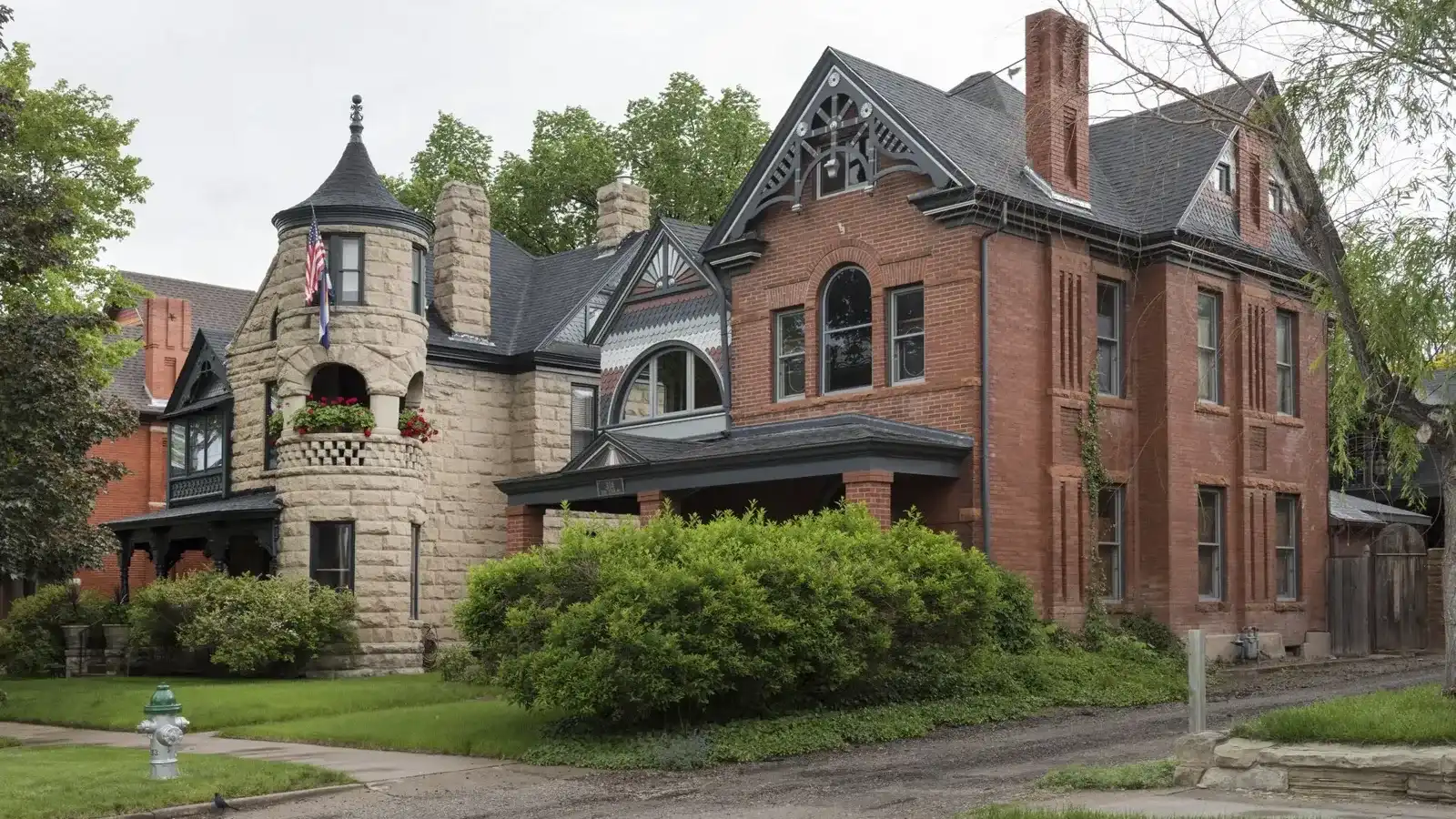
A sale needs no Landmarks Board approval in St. Charles; Board review attaches to exterior work, demolition, and new construction.
The City has 26 individual Landmarks and 6 historic districts with more than 3,000 properties, and most permit-level exterior work there, such as windows, siding, or porches, needs a $50 certificate of appropriateness. An older house can sell as it stands, and the next owner takes on any future review.
This is general information, not legal advice. State rules vary.
Jump to a section
What does your St. Charles house need on the outside?
Free. No obligation. You choose the closing date.
Selling a house in a historic district in St. Charles, Missouri does not need approval from the City's Landmarks Board. What the Board reviews is exterior work: replacement windows and doors, new siding, a rebuilt porch, a fence, a demolition, or new construction. That line matters if your Frenchtown, South Main, or Commons house needs exactly that kind of work.
This guide covers where the districts are, what the Board reviews, how long a certificate takes on the 2026 calendar, and the disclosures that come with an older house. It also compares fixing the house under review with selling it as-is.
Does selling a house in a St. Charles historic district need Landmarks Board approval?
No City source we read requires Landmarks Board approval for a sale. The City's Historic Preservation page ties Board review to exterior changes, demolition, and new construction, and a deed is none of those.
The Board's full name is the Historic Landmarks Preservation and Architectural Review Board, or HLPARB. The City Council created it, in the page's words, "for the purpose of preserving and protecting the city's historic resources for future generations."
The district stays with the house after closing. Whoever buys it takes on the same review for any later exterior project. That is why buyers who plan new windows or a porch rebuild often ask about the district before they sign.
Which St. Charles neighborhoods are historic districts?
The City says it "has designated 26 individual Landmarks and 6 historic districts containing more than 3,000 properties." The six are the South Main Preservation District, the Historic Downtown District, the Frenchtown Preservation District, the Commons Preservation District, the Landmarks Preservation District, and the Extended Historic Preservation District.
The City publishes its local historic district map as a downloadable PDF. District names and neighborhood names do not always line up, so the map is the place to check a specific address.
French-style houses with two front doors
Many of these blocks hold the city's oldest houses. The City's 2026 Comprehensive Plan notes that French-style houses here "have two (2) front doors and often appear to be duplexes, although they were built as single-family homes." It adds that some "have been converted into actual duplexes." A buyer may ask which one yours is.
Local districts and the National Register are different lists
St. Charles has two kinds of historic status, and they come from different governments. Local districts are the City's, and they carry Landmarks Board review. National Register listings come through the Missouri State Historic Preservation Office and the National Park Service.
The state's St. Charles County National Register list includes the Frenchtown Historic District (listed March 14, 1991), the Midtown Neighborhood Historic District (October 29, 2014), and the Lindenwood Neighborhood Historic District (October 17, 2016). It also lists the Commons Neighborhood Historic District (April 10, 2017) and the St. Charles Historic District along the river (1970, with later boundary increases).
| Question | City local district | National Register listing |
|---|---|---|
| Who keeps the list | City of St. Charles, Community Development | Missouri State Historic Preservation Office and the National Park Service |
| Names in St. Charles | South Main, Historic Downtown, Frenchtown, Commons, Landmarks, Extended | Frenchtown, Midtown Neighborhood, Lindenwood Neighborhood, Commons Neighborhood, St. Charles Historic District |
| Exterior review | Landmarks Board approval for most exterior work, demolition, new construction, and fences | Not the source of City review; Board review follows the local map |
| Missouri tax credit link | Only if the district is certified by the U.S. Department of the Interior (RSMo 253.545) | Individually listed buildings and contributing buildings in listed districts can qualify (RSMo 253.545) |
| Effect on a sale | None found; the City disclosure form names historic districts and review requirements | None found |
A house can sit inside both lines, one, or neither. The 2026 plan describes the Mid-Town and Commons survey areas as part "of the previously identified Extended Historic Preservation District," so a Midtown owner may want to check both maps.
What exterior work needs a certificate of appropriateness?
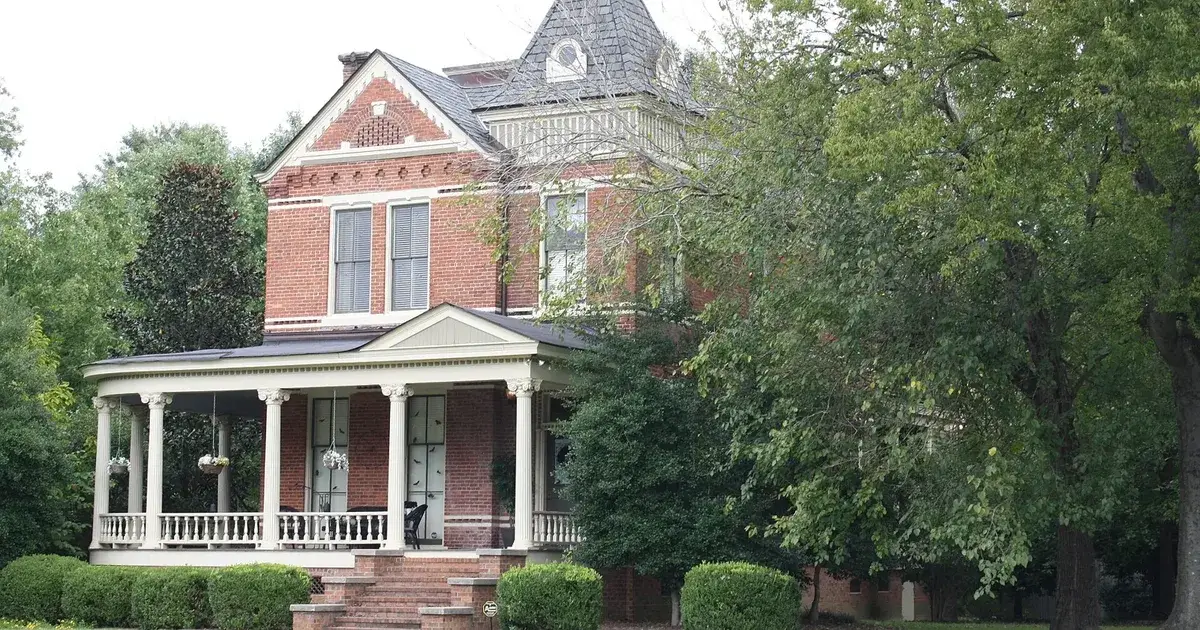
In a St. Charles district, most exterior work on a house or garage that needs a building permit also needs Landmarks Board approval. The City names windows, doors, decorative elements, siding, and porches, and the Board also approves demolition, new construction, and fences.
"Landmarks Board approval may be required before changes are made to the exterior of any primary or secondary building, such as the replacement of windows, doors, decorative elements, installation of siding or replacement of porches."
Historic Preservation page, City of St. Charles, Missouri, Community Development
The same page adds that "Some work is considered maintenance and may not need approval from Landmarks Board." To check a specific project, it lists the preservation staff line at 636-949-3228.
What the Frenchtown guidelines say about common repairs
Each district has its own design guidelines, which the Board uses when it reviews a project. The Frenchtown Preservation District design guidelines set the general order: keep a feature that is in good condition, repair one that is damaged, and replace only what is beyond repair. On materials, the short version is "Repair rather than replace original materials." The table shows a few guidelines that touch the repairs older houses most often need.
| Part of the house | Frenchtown guideline (City of St. Charles) |
|---|---|
| Roof | 3.14: "Preserve original roof materials when feasible." Asphalt, fiberglass or wood shingles, slate, and synthetic slate are listed; "No roll roofing shall be visible from the street." |
| Windows | 3.49: windows "may be replaced with vinyl, wood or finished aluminum windows that duplicate the original in size or style if a model example is provided," though "Repair rather than replacement is normally most appropriate." |
| Siding | 3.23: "Consider removing later covering materials that have not achieved historic significance; examples include vinyl, aluminum, or asphalt siding, or permastone." |
| Porch | 3.54: "Existing open porches shall not be enclosed with windows, screens, or aluminum siding in whole or part." 3.55: "Porches shall be kept in good repair." |
| Brick | 3.25: "Unpainted brick shall remain unpainted." |
The other districts have their own guideline books on the same City page, so a South Main or Commons house follows its district's version. The 2026 plan shows why the City watches these details. In the plan's words, parts of the Extended District "have lost their historic character due to substantial alterations." Its examples are vinyl siding, replaced windows and doors, and altered porches.
How long does Landmarks Board review take in 2026?
On the City's 2026 calendar, an application filed by its deadline reaches the Board three to six weeks later, depending on the month. The City says the Board "meets once per month, generally on the fourth Monday," and each meeting has its own filing deadline.
What the application asks for
The certificate of appropriateness application form (rev. 2024) lists a $50 fee for exterior changes and demolitions. A separate site plan application is $200. A complete filing includes:
- the completed application, signed by the applicant and the property owner;
- a site plan for new construction, additions, and site work, with photos of existing structures and colored elevations;
- samples of all proposed materials, such as brick, siding, roofing, fencing, windows, and doors; and
- proposed colors, from an approved color chart where one applies.
An incomplete filing "will not be scheduled for the Landmarks Board meeting requested," the form says. Approval also does not end the paperwork: "Building Permits are required prior to construction."
The 2026 meeting calendar
The City's 2026 meeting deadlines list sets these certificate deadlines. Meetings begin at 6:00 p.m. on the fourth floor of City Hall, 200 North Second Street.
| Landmarks Board meeting (2026) | Certificate of appropriateness deadline |
|---|---|
| January 26 | December 15, 2025 |
| February 23 | January 26 |
| March 23 | February 23 |
| April 20 | March 23 |
| May 18 | April 20 |
| June 15 | May 18 |
| July 20 | June 15 |
| August 17 | July 20 |
| September 28 | August 17 |
| October 26 | September 28 |
| November 16 | October 26 |
| December 21 | November 16 |
The list calls these "minimum deadlines," and staff give a projected meeting date once a filing is complete. Several 2026 meetings fall on a third Monday, so the list is a better guide than the fourth-Monday rule of thumb. A filing that misses November 16, 2026 cannot make the December 21 meeting, and staff give a projected date after the 2026 list ends.
Fix under review or sell the house as-is?
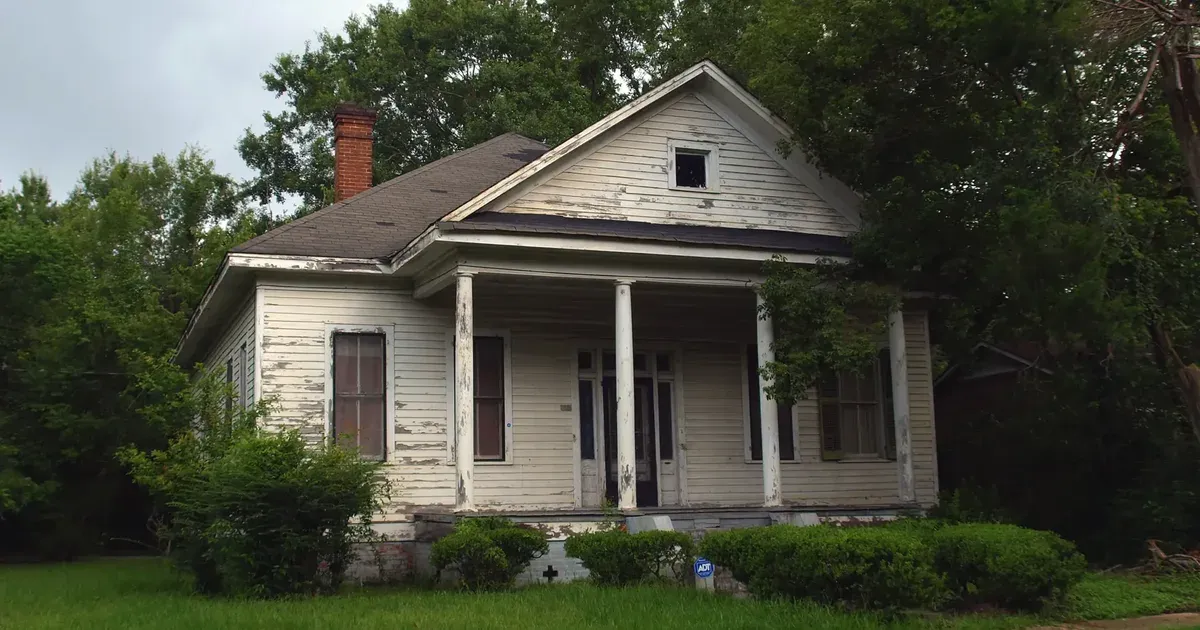
Both paths are open to a St. Charles owner, and the right one depends on the work, the budget, and the time you have. Fixing first means a certificate, a building permit, materials the Board accepts, and a contractor. Selling as-is moves those steps to the buyer.
When fixing first can make sense
- The work is small, and staff confirm it counts as maintenance.
- You have time for a monthly meeting cycle and a permit after it.
- The house is otherwise in good shape and you plan to list it with an agent.
When selling as-is can make sense
- Several items stack up at once: windows, a porch, siding, and a roof.
- You live out of town or inherited the house and do not want to manage a project.
- You would rather not front the cost of materials and samples for review.
As-is means as-is. A buyer who takes the house as it stands also takes on the review for any exterior work they choose to do. If you inherited the house, our guide to selling an inherited house in Missouri covers the probate side.
What a buyer may weigh: the Missouri historic tax credit
Missouri's historic rehabilitation credit rewards a large, qualifying rehab, so it matters most to a buyer who plans one. Under RSMo 253.550, the credit is 25% of rehabilitation costs on a certified historic structure. It is 35% in a "qualifying county" for costs incurred on or after July 1, 2024.
The statute sets conditions. Qualified costs must "exceed fifty percent of the total basis in the property," and the work must meet the U.S. Secretary of the Interior's standards. RSMo 253.545 defines a certified historic structure as a building listed individually on the National Register, or a contributing building in a National Register-listed district or in a local district certified by the U.S. Department of the Interior.
Applications go to the Missouri Department of Economic Development under RSMo 253.559. Under RSMo 253.557, credits can be carried and transferred or sold. Whether any of this fits a given house is a question for a tax professional; this guide does not give tax advice.
What disclosures come with an older St. Charles house?
Two disclosures commonly apply: the City's own form for every residential sale inside city limits, and the federal lead paint disclosure for most houses built before 1978. Neither one requires you to repair the house first.
The City's disclosure form
Under Ord. 23-062, effective September 1, 2023, the City requires sellers to provide and sign a real estate disclosure for residential sales. The disclosure form lists "historic preservation districts and review requirements" among the City rules the seller gives notice of to the buyer. Our guide to the St. Charles city disclosure walks through the whole form.
The federal lead paint rule
The EPA's lead disclosure rule covers most pre-1978 housing. Before the buyer signs, the seller gives the EPA pamphlet and must:
- disclose any known lead-based paint and lead-based paint hazards;
- provide all available records and reports; and
- give the buyer a 10-day window for a paint inspection or risk assessment, which the buyer may waive.
Some houses near the Missouri River or Boschert Creek also raise flood map questions. Our guide to selling a house in the St. Charles floodplain covers those.
How can Propcash help with a St. Charles historic house?
Propcash is a direct cash homebuyer, and we buy older houses as-is. No repairs, no cleaning, and no certificate filing before closing. We'll make you one cash offer based on local market data and show you how we got to our number, with the windows, porch, or roof part of the math you can see.
Sellers pay no fees or commissions, pick the closing date, and can close in as few as 7 days after the contract is signed. If the house shows well and you have time, listing may net you more, and if a cash sale is not your best move, we will tell you. You can see how we work on our St. Charles cash sale page, or get a cash offer with no obligation.
Frequently Asked Questions
Does a Frenchtown seller have to replace vinyl siding or windows before a sale?
No City page we read requires an owner to undo past changes before a sale. The Frenchtown design guidelines ask owners to consider removing later coverings such as vinyl, aluminum, or asphalt siding, which is guidance for a project, not a precondition for selling. Review comes into play when someone applies to change the exterior.
Who can say whether a St. Charles project needs Landmarks Board approval?
The City's Historic Preservation page lists the preservation staff line, 636-949-3228, for that exact question. General questions about the Board's procedures and meeting schedule go to the Planning Division of Community Development at 636-949-3222. Staff can also tell you whether a job counts as maintenance.
Is a Midtown St. Charles house on the National Register the same as a local historic district?
Not necessarily. Missouri's State Historic Preservation Office lists a Midtown Neighborhood Historic District on the National Register, dated October 29, 2014, and that federal listing is a separate thing from the City's six local districts. Local Landmarks Board review follows the City's own district map, so the City map is the place to check an address.
What does the St. Charles certificate of appropriateness cost?
The City's 2024 application form lists a $50 fee for exterior changes and demolitions. A separate site plan application costs $200. An approved certificate does not replace a building permit, which the form says is still required before construction.
Does a seller have to test a pre-1978 St. Charles house for lead paint?
The EPA's disclosure rule asks sellers to share what they know, not to run new tests. Before the buyer signs, the seller discloses known lead-based paint and hazards, hands over available records, and gives the EPA pamphlet. The buyer gets a 10-day inspection window, which the buyer may waive.
Can an heir sell an inherited house in a St. Charles historic district as-is?
Yes, the district rules attach to exterior work, demolition, and new construction, not to a change of owner. An heir can sell the house in its current condition once the estate side allows a sale. The City's disclosure form at closing still lists historic preservation districts and review requirements, so the buyer is told.
Data Sources: City of St. Charles Historic Preservation page, Locally Designated Historic District Map page, Certificate of Appropriateness Application (rev. 2024), 2026 Landmarks Meeting Dates and Deadlines List, Frenchtown Preservation District Design Guidelines, 2026 Comprehensive Plan, and Residential Real Estate Disclosure page and form (all read November 16, 2026); Missouri State Parks St. Charles County National Register Listings; Revised Statutes of Missouri 253.545, 253.550, 253.557, and 253.559 (revisor.mo.gov); EPA Lead-Based Paint Disclosure Rule page. Propcash is a direct cash homebuyer, not a law firm or tax adviser. A Missouri attorney or tax professional can speak to your specific situation.
Reviewed by the Propcash Editorial Team under our editorial standards. Published by Propcash, a direct cash buyer of houses. This guide is general information. Laws, fees, and market figures change, so check the current rules for your state.