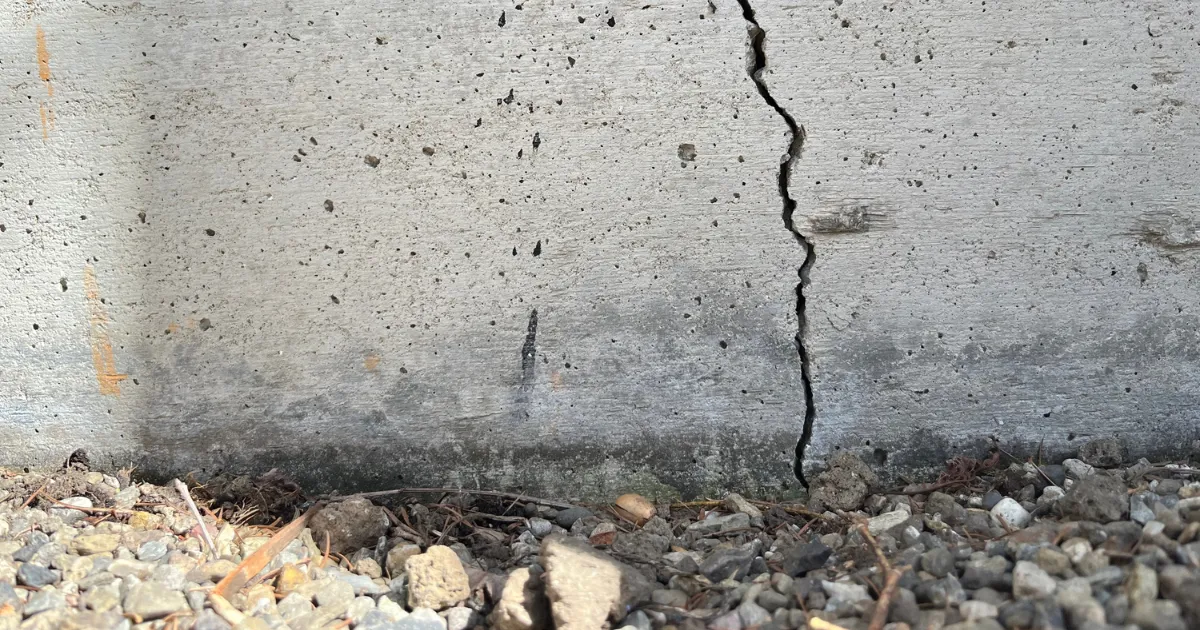
The City of Blue Springs says most sewer backups relate to private service lines, and its insurance rarely pays without proof of City negligence.
The line from the house to the main, including the connection, is the owner's responsibility. Photos, receipts, and an itemized damage list help with a claim and with a buyer's questions.
This is general information, not legal advice. State rules vary.
Jump to a section
Do you know what caused the water in your basement?
Free. No obligation. You choose the closing date.
If you want to sell a house after a sewer backup in Blue Springs, MO, start with what the City itself says. The Sewer Utilities page states that "the majority of sewer back ups are related to the private service lines serving the property." It also says the City's insurance usually will not reimburse homeowners unless there is evidence the City was negligent.
This guide covers the questions a Blue Springs, Missouri seller usually faces next. Who owns which part of the line? Who pays? What should a buyer hear about it? And which records make the sale smoother, whether you repair first, list, or sell as-is?
Who owns the sewer line at a Blue Springs house?
In Blue Springs, the owner is responsible for everything from the plumbing inside the house to the sewer main, including the connection to the main. The City maintains the public sewer mains and lift stations.
The City's page puts it plainly. Problems "within the customer's home / business or between the customer's home / business and the sewer main (including the connection to the sewer main) are the customer's responsibility." The service line is the pipe that carries wastewater from the house to that main.
That split matters for a sale. When a backup traces to a root-filled or sagging service line, the fix sits with whoever owns the house. A buyer's inspector will often ask about it.
| Part of the system | City side or owner side | What the City's page says |
|---|---|---|
| Sewer mains and lift stations | City | The Sewer Utilities Division maintains them and conveys wastewater to treatment. |
| Connection to the sewer main | Owner | Named as part of the customer's responsibility. |
| Private service line | Owner | The majority of backups relate to these lines. |
| Plumbing inside the house | Owner | Problems within the home are the customer's responsibility. |
| Sewer clean-out | Owner | "The clean out is the property owner's responsibility." A plumber can install one. |
| Cleanup inside the house | Owner | Insurance liability restrictions prevent City crews from cleaning private residences and furnishings. |
| Paying for damage | Usually owner | The City's insurance pays only with evidence of City negligence. |
Source: City of Blue Springs, Sewer Utilities page, read November 11, 2026.
Basement water in Blue Springs: who pays?
For most basement water in Blue Springs, the owner and the owner's own insurance policy pay, not the City. The City pays only when there is evidence it was negligent.
"In most cases, the city's insurance will not reimburse homeowners for damages. There must be evidence that the City of Blue Springs has been negligent for an insurance claim to be honored."
City of Blue Springs, Sewer Utilities page, Insurance Claims
You can still file a claim. The page says a claim "may be filed with the Human Resources Department at 816-228-0190." A copy of what you file can help later, since a buyer may ask how it ended.
Your own policy
Backup coverage is not automatic. The City's advice is direct: "Check your homeowner's insurance policy." If you are not covered for backups, it suggests calling your agent about costs and coverage options. A paid claim, a denied claim, or no claim at all each leaves a different paper trail for a sale.
Water that did not come from the sewer
Not every wet basement is a sewer backup. Water can come from other places, such as surface runoff or a sump pump. The City asks residents not to connect drains or sump pumps to the sewer system, so a sump line tied into the sewer is worth checking before you sell.

What to do in the first days after a backup
The City's page lists who to call, and it says to call a plumber if the water does not recede after City crews clean the City line. Photos taken before cleanup help with both an insurance claim and a sale.
- Weekdays: the City lists 816-228-0195, Monday through Friday, between 7:30 a.m. and 4 p.m.
- After hours: the police non-emergency number, 816-228-0150. Dispatch contacts the call-out crew.
- If water does not recede: after City crews clean the City line, the page says to "contact a professional plumber to have your home's service line cleared."
The cleanup is yours. Insurance liability restrictions keep City crews from cleaning private residences and furnishings. The City's cleanup steps include rubber gloves and boots, keeping electrical appliances out of wet areas, removing standing water, and airing out the space.
Photos taken during the event are hard to recreate later. Many owners photograph the water line, the drain, and damaged items before anything goes to the curb.
Which records help when you sell?
The City's own list is a good start: "Good records include photographs, videotapes, receipts, and itemized descriptions of damages." The same file that supports an insurance claim also answers a buyer's questions.
A clear file can shorten the back-and-forth during a buyer's inspection. It also shows what was fixed and when. Here is a checklist built from the City's page and the steps above.
Photographs and video
The City names photographs and videotapes first. Shoot the water line, the drain, and damaged items before cleanup.
Receipts
Keep receipts for plumbing, cleanup, and replaced items. The City lists receipts as good records.
An itemized list of damages
Write down each damaged item and what happened to it. The City asks for itemized descriptions.
The date and who you called
Note the day of the backup, when you called 816-228-0195 or 816-228-0150, and what the crew found.
The plumber's report
If the City told you to call a plumber, keep the invoice and any notes on the service line.
Claim papers
Keep your homeowner's insurance claim and any claim filed with the City's Human Resources Department.
Do you have to disclose a sewer backup in Missouri?
No Missouri statute this guide relies on names sewer backups. Missouri courts, though, have held that staying silent about a known, hidden defect can amount to misrepresentation when the seller has a duty to speak.
What the disclosure statute covers
One Missouri statute, RSMo 442.606, requires a written seller disclosure, and it covers methamphetamine production, not water. It does not mention basements, sewers, or flooding.
What a Missouri court has said
In Keefhaver v. Kimbrell, 58 S.W.3d 54 (Mo. App. W.D. 2001), a buyer sued the sellers of a house. The sellers had not disclosed that water entered the basement from the driveway during heavy rains.
The court wrote that "silence or concealment of facts can amount to misrepresentation" if the silent party has a duty to speak. That duty can arise "where one party has superior information not reasonably available to the other party." The court also noted that a seller who has lived in a house usually knows more about it than a buyer. It reversed the judgment for the sellers and sent the case back.
One case is not a rule for every house. Still, many sellers choose to describe past water in writing, with dates and records, rather than leave a buyer to find it. This is general information, not legal advice, and a Missouri real estate attorney can speak to your own facts.
Finding the source: sewer scope or flood map
Knowing where the water came from tells you what to fix and what to tell a buyer. A plumber's camera look at the service line and a check of the FEMA flood map answer two different questions.
A sewer scope
Since the City says most backups relate to private service lines, a plumber's inspection of that line can be a sensible step. A sewer scope usually means a camera run through the line, often from the clean-out. If the house has no clean-out, the City says to have one installed by a plumber.
The FEMA flood map
River and surface flooding is a separate question from a sewer backup. You can enter any Blue Springs address in FEMA's flood map center, which searches flood maps by address. Knowing the result before you list lets you answer the question when a buyer asks.
Three ways to sell a Blue Springs house after a sewer backup
Sellers usually take one of three paths: repair and document, list with a written disclosure, or sell as-is for cash. The right one depends on your time, your budget, and what the source turned out to be.
Repair and document
If the cause is clear and the repair is within reach, fixing it first can widen the pool of buyers. Every invoice and the plumber's findings can go in the file. A repaired line with paperwork is easier to explain than an open question.
List with a written disclosure
Some sellers list the house as it stands and share the water history up front. Inspectors and buyers then price the work themselves. Our Blue Springs housing market guide covers how the local market is moving, and our guide to selling an older Blue Springs house that needs work covers the wider repair list.
Sell as-is for cash
A direct cash buyer takes the house in its current condition, so the cleanup, the line, and the inspection questions move to the buyer. As-is still means honest about what you know. If the City has also sent a notice about the house, see our guide to selling a Blue Springs house with an open code violation. Our major repairs page covers other repair-heavy sales.
How can Propcash help after a sewer backup?
Propcash is a direct cash homebuyer that buys Blue Springs houses as-is, with no repairs, no cleaning, and no cleanout. We'll make you a cash offer based on local market data and show you how we got to our number.
There are no agent commissions and no fees, and you pick your closing date. A cash sale can close in as few as 7 days after the contract is signed. If repairing and listing would serve you better than a cash sale, we'll tell you. Our Blue Springs cash sale page explains how it works locally, and you can get a no-obligation cash offer to compare with your other options.
Frequently Asked Questions
Will the City of Blue Springs pay for damage from a sewer backup?
Usually not. The City's Sewer Utilities page says that in most cases the city's insurance will not reimburse homeowners for damages. There must be evidence the City was negligent for a claim to be honored. A homeowner who still wants to register a claim can file it with the City's Human Resources Department at 816-228-0190.
Who do I call when sewage comes up through a Blue Springs floor drain?
On weekdays, the City's page lists 816-228-0195 between 7:30 a.m. and 4 p.m. After business hours, it lists the police non-emergency number, 816-228-0150, and dispatch contacts the right crew. If water does not recede after City crews clean the main, the City says to call a professional plumber to clear the house's service line.
Does homeowners insurance cover a sewer backup?
It depends on the policy. The City of Blue Springs tells residents to check their homeowner's insurance policy and, if they are not covered for backups, to call their agent about costs and coverage options. The City also says to keep records for homeowner insurance claims, such as photographs, receipts, and itemized descriptions of damages.
Can I sell a Blue Springs house as-is after basement water?
Yes. As-is means the buyer takes the house in its current condition and handles any repairs after closing. It does not change what you know about the house, so a seller can still share the water history and records in writing. A direct cash buyer such as Propcash buys houses as-is, with no repairs or cleanout.
What is a sewer clean-out, and who takes care of it?
A clean-out is an access point on a house's sewer service line that a plumber can use to clear a blockage. The City of Blue Springs says the clean-out is the property owner's responsibility. Its page asks owners to locate it and keep it accessible, and to have a plumber install one if the house has none.
How can I check whether a Blue Springs address is in a FEMA flood zone?
Enter the address in FEMA's Flood Map Service Center, which searches flood maps by address, place, or coordinates. The result shows the flood map panel for that spot. A flood map describes river and surface flooding, which is a different source of water than a backup from the sanitary sewer.
Reviewed by the Propcash Editorial Team under our editorial standards. Published by Propcash, a direct cash buyer of houses. This guide is general information. Laws, fees, and market figures change, so check the current rules for your state.