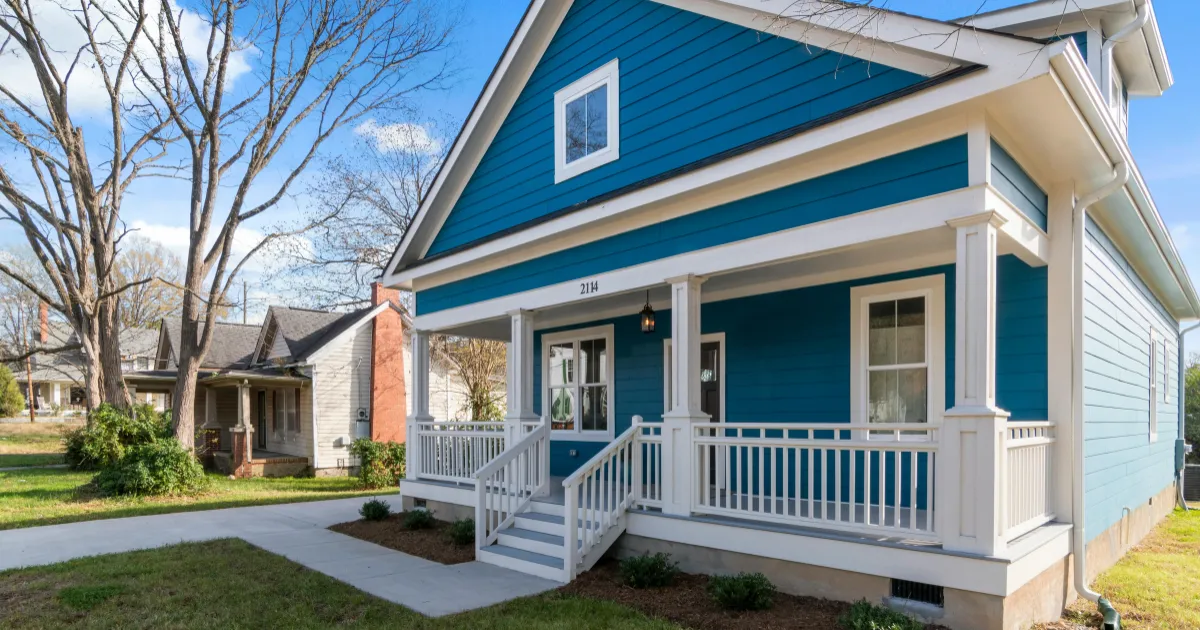
An inherited Austin house can sell once Travis County probate gives someone the power to sign the deed.
That power comes from Letters, a will admitted as a muniment of title, or an approved small estate affidavit. The Travis County Probate Courts require a lawyer for anyone applying for Letters or a determination of heirship.
This is general information, not legal advice. State rules vary.
Jump to a section
Does anyone in your family have the legal power to sign the deed yet?
Free. No obligation. You choose the closing date.
Selling an inherited house in Austin, TX usually waits on one thing: a person with legal power to sign the deed. For a house in Travis County, that power comes from the county's probate courts, a recorded small estate affidavit, or a will admitted as a muniment of title. Each route has its own rules about wills, debts, and lawyers.
This guide covers those routes, the filing fees, and the tax and energy-audit rules that follow an Austin house through an estate. Parts of Austin reach into Williamson and Hays Counties, so the court rules here apply to estates handled in Travis County. The Austin cash sale page covers selling in the city more broadly. Nothing here calls for a rushed decision.
Which court handles Travis County probate for an Austin, TX house?
Travis County has two statutory probate courts, Probate Court No. 1 and Probate Court No. 2, both at 200 W. 8th Street in downtown Austin. They probate wills, declare heirs when someone dies without a will, and hear lawsuits tied to an estate (Travis County Probate Courts, November 2026).
Filings, court costs, and Letters run through the Probate Division of the Travis County Clerk. Letters are the court papers that show an executor or administrator has authority to act for the estate.
Do you need a lawyer for Travis County probate?
In Travis County, anyone applying for letters testamentary, letters of administration, or a determination of heirship must be represented by a licensed attorney. That rule comes from the courts' pro se policy dated October 1, 2024. The policy explains that an executor acts for beneficiaries and creditors, so the role carries duties to other people.
The policy names two exceptions. The first is a narrow muniment of title:
"a pro se applicant may probate a Will as a muniment of title when he or she is the sole beneficiary under the Will, and there are no debts against the estate other than those secured by liens against real estate."
Pro se policy, Travis County Probate Court No. 1 and No. 2 (October 1, 2024)
The second is the small estate affidavit. The same policy says all of a decedent's heirs may work together without a lawyer to file one, in the limited cases where it fits.
Four routes that decide who signs the deed
In Travis County, an inherited house reaches a new signer through administration with Letters, a muniment of title, a small estate affidavit, or an heirship case. The will, the debts, and the family decide which one fits.
| Route | When it fits in Travis County | Lawyer needed? | Who signs the deed |
|---|---|---|---|
| Independent administration | A will names an executor and allows it, or all the distributees agree to it | Yes, under the courts' pro se policy | The independent executor, without court approval unless the will limits the power |
| Court-supervised administration | The will rules out independent administration, or the estate is not set up as one | Yes, under the courts' pro se policy | The executor or administrator, after a court order authorizing the sale |
| Muniment of title | A valid will and no unpaid debts except liens on real estate | Not when a sole beneficiary files pro se under those conditions | The beneficiaries named in the will |
| Small estate affidavit | No will, assets of $75,000 or less outside the homestead and exempt property, and a homestead inherited only by heirs who lived there | No; heirs may file together | The heirs named in the affidavit recorded in the deed records |
| Heirship and administration | No will, and the small estate affidavit does not fit | Yes, under the courts' pro se policy | The administrator the court appoints |
An independent executor has the same power of sale as a supervised one, without the need for court approval, unless the will limits it (Tex. Est. Code § 402.052). In a supervised estate, the house generally may not be sold without a court order authorizing the sale, unless the will authorizes the sale (Tex. Est. Code §§ 356.001, 356.002). When a will names an executor but says nothing about independent administration, all the distributees may agree to ask for one (Tex. Est. Code § 401.002).
What Travis County charges to file
The Travis County Clerk charges $360 for each of the main probate applications (Travis County Clerk probate fees, November 2026). Attorney's fees are separate, and some filings also need posted notice or personal citation, with constable's service fees added.
| Filing | Travis County Clerk fee |
|---|---|
| Application to probate a will and issue letters testamentary | $360 |
| Application to probate a will as a muniment of title | $360 |
| Application for an administrator with a determination of heirship | $360 |
| Application for a determination of heirship | $360 |
| Small estate affidavit | $360 |
| Added deposit: a lost will, a will filed more than four years after the death, or a case that needs an ad litem | $525 |
When does muniment of title fit an Austin estate?
A muniment of title fits when there is a valid will and the estate owes no unpaid debt other than debt secured by a lien on real estate (Tex. Est. Code § 257.001). A mortgage on the house does not rule it out.
The court's order admits the will and lets people deal with the estate's assets without an administration (Tex. Est. Code § 257.102). A beneficiary may treat inherited real estate as if the record title were in their own name. That is why the will's beneficiaries are the ones who sign when the house sells.
What the Travis County courts ask of a pro se muniment
- Every beneficiary applies. All beneficiaries under the will must be applicants, and all must testify at the hearing.
- Every applicant swears to no debts. That covers credit card balances, doctor's bills, utility bills, and Medicaid estate recovery claims. False swearing can bring a perjury charge.
- The will and death certificate are filed together. Both go to the Clerk's Office with the application.
- Extra steps apply to some wills. A copy of a will, a will that is not self-proved, or a will filed more than four years after the death needs more documents.
After the order, the applicant files a sworn affidavit within 180 days stating which terms of the will have been carried out. The court may waive or extend that deadline, and a missed filing does not affect title (Tex. Est. Code § 257.103).
Timing matters in one way. A will generally may not be admitted to probate after the fourth anniversary of the death unless the applicant was not in default (Tex. Est. Code § 256.003).
The small estate affidavit in Travis County
A small estate affidavit can pass an Austin house only when there is no will and the house was the decedent's homestead. Texas law allows the affidavit when assets outside the homestead and exempt property are $75,000 or less and 30 days have passed since the death (Tex. Est. Code § 205.001).
The homestead can pass this way only if it is the only real property in the estate. The affidavit must then be recorded in the deed records of the county where the house sits (Tex. Est. Code § 205.006). A buyer who pays value may rely on that recorded affidavit.
The Travis County Probate Courts apply the statute strictly. Their small estate affidavit checklist, updated October 1, 2024, says the court cannot approve one when:
- The decedent had a will.
- Total assets were more than $75,000, not counting the homestead and exempt property.
- The assets are not worth more than the debts.
- The decedent owned real property, unless it was the homestead and everyone inheriting it was homesteading with the decedent on the date of death.
- An heir cannot be found or refuses to sign.
- Any heir is under 18.
The checklist describes those heirs as a surviving spouse or minor children who lived there, and Travis County does not approve an affidavit with a minor heir. It adds that the court will always check the real property records before approving one. When a grown child who lived elsewhere inherits a share, the house usually needs another route, and the courts' policy requires a lawyer for an heirship case.
What happens to the property tax limits on an inherited Austin house?
The 10 percent homestead cap ends on January 1 of the first tax year when neither the original owner nor that owner's spouse or surviving spouse qualifies for the exemption (Tex. Tax Code § 23.23(c)). For heirs who do not move in, the appraised value can then rise toward market value.
Real property that is not a homestead may get a different limit, the 20 percent circuit breaker. The Travis Central Appraisal District describes its terms:
- It covers real property valued at $5.16 million or less.
- The owner must own the property for at least one full calendar year, January through December.
- A sale removes any existing limit, and the tax base moves to current market value.
- TCAD says the Legislature has authorized it only for the 2024, 2025, and 2026 tax years.
The statute itself ends with one line: "This section expires December 31, 2026" (Tex. Tax Code § 23.231(k)). Tax bills still arrive around October 1 and are payable through January 31, with penalty and interest starting February 1 (TCAD, November 2026). Heirs who fall behind can read our guide to being behind on property taxes in Austin.
Does an inherited Austin house need an ECAD energy audit?
Austin's ECAD ordinance exempts transfers of title "under a court order or probate proceedings." It does not name a later sale by heirs after the estate is settled (City Code § 6-7-13, as posted by Austin Energy).
ECAD covers houses served by Austin Energy inside the city limits that are 10 years or older (Austin Energy, November 2026). The ordinance itself exempts a house built no more than ten years before the sale. When the rule applies, the owner gets the audit and gives the buyer a copy:
- No later than 3 days before the option period ends, if the contract has one.
- With the Seller's Disclosure Notice, if there is no option period.
- Before the time of sale, if no disclosure notice is required.
Austin Energy estimates an audit at about $200 to $300 for a typical single-family house of 1,800 square feet or less with one air conditioning system. Our guide to the Austin ECAD energy audit covers the steps in more depth.
The Seller's Disclosure Notice
Texas exempts a transfer "by a fiduciary in the course of the administration of a decedent's estate" from the Seller's Disclosure Notice (Tex. Prop. Code § 5.008(e)(5)). An executor selling during the estate fits that wording. Heirs selling in their own names afterward are not named in it.
Selling the house once someone can sign
Once an executor, an administrator, or the heirs hold the power to sign, the house can be listed, sold for cash, or kept. The right choice depends on the house, the heirs, and how long the estate can carry it.
Redfin reports a median sale price of $528,657 in Austin across all home types for the three months ending October 2026, roughly flat from a year earlier (Redfin, October 2026). The median sale took 73 days on the market, compared with 83 days a year before. Redfin counted 2,211 sales in October 2026, down from 2,329 a year earlier.
Those 73 days come after the estate step, and taxes, insurance, and utilities keep running on an empty house. Heirs weighing a quick sale can compare the ways to sell a house for cash in Austin. Our page on selling an inherited house covers the steps that apply in any state.
How can Propcash help an Austin heir?
Propcash is a direct cash homebuyer, and we buy inherited Austin houses as-is. No repairs, no cleaning, no cleanout: take what you want and leave the rest. There are no showings, no agent commissions, and no fees, and the closing follows the court step on the date you pick.
Our offer is based on local market data, and we show you how we got to our number. Our offers don't expire, so an executor can wait for Letters or a muniment order and compare our offer with listing the house. If a cash sale is not your best move, we will tell you. When the time is right, you can get a cash offer on the house with no obligation.
Frequently Asked Questions
How soon after a death can heirs file a small estate affidavit in Travis County?
Heirs can file a small estate affidavit once 30 days have passed since the date of death (Tex. Est. Code § 205.001). The Travis County Probate Courts' checklist explains the wait: it gives heirs time to be sure they have all the bills. The affidavit must list every known debt, and the assets outside the homestead and exempt property must be worth more than those debts.
Can an independent executor sell an Austin house before the estate closes?
An independent executor in Texas has the power to sell estate real estate without court approval, unless the will limits that power (Tex. Est. Code § 402.052). That means the house can be sold while the estate is still open. A court-supervised administrator is different: estate property generally may not be sold without a court order authorizing the sale, unless the will authorizes the sale (Tex. Est. Code §§ 356.001, 356.002).
What if nobody probated the will within four years of the death?
A Texas will may not be admitted to probate after the fourth anniversary of the death unless the applicant shows they were not in default for the delay (Tex. Est. Code § 256.003). Letters testamentary also cannot issue on a will admitted that late unless the application was filed within the four years. The Travis County Clerk adds a $525 deposit to the filing fee for a will probated more than four years after the death. The courts also ask for extra documents in that case.
Do heirs selling an Austin house have to give the buyer a Seller's Disclosure Notice?
The Texas Seller's Disclosure Notice does not apply to a transfer by a fiduciary in the course of administering a decedent's estate (Tex. Prop. Code § 5.008(e)(5)). A sale signed by an executor or administrator while the estate is open fits that wording. Heirs who sell in their own names after the estate is settled are not named in that exemption. A Texas probate attorney can say which side of that line a given sale falls on.
Does a Medicaid claim affect a muniment of title in Travis County?
An unpaid Medicaid estate recovery claim counts as a debt of the estate in Travis County, so it can stand in the way of a muniment of title. The probate courts' pro se policy lists Medicaid estate recovery claims next to credit card balances, doctor's bills, and utility bills as debts each applicant must swear do not exist. The small estate affidavit checklist also asks whether the decedent applied for and received Medicaid benefits on or after March 1, 2005.
Will the 20 percent circuit breaker still cover an inherited Austin house after 2026?
Texas Tax Code § 23.231, the 20 percent circuit breaker for real property that is not a homestead, says by its own text that it expires December 31, 2026. The Travis Central Appraisal District says the Legislature has authorized the limit only for the 2024, 2025, and 2026 tax years. Any later change would have to come from the Legislature, and TCAD's circuit breaker page carries the current rule.
Disclaimer: This article is for general information only and is not legal or tax advice. Probate rules and court policies change, and every estate is different. This guide comes from a direct cash homebuyer, not a law firm. A Texas probate attorney can advise on a specific estate.
Reviewed by the Propcash Editorial Team under our editorial standards. Published by Propcash, a direct cash buyer of houses. This guide is general information. Laws, fees, and market figures change, so check the current rules for your state.