

Yes, you can sell a house with code violations in Tucson, AZ, and an open Neighborhood Preservation case does not stop the sale.
Tucson enforces Chapter 16 of the City Code through a notice of violation with a compliance date, then appeals, City Court citations, and city abatement. Unpaid re-inspection fees and abatement costs can become a lien against the real property, which comes up at closing.
This is general information, not legal advice. State rules vary.
Jump to a section
Have you received a notice of violation from the City of Tucson?
Free. No obligation. You choose the closing date.
Selling a house with code violations in Tucson, AZ is legal, and an open case does not stop the sale. What a case changes is the paperwork, the deadlines, and who pays for the fix. The City enforces its Neighborhood Preservation Ordinance, Chapter 16 of the Tucson City Code, through its Code Enforcement Division.
This guide follows a Tucson case from the first notice to a lien, using the code text the City posts. It also covers vacant houses, the Pima County boundary, and the choice between fixing first and selling as-is.
How does a Tucson code enforcement case work?
A Tucson code case usually runs from an inspection to a notice of violation with a compliance date. It ends when the condition is fixed, successfully appealed, resolved in City Court, or abated by the City.
The City's Code Enforcement Division page, which now sits under Planning and Development Services, lists Chapter 16 as the first regulation it enforces. It also enforces the sign ordinance, parts of the Unified Development Code, and the City's building codes. The division takes calls at (520) 791-5843 on weekdays.
The City's procedures manual for code enforcement (effective May 1, 2017) describes the routine. Inspectors generally view a house from the street, sidewalk, or alley. When they confirm a violation, they try to reach the owner or occupant hand over or post a notice at the entrance, and mail a copy.
Asking for more time
The manual lets an inspector grant one extension of up to ten business days when the owner documents a reason. Anything longer needs approval from a supervisor or the Code Enforcement Administrator. The factors listed include the severity of the violation, the weather, the owner's health, and documented efforts to comply.
That scale is worth knowing. A 2023 City audit by the Independent Audit and Performance Commission took a 100-case sample from a pool of 9,000 code cases opened in 2021. The manual counts documented efforts to comply, so a written plan with dates can support an extension request.
| Stage | Code section | What happens | What a seller can do |
|---|---|---|---|
| Notice of violation | § 16-45 | The notice identifies the house, describes each violation, and states the actions required to correct it. | The notice can be used to price repairs or shared with a buyer. |
| Compliance date and re-inspection | § 16-42 | The initial inspection is generally free. A re-inspection after the compliance date that shows no fix may carry a fee set by Mayor and Council. | An owner can request an extension before the date, then pay any fee within 14 days or contest it at an administrative conference. |
| Administrative appeal | §§ 16-70, 16-71 | For violations of §§ 16-4, 16-11, 16-12, and 16-14, a written appeal filed within ten days of service is heard within ten days. | The appeal goes on the code official's form and describes the conditions in question. |
| Board of appeals | §§ 16-73, 16-74 | An appeal filed within 30 days generally pauses enforcement. The board may grant up to 90 more days or approve another repair method. | A timetable can support a request for more time. The board decides within five days of the hearing. |
| Civil citation | § 16-60 (per the City's procedures manual) | Tucson City Court hears the citation. Each day a violation remains may be charged separately, and the court can order abatement. | The owner can plead responsible and pay, or attend the hearing. Missing it leads to a default finding. |
| City abatement and lien | §§ 16-61 to 16-63 (per the City's procedures manual) | The City or its contractor does the work, and the cost becomes a lien against the real property. | A lien can usually be paid from sale proceeds at closing. A board appeal can contest the amount. |
What does a Tucson notice of violation cover?
Under § 16-45(a) of the Tucson City Code, the code official may issue a notice of violation for nine sections of Chapter 16. Those sections cover permits, interiors, exteriors, yards, structures, vehicles, graffiti, sidewalks, and handbills.
- § 16-4: permits required for the work
- § 16-11 and § 16-12: building interiors and exteriors
- § 16-13: exterior premises and vacant land
- § 16-14: dilapidated structures and vacant, unsecured structures
- § 16-15: junked or inoperable vehicles
- § 16-30(a), § 16-35, § 16-36: graffiti, obstructed streets or sidewalks, and posted handbills
Section 16-45(b) says the notice must identify the house by street address or legal description. It must state the violations "in sufficient detail" for the owner to find and correct them, and state the actions required. That list is the scope of work a buyer or contractor will price.
The violations the City sees most
The City's common violations list starts with junked or inoperable vehicles in view of the street. It continues with pools, house numbers, outdoor storage, debris, fences, building exteriors, unpermitted work, and vegetation. Grass and weeds may not exceed 6 inches, and a pool at least 18 inches deep and more than four feet wide must sit behind a 5-foot barrier with self-closing, self-latching gates.
Re-inspection fees
Section 16-42(b) says no fee is charged for the first inspection. If a re-inspection after the compliance date shows the violation is still there, a re-inspection fee may follow. Failing to pay it within 14 days is itself a violation, and the fee may be collected "as a lien against the real property."
Under § 16-42(c), the only administrative appeal of that fee is a conference with the code official. The board of appeals does not hear re-inspection fees.

Can you appeal a Tucson code violation?
Yes, for some violations. Section 16-70 allows administrative review of notices under §§ 16-4, 16-11, 16-12, and 16-14, plus slum designations, abatement cost assessments, and group dwelling nuisance abatements.
The appeal articles quoted here come from Supplement No. 95 (current through March 31, 2012). That is the newest supplement on the City's site that carries Article VII. Supplement No. 114 (March 2017) supplies §§ 16-42 and 16-45, and Supplement No. 102 (December 2013) supplies § 16-14. Later amendments may exist, so confirm current wording with the City.
| Feature | Administrative conference (§ 16-71) | Board of appeals (§ 16-73) |
|---|---|---|
| Deadline to file | Within 10 days after service of the notice | Within 30 days after service; 10 days if the house was posted and vacated as an imminent hazard |
| When it is heard | By the code official within 10 days | Not less than 10 nor more than 60 days after filing |
| Grounds | A review of the notice by the code official; the applicant may, but need not, meet in person | Substantive errors in the notice, an unreasonable or arbitrary method or schedule, or the amount of an abatement assessment |
| Effect on enforcement | The text read does not say it pauses enforcement | A timely appeal stays enforcement, except an order to vacate |
| Possible result | The code official grants or denies; a denial can go to the board | Affirm, reverse, or modify, including up to 90 more days to correct |
Two limits matter. No administrative appeal is available once a court case on the violation is pending or decided. And an owner who goes straight to the board of appeals waives the administrative conference.
What happens after a citation in Tucson City Court?
If a notice is not corrected, the owner can receive a civil citation that Tucson City Court decides. The procedures manual says each violation is a separate charge, and each day a violation remains may be charged as a separate violation.
After a citation, the manual lists three paths. The owner can plead responsible and pay the fines and fees, or attend a hearing before a City Magistrate. An owner who misses the hearing is found responsible by default. When the court finds a violation, the inspector asks it to order abatement, and the manual says that order lasts one year.
Ignoring a court abatement order is a crime. Under § 16-67, it is a misdemeanor with a minimum mandatory 24 hours in jail and a minimum fine of $250, up to $2,500.
When the City does the work
The manual describes four ways the City can abate a violation itself:
- Court order (§ 16-61(a)): the court authorizes the City to do the work, and the costs are enforced by court order and a lien.
- Temporary abatement (§ 16-62): the City may board an unsecured § 16-14 structure the owner did not secure, and the cost becomes a lien.
- Emergency abatement (§ 16-63): for an imminent hazard, the City may act without notice and record a lien for its costs.
- Unabated yard violations (§ 16-61(g)): weeds, refuse, unlawful composting, pests, and dumping still present 30 days after notice are treated as a hazard the City can abate.
Emergency examples in the manual include damaged pool fences, open excavations, and "cooling availability when 100 degree temperatures are reached".
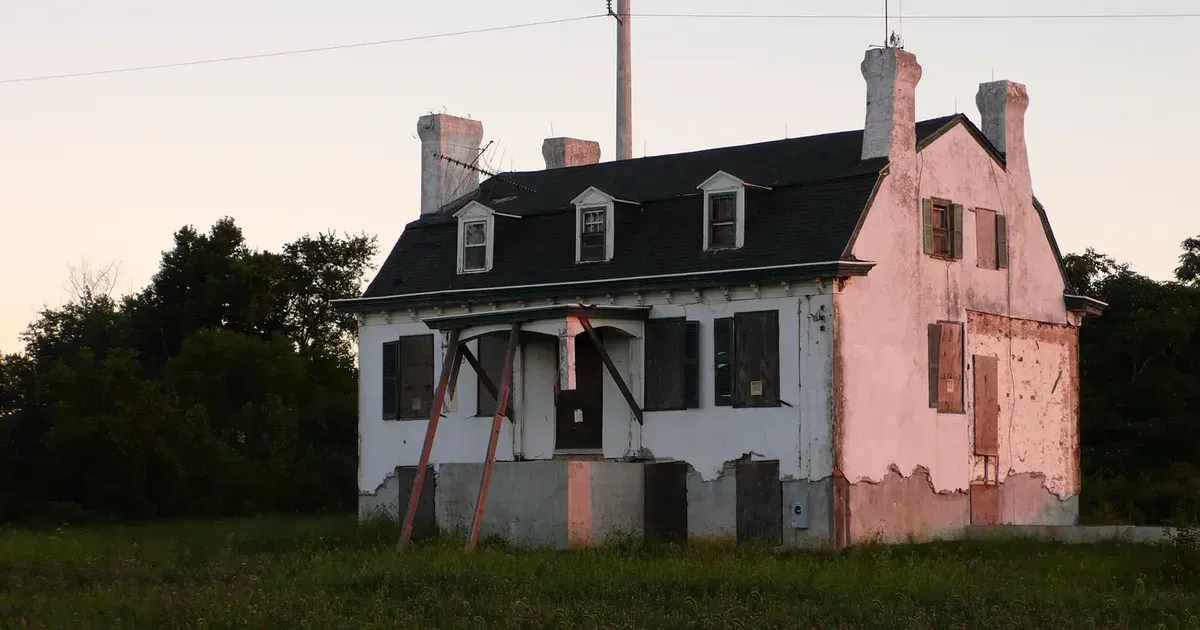
How does Tucson treat vacant and dilapidated houses?
Tucson treats a vacant, unsecured house as a violation in itself, and a dilapidated one as a nuisance. Both fall under § 16-14, one of the sections that can be appealed administratively.
"Vacant and unsecured buildings or structures are unlawful and are prohibited by this chapter."
Tucson City Code, § 16-14(b), Supplement No. 102
Section 16-14(b)(1) gives the owner of a vacant house three duties. The owner must remove weeds, combustible waste, and refuse inside and in the yards. All doors, windows, and openings must be secured, and "No Trespassing" signs posted. The rule applies even when a wall or fence surrounds the lot.
Dilapidated structures
Under § 16-14(a), a building so deteriorated that it threatens health and safety "shall be abated by repair, rehabilitation or demolition." Section 16-14(c) lists conditions that make a building a public nuisance. Examples include fire or flood damage that weakens the structure, and 33 percent or more damage to supporting members. Others are pest infestation that makes it uninhabitable, or a dwelling unfit for human habitation.
Historic structures get extra steps before a demolition under § 16-66, which calls for a structural engineer experienced with local historic buildings and an architect from a list familiar with adobe construction. The guide to selling a historic house in Tucson covers the preservation zones that can apply on top of that.
Can you sell a house with code violations in Tucson?
Yes. None of the Chapter 16 sections read for this guide bars an owner from selling a house with an open case. The one transfer rule in the text read covers group dwelling nuisance cases (§ 16-38), where a new owner must accept responsibility in writing. A sale does change who answers to the City, and any recorded lien still has to be dealt with at closing.
Transfer and recording rules
Chapter 16 includes § 16-46, titled "Transfer of property after notice," and § 16-47, titled "Recording a violation." The supplements the City posts list those titles but do not carry their text. Before closing, it can help to ask the inspector on the case what those sections require of a seller and a new owner.
Liens are the other piece. Re-inspection fees and City abatement costs can be filed against the real property, so a title search should surface them. They can be paid from sale proceeds at closing.
Telling a buyer
Arizona's standard seller disclosure form asks about code violations. The Arizona seller disclosure guide covers the seller's duty to disclose known material facts. A copy of the notice of violation is usually the clearest way to show a buyer what the City found.
Fix first or sell as-is
Fixing first and closing the case can widen the pool of financed buyers. That route takes time on the open market. In October 2026, Redfin reported a Tucson median sale price of $308,785 and a median 65 days on market. Zillow's home value index put the typical Tucson house at about $317,277 for the same month.
Selling as-is with the case disclosed shifts the repairs to the buyer. A cash buyer can price the notice's scope of work into the offer and take on the repairs after closing. Propcash explains when repairs make more sense in its page on selling a house that needs major repairs.
City of Tucson or Pima County: whose code applies?
Chapter 16 applies only inside Tucson city limits. Unincorporated areas around the city, such as Catalina Foothills, Tanque Verde, and Drexel Heights, fall under Pima County's own rules instead.
The Code Compliance Program of Pima County, run by the Development Services Department, investigates zoning and building code complaints. Its common zoning violations include inoperable vehicles, open storage of appliances, and structures over 200 square feet built without a permit. Its Permit Gateway shows complaints and violations by address. Oro Valley, Marana, and Sahuarita are separate towns with codes of their own.
Inside the city, the Property Research Online address search can look up City records for a house by address. The name on the notice itself tells you which government opened the case.
How can Propcash help with a Tucson code case?
Propcash is a direct cash homebuyer, and we can buy a house with an open code case as-is. As-is means as-is: no repairs, no cleanout, and no judgment about how the house got there. We make one transparent, data-backed cash offer, show how we reached it, and you pick the closing date.
An offer can sit next to your other options, such as an extension, an appeal, or fixing and listing. If a cash sale is not your best move, we will tell you. When you are ready, you can request a no-obligation cash offer or read more about selling a house with code violations, or see how a Tucson cash sale works.
Frequently Asked Questions
How long do you get to fix a Tucson code violation?
The notice of violation sets a compliance date for each case. The City's procedures manual lets an inspector grant one extension of up to ten business days, and anything longer needs supervisor approval. When a vacant house faces possible City abatement, the manual calls for an abatement notice that allows at least 30 calendar days.
Is there a fee for a Tucson code re-inspection?
Generally, no fee is charged for the initial inspection under Tucson City Code § 16-42(b). A re-inspection after the compliance date that shows the violation is still there may carry a fee set by Mayor and Council. An unpaid fee after 14 days is a violation and can become a lien on the house.
Does filing an appeal pause a Tucson code case?
A timely appeal to the board of appeals under § 16-73 stays enforcement of the notice until the board decides, except for an order to vacate. The appeal must be filed within 30 days of service. The board can grant up to 90 more days when the owner shows a reasonable plan to finish.
Can the City of Tucson board up a vacant house and bill the owner?
Yes. When an unsecured vacant house is declared a hazard and the owner does not secure it after notice, the City may board it. The procedures manual says those costs become a lien against the real property. The City may also post "No Trespassing" signs on the structure and the yard.
Does a Tucson code case follow the house to a new owner?
Chapter 16 has a section titled "Transfer of property after notice" (§ 16-46), but the City's posted supplements do not include its text. Liens for re-inspection fees or abatement costs attach to the real property itself. Checking with the inspector and reviewing the title before closing can show what carries over.
Does Tucson code enforcement cover Catalina Foothills?
No. Catalina Foothills is unincorporated Pima County, so the City of Tucson's Chapter 16 does not apply there. Zoning and building code complaints in unincorporated areas go to the Pima County Development Services Department's Code Compliance Program.
Reviewed by the Propcash Editorial Team under our editorial standards. Published by Propcash, a direct cash buyer of houses. This guide is general information. Laws, fees, and market figures change, so check the current rules for your state.
