

A Bridgeport flood-zone house can sell, but a federally regulated lender must require flood insurance first.
The State's Resilient Bridgeport floodwall for the South End is not built, so the effective flood map still governs. An elevation certificate, your policy papers, and your claims history can help any buyer.
This is general information, not legal advice. State rules vary.
Jump to a section
Has your Bridgeport house taken on water in a storm?
Free. No obligation. You choose the closing date.
You can sell a house in a flood zone in Bridgeport, CT, but a financed buyer's federally regulated or backed lender has to require flood insurance first. That one federal rule shapes who can buy, how long it takes, and which papers help. The State's Resilient Bridgeport floodwall plan for the South End does not change that rule, and the wall is not built.
This guide is for owners of low-lying houses near the water in the South End, the East End, and Black Rock. It draws on FEMA, federal law, and State of Connecticut records, and it describes zones only in general terms. For the wider picture of selling in the city, see our page on selling a house fast in Bridgeport.
Why does a flood zone slow a financed sale in Bridgeport?
A flood zone slows a financed sale because the buyer's lender has to require flood insurance. Under 42 U.S.C. § 4012a(b), regulated lenders cannot make, increase, extend, or renew a loan on a building in a special flood hazard area without it.
The coverage has to last for the term of the loan. It must equal the outstanding principal or the program's maximum coverage limit, whichever is less. The same section requires lenders to accept private flood insurance that meets the federal coverage standard.
The lender also has to warn the buyer in writing. Under 42 U.S.C. § 4104a, that notice describes the flood hazard and the insurance requirement. It must arrive a reasonable period before the purchase documents are signed.
What that means for your buyers
- A buyer with a mortgage needs a flood quote before the monthly budget is clear.
- A premium that runs higher than a buyer expected can change what that buyer can afford.
- Elevation questions can add a step, since a house in a high-risk zone may need an elevation certificate.
- Each of these steps happens after you accept an offer, so a deal can stall late.
What do AE and VE mean on a Bridgeport flood zone map?
AE and VE are both high-risk zones on FEMA's flood maps, and VE adds the hazard of storm waves. FEMA's glossary defines Zone AE as "the base floodplain where base flood elevations are provided."
For Zone VE, FEMA describes coastal areas with a 1% or greater chance of flooding and an added hazard from storm waves. The same entry puts the chance of flooding over a 30-year mortgage at 26%. Federal rules at 44 CFR 59.1 list both as special flood hazard areas. That means land with at least a 1 percent chance of flooding in any given year.
How to look up your own parcel
FEMA's Flood Map Service Center calls itself the official public source for flood hazard information. Its search box takes an address, a place, or longitude and latitude. The result shows the effective flood map for that spot.
For the South End project area, a 2021 FEMA notice cited map panels effective July 8, 2013. This guide does not state a zone for any street. The lookup for your own address is the record to show a buyer.
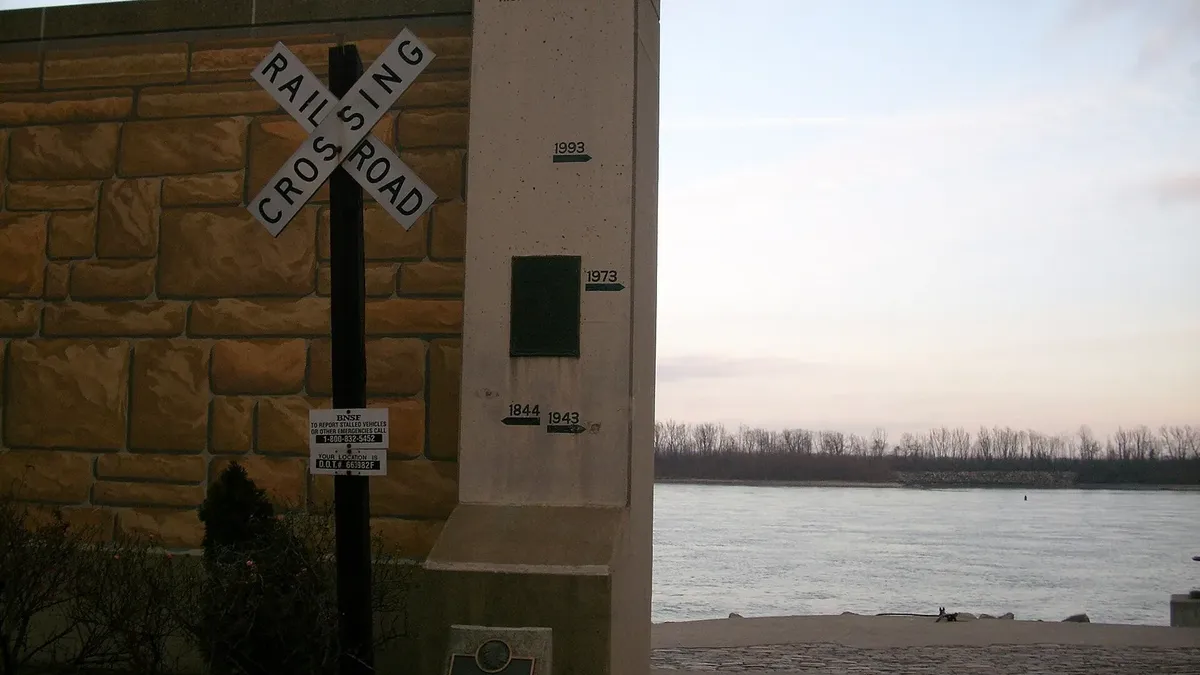
What is Resilient Bridgeport, and does it change your flood zone?
Resilient Bridgeport is a Connecticut Department of Housing plan to lower flood risk in the South End, and the floodwall at its center is not built. Its design aims at a possible future map revision, not a present one.
The plan grew out of Superstorm Sandy. The State's 2019 Final Environmental Impact Statement says Bridgeport saw the highest storm surge in the state, nearly 7 feet above normal high tide. Sandy damaged over 570 single-family houses citywide, and 211 South End buildings were inundated.
What the plan would build
- A raised stretch of University Avenue with floodwalls and sheet piling, giving a dry route out during storms.
- Pumps and green and gray drainage to handle rain and storm water.
- At the Marina Village site, a raised Johnson Street extension and a 2.5-acre stormwater park.
- A Resilience Center for flood education and storm recovery supplies.
A Department of Housing notice dated October 24, 2019, put funding at about $42 million in CDBG-NDR funds and $10 million in CDBG-DR funds. It also noted the South End's trouble in other storms, such as Hurricane Irene. In August 2021, a FEMA final public notice described a floodwall to protect about 64 acres from the 100-year storm plus 2.5 feet of sea level rise.
Where the project stands
Funding has been uneven. WSHU reported in February 2023 that funding issues had delayed the South End plan for more than seven years. In August 2025, CT Mirror reported that FEMA's cancellation of its BRIC grant program hit the Bridgeport coastal flood defense project. The State Department of Housing's progress report for early 2025 said the project was in a "HOLD" status awaiting FEMA's review of the grant application. We found no dated primary source showing the floodwall is built.
The 2019 study says the wall would be designed to meet FEMA's accreditation standard, potentially allowing a map revision to Zone X. Even then, it notes FEMA recommends that owners keep their flood insurance. For a sale today, the effective map is the one that counts. Owners there can see local options on our South End selling page.
What records help a buyer of a Bridgeport flood-zone house?
The most useful records are an elevation certificate, your flood policy's declarations page, and your claims and repair history. Together they answer most of what a buyer, an insurance agent, or a lender will ask.
Connecticut's condition report now asks for much of this. Since July 1, 2025, it has carried a Flood Risk Awareness section added by Public Act 25-33. Our Connecticut seller disclosure guide covers the full form, so the table below sticks to where each record usually lives.
| What a buyer will ask | Record that answers it | Where a seller can look |
|---|---|---|
| Is the house in a FEMA floodplain, and which zone? | The effective flood map for the address | FEMA Flood Map Service Center address search |
| How high is the house compared with expected floodwater? | Elevation certificate | Your own files, or the local floodplain manager, who may have one on file; if none exists, a land surveyor, engineer, or architect |
| Is a flood policy in effect now? | Policy declarations page | Your policy papers or your insurance agent |
| Have you ever filed a flood claim? | Claim letters and payment records | Your own files or your insurance agent |
| Did you or a past owner get disaster aid for flood damage? | Award or approval letters | Your records from FEMA, the U.S. Small Business Administration, or a state program |
| Has water ever come into the building? | Repair invoices, permits, and photos | Your own files and any permits you pulled for the work |
FEMA's FloodSmart elevation certificate page says a house may have a certificate on file with its community. It also says certificates do not set your rate but can identify discounts.
Can your buyer take over your flood policy?
Often, yes. The federal Standard Flood Insurance Policy lets you hand the policy to the buyer at closing:
"You may assign this policy in writing when you transfer title of your property to someone else..."
Standard Flood Insurance Policy, Dwelling Form, 44 CFR 61, Appendix A(1)
The form lists two exceptions: a policy that covers only personal property, and a policy on a building under construction. Your insurance agent can say whether an assignment suits your buyer.

What if your Bridgeport house took water in a storm?
If repairs would cost at least half the building's pre-damage market value, federal rules call that substantial damage. Repairing it then counts as a substantial improvement, which brings current flood construction rules into play.
Both terms are defined in 44 CFR 59.1, and both use a 50 percent test. In AE zones, 44 CFR 60.3(c)(2) tells participating communities to require the lowest floor of new and substantially improved houses, basement included unless an exception is granted, at or above the base flood level. In VE zones, 44 CFR 60.3(e)(4) calls for elevation on pilings or columns.
These rules work through local permits. The City of Bridgeport is the place to ask how it applies the 50 percent test to a given house. A Connecticut attorney or a licensed contractor can help read the answer.
What that means for a sale
- A buyer who plans big repairs may face the same elevation rule you would.
- Some owners choose to sell as-is and leave the repair choice to the buyer.
- Claim letters and repair records help any buyer judge the work ahead.
If the house is a two- or three-family with tenants, our guide to selling a Bridgeport rental with tenants in place covers the lease side.
What are your options for selling a Bridgeport flood-zone house?
Most owners choose among listing for a financed buyer, selling to a cash buyer, or repairing first. Each path handles the flood insurance step in its own way.
| Path | Lender flood insurance rule | Flood records still useful? |
|---|---|---|
| Listing for a financed buyer | Applies to a federally regulated or backed loan in a special flood hazard area (42 U.S.C. § 4012a(b)) | Yes: the buyer, the agent, and the lender will ask |
| Selling to a cash buyer | No loan, so no lender requirement; a disaster-aid requirement stays with the house | Yes: the condition report asks the same flood questions |
| Repairing first | Applies later to any buyer who borrows | Yes, plus permits; work at 50 percent of value or more can bring elevation rules (44 CFR 59.1) |
Listing for a financed buyer
Listing reaches the most buyers, and the lender's flood insurance rule applies to each one who borrows. Having the records from the table ready can shorten the questions. Older houses near the harbor in Black Rock raise the same issues; see our Black Rock selling page.
Selling to a cash buyer
The purchase requirement in § 4012a(b) is tied to a loan, so a buyer who pays cash does not face a lender's flood insurance demand. A cash buyer can still choose to insure. A requirement tied to past federal disaster aid is different: the condition report notice says it "affixes to the property and applies to all future owners."
Repairing first
Repairs can make a house easier to finance, but large ones may trigger the 50 percent rule above. It can help to ask the City about permits before work starts.
How can Propcash help with a Bridgeport flood-zone house?
Propcash is a direct cash homebuyer, so we can make you one cash offer on your Bridgeport flood-zone house as-is, with the reasoning shown. Because we pay cash, there is typically no lender flood insurance step before closing. Sellers pay no fees or commissions, you pick the closing date, and closings can happen in as few as 7 days.
An offer is one more number to set beside listing or repairing. If a cash sale is not your best move, we will tell you. You can request a no-obligation cash offer and compare it with a financed sale.
Common questions about Bridgeport flood-zone sales
Do you have to tell a Connecticut buyer the house is in a flood zone?
The Residential Property Condition Report under Conn. Gen. Stat. § 20-327b asks whether the property is in a flood hazard area. Since July 1, 2025, its Flood Risk Awareness section (Public Act 25-33) also asks which FEMA zone applies, whether an elevation certificate exists, and about past flood claims. A Connecticut attorney can say how the form applies to a given sale.
Can a buyer take over the seller's NFIP flood policy?
Usually, yes. The Standard Flood Insurance Policy lets the policyholder assign it in writing when title moves to someone else. The two exceptions are a policy that covers only personal property and a policy on a building under construction. Your insurance agent can explain the steps for your policy.
Does a cash buyer need flood insurance in Bridgeport?
The federal purchase requirement in 42 U.S.C. § 4012a(b) applies to loans, so a buyer who pays cash does not face a lender's flood insurance demand. A cash buyer can still choose to insure the house. A requirement tied to past federal disaster assistance is separate, and the Connecticut condition report notice says it applies to all future owners.
How do you find the flood zone for a Bridgeport address?
FEMA's Flood Map Service Center at msc.fema.gov is the official public source for flood hazard information. Its search box takes an address, a place, or coordinates and returns the effective flood map for that spot. A printout of that result is a simple record to share with a buyer.
Is an elevation certificate required for flood insurance?
Not for most houses. FEMA's FloodSmart site says most homeowners do not need one to get flood insurance, though a building in Zone A or Zone V may need one to verify local compliance. The same page says certificates do not set the rate but can identify discounts, so one already on file can help a buyer.
Will Resilient Bridgeport take South End houses out of the flood zone?
Not yet, and not automatically. The 2019 Final Environmental Impact Statement says the floodwall would be designed to meet FEMA's accreditation standard, potentially allowing a map revision to Zone X. The State's own 2025 progress report put the project on hold pending a federal grant review, and news reports from 2023 and 2025 describe funding delays and a cancelled grant program. Until FEMA revises the map, the effective map for your address is the one that counts.
Data Sources: 42 U.S.C. §§ 4012a and 4104a; 44 CFR 59.1 and 60.3; Standard Flood Insurance Policy, 44 CFR Part 61, Appendix A(1); FEMA glossary and Flood Map Service Center; FEMA FloodSmart; Connecticut Department of Housing, Resilient Bridgeport Final EIS (2019) and Notice of Record of Decision (October 24, 2019); FEMA Final Public Notice PDMC-PJ-01-CT-2019-006 (August 12, 2021); Connecticut Public Act 25-33; WSHU (February 2023); CT Mirror (August 2025). Propcash is a direct cash homebuyer, not a law firm or an insurance agency. Owners should consult a Connecticut-licensed attorney about their own sale.
Reviewed by the Propcash Editorial Team under our editorial standards. Published by Propcash, a direct cash buyer of houses. This guide is general information. Laws, fees, and market figures change, so check the current rules for your state.
