
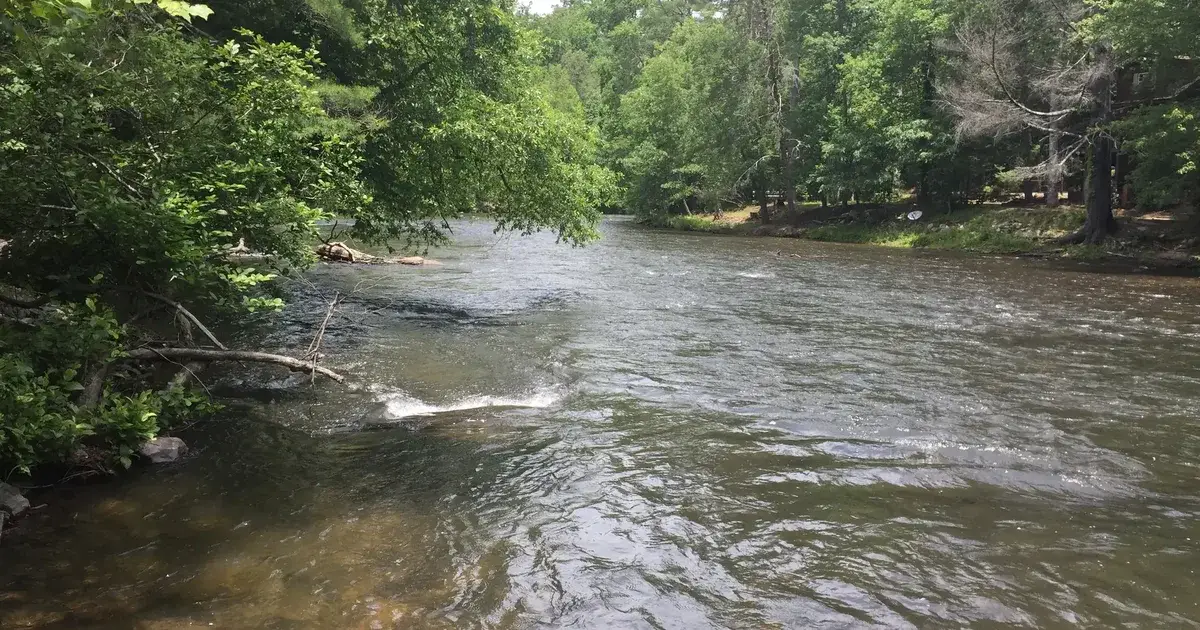
Yes, and every City of Newark buyer gets a Deed Transfer Affidavit stating whether the house is within the 100 Year Floodplain.
One person on the deed signs it at settlement, and there is no fee, so the buyer learns the answer by then at the latest. You can check the zone first on FEMA's Flood Map Service Center.
This is general information, not legal advice. State rules vary.
Jump to a section
Do you know which FEMA flood zone your Newark house is in?
Free. No obligation. You choose the closing date.
You can sell a house in a flood zone in Newark, DE, and the buyer will learn its floodplain status by settlement at the latest. The City of Newark requires a Deed Transfer Affidavit, also called a Zoning Certificate, for every purchase inside City limits. It tells the new owner the zoning and whether the house is within the 100 Year Floodplain. One person on the deed signs it at settlement, and there is no fee.
A seller gains by knowing that answer first. This guide covers the FEMA flood map, what Zone AE and Zone X mean for a buyer's loan, and how high White Clay Creek and the Christina River have run. It also covers what Delaware's condition report asks about water.
What does a Newark buyer learn about the floodplain at settlement?
A buyer of a house inside the City of Newark gets a Deed Transfer Affidavit that states the zoning and whether the house is within the 100 Year Floodplain. At least one person whose name will be on the deed signs it at settlement.
"Its purpose is to inform new homeowners of the property’s zoning and whether or not it is within the 100 Year Floodplain."
City of Newark, Buyer's Affidavit page of the Planning and Development Department
To request the affidavit, the City asks for the address, the names that will be on the deed, and an email address. If the purchaser cannot reach the Planning and Development Department, the City requires a power of attorney for a third party to complete it. After the affidavit, purchasers get a Buyer's Packet with information for new residents.
The affidavit sits beside the City's lien certificate, which every sale inside the City also needs. The settlement attorney requests it at least ten days before settlement. It lists amounts owed to the City and any open permits or violations, which our guide to open permits and code violations in Newark covers.
Why it helps to know first
The affidavit is a buyer's document, and it arrives near the end of the sale. A buyer who first sees a floodplain answer at the settlement table may have insurance questions you could have answered at the start. Looking up the map yourself lets you price, disclose, and plan with the same facts the buyer will see.
How do you check the flood zone for a Newark address?
You can check the flood zone for a Newark address on FEMA's Flood Map Service Center by typing the street address into its search box. FEMA calls it the official public source for flood hazard information produced for the National Flood Insurance Program (NFIP).
The City's Comprehensive Development Plan V says a FEMA revision of the New Castle County Flood Insurance Rate Map took effect on February 4, 2015. City Council approved Chapter 14A: Floodplains on January 12, 2015. That ordinance adopted the updated maps and designated a Floodplain Administrator. The Map Service Center shows the panel in effect today, so it is a better check than an old printout.
What the zone labels mean
FEMA's flood zone glossary defines the Special Flood Hazard Area as the land the base flood would cover. The base flood has a 1-percent chance of happening in any year and is also called the 100-year flood.
- Zone A and Zone AE: labels for the Special Flood Hazard Area.
- Zone X (shaded): moderate hazard, between the base flood and the 0.2-percent-annual-chance (500-year) flood.
- Zone X (unshaded): minimal hazard, outside the Special Flood Hazard Area and above the 500-year flood elevation.
Flood zone on the map: what it means for a buyer's loan and your sale
A Zone A or AE house falls under the federal flood insurance rule for loans, and a Zone X house does not. The table sets the zones side by side.
| Map zone | What FEMA's label means | Buyer's loan | What it can mean for your sale |
|---|---|---|---|
| Zone AE | Special Flood Hazard Area (1-percent annual chance flood) | Flood coverage required for the term of a loan from a regulated lender (42 U.S.C. § 4012a) | A financed buyer needs a policy by closing. An NFIP policy you hold can transfer to the buyer. |
| Zone A | Special Flood Hazard Area (1-percent annual chance flood) | Same federal requirement as Zone AE | Same insurance step for a financed buyer. The City's affidavit states the floodplain answer at settlement. |
| Zone X (shaded) | Moderate hazard, between the 100-year and 500-year flood | Outside the Special Flood Hazard Area, so the federal requirement does not apply | A buyer may still choose a policy. Past water problems still go on the condition report. |
| Zone X (unshaded) | Minimal hazard, above the 500-year flood elevation | Federal requirement does not apply | The map rarely shapes the sale. Storm drain flooding can still happen, as the City notes. |
Sources: FEMA flood zone glossary and 42 U.S.C. § 4012a, both read November 2026. The rule covers loans and federal financial assistance, not a buyer paying cash.
Why does a Newark house in Zone AE need flood insurance for a mortgage?
Federal law requires flood coverage for the term of a loan from a regulated lender on a building in a Special Flood Hazard Area. Lenders may not make, increase, extend, or renew such a loan without it (42 U.S.C. § 4012a). The coverage must equal the outstanding principal balance or the maximum available coverage, whichever is less.
The same section bars federal agencies from approving financial assistance to buy or build in those areas without flood coverage. For a residential building, the NFIP insures the building up to $250,000 and contents up to $100,000 (FEMA FloodSmart, November 2026).
Your policy can move to the buyer
If you carry an NFIP policy, FEMA's FloodSmart site says the building policy can be transferred to the new buyer when you sell. It cannot follow you to your next house, because the premium is tied to that house and its flood risk. Your insurance agent can explain how the transfer is handled at settlement.
Newark's Community Rating System class
The City's Comprehensive Development Plan V reports a Class 7 rating in FEMA's Community Rating System, which it calls the highest in Delaware. The plan says owners in the floodplain receive substantial discounts on flood insurance premiums as a result. It adds that FEMA recertifies the City's participation every year, so a buyer's insurance agent can confirm the current class.
How high have White Clay Creek and the Christina River risen?
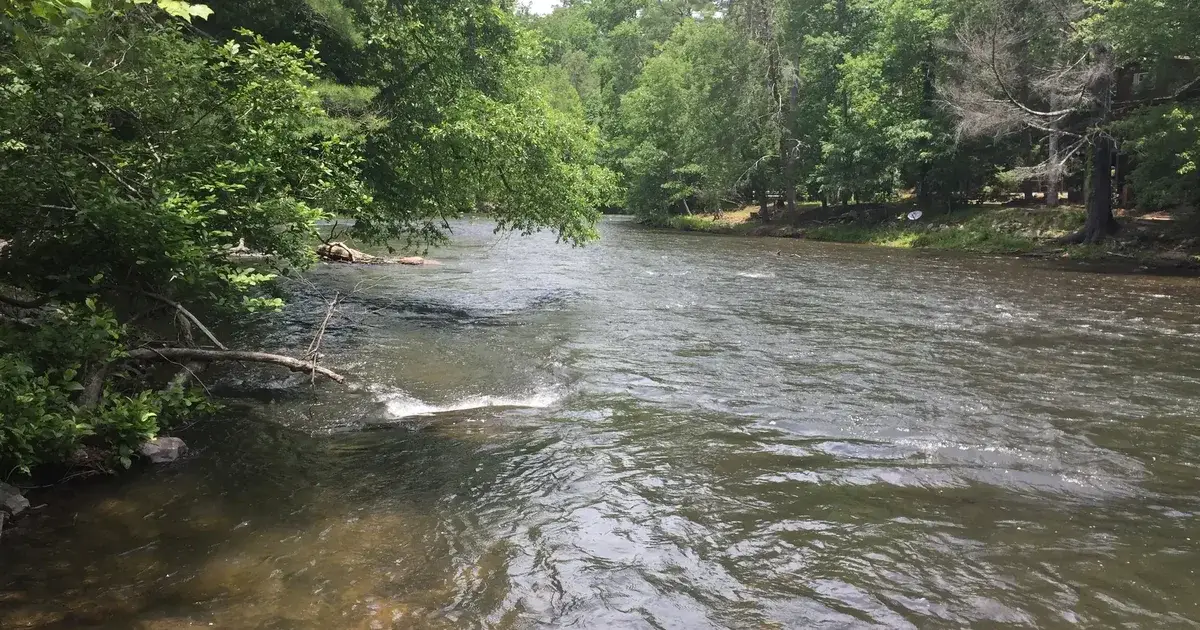
The highest annual peak in the USGS record for White Clay Creek near Newark is 19,500 cubic feet per second, on September 16, 1999. The gauge read 17.57 feet that day (USGS, November 2026).
The second-highest peak at that gauge, 17,000 cubic feet per second, came on August 28, 2011. The record holds 86 annual peaks from 1932 through 2025. On the Christina River at Coochs Bridge, the top recorded peak is 9,000 cubic feet per second on August 4, 2020 (USGS, November 2026).
| USGS gauge | Highest annual peak on record | Date | Gauge height |
|---|---|---|---|
| White Clay Creek near Newark (01479000) | 19,500 cubic feet per second | September 16, 1999 | 17.57 feet |
| White Clay Creek at Newark (01478650) | 16,800 cubic feet per second | September 16, 1999 | 17.13 feet |
| Christina River at Coochs Bridge (01478000) | 9,000 cubic feet per second | August 4, 2020 | 14.00 feet |
Newark has kept building out of these stream valleys for decades. The City's plan says no above-ground development has occurred in the White Clay and Christina Creek floodplains since its 1972 rules. Those rules limit the Special Flood Hazard Area to farming, recreation, and open space, with some uses allowed by a Council permit.
Water that never shows on the map
The City's stormwater page says much of the flooding inside Newark comes from storm pipes and inlets overwhelmed in heavy rain. It adds that the large streams usually stay within parkland or designated floodplains, except at several spots along the Christina. A house in Zone X can still have a wet basement, and the condition report asks about it.
Do Newark's floodplain rules apply outside the City limits?
No. The Deed Transfer Affidavit, the lien certificate, and Chapter 14A are City of Newark rules, and they apply only to houses inside City limits.
A 19711, 19702, or 19713 mailing address does not by itself make a house part of the City. The City's building permit application gives a test: a New Castle County parcel number that begins with "18" needs a City of Newark permit, and other parcels file with New Castle County. A sale outside the City carries no City affidavit. The FEMA map and the federal lender rule still apply everywhere, so the Map Service Center is the place to check.
Your tax bills show whether the City taxes the house. Our guide to Newark property taxes and transfer tax explains the City and county bills and what is settled at closing.
What does Delaware's condition report ask about flooding?
Delaware's condition report asks whether the house is in a flood zone, whether it has drainage or flood problems, and whether you carry flood insurance. The current form, approved by the Delaware Real Estate Commission, took effect August 1, 2026.
- Questions 61 to 63: regulated wetlands on the lot, and whether any part of it is in a flood zone or a wetlands area.
- Question 64: drainage or flood problems affecting the house.
- Questions 65 and 66: whether you carry flood insurance, the agent and policy number, and the annual cost.
- Question 67: insurance claims in the past 5 years.
- Question 68: standing water in the yard for more than 48 hours after rain.
- Question 79: any past damage by fire, smoke, wind, or flood.
- Questions 98 and 99: water or dampness in the basement or crawlspace, and any repairs to control it.
Delaware law requires a seller to disclose known material defects in writing (6 Del. C. § 2572). Buyers get the report before they make an offer, and the signed report becomes part of the purchase agreement (§ 2573). Our guide to Delaware seller disclosure requirements walks through the whole form and who is exempt.
Propcash is a direct cash homebuyer, not a law firm or an insurance agency. For a question about your disclosure duties, talk with a licensed Delaware attorney. For policy questions, talk with a licensed insurance agent.
How can Propcash help with a Newark house in a flood zone?
Propcash is a direct cash homebuyer, so a sale to us does not wait on a lender's flood insurance condition. We can buy houses as-is, whether the map says Zone AE or Zone X and whether the basement has seen water. You pay no fees or commissions, and you pick the closing date, set around the City's lien certificate lead time.
Our offer is based on local market data, and we show you how we got to our number. If the house shows well and a financed buyer can place coverage, listing may net you more. If a cash sale is not your best move, we will tell you. You can request a no-obligation cash offer and compare it with a listing, or see how we buy on our Newark cash offer page.
Frequently Asked Questions
Does a Newark house in Zone X need flood insurance before it can sell?
No federal rule requires flood insurance on a house outside the Special Flood Hazard Area, and Zone X sits outside it. The federal requirement in 42 U.S.C. § 4012a applies to buildings in areas FEMA has identified as having special flood hazards. A buyer may still choose a policy, and Delaware's condition report notes that flood insurance options exist for most houses outside high-risk zones.
Can I sell a Newark house that has flooded before?
Yes. A past flood does not stop a sale, but Delaware law requires a seller to disclose known material defects in writing (6 Del. C. § 2572). The Delaware condition report asks whether the house has ever been damaged by flood, whether there is water in the basement or crawlspace, and whether you made insurance claims in the past 5 years.
Who signs the City of Newark's Deed Transfer Affidavit?
At least one person whose name will appear on the deed signs it at settlement, so it is the buyer's signature, not the seller's. If the purchaser cannot reach the Planning and Development Department to complete it, the City requires a power of attorney for a third party to complete it. The City charges no fee for the affidavit.
Can my NFIP flood policy go to the buyer when I sell?
Yes. FEMA's FloodSmart site says the building policy can be transferred to the new buyer when a house sells. The policy cannot move with you to your next house, because the premium is tied to that house and its flood risk. Your insurance agent can explain how the transfer is handled at settlement.
Does a house in Bear or Glasgow get the City of Newark floodplain affidavit?
Only if the house is inside City limits. The Deed Transfer Affidavit is a City of Newark requirement for houses purchased in the City, and a Newark-area mailing address alone does not settle that; the City's building permit application treats a parcel number that begins with "18" as a City parcel. The FEMA flood map and the federal flood insurance rule for loans still apply there, so the Map Service Center remains the place to check the zone.
Does a cash buyer need flood insurance on a Newark house in Zone AE?
The federal flood insurance requirement is tied to loans and federal financial assistance, so a buyer paying cash with no loan is not under that lender rule. A cash buyer may still choose to insure the house. The City's Deed Transfer Affidavit still tells that buyer whether the house is within the 100 Year Floodplain.
Reviewed by the Propcash Editorial Team under our editorial standards. Published by Propcash, a direct cash buyer of houses. This guide is general information. Laws, fees, and market figures change, so check the current rules for your state.
