
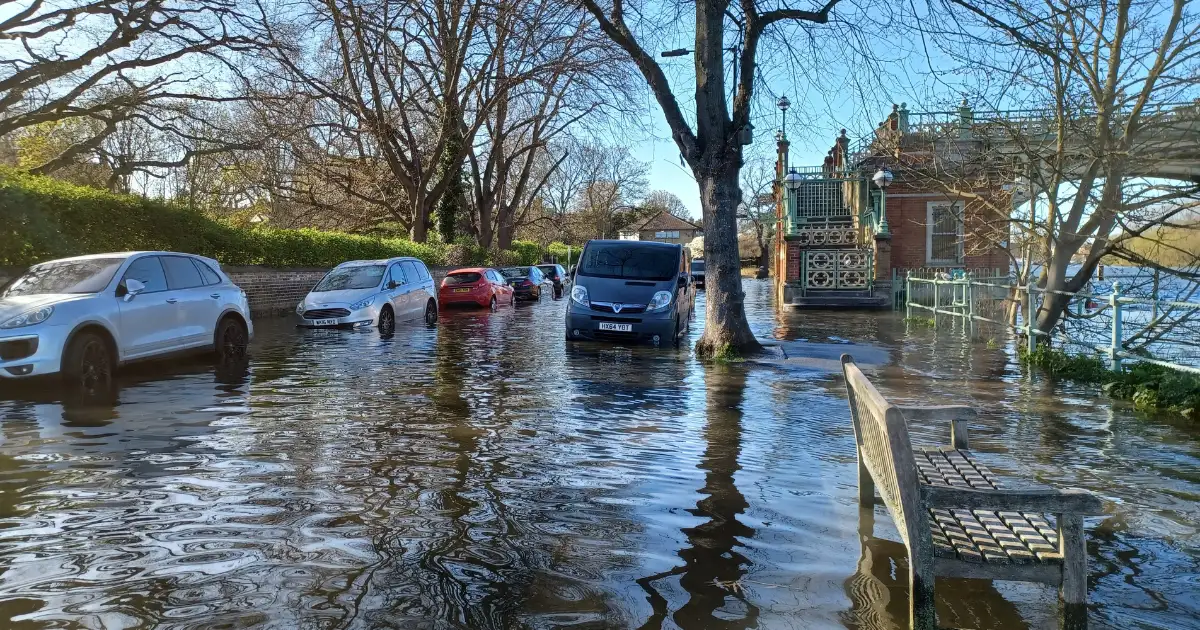
You can sell a Miami house with flood history as-is, with Florida's three-question flood disclosure given at or before signing.
The City of Miami keeps elevation certificates for houses built or substantially improved in the City since December 1992. The form under Fla. Stat. § 689.302 asks about flooding during your ownership, flood insurance claims, and flood assistance.
This is general information, not legal advice. State rules vary.
Jump to a section
Has your Miami house taken on water?
Free. No obligation. You choose the closing date.
To sell a house with flood damage in Miami, you give the buyer Florida's flood disclosure and, ideally, a file that backs up each answer. The City of Miami makes part of that file easier to build. Its Building Department says it maintains elevation certificates for houses built or substantially improved in the City since December 1992, and an owner can request them through its records section.
The state form itself is short. Under Fla. Stat. § 689.302, it asks three things: known flooding that damaged the house during your ownership, flood insurance claims (including the National Flood Insurance Program), and flood assistance (including FEMA). Redfin's climate panel (August 2026), using First Street data, rates Miami's Flood Factor "Major." It says "20,358 properties in Miami are likely to be severely affected by flooding over the next 30 years," which it calls 69% of all properties.
What does the Florida flood disclosure ask a Miami seller?
The Florida flood disclosure asks a Miami seller three yes-or-no questions about past flooding, flood claims, and flood assistance. Section 689.302 requires the seller to complete it and hand it to the buyer at or before the time the sales contract is executed.
The form opens with a note for the buyer: "Homeowners' insurance policies do not include coverage for damage resulting from floods." It then lists the three questions. Chapter 2025-166, which took effect October 1, 2025, revised the flood information the form covers, so an older blank form may differ from the current text.
| Question on the form | What counts | What to gather |
|---|---|---|
| (1) Knowledge of any flooding that has damaged the property during the seller's ownership | Inundation from inland or tidal waters, rapid runoff from an established water source, or sustained standing water from rainfall | Dates, photos, repair invoices, and any City building permits for the repairs |
| (2) A claim filed with an insurance provider for flood damage, including a National Flood Insurance Program claim | Any flood damage claim, whether it was paid or not | Claim numbers, claim dates, and the closing or payment letters |
| (3) Assistance received for flood damage, including assistance from FEMA | Assistance received for flood damage to the house | Award or decision letters and what the money repaired |
Only the first question mentions "during Seller's ownership." The claim and assistance questions do not say that, so it can help to ask a Florida real estate attorney how to answer them for your file. An heir or a recent buyer may know little about earlier owners, and the attorney can explain how to mark the form in that case.
Is your house in the City of Miami or unincorporated Miami-Dade?
Your folio number answers it: the City of Miami says that if a folio number does not begin with "01," the house is not in the City. The City details in this guide apply only to City of Miami houses, so confirm with the City if you are unsure.
Miami-Dade County is home to 34 incorporated municipalities, plus unincorporated communities. A Miami mailing address can sit in any of them. The City's lien search page states the "01" test plainly. The same jurisdiction check matters for open permits and code cases, which the guide to selling a Miami house with a City code lien covers.
| Where the house sits | Elevation certificates and permits | Flood disclosure |
|---|---|---|
| City of Miami (folio starts with "01") | City of Miami Building Department, 444 S.W. 2nd Avenue | Fla. Stat. § 689.302 form |
| Unincorporated Miami-Dade County | Miami-Dade County, not the City | Same statewide form |
| Another city in the county | That city's own building department | Same statewide form |
How do you find the elevation certificate for a Miami house?
For a City of Miami house built or substantially improved since the early 1990s, start with the City's Building Department records. An elevation certificate shows how high the house was built compared with its flood zone.
"The department maintains elevation certificates for properties that have been substantially improved or constructed in the City of Miami since December 1992."
City of Miami, Hurricane Flood Information page
The same page adds that the City "has been collecting" the FEMA elevation certificate from builders and developers "since 1995 as a requirement of their building permit." It also says elevation certificates are required for substantially damaged structures. For questions, the page lists 305-416-1279 during office hours.
How to request a copy
- House built after 1995: the City says you may be able to find the certificate through its Microfilm and Records Section, using its Request Building Records page.
- Where to go: City of Miami Building Department, 444 Southwest 2nd Avenue, 4th Floor, phone (305) 416-1140.
- House built before 1995 and never substantially improved or damaged: the City says you may need to hire a surveyor, or you can ask the prior owner.
A certificate in hand lets a buyer read the elevation data directly instead of guessing. It also helps the 50% rule discussion below, because the City ties that rule to what the certificate shows.
How can you look up a Miami house's flood zone?
You can look up a Miami house's flood zone by entering the address in Miami-Dade County's flood zone tool. The County lists 305-372-6466 for confirmation of a property's official flood zone designation.
The County page also points to the FEMA Flood Map Service Center. One detail is easy to miss. The County says FEMA published preliminary flood zone maps for Miami-Dade in 2021, and that these "may change" and "are not currently effective." Note which map a zone letter came from before you write it down.
Written flood information from the City
Inside the City, the Building Department says it "can inform you if your property is in a floodplain area." For a $25 fee, the City can provide flood information in writing:
- Community number, panel number, and suffix
- Date of the FIRM's index and the FIRM zone
- Base flood elevation and the elevation data used on the FIRM
The page names the Plumbing Plans Examiner at 444 S.W. 2nd Avenue, 4th Floor, (305) 416-1111, as the contact. The City also offers site visits to tell an owner whether the house is in a flood zone.
What is the 50% rule for a flood zone house in the City of Miami?
The City says that if a flood zone house is damaged or improved by more than 50% of its market value, it has to be raised to meet the current elevation requirement. The City links the rule to houses whose elevation certificate shows them lower than required.
For a seller, the rule shapes the repair math more than the disclosure. A large repair bill on an older house may cross that line, and the work could then grow into elevation. The City's page also says to check with the Building Department before you "build, alter, re-grade or put fill" on the property.
This guide does not estimate where any house falls. The Building Department and a licensed design professional can say how the rule applies to a specific house.
Should you repair first or sell flood damage in Miami as-is?
Repairing first can suit a seller with time, cash, and a house far from the 50% line, while selling as-is can suit one who wants to stop spending on the house. Either way, the same disclosure goes to the buyer.
Repair, then list
- Repairs may need City permits, and the City asks owners to check with the Building Department before they alter the property.
- Invoices and permits can go into the same file as the disclosure.
- A listing takes time. Redfin reports a median of 113 days on market in Miami for the three months ending September 2026, up from 106 a year earlier.
Sell as-is with full disclosure
As-is means as-is: the buyer takes the house in its current condition, damage included. You skip the repair project and the permit timeline. You still complete the § 689.302 form, and the records above still help, because a buyer who sees the file can price the house with fewer unknowns. Some owners in this spot also weigh Florida's insurance pressures as part of the decision. The major repairs guide covers the same choice more broadly.
How can Propcash help with a Miami house that has flooded?
Propcash is a direct cash homebuyer, and we buy houses as-is, flood history included. There are no repairs, no showings, and no agent commissions, and Propcash charges sellers no fees. We'll make you one cash offer based on local market data and show you how we got to our number.
You can put that offer next to a repair-and-list plan and decide with both in view. Closings can happen in as few as 7 days after the contract is signed, or on the date you pick. If a cash sale isn't your best move, we'll tell you. You can request a no-obligation cash offer or read more on our Miami cash house buyer page.
Frequently Asked Questions
Do I have to tell a buyer my Miami house flooded if I fixed it?
The first question on Florida's flood disclosure asks about flooding that damaged the house during your ownership, and it does not ask whether the damage was repaired. Repair records still help, because they show the buyer what was done. A Florida real estate attorney can review your answers before you sign.
Does Florida count heavy rain as flooding on the disclosure?
Yes, in some cases. The form defines flooding to include sustained periods of standing water resulting from rainfall. It also covers the overflow of inland or tidal waters and the rapid buildup of runoff from an established water source, such as a river, stream, or drainage ditch.
Can I get flood zone details in writing from the City of Miami?
Yes. The City's Hurricane Flood Information page says that for a $25 fee the City can provide flood information in writing, including the FIRM zone, the panel number, and the base flood elevation. The Plumbing Plans Examiner at 444 S.W. 2nd Avenue, 4th Floor, (305) 416-1111, holds that information.
What if no elevation certificate exists for my Miami house?
The City says that for a house built before 1995 that was never substantially improved or substantially damaged, you may need to hire a surveyor or ask the prior owner. A sale can still go forward without one; the buyer simply has less elevation information to review.
Do the preliminary Miami-Dade flood maps apply to my sale?
Miami-Dade County says the preliminary flood zone maps published in 2021 may change as FEMA addresses comments and are not currently effective. The County links separate map viewers for the current and preliminary maps. It helps to note which map a zone letter came from.
Can a cash buyer purchase a Miami house that still has flood damage?
Yes. A direct cash buyer such as Propcash can buy a house as-is, with the damage still in place, so no repairs are asked of you. The flood disclosure still goes to the buyer at or before signing, and as-is means the buyer takes the house in its current condition.
Data Sources: Florida Statutes § 689.302 and Laws of Florida ch. 2025-166; City of Miami Hurricane Flood Information and lien search pages; Miami-Dade County Flood Zone Maps and Municipalities pages; Redfin. Propcash is a direct cash homebuyer, not a law firm. Sellers should consult a Florida-licensed real estate attorney for case-specific guidance.
Reviewed by the Propcash Editorial Team under our editorial standards. Published by Propcash, a direct cash buyer of houses. This guide is general information. Laws, fees, and market figures change, so check the current rules for your state.