

Yes, a Miami house with a City code lien can be sold, but the lien stays on the land until paid or released.
The City requires an Affidavit of Compliance before the Code Enforcement Board will hear a mitigation request. Buyers check for liens with the City's $200 search by folio number.
This is general information, not legal advice. State rules vary.
Jump to a section
Where does your Miami code matter stand?
Free. No obligation. You choose the closing date.
A code enforcement lien in Miami does not block a sale, but it has to be paid, reduced, or taken on by the buyer before title can pass clean. The City's own Code Compliance road map sets the order of steps. An owner must first get an Affidavit of Compliance from the Code Compliance Inspector, then request a mitigation hearing before the Code Enforcement Board. That request goes online through the Hearing Boards Division of the Planning Department. The same guide warns that the City Attorney's Office may seek an injunction, foreclosure, or a money judgment over an open violation.
Buyers start from the other end. A title company or buyer usually runs the City's lien or violation search, which costs $200 and works by folio number. This guide walks through both sides, from the first notice to a cleared lien, with the Miami details a general Florida guide leaves out. It is general information, not legal advice; a Florida attorney can review your case.
Can you sell a Miami house with a code enforcement lien?
Yes, a Miami house with a code enforcement lien can be sold, but the lien follows the land until the City releases it. The sale itself is legal; the lien is what the closing has to resolve.
Yes, but the lien stays with the land until it is paid or released, as Florida's code enforcement law makes plain. Once a certified copy of a fine order is recorded under Fla. Stat. 162.09(3), it "shall constitute a lien against the land on which the violation exists." The lien can also reach other real or personal property the violator owns. The fine keeps growing each day until the violation is fixed or a court enters judgment.
The City's Code Compliance page adds its own rule for removal. It says a lien "can only be removed by complying the violation and payment of the lien." In other words, fixing the problem stops the clock, but the balance still needs to be paid or reduced.
A code case and a code lien are not the same thing
A code case is the City's open file on a violation. A lien exists only after the board imposes a fine and the order is recorded.
Is your house under City of Miami or Miami-Dade County code rules?
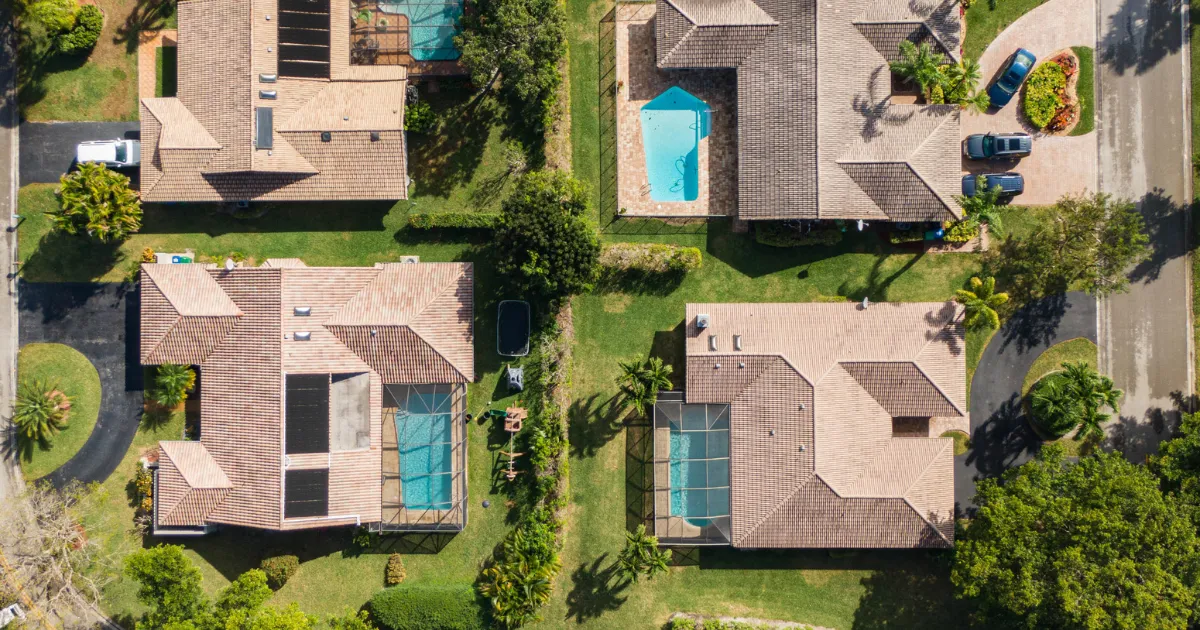
Your house is under City of Miami code rules only if it sits inside city limits, and the folio number is the fastest test. City parcels have folio numbers that begin with "01."
Many houses with a Miami mailing address are not in the City at all. Large areas with Miami addresses are unincorporated Miami-Dade County, where County code enforcement applies instead. Hialeah, Coral Gables, Miami Beach, Doral, and the county's other cities run their own code programs too. The City's lien search page says a folio that does not begin with "01" is "not in The City of Miami."
The County adds a rule of its own. Sellers of residential houses in unincorporated Miami-Dade must disclose code violations and illegal construction to buyers when they sign the contract. The disclosure goes in the contract or a same-day addendum, and the buyer signs and dates it. Everything below covers City of Miami cases.
How does a City of Miami lien search work?
A City of Miami lien search is an online report, ordered by folio number, that shows City liens and violations tied to a parcel for a $200 fee. Buyers and title companies usually run it, but a seller can order one first.
The City's lien search page lays out the steps:
- Have the folio number ready, or look it up on the Miami-Dade property search by address or owner.
- Enter the folio and choose a new report or an existing one.
- Confirm the $200 fee and validate the address.
- Enter contact details and pay by card or check through the payment screen.
- Return to the search link to view or print the report.
Running the search before you list can help you see what a buyer will see. It also gives you the case numbers you need for every later step. The page does not list a turnaround time or say whether the report includes a payoff figure.
How does a City of Miami code case become a lien?
A City of Miami code case becomes a lien when a violation outlasts the time to fix it, the Code Enforcement Board imposes a daily fine, and the fine order is recorded. Each step has its own paper, and the table shows who handles it.
| Step | Who | Document | Where |
|---|---|---|---|
| 1. Violation found | Code Compliance Inspector | Notice of Violation, with the case number | Notice by certified mail or hand delivery; posting is an added option (Fla. Stat. 162.12) |
| 2. Extra time (residential) | Inspector, then supervisor, then Director or Assistant Director | Up to three 30-day extensions | Code Compliance, (305) 416-2087 |
| 3. Hearing | Code Enforcement Board | Findings and an order with a compliance date (Fla. Stat. 162.07(4)) | Next available board meeting |
| 4. Daily fine and lien | Code Enforcement Board | Certified fine order (Fla. Stat. 162.09(3)) | Miami-Dade public records |
| 5. Compliance | Owner asks for re-inspection; inspector confirms | Affidavit of Compliance | Code Compliance Inspector |
| 6. Mitigation (optional) | Owner or legal representative; the board decides | Online questionnaire, then the board's motion on fines | Hearing Boards, 444 SW 2nd Ave, 7th Floor |
| 7. Lien cleared | City of Miami | Payment, then a satisfaction or release of lien (Fla. Stat. 162.09(3)) | Often paid from sale proceeds at closing |
The extension ladder comes from the City's road map. After 90 days of extensions, the case is set for the next board meeting. Once you fix the violation, the road map asks you to call the inspector or (305) 416-2087 for a re-inspection.
How large can the fine get?
Florida's base caps are $250 a day for a first violation and $500 a day for a repeat (Fla. Stat. 162.09(2)(a)). A city of 50,000 or more may adopt higher caps by ordinance, up to $1,000 and $5,000 a day (162.09(2)(d)). Your fine order states the daily amount that applies to your case. If the City wins its case, Florida law lets the City add its prosecution costs to the lien.
How does lien mitigation work in Miami?
Lien mitigation in Miami is a hearing where the Code Enforcement Board can reduce a fine, and it opens only after the violation is fixed and the inspector signs an Affidavit of Compliance. State law lets an enforcement board reduce a fine it imposed (Fla. Stat. 162.09(2)(c)).
"The Code Enforcement Board is the only entity in the City empowered to mitigate a fine amount."
Code Compliance, City of Miami department page
The same page says the board weighs mitigation under section 2-817 of the City Code. The City's mitigation request page sets these conditions:
- Only the owner, or someone with legal standing such as counsel or a power of attorney holder, may ask.
- Every violation on the case must be marked complied, with an Affidavit of Compliance.
- A power of attorney must be notarized, uploaded as a PDF, and is reviewed by the Legal Department.
- The case number from the Notice of Violation starts the online questionnaire.
If the papers are in order, the City emails a hearing date, time, and location within 3 to 5 business days. At the hearing, the board makes a motion on the fines. Everything submitted becomes a public record, so leave out sensitive personal details. The Hearing Boards office answers questions at 305-416-1796.
What changes if you sell while the case is still open?
If you sell after the first pleading is served but before the hearing, Florida requires written disclosures to the buyer and a notice to the City within 5 days after the transfer. These duties come from Fla. Stat. 162.06(5).
Before the sale, the seller must tell the buyer in writing that the case exists and what it is about. The seller hands over the notices and papers received in the case. The seller also states in writing that the new owner will be responsible for compliance. Skipping those disclosures creates a rebuttable presumption of fraud under the statute.
The case does not end with the sale. The statute gives the new owner a reasonable time to correct the violation before the hearing. A recorded order also binds later owners of the house (Fla. Stat. 162.07(4)).
Homestead and the 20-year limit
A code lien cannot be foreclosed on a Florida homestead (Fla. Stat. 162.09(3)). That protects the owner who lives there, but the lien still shows up at closing. Under Fla. Stat. 162.10, a recorded lien lasts up to 20 years unless the City files suit first. An heir who finds an old lien on a family house can read our guide to selling an inherited house in Miami.
Should you cure, mitigate, pay at closing, or sell as-is?
The right path depends on how much time and cash you have, and on whether the violation can be fixed at a reasonable cost. Four routes are open, and each one ends the same way: the lien is paid or released at or before closing.
| Route | What it takes | Trade-off |
|---|---|---|
| Cure, then list | Fix the violation, get re-inspected, receive the Affidavit of Compliance | Stops the daily fine; the repair cost and any permit time are yours |
| Cure and mitigate | Affidavit of Compliance, then a mitigation hearing request | May lower the balance; the reduction is the board's call |
| Pay at closing | The title company pays the lien from your proceeds | Simple, but a fine that is still running keeps growing until compliance |
| Sell as-is | A buyer who prices in the repair and takes on the cure | No repairs by you; open-case disclosures still apply |
Time on the market matters while a fine runs. Miami houses took a median of 113 days to sell in the three months ending September 2026, up from 106 a year earlier, according to Redfin (September 2026). The median sale price was $649,691, up 4.8% year over year, on 1,025 sales. In Zillow's ZHVI, the typical Miami value was about $583,705 on September 30, 2026, up about 1.4% year over year. The two measure different things, so read them separately.
If the house also faces a mortgage default, the code lien is one of several claims a sale has to settle. Our guide to selling before the Miami-Dade foreclosure sale covers that calendar. More on code issues sits on our code violations page.
How can Propcash help with a Miami code lien?
Propcash is a direct cash homebuyer, and we buy houses as-is, open code cases and recorded liens included. As-is means as-is: no repairs, no cleaning, and no showings. Our offer is based on local market data, and we show you how we got to our number. Sellers pay no fees or commissions, and you pick the closing date.
A cash offer can sit next to your other routes. You can compare it with curing and listing, or with a mitigation hearing first, and decide on your own time. Closings can happen in as few as 7 days after the contract is signed. If a cash sale is not your best move, we will tell you. Learn more on our Miami cash house buyer page, or get a cash offer from Propcash with no obligation.
Frequently Asked Questions
How much does a City of Miami lien search cost?
The City of Miami charges $200 to run a lien or violation search, paid by credit card or check. You need the folio number, and a folio that does not begin with "01" is not in the City of Miami. A buyer or title company usually orders it, but a seller can run one first to see what a buyer will see.
Can the City foreclose a code lien on a Miami homestead?
No. Fla. Stat. 162.09(3) says no lien created under the code enforcement chapter may be foreclosed on real property that is a homestead under the Florida Constitution. The lien still sits on the title, though, and a title company will usually want it paid or released before a sale closes.
Who can ask for a mitigation hearing on a Miami code lien?
Only the owner, or someone with legal standing for the owner such as legal counsel or a holder of a power of attorney, can request it. The City requires the power of attorney to be notarized, and its Legal Department reviews it. The owner also needs an Affidavit of Compliance with every violation on the case complied.
How long does a recorded code lien last in Florida?
Under Fla. Stat. 162.10, a code enforcement lien lasts no longer than 20 years after the certified fine order is recorded, unless the local government starts a court action within that time.
Does selling the house end the City's code case?
No. Under Fla. Stat. 162.06(5), a case is not dismissed when the house changes hands before the hearing, and the new owner gets a reasonable time to correct the violation. A recorded fine lien also stays on the land until it is paid or released, so the case and the lien both survive a sale.
How much time does a Miami homeowner get to fix a violation before the board hears it?
The City's Compliance Road Map says a residential owner may get up to three 30-day extensions, granted in turn by the inspector, a supervisor, and the Director or Assistant Director. After those 90 days, the case goes to the next available Code Enforcement Board meeting. Each extension depends on the City's discretion and the owner's progress.
Reviewed by the Propcash Editorial Team under our editorial standards. Published by Propcash, a direct cash buyer of houses. This guide is general information. Laws, fees, and market figures change, so check the current rules for your state.