
A Gainesville, FL house can be sold with a code lien, but the lien stays until paid or released.
City Code Sec. 2-388.1 allows fines up to $1,000 a day for a first violation and $5,000 a day for a repeat. A code lien cannot be foreclosed on a homestead, and the Special Magistrate hears reduction requests.
This is general information, not legal advice. State rules vary.
Jump to a section
Where does your Gainesville code matter stand?
Free. No obligation. You choose the closing date.
A code enforcement lien in Gainesville, FL can carry far larger fines than Florida's default limits. City Code Sec. 2-388.1 caps fines at $1,000 a day per violation for a first violation and $5,000 a day for a repeat. An irreparable or irreversible violation can draw up to $15,000 per violation. A recorded order becomes a lien on the land, but a lien under this part may not be foreclosed on a homestead. Sec. 2-388.2 adds that no lien lasts longer than 20 years.
Owners who want a fine lowered can file the City's reduction or rescission request for the Special Magistrate, who meets the second Thursday of each month at 9:00 a.m. This guide covers what those rules mean when you sell a house with code violations in Gainesville, and how to check a house before closing.
Can you sell a Gainesville house with a code enforcement lien?
You can sell a Gainesville house with a recorded code lien, but the lien does not drop off at the sale. It stays on the land until the City signs a satisfaction or release, so a seller generally deals with the balance at or before closing.
Florida's code enforcement law makes a recorded fine order "a lien against the land on which the violation exists" (Fla. Stat. § 162.09(3)). The same lien also reaches any other real or personal property the violator owns. The local government may sign a satisfaction or release once the lien is resolved.
A recorded order also binds whoever buys next. Under Fla. Stat. § 162.07(4), it gives notice to later purchasers, and its findings bind them when the violation concerns real property. That is why a title search for a buyer or lender usually looks for these orders.
What sellers usually weigh
- The size of the lien compared with the equity in the house.
- Whether the violation is fixed, since a daily fine keeps running until it is.
- Whether a reduction request is worth filing before the sale.
- How much time and money the repairs would take.
How high can City of Gainesville code fines go?
City of Gainesville code fines can reach $1,000 a day per violation for a first violation and $5,000 a day for a repeat violation. A violation found irreparable or irreversible can bring up to $15,000 per violation under City Code Sec. 2-388.1.
Those caps sit well above Florida's default limits. State law sets $250 a day for a first violation, $500 a day for a repeat, and $5,000 for an irreparable one (Fla. Stat. § 162.09(2)(a)). Section 162.09(2)(d) lets a county or city of 50,000 or more people adopt the higher limits by ordinance. Gainesville's code uses those higher figures.
A fine also keeps growing. Under section 162.09(3), it accrues until the violator comes into compliance or a court enters judgment, whichever comes first. The City's own Code Enforcement page puts the result plainly:
"Any accumulated fines and assessed costs will be attached to the property as a lien."
City of Gainesville, Code Enforcement Division
Fine caps and lien rules at a glance
| Item | City Code or statute | What it means for a sale |
|---|---|---|
| First violation: up to $1,000 a day per violation | City Code Sec. 2-388.1 | A balance can grow fast while a repair waits |
| Repeat violation: up to $5,000 a day per violation | City Code Sec. 2-388.1 | A second case for the same problem costs more |
| Irreparable or irreversible: up to $15,000 per violation | City Code Sec. 2-388.1 | A one-time fine, not a daily one |
| Fine runs until compliance or judgment | Fla. Stat. § 162.09(3) | Fixing the violation stops the daily count |
| The board may reduce a fine | City Code Sec. 2-388.1; Fla. Stat. § 162.09(2)(c) | A request can be filed; the outcome is up to the Special Magistrate |
| Recorded order is a lien on the land | City Code Sec. 2-388.1; Fla. Stat. § 162.09(3) | Stays with the house until satisfied or released |
| Recorded order binds later buyers | Fla. Stat. § 162.07(4) | Title searches look for it |
| No foreclosure of the lien on a homestead | City Code Sec. 2-388.1; Fla. Stat. § 162.09(3) | Protects a homestead from lien foreclosure, not from the lien |
| Lien lasts no longer than 20 years | City Code Sec. 2-388.2; Fla. Stat. § 162.10 | Unless a court action is filed within that time |
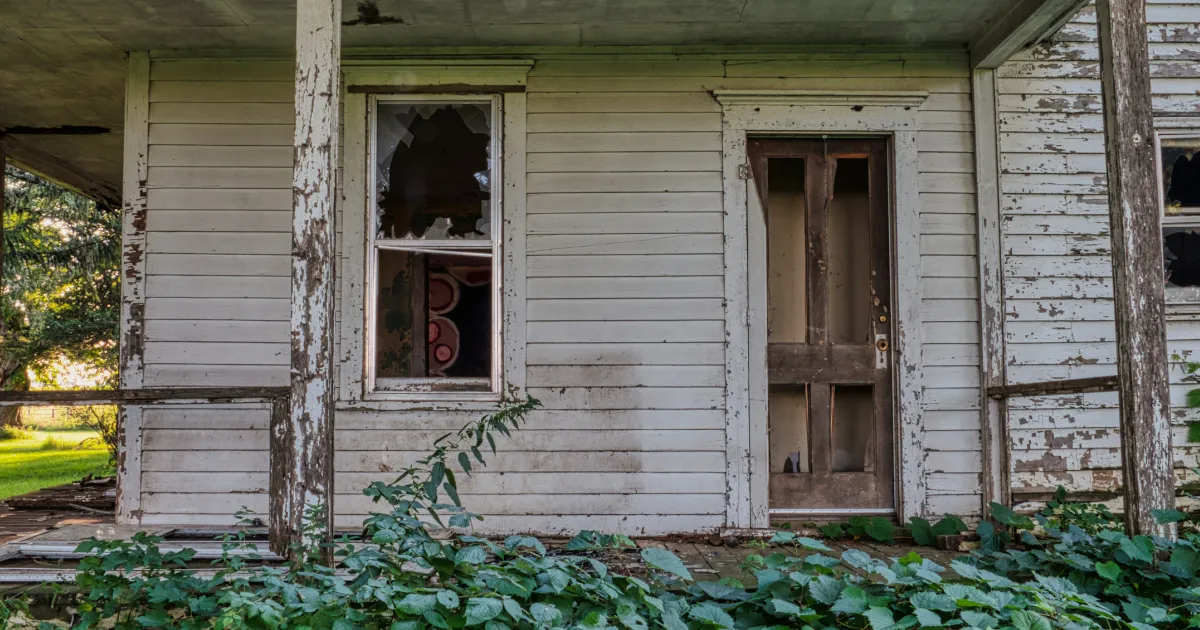
Is your house under City or Alachua County code enforcement?
A house inside Gainesville city limits falls under City Code and the City's Special Magistrate. A house in unincorporated Alachua County falls under the County's Code Administration office, even when its mailing address says Gainesville.
Some houses with a Gainesville mailing address sit in unincorporated Alachua County, so it helps to confirm the parcel's jurisdiction first. The City's fine caps, its reduction form, and its hearing calendar do not apply there.
Alachua County Code Administration enforces Florida Statute 162 and county codes and holds its own Special Magistrate hearings. Its office line is (352) 374-5238.
How do you find a code lien on a Gainesville house?
A Gainesville code lien is a recorded document, so the Alachua County Clerk's official records search is the first place to look. The City's Code Enforcement Division can then confirm the case and the balance.
The Clerk's Official Records page says most records are online. Some older records are indexed but not imaged, which the search results show. The Official Records office is at 201 East University Avenue and can be reached at 352-374-3625.
Steps that can help before closing
- Step 1Search the owner's name in the Clerk's official records for a recorded fine order
- Step 2Note the case number on the order
- Step 3Call Code Enforcement at 352-334-5030 to confirm the status and ask for the balance in writing
- Step 4Share the written balance with the title or closing agent
- At closingPayment, then a recorded satisfaction or release from the City
A written balance helps because the number can change. A daily fine still running on an open violation adds to the total each day. The City's Code Enforcement email listed on its page is codes@gainesvillefl.gov.

How does a Special Magistrate reduction request work?
A Gainesville owner asks for a lower fine by filing the City's one-page Request for Reduction/Rescission of Fine & Costs. The request is placed on a Special Magistrate agenda, and the Special Magistrate decides whether to reduce or rescind.
The Special Magistrate page says the magistrate hears code violations and "reduction and rescission requests of codes, fines and liens." Regular meetings are the second Thursday of each month at 9:00 a.m. They take place in the City Commission Auditorium, first floor of City Hall, 200 East University Avenue.
What the form asks for
- The date, the case number, and the house address.
- The requester's name, as "property owner/interested party."
- The agenda the request should go on.
- The date the house came into compliance.
- The reason it was out of compliance, with room to continue on the back.
- A signature, address, and phone number.
By signing, the requester releases the City and the Special Magistrate from any liability on the matter. The form reads as though the house is already in compliance, so fixing the violation usually comes first. Florida law also lets an enforcement board reduce a fine it imposed (Fla. Stat. § 162.09(2)(c)).
The form lists three ways to send it:
- Fax to (352) 334-2239.
- Mail to the Clerk for the Code Enforcement Special Magistrate, 306 NE 6th Avenue, Sta. 10A, Gainesville, FL 32602.
- Email to codes@gru.com.
The posted copy is a 2022 scan, and the City's web page lists a different email. A call to 352-334-5030 can confirm the current address before you send it.
A reduction is never certain. The Special Magistrate weighs each request, and no buyer, agent, or other outside party can promise a result.
What do the homestead rule and the 20-year limit cover?
The homestead rule stops the City from foreclosing a code lien on a homestead, and the 20-year rule ends a lien that has gone that long without a court action. Neither rule clears the lien from the records while it is still in effect.
Under section 162.09(3), the board may authorize a foreclosure or a suit for a money judgment once a lien has gone unpaid for 3 months. The same subsection says no lien under this part "may be foreclosed on real property which is a homestead." Gainesville's Sec. 2-388.1 carries the same homestead language. A rental, a vacant house, or a second house has no such bar.
Under Fla. Stat. § 162.10, a lien lasts no longer than 20 years after the fine order is recorded. A court action filed in that window keeps it alive. In an action to foreclose or for a money judgment, the prevailing party can recover its costs, including a reasonable attorney's fee.
For a homestead owner, the lien can still matter at a sale. A buyer and title company will usually want it satisfied or released before closing. If a lender has also filed against the house, our guide to selling before the Alachua County foreclosure sale covers that separate timeline.
What if the code case is still open when you sell?
If a Gainesville code case is open and the hearing has not happened yet, Florida law requires written disclosures to the buyer before the transfer. The case does not end with the sale; the new owner gets a reasonable time to correct the violation.
Under Fla. Stat. § 162.06(5), the seller tells the buyer in writing about the case and hands over the case papers. The seller also states in writing that the new owner will be responsible for compliance. Within 5 days after the transfer, the seller files a notice with the code official. A Florida attorney can explain how this applies to a given case.
The maintenance code covers older houses too
Gainesville City Code Sec. 13-17 adopts the 2018 International Property Maintenance Code. It applies to every building or structure "irrespective of when the building was constructed." Rentals follow it as well; our guide to selling a Gainesville rental with tenants covers that side. Houses in a local historic district can also need review before some exterior work, as our guide to selling a historic house in Gainesville explains.
Where the market stands
Repair time has a cost in a slower market. Gainesville's median sale price was $272,870 over the three months ending September 2026, with a median of 57 days on market, up from 39 a year earlier (Redfin, September 2026). Separately, the typical Gainesville house value was $291,789 at the end of September 2026 (Zillow ZHVI, September 2026).
How can Propcash help with a Gainesville code lien?
Propcash is a direct cash homebuyer, and we buy houses as-is, open code cases and recorded liens included. As-is means as-is: no repairs, no cleaning, and no showings. A lien balance is typically paid from the sale proceeds at closing, and you pick the closing date.
We make one transparent, data-backed cash offer and show how we got to the number, so you can compare it with fixing the violation, filing a reduction request, or listing. Propcash cannot change a fine or a Special Magistrate decision. If a cash sale is not your best move, we will tell you. You can request a no-obligation cash offer or read more on our Gainesville cash house buyer page.
Frequently Asked Questions
Does a Gainesville code lien go away when the house is sold?
A recorded code lien does not end because the house changes hands. Florida law makes the recorded order a lien against the land, and it gives notice to later buyers. The lien ends when the City signs a satisfaction or release, or when the 20-year limit runs out with no court action filed.
Can the City of Gainesville foreclose on a homestead for code fines?
Florida law and Gainesville City Code both bar foreclosure of a code lien on real property that is a homestead under the Florida Constitution. The lien itself can still sit in the public records. A rental, a vacant lot, or a second house has no such protection, so the City may foreclose or sue once a lien has gone unpaid for 3 months.
What does the Gainesville reduction or rescission request form ask for?
The one-page form asks for the date, the case number, the house address, and the requester's name as owner or interested party. It also asks for the date the house came into compliance and the reason it was out of compliance. The signer releases the City and the Special Magistrate from liability and adds an address and phone number.
When does the Gainesville Special Magistrate meet?
The City's Special Magistrate page lists regular meetings on the second Thursday of each month at 9:00 a.m. They are held in the City Commission Auditorium on the first floor of City Hall, 200 East University Avenue. The Code Enforcement Division at 352-334-5030 can confirm a specific date.
Do Gainesville code rules apply to a house outside city limits with a Gainesville address?
Some houses with a Gainesville mailing address sit in unincorporated Alachua County, outside city limits. A house outside city limits falls under Alachua County Code Administration, not the City's Special Magistrate. The County office can be reached at (352) 374-5238.
Can an older Gainesville house be exempt from the property maintenance code?
Age alone does not exempt a house inside city limits. Gainesville City Code Sec. 13-17 adopts the 2018 International Property Maintenance Code and applies it to every building or structure, whatever year it was built. A house in a historic district may also need a certificate of appropriateness before some exterior repairs.
Data Sources: Florida Statutes chapter 162, City of Gainesville Code of Ordinances, City of Gainesville Code Enforcement Division, Alachua County Clerk of the Court, Alachua County Code Administration, Redfin, Zillow. Propcash is a direct cash homebuyer, not a law firm. Owners can consult a Florida attorney for advice on a specific case.
Reviewed by the Propcash Editorial Team under our editorial standards. Published by Propcash, a direct cash buyer of houses. This guide is general information. Laws, fees, and market figures change, so check the current rules for your state.