

You can sell an inherited St. Joseph house once someone holds the power to sign: a beneficiary, the affidavit heirs, or a personal representative.
Buchanan County estates open in the probate division of the Fifth Judicial Circuit, and the small estate affidavit fits only estates of $40,000 or less after debts, 30 days after the death. Older houses can also face a City demolition delay or rental inspection rules.
This is general information, not legal advice. State rules vary.
Jump to a section
Has your family opened probate for the house yet?
Free. No obligation. You choose the closing date.
Selling an inherited house in St. Joseph, Missouri begins with a paperwork question: who now has the legal power to sign the deed? The answer turns on how your loved one held title and on the size of the estate. For a Buchanan County family, it usually comes from a recorded deed, a small estate affidavit, or letters from the probate division.
This guide walks through those routes, the court that hears Buchanan County estates, and two City rules that touch older houses. For local sale options, see our St. Joseph cash home buyer page. Nothing here is legal advice; a Missouri probate attorney can confirm which route fits your family.
Who has the power to sell a St. Joseph house after a death?
The power to sell belongs to whoever now holds title, or to whoever the probate division has put in charge of the estate. For most families, that is a surviving co-owner, a named beneficiary, the heirs listed in a small estate affidavit, or a personal representative.
Some houses never enter the estate at all. Missouri's small estate statute does not count a house held as a joint tenant or tenant by the entirety as the decedent's property (RSMo 473.097). A beneficiary deed is the other common shortcut.
Under RSMo 461.025, a deed that says it takes effect only at the owner's death transfers the house to the named beneficiary. The catch is timing. For that rule to apply, the deed must have been signed and filed with the recorder of deeds in the house's county before the owner died.
Three papers usually sort out which route you are on:
- The last recorded deed. It shows whether a co-owner or a beneficiary is named.
- Any will. Missouri sets time limits for presenting a will to the probate division (RSMo 473.050).
- A rough list of assets and debts. It tells you whether the $40,000 affidavit could fit.
Which court opens a Buchanan County estate?
A St. Joseph estate is filed in the probate division of the circuit court for the county where your loved one lived. Buchanan County sits in Missouri's Fifth Judicial Circuit, which the statute defines as the counties of Buchanan and Andrew (RSMo 478.370).
Venue follows the decedent's domicile, the place they treated as a permanent home (RSMo 473.010). The heirs' own addresses do not change it. A parent who lived in St. Joseph has a Buchanan County estate even if every child lives in Kansas or Texas.
The Fifth Circuit also covers Andrew County, but each estate is still filed in the county of domicile. An owner who lived outside Missouri is handled differently. When most of that person's Missouri estate is real estate, letters are granted in the county holding that real estate, or the larger share of it (RSMo 473.010).
Missouri's fee schedule and the statewide probate steps are covered in our guide to selling an inherited house in Missouri.
Does the $40,000 affidavit work for a St. Joseph house?
It can, but only when the whole estate, less liens, debt, and encumbrances, is worth $40,000 or less. At least 30 days must also have passed since the death, with no application for letters pending or granted (RSMo 473.097).
The statute adds two more conditions before heirs can use it:
- The person making the affidavit files a bond at least equal to the value of the personal property, unless the court finds a bond is not necessary.
- The clerk's filing fee is paid, along with the cost of a creditor notice when one is required.
A notice to creditors runs in a local newspaper once a week for two weeks in a row when the listed property is worth more than $15,000. The affidavit can come from the personal representative named in a will presented on time. Without one, any distributee, meaning an heir entitled to property, can make it after 30 days.
The affidavit reaches the house once a copy, with the clerk's certificate, is filed at the recorder of deeds for the county holding the land. After that, the statute gives it the same effect in establishing the heirs' right as a complete administration (RSMo 473.097).
Will a St. Joseph house fit under the cap?
A house with no mortgage often will not. Redfin reports a median sale price of $185,871 in St. Joseph for the three months ending October 2026, down 2.2% from a year earlier (Redfin, November 2026). The same page puts median time on market at 28 days, against 24 days a year before, with 262 sales in October 2026 versus 274.
The Zillow Home Value Index for Saint Joseph was $180,050 for October 2026, up 2.9% over the year (Zillow ZHVI, October 2026). These are separate measures. Redfin's figure comes from closed sales, while Zillow's is a modeled value for a typical house in the city.
Debt changes the math. Because the test subtracts liens and loans, a heavily mortgaged house might still leave a net estate under the cap. Before anyone files, a probate attorney can total the accounts, vehicles, and debts alongside the house.
Four ways an inherited house changes hands in Missouri
Most St. Joseph families end up on one of four paths: a small estate affidavit, independent administration, supervised administration, or a beneficiary deed recorded before the death. The table shows who signs the deed on each and what wait the statute sets.
| Path | Who signs the deed | Waiting time in the statute | Source |
|---|---|---|---|
| Small estate affidavit | The distributees named in the affidavit, once it and the clerk's certificate are filed with the recorder of deeds | 30 days after the death, with no letters application pending or granted | RSMo 473.097 |
| Independent administration | The independent personal representative, with no separate court order for the sale | No sale wait is set; creditor claims run six months from the first published notice of letters | RSMo 473.810, 473.787, 473.360 |
| Supervised administration | The executor or administrator, after the court orders the sale | A hearing on the petition; with published notice, no sooner than day 30 and no later than day 42 after the first insertion | RSMo 473.493 |
| Beneficiary deed | The named grantee beneficiary, who takes the interest effective on the owner's death | None set; the deed must have been recorded before the death | RSMo 461.025 |
None of these paths forces a sale on its own. An affiant sells the decedent's property only as far as needed to pay debts, or to make distribution easier (RSMo 473.097).

Can an estate sell the house before probate closes?
Yes. A personal representative with letters can sell before the estate closes, and the steps depend on whether those letters allow independent administration.
Independent administration
Letters allow it when the will authorizes it, or when all heirs or devisees consent and the will does not prohibit it (RSMo 473.780). The independent personal representative may then sell estate real estate for cash, credit, or both (RSMo 473.810).
That person acts without an order or direction from the court, though they can still ask the court to resolve a question. Unless they belong to the Missouri bar, the statute requires an attorney's advice on transferring estate property (RSMo 473.787).
Supervised administration
In a supervised estate, the executor or administrator files a petition to sell that gives the reason and describes the house (RSMo 473.493). The court sets a hearing, notice goes to the heirs and devisees, and the court may then order the sale. Published notice runs once a week for four consecutive weeks.
Deadlines that run in the background
- Notice of letters: the clerk publishes it once a week for four consecutive weeks and mails a copy to each heir and devisee on file (RSMo 473.033).
- Creditor claims: most are barred unless filed within six months of the first published notice, or two months after a mailed notice, whichever is later (RSMo 473.360).
- The will: after letters notice is published, a will must be presented within six months of the first publication; with no notice, within one year of the death (RSMo 473.050).
- Day of deathA recorded beneficiary deed takes effect
- 30 days after deathThe earliest a small estate affidavit can be made
- Letters issuedNotice runs once a week for four consecutive weeks
- Six months after first publicationMost creditor claims and a late will are barred
- One year after deathClaims are barred; the will limit when no notice was published
What should heirs of an older St. Joseph house know?
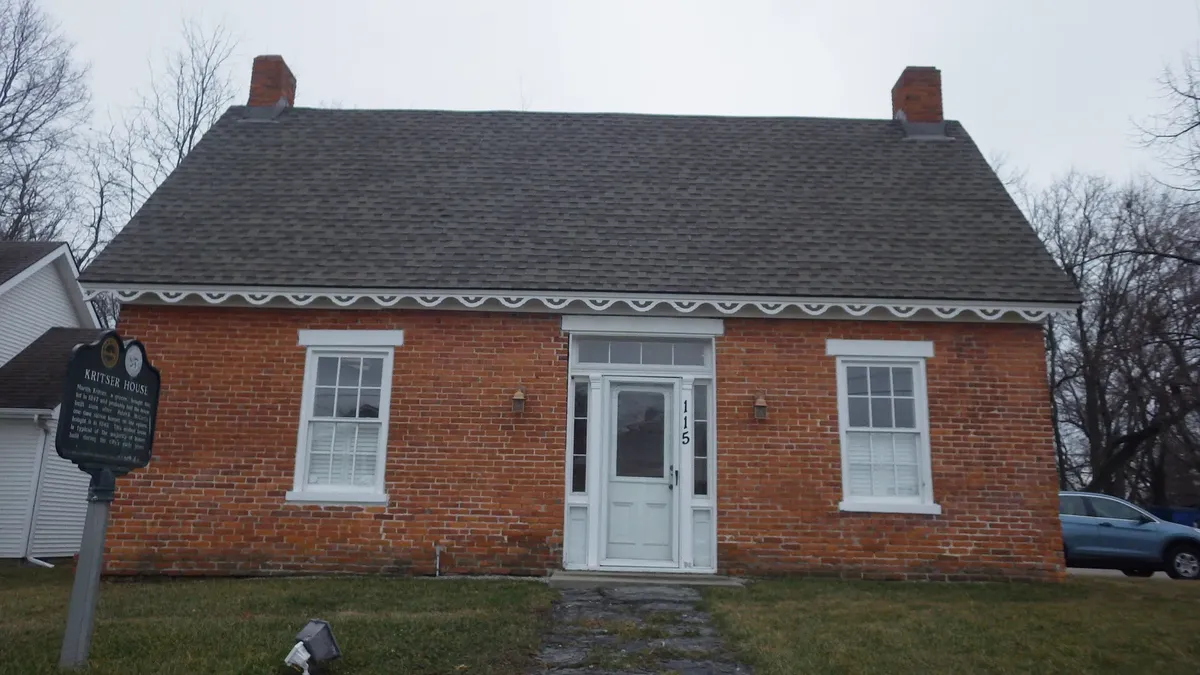
Two City of St. Joseph rules can matter for an older inherited house: a demolition delay for buildings 100 years or older, and a rental inspection program if the house held tenants.
Buildings 100 years or older
The City's Demolition Delay page says the rule exists to protect the city's historic and aesthetic character.
"During the June 14, 2021 City Council meeting, council approved an ordinance where buildings 100 years or older need an appeal before demolition."
City of St. Joseph, Demolition Delay page
Selling the house as it stands involves no demolition. The rule matters most to a buyer who plans to tear down and rebuild.
Houses in a historic district
The City's district maps show two local historic districts, Museum Hill and Hall Street. Its national district maps include Cathedral Hill, the Harris Addition, the Kemper Addition, and Patee Town, among others. Our guide to selling a house in a St. Joseph historic district covers what those designations can mean for a sale.
If your parent rented the house out
St. Joseph's Residential Rental Certification Program began in July 2019. It requires residential rental units to pass a minimum code inspection every five years. The program page lists the Property Maintenance Manager at City Hall, 816-271-4620.
If tenants still live in the house, our guide to selling a St. Joseph rental covers the inspection and the lease. City rules can change, so confirm the current requirement with City Hall (816-271-5300) before you sign a contract.
What happens to the belongings and the heirs who live away?
The belongings can stay in place while the family settles who has authority. Heirs who live far from St. Joseph can often take part by mail.
Missouri law gives the person in charge room to hold things as they are. Under an affidavit, the affiant collects the listed property and passes on what remains after debts (RSMo 473.097). An independent personal representative may keep assets until distribution, insure them, and make ordinary repairs to buildings (RSMo 473.810).
That leaves time to sort photographs, papers, and furniture. There's no rush to decide what stays with the family.
For heirs in other cities, the clerk mails the notice of letters to each heir and devisee listed in the court file. Any of them can waive that notice in writing (RSMo 473.033). For the closing itself, the title company can explain how signers outside St. Joseph take part.
How can Propcash help with an inherited St. Joseph house?
Propcash is a direct cash homebuyer, and we want to buy your inherited St. Joseph house as is. There are no repairs, no cleaning, and no cleanout: take what you want, leave the rest. Sellers pay no agent commissions and no fees, and you pick the closing date.
Our offers are based on local market data, and we'll show you how we got to our number. Our offers don't expire, so the heirs and the estate's attorney can review ours without pressure. If a cash sale isn't your best move, we'll tell you. When the estate has the power to sign, you can request a no-obligation cash offer or read more on our inherited house page.
Frequently Asked Questions
Do heirs have to sell an inherited St. Joseph house?
Usually not. Under a Missouri small estate affidavit, the affiant sells the decedent's property only as far as needed to pay debts, or to make distribution easier (RSMo 473.097). Once the right paperwork is in place, a family can keep the house, rent it, or sell it.
How long do creditors have to file claims against a Buchanan County estate?
Most claims are barred unless they are filed within six months after the first published notice of letters, or within two months after a mailed notice, whichever is later (RSMo 473.360). The published notice form also warns that claims are barred one year after the death (RSMo 473.033). An estate attorney can confirm which dates apply to your case.
Is there a deadline to file a will in Missouri?
Yes. If notice of letters has been published, a will must be presented within six months of the first publication. If no such notice ran, the limit is one year after the death (RSMo 473.050). A will presented late is forever barred from probate in Missouri, which can change who inherits the house.
Does a house held with a surviving joint tenant need probate?
Often it does not pass through the estate. Missouri's small estate statute leaves out property the decedent held as a joint tenant or tenant by the entirety when it lists the decedent's property (RSMo 473.097). Before the survivor sells, a title company can say which records it needs to insure the sale.
Does a personal representative need a lawyer to sell estate real estate in Missouri?
In an independent administration, yes, unless the personal representative is a member in good standing of the Missouri bar. The statute requires an attorney's advice on legal questions about transferring estate property (RSMo 473.787). In a supervised estate, the sale also needs a court order after a petition and a hearing (RSMo 473.493).
Can a buyer tear down an inherited St. Joseph house that is 100 years old?
Not without an appeal first. The City of St. Joseph says buildings 100 years or older need an appeal before demolition, under an ordinance the City Council approved on June 14, 2021. Selling the house as it stands involves no demolition, so the rule matters most to a buyer with plans to tear down.
Reviewed by the Propcash Editorial Team under our editorial standards. Published by Propcash, a direct cash buyer of houses. This guide is general information. Laws, fees, and market figures change, so check the current rules for your state.