
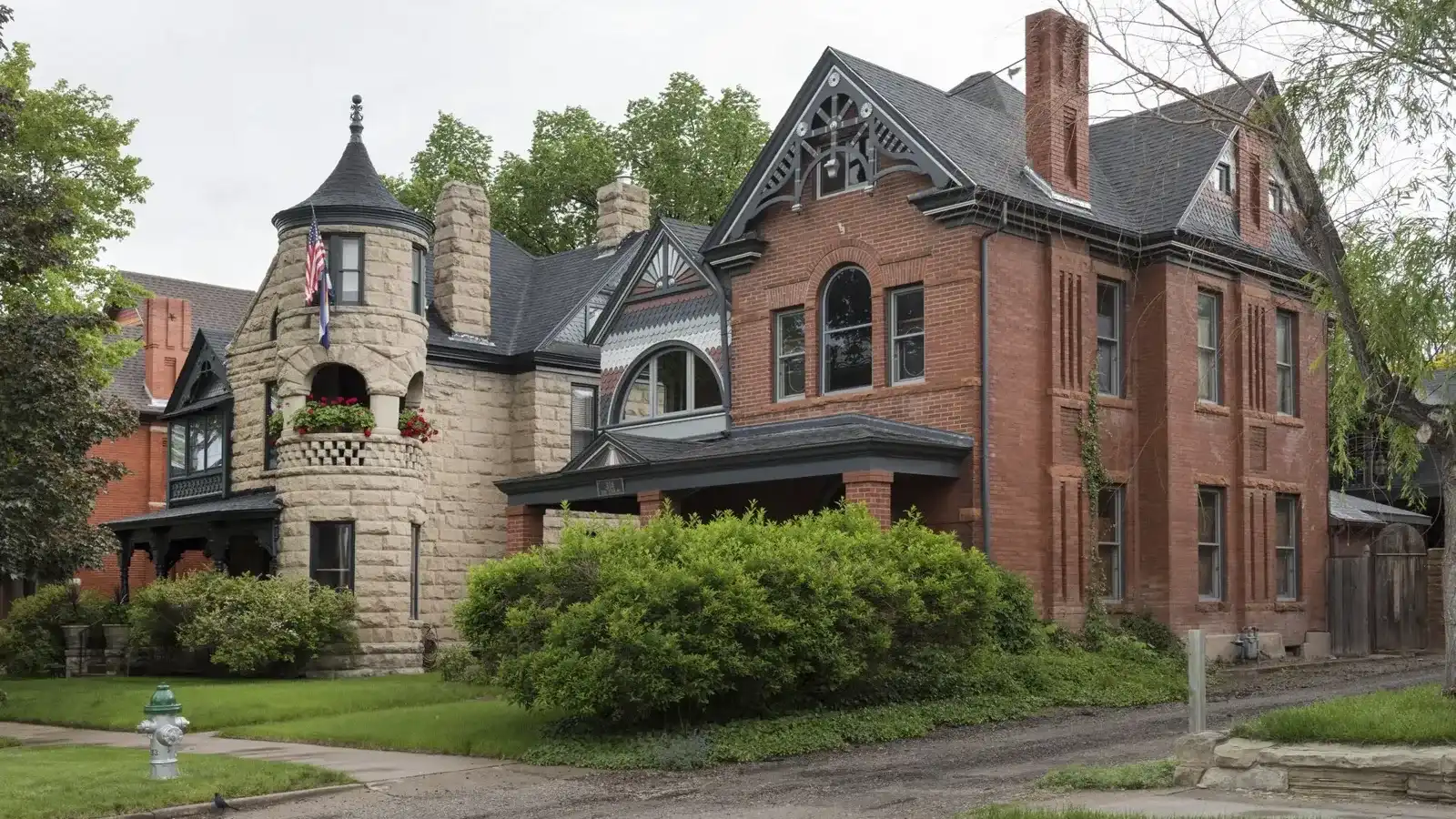
Selling a house in a St. Joseph historic district needs no Landmark Commission approval; exterior work and demolition are what the City reviews.
Museum Hill and Hall Street are the local districts, where visible exterior changes need a certificate of appropriateness. Separately, the City says buildings 100 years or older need an appeal before demolition.
This is general information, not legal advice. State rules vary.
Jump to a section
Does your St. Joseph house need work on the outside?
Free. No obligation. You choose the closing date.
If you plan to sell a historic house in St. Joseph, Missouri, the sale itself needs no sign-off from the City's Landmark Commission. The Commission reviews exterior work and demolition in two local districts, Museum Hill and Hall Street, and on designated landmarks. A separate City rule asks for an appeal before any building 100 years or older comes down.
This guide covers where the districts are, what needs a certificate of appropriateness, and how the demolition delay can shape a buyer's plans. It also walks through review times on the City's 2026 calendar, the state tax credit, and the disclosures that come with an older house.
Does selling a house in a St. Joseph historic district need approval?
No City rule we read requires Landmark Commission approval to sell a house. Under St. Joseph City Code Sec. 31-179, a certificate of appropriateness covers construction, alteration, relocation, or demolition, and a deed transfer is none of those.
The rules stay with the house after closing. The next owner takes on the same review for any later exterior project. That is why buyers who plan new windows, a porch rebuild, or an addition often ask about the district before they sign.
The code chapter we read is a PDF with a December 2020 supplement date, and rules can change after a supplement is printed. It can help to confirm the current rule with the City's Historic Preservation Planner at 816-271-4648, in Room 107 of City Hall.
Which St. Joseph neighborhoods are local historic districts?
St. Joseph has two local historic districts, Museum Hill and Hall Street. The City's district maps page lists nine National Register districts beside them, and those carry a lighter set of rules.
The National Register districts on that page are:
- Cathedral Hill
- Central-North Commercial
- Commerce and Banking
- Dewey Avenue and W. Rosine Street
- Harris Addition
- Kemper Addition
- Krug Park Place
- Patee Town
- South Fourth Street
Museum Hill and Hall Street
The City's Historic Neighborhoods page says Museum Hill is both a National Register district and a local one. It counts 248 contributing structures built between about 1860 and 1942. The page notes grand mansions next to small working-class houses, with brick sidewalks throughout.
Hall Street shares the Old Town North neighborhood with the Cathedral Hill National Register district. Hall Street also appears on the City's National Register list, so a house there can carry both kinds of status.
Individual local landmarks
Outside the two districts, the City's Local Landmarks page lists ten designated buildings. They include the Ogden Mansion at 809 Hall Street and the Lewis Burnes House at 1923 Francis Street. A landmark gets the same Commission review as a district house. The district map PDFs and the City's interactive historic map show the exact lines for one address.
What needs a certificate of appropriateness in St. Joseph?
In a local district or on a landmark, exterior changes that can be seen from a street, park, or other public place generally need a certificate of appropriateness. The City's design guidelines sort exterior work into three tiers.
- Regular maintenance (no certificate): repainting painted surfaces, replacing broken glass, swapping a damaged porch post or siding board in kind, and re-roofing with the same or better material.
- Minor Works (staff approval): repointing masonry, storm windows sized to the original opening, side and rear yard fences, and removing a non-contributing accessory building. The Historic Preservation Planner's office reviews these.
- Major Works (Commission hearing): restoration, additions, new construction, and demolition.
Work that does not change the exterior appearance falls outside the certificate rule in Sec. 31-179. Interior remodeling generally fits there.
Siding and windows
Two repairs that older houses often need get firm treatment in the guidelines. Covering wood siding with aluminum or vinyl "is generally prohibited." The guidelines also warn against replacing windows "solely because of peeling paint, broken glass, stuck sash, or high air infiltration."
For a seller, that means a buyer's repair budget may include restoration-grade materials and a hearing. If the repair list is the bigger question, our page on selling a house that needs major repairs covers the as-is route.
Does National Register listing bring local review?
No. St. Joseph's design guidelines say Landmark Commission review "is not required within National Register districts," and owners there are only encouraged to follow the guidelines.
The federal side says the same. The National Park Service says listing places no restrictions on what a non-federal owner does with a building, "up to and including destruction," unless federal funding or permits are involved. Sec. 31-179 names only local districts and designated landmarks.
The age rule is different. The demolition delay is tied to a building's age, so it can reach a house in any of the three groups below.
| Question | Local district or landmark (Museum Hill, Hall Street) | National Register district only (Cathedral Hill, Harris Addition, Patee Town, others) | House 100 years or older outside any district |
|---|---|---|---|
| Does the sale need approval? | None found; Sec. 31-179 covers work, not sales | None found | None found |
| Visible exterior work | Certificate of appropriateness, unless it is maintenance or a Minor Works item (Sec. 31-179; design guidelines) | No mandatory Commission review; guidelines encouraged (design guidelines) | Not covered by Sec. 31-179, which names local districts and landmarks |
| Demolition | Certificate of appropriateness (Sec. 31-179), plus the City's appeal step for buildings 100 years or older (Demolition Delay page) | Appeal step if 100 years or older (Demolition Delay page); no federal limit without federal funds or permits (National Park Service) | Appeal step before demolition (Demolition Delay page) |
| Missouri historic tax credit | Possible for a contributing building if the local district is certified by the U.S. Department of the Interior (RSMo 253.545) | Possible for a contributing building in the listed district (RSMo 253.545) | Only if the building is individually listed on the National Register (RSMo 253.545) |
What does the demolition delay mean for a buyer who plans to tear down?
It means a buyer who wants to tear down a St. Joseph building 100 years or older faces an appeal first. That step sits on top of the usual permit to wreck or raze a building, which St. Joseph City Code Sec. 7-33 already requires.
"During the June 14, 2021 City Council meeting, council approved an ordinance where buildings 100 years or older need an appeal before demolition."
Demolition Delay, City of St. Joseph, Missouri, Historic Preservation page
The page gives the purpose as protecting "the historic and aesthetic character of the city." It also posts pending cases, and on November 16, 2026 it read "There are no postings at this time."
The 2021 ordinance text is not in the code PDFs we could read, which carry earlier supplement dates. The page does not say how long the delay runs or who hears the appeal. Those are good questions for the Historic Preservation Planner before you price the house to a builder.
What it means for a seller
A buyer who plans to replace the house may build the appeal into the price or the timeline. A buyer who plans to repair, live in, or rent the house as it stands has no demolition to appeal. In Museum Hill, where the City dates buildings from about 1860 to 1942, a house built in 1926 or earlier has now reached 100 years.
Dangerous building orders still apply
Historic status does not shield a house from the City's dangerous building powers. Sec. 31-182 says the preservation article shall not be read to hinder City officials acting on dangerous building abatement. If a house sits empty or has a notice, our guide to selling a vacant house in St. Joseph covers registration and boarded windows.
How long does Landmark Commission review take?
A Major Works certificate waits for the Landmark Commission's monthly hearing, held at 5:30 p.m. on the first Tuesday. The City's 2026 meeting schedule sets most filing deadlines three weeks before the meeting (two weeks for March).
The application form asks for filing at least 18 days ahead, while the City's design guidelines say 20 days, so the schedule date is the safer one to use. It needs a written scope of work, with photographs and sketches for an exterior change. The December 1, 2026 meeting's deadline was November 10, 2026, so a filing made now goes to a 2027 meeting. The schedule notes that dates are subject to change.
| Step | Time limit | Source |
|---|---|---|
| File the application | At least 18 days before the meeting; most 2026 deadlines fall three weeks before | COA application; 2026 schedule |
| Public notice of the hearing | Published and sent to the applicant at least 15 days before | Sec. 31-179(d) |
| Written findings after a denial | Within 30 days | Sec. 31-179(e) |
| Get the building permit after approval | Within 60 days | Sec. 31-179(f) |
| Finish the approved work | One year, or the permit period if longer; a lapsed certificate means a new one and a $100 fee | Sec. 31-179(f) |
| Appeal a denial to the City Council | Within 30 days of the written findings | Sec. 31-179(g) |
| Appeal the Council's decision to Buchanan County Circuit Court | Within 30 days of the decision | Sec. 31-179(g)(3) |
| Refile the same work after a denial | Not heard for three months | Sec. 31-179(h) |
Minor Works skip the hearing and go to the planner's office instead. A seller who plans repairs before listing can count the hearing month into the timeline.
Why do some buyers look for a certified historic house?
Some buyers plan a full rehabilitation and want Missouri's historic preservation tax credit. Under RSMo 253.550, the credit is 25% of qualified rehab costs, or 35% for some projects in a qualifying county, when those costs exceed half the building's basis.
The work must meet the U.S. Secretary of the Interior's rehabilitation standards. The building must be a certified historic structure under RSMo 253.545: listed on its own, or a contributing building in a listed or federally certified district.
The City's National Register page notes that listing makes a building eligible for "historic tax credits." The credit goes to whoever does the work, so it rewards the next owner's project rather than the sale. It sets no price for a house, and a buyer who is not planning that scale of work may not weigh it at all.
What should you disclose when selling an older St. Joseph house?
For a house built before 1978, federal law requires lead paint disclosures before the buyer signs the contract. Historic status adds one more thing a buyer may find: a local landmark designation is noted on the deed, according to the City.
The EPA's disclosure rule asks sellers of most pre-1978 housing to:
- Give the buyer the pamphlet Protect Your Family From Lead in Your Home.
- Disclose any known lead-based paint or lead hazards in the house.
- Hand over any records and reports on lead paint that you have.
- Include a Lead Warning Statement in or with the contract.
In a local district, a buyer may also ask whether past exterior work had a certificate. It can help to gather any certificates, permits, and planner letters you hold. Heirs selling an older house can find the probate side in our guide to selling an inherited house in St. Joseph.
How can Propcash help with a historic St. Joseph house?
Propcash is a direct cash homebuyer, and we buy St. Joseph houses as-is, in or out of a historic district. You make no repairs and pay no fees or commissions, so the windows and any certificate become the next owner's project. Closings can happen in as few as 7 days after the contract is signed, on the date you pick.
Our offers are based on local market data, and we show you how we got to our number. If the house shows well and you have time, listing with an agent may net you more, and if a cash sale is not your best move, we will tell you. Our St. Joseph cash offer page explains how it works, or you can request a no-obligation cash offer and compare it with your other options.
Frequently Asked Questions
Does the St. Joseph demolition delay apply outside Museum Hill and Hall Street?
The City of St. Joseph describes the demolition delay by a building's age, not by district: buildings 100 years or older need an appeal before demolition. The City's page does not limit the rule to the historic districts, so a century-old house elsewhere in the city may fall under it too. The Historic Preservation Planner at 816-271-4648 can confirm whether a specific building is covered.
Can a buyer put new windows in a Museum Hill or Hall Street house?
A buyer can replace windows in a St. Joseph local district, but window work visible from the street goes through design review first. The City's design guidelines ask for replacement in kind and say new window units must have true divided light muntins or three-dimensional grilles on both the inside and outside. Repair is the starting point, since the guidelines treat peeling paint or stuck sash alone as no reason to replace a window.
Will a title search show that a St. Joseph house is a local landmark?
It can. The City's Local Landmarks page says that once the City Council approves a landmark designation, the Recorder of Deeds is notified and the change is noted on the deed. That step is described for individual landmarks, so for a house inside Museum Hill or Hall Street the City's district maps are the simpler check.
What happens if past exterior work in a local district never got a certificate?
St. Joseph City Code Sec. 31-183 makes exterior work done in violation of the historic preservation article punishable under the City Code, and a court can be asked to stop it. Sec. 31-179 also bars a building permit for work that needs a certificate until one is issued. If you are unsure about work done before you owned the house, it can help to ask the Historic Preservation Planner's office about past approvals.
Who sits on the St. Joseph Landmark Commission?
The City's Landmark Commission page lists seven members appointed to three-year terms, each with an interest or knowledge in historic preservation. The City's page says two members should own or live in historic houses, and it tries to seat a resident of a local historic district. The City's Historic Preservation Planner, a post St. Joseph has filled since 1986, staffs the Commission.
Does a seller get the Missouri historic tax credit when selling an old house?
Usually not. Under RSMo 253.550, the credit goes to the taxpayer who incurs the costs of a qualifying rehabilitation, so it follows the work rather than the sale. A seller who does no certified rehabilitation has no credit to claim, while a buyer who plans one may look at it when deciding what a house is worth to them.
Reviewed by the Propcash Editorial Team under our editorial standards. Published by Propcash, a direct cash buyer of houses. This guide is general information. Laws, fees, and market figures change, so check the current rules for your state.
