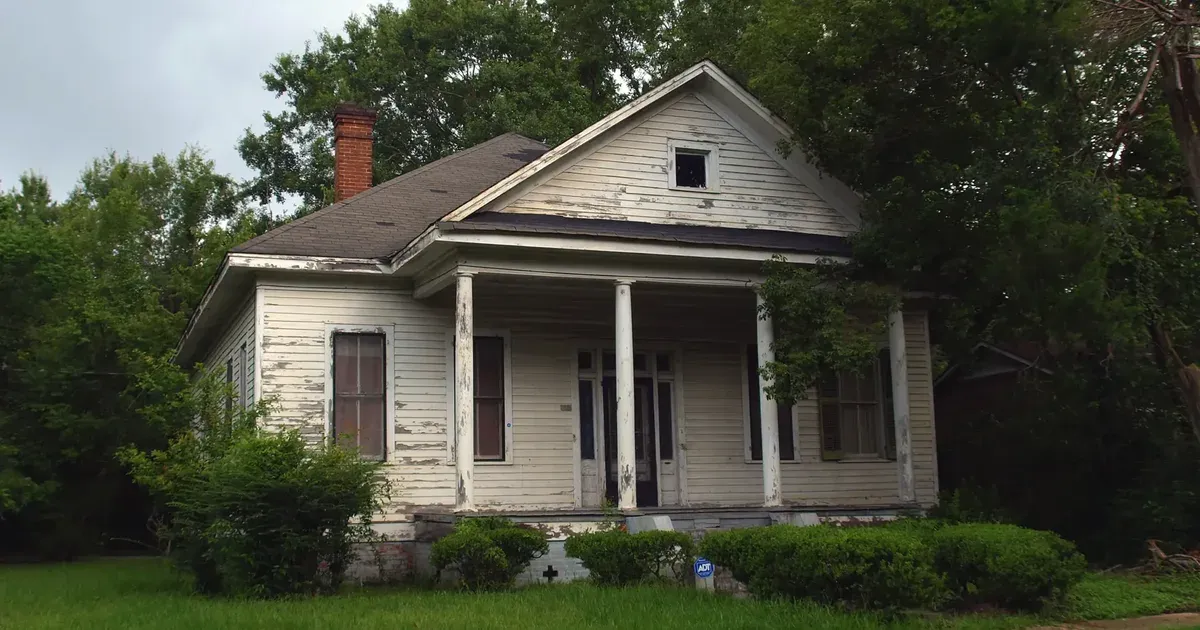
You can sell a cited Youngstown house once it complies or the buyer signs a notarized transfer affidavit.
Under Section 546.07, the buyer gets copies of the open orders and takes on the repairs in writing. An appeal is due within 15 days of the notice, with a $15 deposit.
This is general information, not legal advice. State rules vary.
Jump to a section
Do you know whether your Youngstown house has an open City order?
Free. No obligation. You choose the closing date.
You can sell a house with code violations in Youngstown, Ohio, but the City puts a condition on the sale. Under Section 546.07, an owner cited by Property Code Enforcement & Demolition "is not permitted to sell, transfer, mortgage, lease, or otherwise dispose of the building" until one of two things happens.
Either the house is brought into compliance, or the buyer gets copies of the notices or orders and a signed, notarized Property Transfer Affidavit goes to the City. This guide reads that affidavit line by line. It then covers lenders, as-is buyers, Ohio's disclosure form, and the appeal window.
Can you sell a house with code violations in Youngstown?
You can sell a Youngstown house with open code violations if you follow one of the two paths in Section 546.07. You either bring the house into compliance first, or the buyer accepts the open orders through a notarized Property Transfer Affidavit.
The City's enforcement page explains who enforces the rule. The department enforces Chapter 546, the City's Property Maintenance Code, through inspections and notices of violation. It also handles zoning and the rental and vacant registration programs.
The rule reaches more than a sale. It also covers a new mortgage, a lease, or any other way of handing the building to someone else. That matters if you planned to rent the house out or borrow against it while you decide.
The affidavit form traces the rule to City of Youngstown Ordinance 83-121, passed April 6, 1983.
What are the two legal paths under Section 546.07?
The two legal paths under Section 546.07 are fixing the cited items before the sale, or selling with the orders open and filing the Property Transfer Affidavit. The table sets them side by side, using only what the City's page and form say.
| Question | Path 1: Fix first | Path 2: Sell with the affidavit |
|---|---|---|
| Who makes the repairs | You, before the sale | The buyer, after the sale |
| What paperwork the rule adds | None once the house "is brought into compliance" | Copies of every notice of violation or compliance order to the buyer, plus the affidavit to the department |
| Who signs | No City affidavit is needed | The owner certifies the form; the buyer signs and swears to it before a notary |
| What the buyer accepts | A house with the cited items resolved | "responsibility for code violation or any other orders issued by the City of Youngstown" |
| Where the cost lands | On you, paid before closing | On the buyer, which can be reflected in the price |
Path one keeps the closing paperwork simple, but the repair bill and the schedule fall on you. Path two moves the work to the buyer. It suits a seller who cannot or would rather not manage contractors and inspections before moving on.

What the Youngstown Property Transfer Affidavit asks
The Youngstown property transfer affidavit is a two-page City form that asks the owner about open orders and unpaid code fines, then has the buyer accept those orders under oath. You can read the affidavit PDF on the City's site.
| Part of the form | What it asks | Who fills it in |
|---|---|---|
| Zoning / Assessment | Known zoning or code violations, zoning rules or nonconforming uses, and recent or proposed assessments, fees, or abatements | Owner |
| Code Violations | Whether any City code fines are owed, and the amount | Owner |
| The orders | The date a "Raze or repair order" was issued, the date a "P.M. Code Violation" was issued, and a list of violations | Owner |
| Certification of Owner | Printed names, signatures, and dates for up to two owners | Owner |
| Buyer Information | Printed names and signatures for up to two buyers, a mailing address, and home and cell phones | Buyer |
| Notary block | The buyer's sworn signature, with "State of: Ohio" and "County of: Mahoning" | Buyer and notary |
The owner's page
The owner's instructions are short. Answer the questions, report known conditions, attach any City inspection reports or orders, and send a copy to the Property Code Enforcement Office.
The certification says the answers are made "in good faith and based on his/her actual knowledge." It also says the form does not limit any duty to disclose that exists to prevent fraud. That wording tracks the language of Ohio's state disclosure statute.
The buyer's page and the notary
The buyer's page carries the sentence that does the real work: "Responsibility for this property is being transferred to the transferee." The buyer then swears before a notary that the information is true to the best of their knowledge.
The ordinance text printed at the top of the form explains what the City expects to receive from the buyer:
"... a signed and notarized statement from the grantee, transferee, mortgagee or lessee, acknowledging the receipt of such compliance order or notice of violation and fully accepting the responsibility without condition for making the corrections or repairs"
City of Youngstown, Property Transfer Affidavit quoting Ordinance 83-121
Where the form goes
The City's page sends the signed affidavit to the Property Code Enforcement & Demolition Department at City Hall, 4th Floor, 26 South Phelps Street. The PDF's own header lists the 5th floor. A quick call before you deliver it can save a trip between floors.
How do you find out what is open on your house?
The City's Property Code Enforcement page lists one place to ask: the department itself, at (330) 742-8888, open Monday through Friday from 8:00 AM to 4:00 PM. The same page gives the City Hall office address on South Phelps Street.
The affidavit tells you what to ask for, because it needs these details anyway:
- A copy of each notice of violation or compliance order on the house.
- The issue date of any raze or repair order.
- The issue date of any property maintenance code violation.
- Whether any code fines are owed, and the amount.
- Any inspection reports the City has on file.
The dates matter for a second reason. The appeal window described below runs from the day you received the notice or order.
How lenders and as-is buyers treat an open order
An open order affects the two kinds of buyers differently. A financed buyer brings a lender into the deal, while an as-is buyer signs the affidavit and takes on the work with no lender involved.
A buyer using a mortgage
Section 546.07 lists mortgaging among the restricted transfers. The ordinance text on the form also names a "mortgagee" among the parties who must receive a true copy of the order. A lender on a cited Youngstown house is part of the paper trail.
A lender may set its own conditions for funding a loan on a house with open City orders. Some financed buyers may ask for the repairs to be finished before closing. That request sends the deal back to path one, with the cost and timing on you.
An as-is buyer
An as-is buyer reads the notices, prices the work, and signs the buyer page. With no lender, there is no loan approval step that depends on the condition of the house. The open items stay open, and the buyer takes them on in writing.
For a house with a long repair list, that can be the simpler route. Our page on selling a house that needs major repairs covers how condition shapes a sale.
Ohio's Residential Property Disclosure Form
Ohio's Residential Property Disclosure Form is a separate state requirement under ORC 5302.30, and it applies alongside the City affidavit unless the sale falls under a statutory exemption. The statute covers houses with one to four dwelling units.
A seller must deliver a signed and dated copy to the buyer "as soon as is practicable" (ORC 5302.30(C)). Answers are made in good faith, and a seller is not liable for an error that was outside their actual knowledge (ORC 5302.30(E), (F)).
Timing has a consequence. If the buyer receives the form after signing the contract, the buyer may rescind within three business days of receiving it (ORC 5302.30(K)). That right ends at the earlier of closing or 30 days after the seller accepted the offer, and a buyer may waive it.
Who is exempt from the state form
ORC 5302.30(B)(2) lists 14 kinds of transfers that skip the state form. Those that come up in Youngstown sales include:
- A transfer under a court order, including one a probate court orders during an estate.
- A transfer by a fiduciary administering a decedent's estate, a guardianship, a conservatorship, or a trust.
- A transfer from one co-owner to another.
- A transfer between spouses under a divorce or dissolution decree.
- A transfer to or from a government entity.
- A transfer by an heir who inherited the house and has not lived in it within the year before the sale.
These exemptions come from the state statute. The City's page and form list no exemptions like these, so an heir who skips the state form can still need the affidavit for a cited house. Our guide to selling an inherited house in Youngstown covers the probate side.
Can you appeal Youngstown code enforcement orders before you sell?
You can appeal Youngstown code enforcement orders to the Property Maintenance Appeals Board, but the form and a $15 non-refundable deposit are due within 15 days of receiving the notice or order. The City's page lays out the steps.
- Within 15 days: file the Property Maintenance Appeals Board Form with the $15 deposit, or an affidavit of indigency.
- Within 60 days: the Board schedules a hearing and notifies you of the time and place.
- At the hearing: you state your case. If you do not attend, the appeal is dismissed.
- Within 15 days of the hearing: you are notified of the decision. It is final, and further appeals go through the court system.
The City is candid about the odds. It calls appeals of the listed violations "quite rare," because inspection photographs offer clear evidence. The same process can also be used to request a compliance date extension by owners making good-faith efforts to bring a house into compliance.
The City's page says failure to remedy violations "may result in fines, prosecution, and/or demolition." A raze or repair order has its own line on the affidavit, so a buyer sees its date before signing.
The same department runs the City's registration programs. The City's page adds, "With the exception of owner-occupied properties, ALL properties are now required to be registered." Landlords can find the licensing details in our guide to selling a Youngstown rental house.
How can Propcash help with a cited Youngstown house?
Propcash is a direct cash homebuyer, and we buy Youngstown houses as-is, open City orders included. We read the notices with you and make one transparent, data-backed cash offer that accounts for the repairs, with the reasoning shown. On the affidavit path, the buyer's signature moves the repairs off your list. See how we approach houses with code violations.
Sellers pay no fees or commissions, you pick the closing date, and cash sales can close in as few as 7 days after the contract is signed. If fixing first and listing is your better move, we will tell you. You can get a no-obligation cash offer to compare with repair estimates, or review other routes on our Youngstown sell house fast page.
Frequently Asked Questions
Does a Youngstown code violation go away when the house changes hands?
A sale does not clear a Youngstown code order on its own. On the affidavit path, the buyer signs a line that reads "Transferee assumes responsibility for code violation or any other orders issued by the City of Youngstown." The order stays with the building, and the repairs become the buyer's job.
Who has to sign the Youngstown Property Transfer Affidavit?
The owner signs a certification that the answers on the City's form are made in good faith and based on actual knowledge. The buyer, called the transferee, signs the buyer page and swears to it before a notary, with the venue printed as State of Ohio, County of Mahoning. The owner then submits the signed form to the Property Code Enforcement & Demolition Department.
Do unpaid code fines show up on the affidavit?
Unpaid fines are one of the questions on the Youngstown affidavit. It asks, "Are there any fines owed regarding code violations issued by the City of Youngstown?" and leaves a line for the amount. The City's page does not say whether fines must be paid before closing, so the department at (330) 742-8888 is the place to confirm the balance.
Does Section 546.07 apply to leasing or mortgaging a cited house?
Section 546.07 reaches more than a sale. As the City states it, the owner of a cited building may not "sell, transfer, mortgage, lease, or otherwise dispose of" it until it complies or the affidavit is filed. A new lease or a new mortgage on a cited Youngstown house falls under the same rule.
Can an heir sell an inherited Youngstown house that has open orders?
An heir can sell an inherited Youngstown house with open orders by using either path in Section 546.07. Ohio's statute exempts some heirs from the state disclosure form under ORC 5302.30(B)(2)(n), but the City's page states its rule for any owner of a cited building. The City affidavit can still be needed even when the state form is not.
How long does a Property Maintenance Appeals Board decision take?
The Youngstown Property Maintenance Appeals Board schedules a hearing within 60 days of receiving the form and fee. The owner is notified of the decision within 15 days of the hearing. The Board's decision is final, and any further appeal goes through the court system.
Can Propcash buy a Youngstown house with a raze or repair order?
Propcash buys houses as-is, and an open raze or repair order is one of the conditions a cash offer can account for. The affidavit path under Section 546.07 lets the buyer accept the order in writing, so the repairs do not have to happen before you sell. If a different route fits your situation better, we will say so.
Reviewed by the Propcash Editorial Team under our editorial standards. Published by Propcash, a direct cash buyer of houses. This guide is general information. Laws, fees, and market figures change, so check the current rules for your state.