Mahoning County releases estates of $35,000 or less; larger ones need an executor or administrator to sign.
A will's power of sale skips a separate court order (ORC 2113.39). If the house sits empty, Youngstown asks for registration within 30 days.
This is general information, not legal advice. State rules vary.
Jump to a section
Has the probate court named someone to sign for your family's estate yet?
Free. No obligation. You choose the closing date.
Selling an inherited house in Youngstown, Ohio, runs on two clocks. The Mahoning County Probate Court sets the first one, because it decides who has the power to sign the deed. The second starts at City Hall once the house sits empty.
Neither clock calls for a rushed sale. This guide walks through the court's three routes, the dollar limits, Ohio's claims period, and the City's vacant house steps. With those in hand, you can decide when, and whether, to sell.
Do you need probate to sell an inherited house in Youngstown?
A Youngstown house titled in the owner's name alone generally needs a probate case before anyone can sell it. The Mahoning County Probate Court's Decedents Estates page explains that probate happens with or without a will.
The case belongs in the probate court of the county where the owner lived. For a Youngstown resident, that is Mahoning County. If the owner also held property in another state, the court notes that extra (ancillary) proceedings may be needed there.
Some houses skip probate entirely. The same court page lists real property designated to transfer on death (TOD) to a named beneficiary among the kinds of ownership that bypass it. Assets in a revocable trust the owner funded during life also pass outside probate.
Mahoning County probate court routes and who signs the deed
The Mahoning County Probate Court offers three routes, and each one changes who can sign the deed. Smaller estates can be released from administration, while larger ones go through full administration with an executor or administrator.
| Route | Statute | Dollar limit | Who can sign the deed |
|---|---|---|---|
| Release from administration | ORC 2113.03 | Estate assets of $35,000 or less, or $100,000 or less when the surviving spouse takes everything | The heirs or devisees, once the court orders the real estate transferred to them |
| Summary release from administration | ORC 2113.031 | The lesser of $5,000 or the funeral and burial bill, for the person who paid it; for a spouse, the $40,000 support allowance plus up to $5,000 of funeral costs | The people named in the certificate of transfer filed with the application |
| Full administration | ORC Chapter 2113 | No cap | The executor or administrator under letters of authority, with a power of sale in the will or a court land sale; or the heirs after a certificate of transfer |
How the release routes move the house
A release does not appoint anyone to sell the house. Under ORC 2113.03(B), the court's order directs "transfer of real property to the persons entitled" to it. The heirs then own the house and can sell it themselves.
The court's own forms show the mechanics. Its release entry (Form 5.6) can order a certificate of transfer describing the real estate. The summary release packet attaches Form 12.0, which asks for a certificate so new ownership "may be recorded."
Value matters for the limits. When an estate holds a house rather than cash, ORC 2113.03(C) has its value set by an appraiser the applicant picks and the court approves. Notice by newspaper publication applies unless it is waived, and the court posts a waiver form (Form 5.2).
Can the executor sell without a court order?
An executor whose will grants a power of sale can sell the Youngstown house without a separate probate court order. Ohio's statute on sales under a will says so directly.
"If a qualified executor, administrator, or testamentary trustee is authorized by will or devise to sell any class of personal property or real property, no order shall be required from the probate court..."
ORC 2113.39, Ohio Revised Code
Without that power, a sale by the executor or administrator follows the land sale sections of the Revised Code. ORC 2127.01 sends those sales through sections 2127.01 to 2127.43. The other path is a certificate of transfer to the heirs under ORC 2113.61, after which they sell as owners.
In Mahoning County, the judge's Entry Appointing Fiduciary (Form 4.5) is the key document. The form states that the entry "constitutes the fiduciary's letters of authority."
How long do creditors have to file claims in Ohio?
Ohio gives creditors six months from the date of death to present claims against an estate. ORC 2117.06(B) says claims "shall be presented within six months after the death of the decedent."
That deadline applies whether or not the estate is released from administration. Under division (C), a claim not presented in time is "forever barred," with exceptions set out in ORC 2117.061.
The court's Decedents Estates page still states that claims may be made up to one year from the date of death. That line shows an older figure. The statute is the rule, so six months is the number to plan around.
The same page says the legislature "has recently provided that most estate administrations should be concluded within 6 months." It adds that an estate filing a federal estate tax return can run past a year. An estate attorney can say how any open claim affects the timing of a sale.
What does Youngstown require for an empty inherited house?
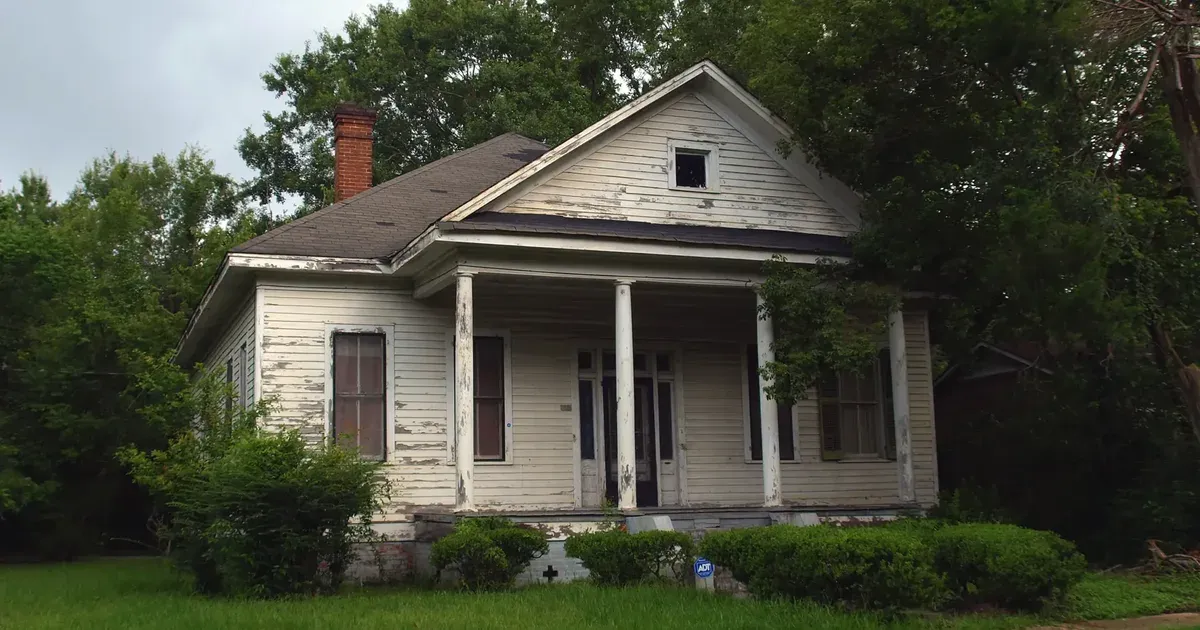
Youngstown asks the owner of a vacant house to register it within 30 days, at $100 a year for a residential structure. The City's Property Registration page ties the rule to Chapter 546.13 of its Codified Ordinances.
The form must name an agent in Mahoning County who can accept notices from code enforcement and papers from court cases. For an heir who lives out of state, that agent is the local contact the City reaches. A late filing brings a fine of $50 per day, with a $1,000 maximum, and the City says it "may be subject to criminal penalties."
The City lists a second rule for vacant houses in foreclosure. Owners of vacant properties subject to foreclosure actions must post a $10,000 cash bond per property, according to the same page.
A first-30-days checklist for an empty house in the City
| Step | When | What the City of Youngstown says |
|---|---|---|
| File the Property Registration Form | Within 30 days of vacancy or a vacancy notice | $100 for a residential structure; checks payable to THE CITY OF YOUNGSTOWN, mailed to the Finance Department, City Hall, 3rd Floor, 26 South Phelps Street |
| Name a local agent | With the form | An agent in Mahoning County authorized to receive code notices and court papers |
| Inspect and photograph the house | Within 15 days of registering | The owner records the condition of the structure |
| Update the registration | Within 20 days of any change | File an amended Property Registration Form |
| Keep the grass down | All season | The City takes high-grass complaints when grass and weeds exceed 8 inches |
| Renew | Every year | Registration must be renewed annually; questions go to the Property Registration Department at (330) 742-8743 |
The registry is a City of Youngstown rule, so it covers houses inside city limits. Boardman, Austintown, and Canfield are separate Mahoning County communities, outside the City's registry. For more on holding an empty house, see our page on selling a vacant house.
What if the City has open orders on the house?
If the City has cited the house, Section 546.07 bars a sale until the house complies or the buyer takes on the orders in writing. The City's code enforcement page describes a signed, notarized Property Transfer Affidavit for that second path.
The seller hands the buyer copies of the open notices, and the affidavit states that "the other party will be responsible for bringing the property into compliance." An heir may not know about orders issued during a parent's illness. The department answers questions at (330) 742-8888, and our guide to selling a Youngstown house with open code violations covers the affidavit in detail.
Does an heir fill out Ohio's disclosure form?
An heir selling a Youngstown house can be exempt from Ohio's residential property disclosure form. ORC 5302.30(B)(2)(g) exempts "a transfer by a fiduciary in the course of the administration of a decedent's estate."
Division (B)(2)(n) covers heirs who sell after the estate is done. It exempts a seller who acquired the house "through inheritance or devise" and has not lived in it within the year before the transfer. The exemption covers the state form only, so a 546.07 affidavit still applies when City orders are open.
Selling an inherited house in Youngstown on your own schedule
Once someone holds the authority to sign, the estate and the heirs choose when to sell. Some families wait for the claims period to pass, and some sell once letters or a certificate of transfer arrive.
Local sales data can help frame the choice. Redfin's Youngstown market data put the median sale price at about $100K for the three months ending October 2026, up 3.9% from a year earlier. Houses sold after a median of 52 days, compared with 48 a year before (Redfin, October 2026).
A listed sale brings a cleanout, showings, and any repairs a buyer's lender asks for. A cash sale as-is skips those steps, and the house can sell with belongings inside. You can compare both on our Youngstown cash sale options page, or read the statewide guide to selling an inherited house in Ohio.
How can Propcash help with an inherited Youngstown house?
Propcash is a direct cash homebuyer, and we can buy an inherited Youngstown house as-is, with no repairs and no cleanout. Take what you want and leave the rest. We work with the executor, administrator, or heirs the court names, and you pick the closing date, as few as 7 days after the contract is signed.
Our offer is one number based on local market data, and we show how we got there. It stands while the estate waits on letters, a certificate of transfer, or a family decision, with no follow-up calls unless you want them. If a cash sale is not your best move, we will tell you. You can request a no-obligation cash offer whenever the timing feels right, and our inherited house page explains the steps.
Frequently Asked Questions
How long does an estate take in the Mahoning County Probate Court?
The Mahoning County Probate Court says the legislature has provided that most estate administrations should be concluded within 6 months. The same court page says an estate that must file a federal estate tax return can last more than a year, and a contested will can take three years or more. A release from administration for a small estate can move faster because it skips most of the full process.
Does the estate have to be opened in Mahoning County if the house is in Youngstown?
The Mahoning County Probate Court explains that probate takes place in the probate court of the county where the deceased owner lived. If the owner of a Youngstown house lived in Mahoning County, the case belongs there. If the owner lived in another Ohio county, that county's probate court handles the estate. If the owner also held property in another state, the court notes that extra (ancillary) proceedings may be needed in that state.
Does a Youngstown house with a transfer on death designation go through probate?
The Mahoning County Probate Court lists real property designated to transfer on death (TOD) to a named beneficiary among the kinds of ownership that bypass probate. Assets in a revocable trust the owner funded during life bypass it too. The court adds that assets which skip probate may still be subject to estate taxes, so an estate attorney can confirm the next step.
Who files the vacant house registration for an inherited Youngstown house?
The City of Youngstown's Property Registration page places the duty on the owner of the vacant structure, within 30 days of vacancy or of a vacancy notice. During probate, title can sit with the estate or pass to the heirs, depending on the route. An estate attorney can confirm whether the executor, the administrator, or the heirs should sign the form.
Does the Youngstown vacant house registry apply in Boardman or Austintown?
The vacant structure registry under Chapter 546.13 is a City of Youngstown rule, and the City describes it as covering vacant structures in the City. Boardman and Austintown are separate Mahoning County communities, not Youngstown neighborhoods. An inherited house there follows that community's own rules, which its offices can explain.
Can an inherited Youngstown house be sold with furniture and belongings still inside?
An inherited Youngstown house can be sold with belongings inside when the buyer agrees to take it as-is. Propcash buys houses as-is, so heirs can take what they want and leave the rest. A listed sale with a financed buyer typically asks for a cleared, show-ready house instead.
Reviewed by the Propcash Editorial Team under our editorial standards. Published by Propcash, a direct cash buyer of houses. This guide is general information. Laws, fees, and market figures change, so check the current rules for your state.