
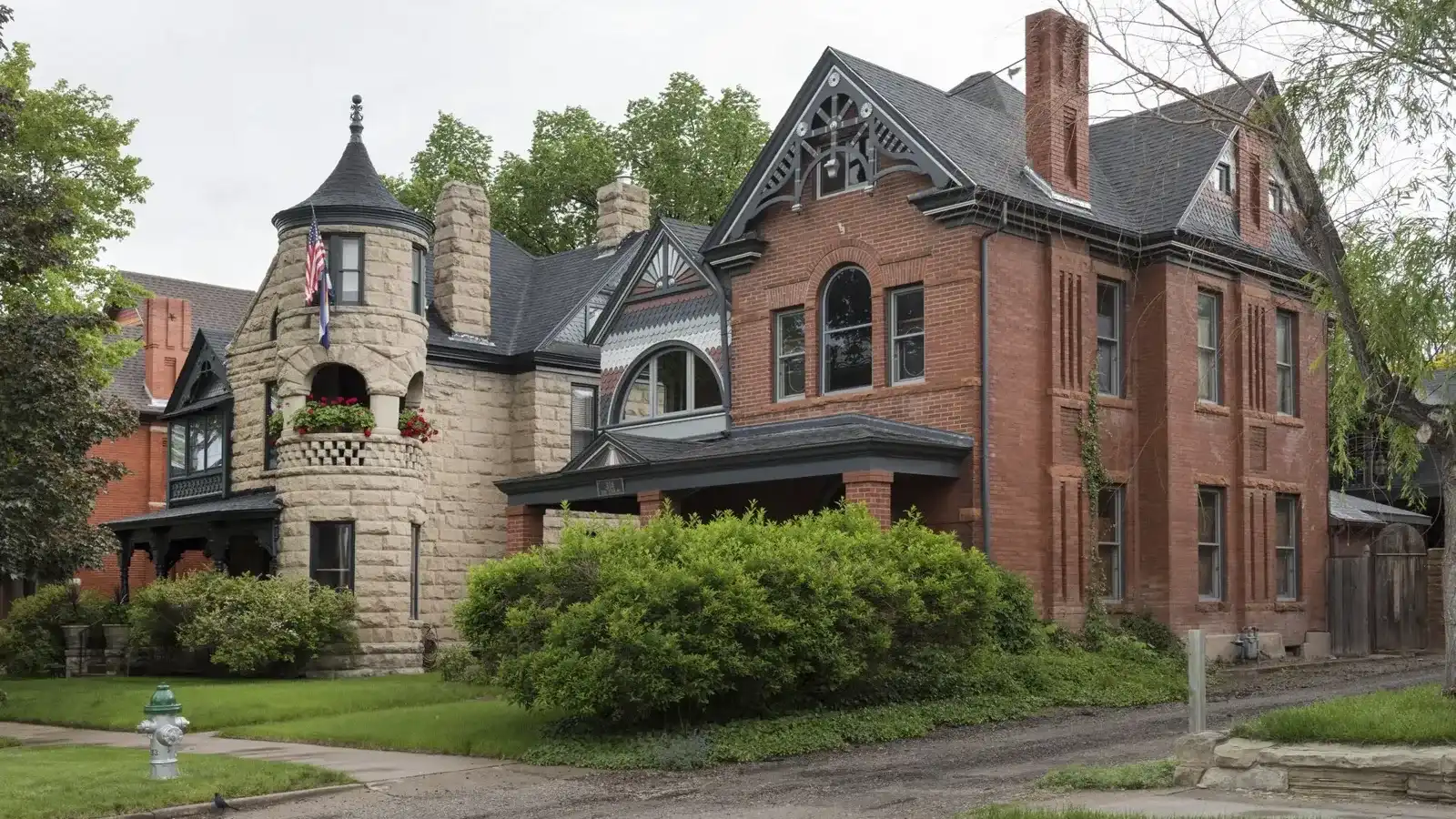
No. Selling a house in a Dayton historic district needs no City approval; review applies only to exterior work.
The City charges no fee for a certificate of appropriateness, and minor ones are typically issued the same day. Major changes, such as porches or new window openings, go to the Landmark Commission, which shapes what a renovation buyer may offer.
This is general information, not legal advice. State rules vary.
Jump to a section
Is your Dayton house in a local historic district?
Free. No obligation. You choose the closing date.
Selling a house in a Dayton historic district needs no approval from the City of Dayton, Ohio. The City requires a certificate of appropriateness only for exterior work, and its historic zoning page says the certificate carries no fee. Dayton has 13 locally designated districts and more than 70 local landmarks.
Review leaves the sale itself alone. It does set what a renovation buyer can change on the outside and how long approval takes, and both show up in the offer. This guide covers the Dayton historic district rules, the minor and major certificate paths, and what travels with an older house at closing.
Does selling a house in a Dayton historic district need approval?
No. Dayton's historic review applies to physical work on the outside of a house, and a sale changes only the owner. The City asks for a certificate of appropriateness "before exterior repairs or modifications or demolition," which leaves a transfer of title outside the rule.
That means you can list the house, sell it to a cash buyer, or pass it to heirs without filing anything with the Landmark Commission. The listing photos, the price, and the closing date are your call. What the rules govern is the next owner's plans for the roof, windows, porch, and siding.
Who runs historic review in Dayton
Two people or bodies sign off on exterior work. The City's Historic Preservation Officer handles routine requests by phone or email. The Landmark Commission, a seven-member board set up by the City Charter, hears the larger projects at public meetings twice a month.
Which parts of Dayton fall under historic zoning?
Dayton's historic zoning covers 13 local districts and more than 70 individual landmarks, each with an HD-1, HD-2, or HD-3 designation. The designation decides how much exterior work needs a certificate.
The City publishes planning district maps that show local historic districts in these areas:
- Five Oaks, Grafton Hill, and the Historic Inner East
- McPherson, Old Dayton View, and Oregon
- South Park, Wolf Creek, and Wright-Dunbar
A citywide local district map shows the HD class of each one. It is the quickest way to check a specific address before you sell.
HD-1, HD-2, and HD-3
Most residential blocks fall in HD-2. The City says HD-2 "is generally applied to all residential areas in historic districts," and it is the strictest class. HD-1 is often used on commercial blocks and skips the minor certificate for routine work. HD-3 protects significant buildings from demolition and needs a certificate only for a teardown.
National Register districts are a separate list
The City counts 21 National Register historic districts and 78 individual National Register sites in Dayton. Names on that list include Dayton View, Huffman, McPherson Town, St. Anne's Hill, and Wright-Dunbar. The City notes that many of them are also listed locally.
The difference matters to a seller. Local designation is what brings certificate review for exterior work. A National Register listing on its own can matter for some federal tax incentives, covered below. The local map, not the National Register name, is what tells a buyer which rules apply.
Minor and major Dayton certificates of appropriateness
A Dayton certificate of appropriateness comes in two types: minor, issued by the Preservation Officer and typically ready the same day, and major, decided only by the Landmark Commission at a hearing. Neither type has a fee.
| Type of work | Certificate | Who approves | Timing the City states |
|---|---|---|---|
| Painting surfaces that are already painted | Minor | Historic Preservation Officer | Typically same day |
| Replacing a roof, doors, windows, or gutters in the existing design | Minor | Historic Preservation Officer | Typically same day |
| Fencing, garages, sheds, and removing mature trees | Minor | Historic Preservation Officer | Typically same day |
| Painting unpainted surfaces, such as bare brick | Major | Landmark Commission only | Hearing within 30 days of the application; written decision within 7 days |
| Building or removing a porch | Major | Landmark Commission only | Hearing within 30 days; written decision within 7 days |
| Adding or closing up window or door openings | Major | Landmark Commission only | Hearing within 30 days; written decision within 7 days |
| Siding, abrasive cleaning, and decorative details like chimneys, gables, and shutters | Major | Landmark Commission only | Hearing within 30 days; written decision within 7 days |
| Building or removing additions and contributing buildings | Major | Landmark Commission only | Hearing within 30 days; written decision within 7 days |
The table draws on the City's historic zoning page and its application process page. The two pages list decks and patios differently, one as minor and one as major. A quick call to the Preservation Officer settles which path a deck takes.
"Only the Landmark Commission has the authority to approve major modifications."
City of Dayton, Living With Historic Zoning
What a major application asks for
A major application is a real project file. The City asks for site plans, floor plans, building elevations, detailed sections, a streetscape elevation, and specifications. The Commission can approve, deny, or approve with changes the applicant agrees to. After approval, the work still needs ordinary building and zoning permits.
What Dayton historic district rules say about windows, siding, and porches
Dayton's rules favor repairing original windows, send siding and porch changes to the Landmark Commission, and allow replacement windows that follow the Secretary of the Interior's Standards for Rehabilitation.
Windows
The City's window replacement application encourages owners to repair and keep historic windows. It suggests storm windows when energy use is the concern. When replacement is justified, the City sets these rules:
- The new window sits at the original window plane, behind the original trim.
- Muntins follow the original pane layout, sit on the exterior, and are no wider than one inch.
- Replacement trim or brick mold follows the original.
On materials, all-wood windows rate "Most Appropriate," and wood clad in aluminum or vinyl rates "Appropriate." Vinyl and fiberglass "Can be Appropriate" once the owner submits specs to staff.
Siding and paint
Siding work is on the City's list of major repairs of exterior surfaces. So is painting a surface that was never painted, such as original brick. Repainting trim or clapboard that is already painted is minor work.
Porches
Building or removing a porch is major work on both City pages. A buyer who wants to take off an enclosed porch, or rebuild a missing one, plans for a Landmark Commission hearing.
How does historic review shape a buyer's offer?
Historic review shapes an offer through scope and time: a renovation buyer prices in what the rules allow on the exterior and how many weeks a major approval adds before work starts.
Many items are quick. A new roof or a repaint can clear in a day. The cost question comes from major items. A porch rebuild or new siding waits for a hearing within 30 days, then a written decision, then permits. The outcome is also not certain, since the Commission can deny a plan or ask for changes.
Here is the major certificate path as the City lays it out:
| Step | What the City of Dayton says happens |
|---|---|
| 1. Prepare and file | Site plans, floor plans, elevations, sections, a streetscape elevation, and specifications, filed with Planning on the sixth floor of City Hall |
| 2. Hearing | The Landmark Commission hears the application within 30 days after it is received |
| 3. Decision | Approve, deny, or approve with changes; the written decision follows within 7 days |
| 4. Permits | Building and zoning permits, which the City says all construction requires |
| 5. Work and inspection | The certificate's placard goes in the front window, and Housing Inspection checks the work |
A cash buyer does not wait on a lender, but still builds the review calendar into the number. The clearer the exterior plan, the easier that math is for both sides.
What the market looks like right now
Redfin reports that over the three months ending October 2026, Dayton's median sale price was $140K, down 5.9% from a year earlier. Houses sold after a median of 43 days, up from 37. Redfin counted 434 sales in October, down from 464. Those are citywide figures; historic blocks can differ, and the Dayton housing market guide covers the trends in more depth.
Tax credits help some buyers, not all
The federal 20% rehabilitation credit is for certified historic structures in income-producing use. The National Park Service states that owner-occupied residential buildings do not qualify. A buyer who plans to rent out a historic double might look into it. A family buying to live in the house cannot use it.
What paperwork travels with an older Dayton house?
Two filings follow most older Dayton houses to closing: the City's Certificate of Disclosure for open violation notices, and the federal lead paint disclosure for houses built before 1978.
The Certificate of Disclosure
Apart from a few exempt transfers, residential sales in Dayton require a Certificate of Disclosure filed with the Housing Inspection Division. It applies whether or not the house has an open notice. The City's FAQ adds that a sale "does not remove violations from a property." With an open notice, the buyer either sees it corrected before the sale or agrees to make the listed repairs within 90 days.
That matters on an older house with an open exterior notice. The buyer may need a certificate of appropriateness to fix it, on top of the 90-day clock. The guide to selling a Dayton house with open code violations walks through the full process and the $60 fee.
Lead-based paint
For most houses built before 1978, the EPA's disclosure rule applies. The seller shares what they know about lead paint and hands over the federal pamphlet. The buyer gets a 10-day window to inspect, which the buyer may waive.
Past exterior work
A buyer may ask whether earlier exterior changes had a certificate. Keeping any old certificates, permits, and contractor invoices together helps answer that. The Preservation Officer can also tell you what the City has on file.
How can Propcash help with a Dayton historic district house?
Propcash can buy your Dayton historic district house as-is, with no certificate or exterior work needed first. We make one cash offer based on local market data, show you how we got to our number, and you pick the closing date.
There are no repairs, showings, fees, or commissions, and closings can happen in as few as 7 days after the contract is signed. Listing can make sense when the house shows well and you have time, and if a cash sale is not your best move, we will tell you. You can compare paths in our guide to selling a Dayton house for cash, see the Dayton cash buyer page, or get a cash offer from Propcash with no obligation.
Frequently Asked Questions
Do I need a certificate of appropriateness to sell my house in the Oregon District or South Park?
No. The City of Dayton requires a certificate of appropriateness before exterior repairs, modifications, or demolition, and a sale is none of those. The certificate comes into play only when an owner, old or new, plans exterior work on the house.
How much does a Dayton certificate of appropriateness cost?
Nothing. The City's Living With Historic Zoning page states that there is no fee for a certificate of appropriateness. Ordinary building and zoning permits for the work itself are a separate step, and the City says all construction and demolition requires them.
How long does Landmark Commission review take for a major project?
The City says a major application is heard by the Landmark Commission within 30 days after it is received. The Commission must give its decision in writing no more than seven days after it decides. Minor work approved by the Preservation Officer is typically handled the same day.
Can new vinyl windows go into a Dayton historic district house?
Sometimes. The City's window replacement application rates all-wood windows as most appropriate and wood with aluminum or vinyl cladding as appropriate. Vinyl and fiberglass can be appropriate when the owner submits the specs to staff, and the City encourages repairing original windows first.
Does a National Register listing mean my Dayton house is under local historic zoning?
Not by itself. Dayton has 21 National Register historic districts and 13 local districts, and the City says many National Register districts are also listed locally. The local designation, such as HD-2, is the one that brings certificate of appropriateness review for exterior work.
Do I need a lead paint disclosure when selling an older Dayton house?
For most houses built before 1978, yes. The EPA requires sellers to share what they know about lead-based paint, give the buyer the federal lead pamphlet, and offer a 10-day inspection period that the buyer may waive. That rule applies whether the house is listed or sold as-is.
Reviewed by the Propcash Editorial Team under our editorial standards. Published by Propcash, a direct cash buyer of houses. This guide is general information. Laws, fees, and market figures change, so check the current rules for your state.