
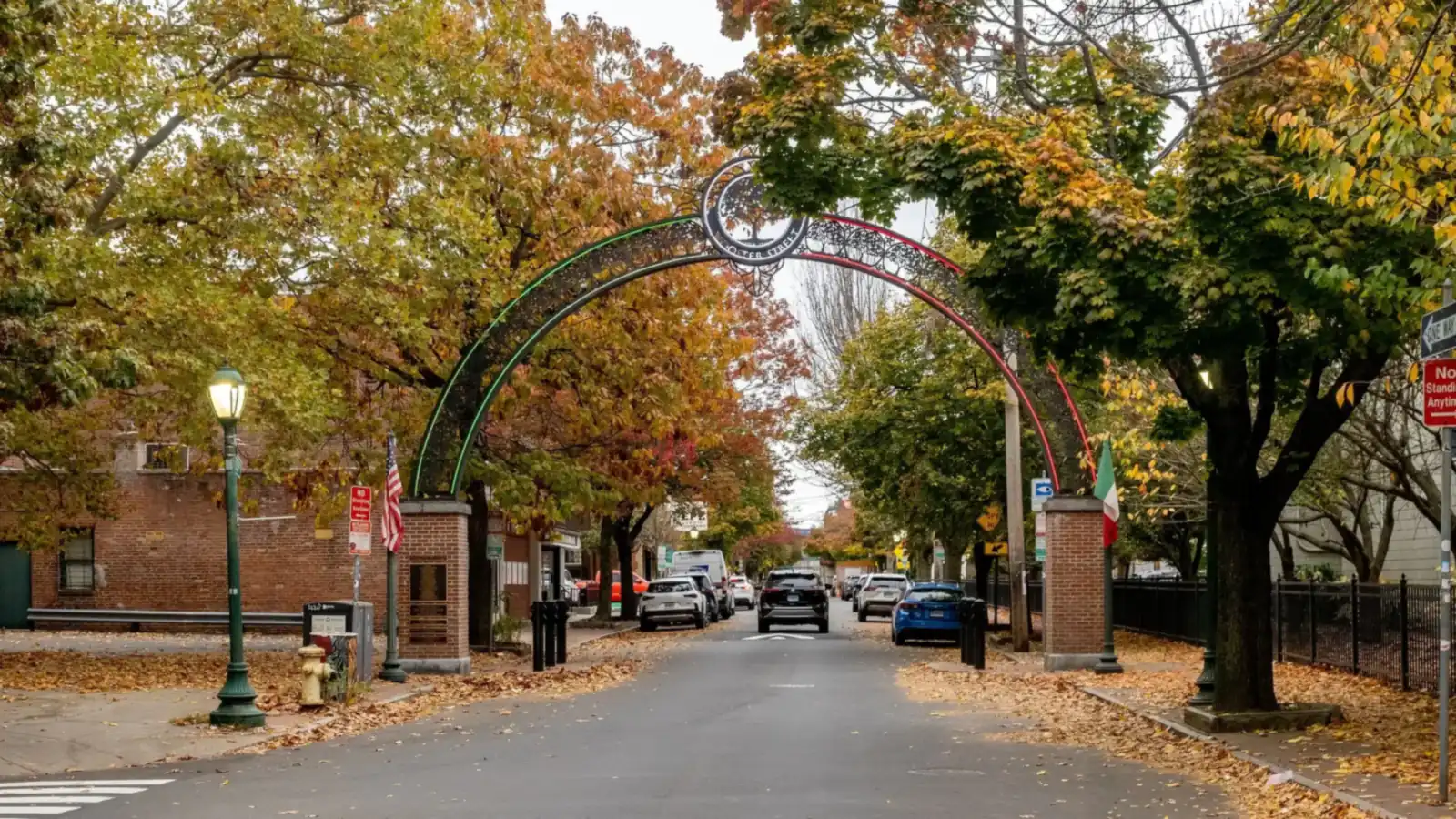
You can sell a house in a New Haven historic district as-is, and the district rules pass to the buyer with the house.
In the Wooster Square, Quinnipiac River, and City Point local districts, exterior work visible from a public street needs a certificate of appropriateness first, while interiors and paint color are outside review. The Connecticut condition report asks whether the house is in a historic district or on the National Register.
This is general information, not legal advice. State rules vary.
Jump to a section
Has your house had exterior work done without a certificate?
Free. No obligation. You choose the closing date.
If you plan to sell a house in a historic district in New Haven, the first question is which kind of district it is. New Haven has three local historic districts: Wooster Square, Quinnipiac River, and City Point. Inside them, any exterior alteration, addition, or demolition visible from a public street needs a certificate of appropriateness from the Historic District Commission before the work starts.
That rule comes from Connecticut's historic district law, Conn. Gen. Stat. §§ 7-147a to 7-147k. This guide covers what the commission reviews and what it leaves alone. It also covers what a buyer asks about past work, what the state condition report asks, and how selling as-is passes the review question to the next owner.
Which New Haven houses sit in a local historic district?
Houses inside the Wooster Square, Quinnipiac River, and City Point local historic districts are the ones under binding exterior review in New Haven. The New Haven Preservation Trust, a nonprofit, lists these three local districts, each set up by the Board of Aldermen under state law.
Each district grew around a different chapter of the city's past. The Trust's district history (New Haven Preservation Trust, November 2021) and its City Point profile give these figures:
- Wooster Square (1970): 178 properties around the square east of downtown, mostly built between 1830 and 1870.
- Quinnipiac River (1977): 241 historic buildings on both sides of the river, in the old oyster village that became Fair Haven.
- City Point (2001): about 30 acres between Interstate 95 and New Haven Harbor, with almost 100 residential historic properties.
The houses themselves
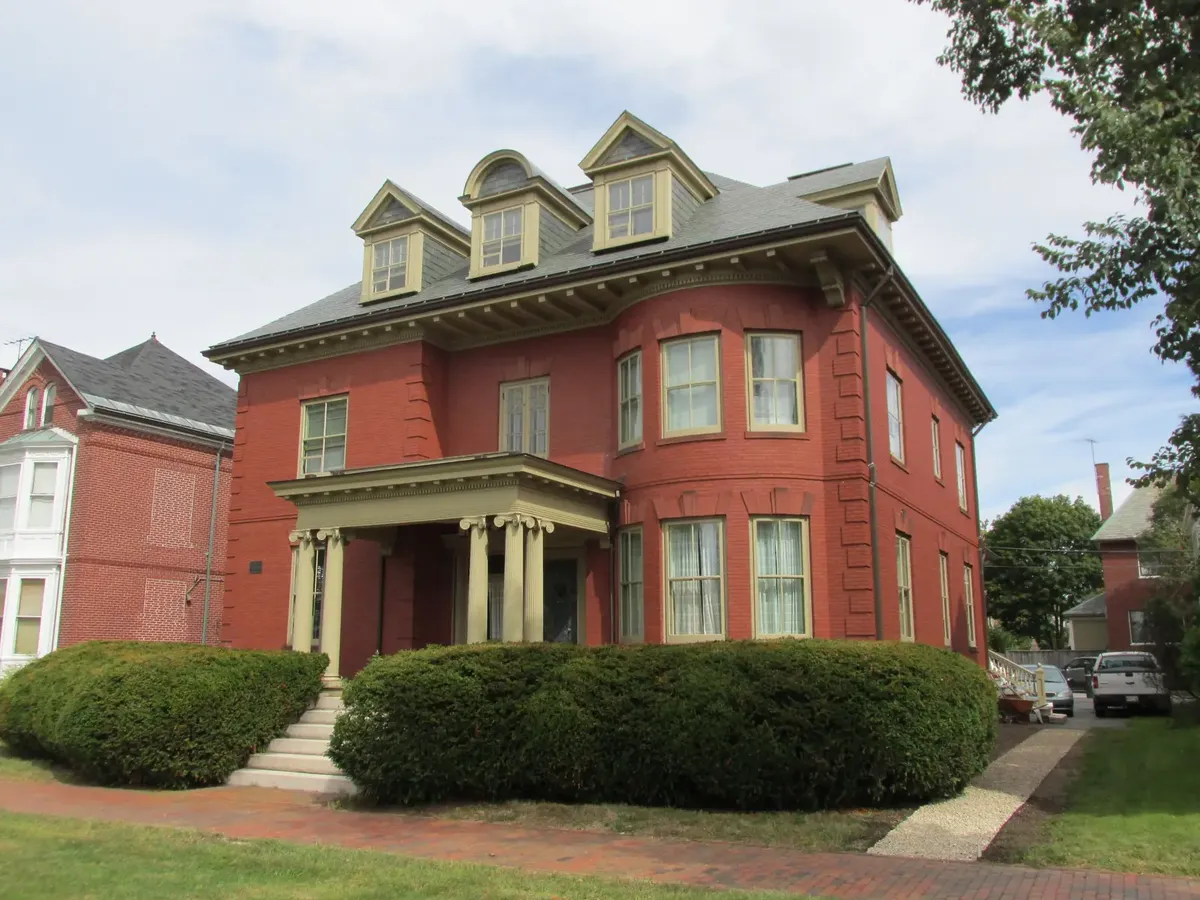
The Trust's Wooster Square profile describes Federal, Greek Revival, and Italian Villa houses, plus Italianate row houses and Second Empire and Queen Anne residences. Its Quinnipiac River profile covers houses from 1785 to 1885 built by oyster dealers, mariners, and traders.
The City Point profile highlights mid-1800s oystermen's houses and later Queen Anne houses, on streets that include Howard Avenue, Sea Street, and South Water Street. These are working houses with long histories. Owning one means caring for wood, slate, brick, and old glass that newer houses do not have.
What needs a certificate of appropriateness in New Haven?
In a New Haven local district, a certificate of appropriateness is needed before any building or structure is erected or altered in a way that changes its exterior architectural features. State law defines those features as the part of the exterior open to view from a public street, way, or place (Conn. Gen. Stat. § 7-147a).
The certificate comes first. No building permit for exterior work and no demolition permit can issue inside a district until it does. The certificate is required even when no building permit is (Conn. Gen. Stat. § 7-147d). The Trust notes that its staff helps residents frame applications at no cost.
What the commission weighs
Section 7-147f tells the commission what to look at. The list includes:
- The type and style of windows, doors, and light fixtures
- Signs, above-ground utility structures, and mechanical equipment
- The type and texture of building materials
- Scale, design, and fit with nearby buildings
Solar panels get extra protection. The commission cannot deny them unless they cannot be installed without substantially impairing the district's historic character (Conn. Gen. Stat. § 7-147f).
What review leaves out
The inside of the house is outside the commission's reach. The statute says it plainly:
"The commission shall not consider interior arrangement or use."
Conn. Gen. Stat. § 7-147f(b), Connecticut General Statutes
Paint color is also excluded by § 7-147d(c). Section 7-147j adds that ordinary maintenance or repair that does not change appearance or design needs no certificate. The same section allows work a building inspector certifies is needed for public safety. A kitchen, a boiler, or new wiring generally sits outside district review, though building permits still apply.
Two more rules matter. Demolition of a district building can wait 90 days after the permit issues while the commission or the state looks for a buyer who would keep it (§ 7-147j(b)). Property owned by a nonprofit college or university is excluded from the law while it owns it (§ 7-147k(b)).
Local district, National Register, or neither
A local district carries binding review of exterior work, while a National Register listing alone does not. The National Park Service's National Register FAQ says listing places no restrictions on what a non-federal owner may do. The exception is a project that receives federal assistance, usually funding or a license or permit.
New Haven has many National Register districts, and the Trust's Register list includes Wooster Square, Oyster Point, Westville Village, and others. The boundaries do not always line up. The Trust says the City Point local district is slightly larger than the Oyster Point Register district, and the two are not the same shape.
| Status | What review applies | Who decides | What a sale changes |
|---|---|---|---|
| Local historic district (Wooster Square, Quinnipiac River, City Point) | A certificate of appropriateness before exterior work visible from a public way; no review of interiors or paint color | The Historic District Commission, with appeal to Superior Court within 15 days | Nothing. The rules apply to the new owner the same way |
| National Register listing only | No federal limits on private work unless federal money or a federal license or permit is involved | Federal review only when a federal project triggers it | Nothing, though a buyer who lives there may look at the state rehabilitation credit |
| Neither | Ordinary building permits and zoning only | The City's building and zoning officials | Nothing historic carries over |
Sources for the table: Conn. Gen. Stat. §§ 7-147d, 7-147f, and 7-147i, and the National Park Service National Register FAQ. A house can be in a Register district and a local district at once, as Wooster Square is both.
What does a buyer ask about a Wooster Square historic district house?
A buyer of a Wooster Square historic district house often asks whether past exterior work was approved, and whether any commission matter is still open. The questions tend to center on the features § 7-147f names, such as replacement windows, new doors, vinyl siding, and rooftop equipment.
The Trust's history of the districts notes there may be tension between authentic materials like wood and newer materials like vinyl and aluminum. A buyer may want copies of any certificates on file. A buyer's attorney may also check the permit history, since the Connecticut condition report tells buyers to confirm that building permits were issued for past work.
Why an open matter worries a buyer
Enforcement can reach the next owner. Under Conn. Gen. Stat. § 7-147h, the commission can go to Superior Court to stop a violation. The court can order an unapproved feature removed or the exterior substantially restored.
The fines run per day. They start at $10 to $100 for each day a violation continues, and rise to $100 to $250 a day if the violation is wilful. The fine provision reaches the owner of a building where a violation exists and anyone who maintains it. Each day counts as a separate offense, and the court may award the commission its attorney's fees.
What the Connecticut condition report asks
The Connecticut Residential Property Condition Report asks one direct district question: whether the house is in a municipally designated historic district or listed on the National Register. Question 10 on the Department of Consumer Protection's condition report form (revised July 2025) adds "If yes, explain."
The form has no separate line for an unapproved window or an open commission matter. Its instructions tell sellers to answer every question to the best of their knowledge and to disclose any problems regarding the property. Whether a known unapproved alteration belongs on the form is a question for a Connecticut real estate attorney.
Who gives the report, and what it covers
- Who: Sellers of one to four unit houses, including condominiums, under Conn. Gen. Stat. § 20-327b.
- Exempt: Transfers by executors, administrators, trustees, and conservators, among others (§ 20-327b(b)).
- Standard: Answers reach only the seller's actual knowledge (§ 20-327e).
- Cost of skipping it: The form says a seller who does not furnish it credits the buyer $500 at closing (§ 20-327c).
The statewide rules are laid out in our Connecticut seller disclosure guide. A Wooster Square row house or a Quinnipiac River house built before 1978 also needs the federal lead paint disclosure, covered in our guide to selling a New Haven house with lead paint.
Repair to district standards or sell as-is?
Repairing to district standards suits an owner with time for review, and selling as-is suits one who would rather leave that work to the next owner. Both paths are legitimate. The review timeline and the costs of period materials often decide it.
The review clock
| Step | What state law says | Section |
|---|---|---|
| Hearing notice | Published 5 to 15 days before a public hearing, unless the items are not subject to review | § 7-147e(a) |
| Decision | Within 65 days of filing; silence after 65 days counts as approval; approval can carry stipulations | § 7-147e(b) |
| Hardship variation | The commission may vary strict rules for unusual conditions on one parcel | § 7-147g |
| Appeal | To Superior Court within 15 days of the decision | § 7-147i |
| Demolition delay | Up to 90 days after the permit while a buyer who would keep the building is sought | § 7-147j(b) |
The Trust reports that the commission meets monthly in public. A seller who wants to fix unapproved windows before listing may need a meeting cycle or two, plus lead time for period materials.
The state rehabilitation credit
Connecticut's historic homes credit is 30% of qualified rehabilitation costs, under Conn. Gen. Stat. § 10-416. It follows the National or State Register, not the local district. The house must be listed or be a certified contributing building in a listed district.
The owner must live in one of its one to four units for five years. Costs must exceed $15,000, the plan must be approved before work starts, and the credit caps at $30,000 per unit. The statute counts a buyer holding a purchase agreement as an owner, so the credit is often more useful to an owner-occupant buyer than to a departing seller.
How an as-is sale passes the review question to the buyer
An as-is sale hands the house, its district status, and any review question to the buyer, who decides what to restore and when. The district rules do not end at closing. A buyer who plans exterior work goes to the commission as the new owner.
For the seller, as-is means as-is. You do not replace windows, rebuild a porch, or apply for a certificate before you sell. You still answer the condition report truthfully, unless an exemption applies, and you share what you know about past work.
Some situations push toward this path. An inherited house can sit empty while an estate settles, and our guide to selling an inherited New Haven house covers that. An owner far from New Haven may not want to manage a restoration through monthly hearings. Others simply prefer not to take on period work at this stage.
A house can sit near a district without being in it. Before you sell, the City's district map or the commission's staff can confirm whether your address is inside a local district, a Register district, both, or neither.
How can Propcash help with a New Haven historic district house?
Propcash is a direct cash homebuyer, and we buy historic district houses as-is, with no repairs, no certificate applications, and no showings. We make one transparent, data-backed cash offer and show how we got to our number. You pick the closing date, and a cash sale can close in as few as 7 days when title is clear.
An offer can sit next to your other options, such as restoring and listing or selling to an owner-occupant who wants the state credit. If a cash sale is not your best move, we will tell you. Our New Haven cash home buyer page explains the steps, and you can get a cash offer in about two minutes with no obligation.
Frequently Asked Questions
Can you paint a Wooster Square house a new color without a certificate?
Connecticut's historic district law says the certificate rule does not extend to the color of paint used on the exterior of a building (Conn. Gen. Stat. § 7-147d(c)). Repainting is generally outside the commission's review. Replacing trim, siding, or other materials while painting is a different question, because a change in material or design can need a certificate.
How long does the New Haven Historic District Commission have to decide an application?
State law gives a historic district commission no more than 65 days after an application is filed to decide it and give written notice (Conn. Gen. Stat. § 7-147e(b)). If the commission fails to act within those 65 days, the statute treats that as approval. Notice of the public hearing runs in a newspaper 5 to 15 days before it.
Does a buyer get the Connecticut historic homes tax credit for a house in a local district?
The credit follows the National or State Register, not the local district. Under Conn. Gen. Stat. § 10-416, the house must be listed on a Register individually or sit in a listed district and be certified as contributing. The owner must also live in one of its one to four units for five years and spend more than $15,000 on approved work.
Can an executor sell a historic district house in New Haven without the condition report?
Transfers by executors, administrators, trustees, and conservators are exempt from the Connecticut residential condition report (Conn. Gen. Stat. § 20-327b(b)(4)). The house still sits in the district after the sale, and the buyer takes it with the same review rules. The estate's attorney can confirm what else the New Haven Probate Court needs.
Who can appeal a decision of the Historic District Commission?
A person aggrieved by a decision can appeal to the Superior Court for the judicial district where the city sits within 15 days of the decision (Conn. Gen. Stat. § 7-147i). The appeal follows the procedure for zoning appeals in § 8-8. A Connecticut land use attorney can say whether a particular owner or buyer has standing.
Is every old house in Fair Haven inside the Quinnipiac River local district?
No, the local district has set boundaries, and an old house nearby can sit outside them. The New Haven Preservation Trust describes the district as roughly bounded by Quinnipiac Avenue and Lexington, Chapel, Ferry, Pine, Front, and Lombard Streets. The City's district map or the commission's staff can confirm a specific address.
Propcash is a direct cash homebuyer, not a law firm. For a question about a specific house, a certificate, or a disclosure, talk with a licensed Connecticut attorney.
Reviewed by the Propcash Editorial Team under our editorial standards. Published by Propcash, a direct cash buyer of houses. This guide is general information. Laws, fees, and market figures change, so check the current rules for your state.
