
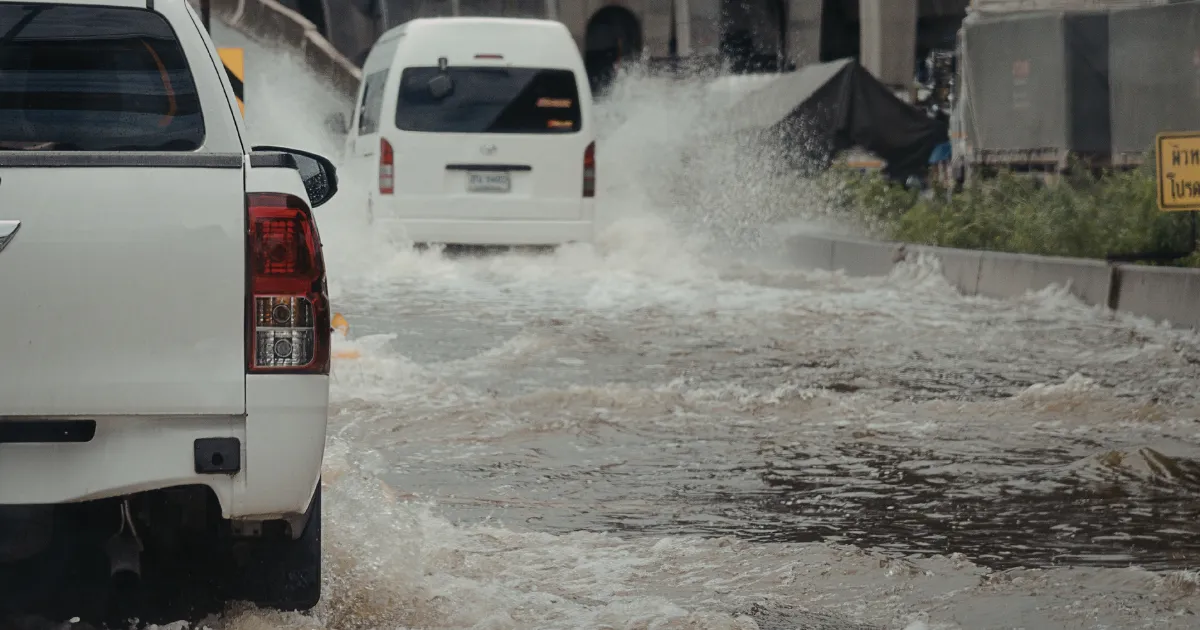
In Port St. Lucie, the owner maintains the swale and driveway culvert, and you can still sell the house as-is.
The City's Stormwater page says owners must maintain the right-of-way "from the edge of the pavement to their property line," part of a system with 1,200 miles of swales and over 6,000 culverts. Florida also requires a flood disclosure at or before the contract (Fla. Stat. § 689.302).
This is general information, not legal advice. State rules vary.
Jump to a section
Is your driveway culvert part of an open City code case?
Free. No obligation. You choose the closing date.
Port St. Lucie swale drainage problems are the seller's to handle, not the City's, and they do not stop a sale. The City's Stormwater page is direct about it: "Swale maintenance and the maintenance of driveway culverts are the landowner's responsibility. Property owners must maintain the portion of the street/road right-of-way from the edge of the pavement to their property line." That strip of grass and pipe feeds a system the same page says holds 200 miles of canals, 1,200 miles of swales, and over 6,000 culverts.
This guide covers who fixes what, the City's culvert loans, an open code case, and the Florida flood disclosure. These City rules cover houses inside the City of Port St. Lucie; a house outside the city limits, in unincorporated St. Lucie County, is not covered by them.
Who is responsible for a Port St. Lucie swale and driveway culvert?
The owner of the lot is responsible for the swale and the driveway culvert in front of it, under City Code Sec. 41.08 as the City describes it. The duty covers the right-of-way from the edge of the pavement to the lot line.
The City's culvert program FAQ adds the detail on pipes. It says that under Section 41.08(H)(1), "homeowners must maintain and replace culverts as needed to avoid obstructing stormwater flow through the swale." A driveway culvert, in the City's words, is "a pipe beneath a driveway that allows rainwater to flow through the swale."
The City still does part of the work. Its Swale Liner page says the City "will continue to perform supplemental maintenance to the level of service the residents currently have until further direction from the Council is in place." In February 2024, the City Council brought back the plastic swale liner program, and crews will install liners where swales lack them.
What the City asks owners to do
The same page lists the routine care the City expects:
- Keep swales and driveway culverts free of rocks, grass, sediment, litter, and branches.
- Leave the swale unfilled and free of landscaping, with side slopes that hold their shape.
- Vehicles stay off the swale, since the City says parking there compacts the soil.
- Mow it, and cut back irrigation if water stands in it when it has not rained.
The stormwater system is paid for by a separate charge on the tax bill. The Stormwater page lists a proposed annual assessment of $189, a $6 increase from the current $183 (City of Port St. Lucie, read November 2026). It is a non-ad valorem assessment, so the amount is not based on the house's value.
Is standing water in a Port St. Lucie swale a problem?
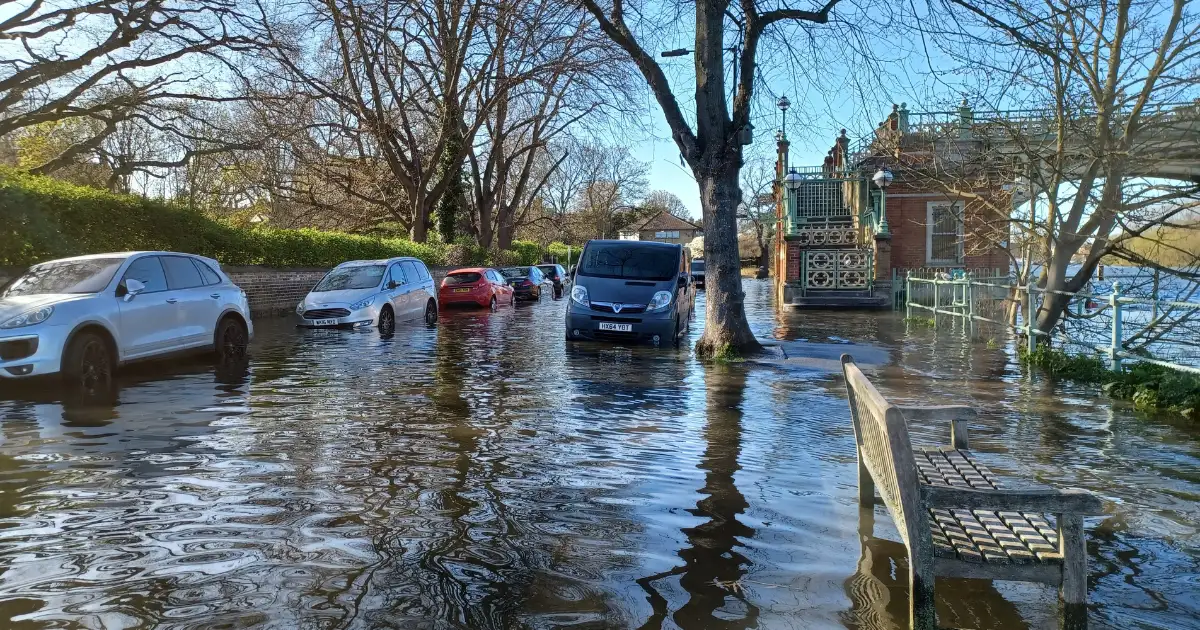
Not by itself, because the City says water in a swale is normal, especially in the rainy season. A swale is built to hold stormwater and pass it toward the canals, so some water after heavy rain is part of the design.
The City gives residents a simple test. During the rainy season, "allow 14 days without further rainfall for the water to recede before submitting a request for service." Outside the rainy season, the City says most stormwater recedes within three days. Water that lasts longer than that is the point where a service request through 1PSL makes sense.
A buyer walking the lot after a storm may still notice the water. Records from a 1PSL request, a liner on the City's work map, or a photo of the swale dry a week later can all help answer that buyer's questions.
What counts as a failed driveway culvert?
The City defines a failed culvert as "A collapsed driveway or blocked pipe that is not conveying the designed drainage capacity." A sunken driveway apron or a pipe packed with sediment can both meet that description.
Replacing a culvert is permitted work in the right-of-way. The City's permitting page lists culvert replacements and driveway modifications among its residential permit types. It also says any work on swales or other public property needs a Right-of-Way permit first.
A driveway project can surface an old culvert. According to the Public Works FAQs, a Driveway Permit is needed to modify a driveway in the right-of-way. Inspectors then check the culvert pipe and tell the owner whether it needs to be replaced. The existing driveway cannot be removed before the permit is approved.
When an inspection starts a code case
The City's culvert program page warns that an inspection can open a case. If an owner applies without an active code case and the culvert "is deemed failed, a formal code violation will be issued with a one-year deadline to resolve the violation."
How does the Residential Culvert Assistance Program affect a sale?
The City's Residential Culvert Assistance Program offers two loans to owners with an active code case for a failed culvert, and both leave a balance that matters at a sale. Both options showed as open when the page was read in November 2026.
Assistance is "limited and provided on a first-come, first-served basis." The City's contractor handles permits and installation, and only the concrete portion of the driveway in the right-of-way is replaced. Decorative driveways come back as plain concrete.
| Program term | Option 1: 10-year, interest-free loan | Option 2: CDBG forgivable loan |
|---|---|---|
| How it is repaid | A special assessment on the annual property tax bill over 10 years | Forgiven over five years if the owner keeps meeting program rules |
| Income test | No income verification | Household income limits apply, from $57,350 for one person |
| Occupancy | Owner-occupied full time for at least one year | Owner-occupied and homesteaded for at least one year; not a rental |
| Code case | A code violation for a failed culvert | A code violation for a failed culvert |
| Lien | The assessment is a lien, superior to other liens until paid | Secured by a lien on the house |
| If the house is sold | Not transferable; it can be paid off early through the Tax Collector | The prorated unforgiven balance is repaid at closing |
Both options also require that the house is not in foreclosure, that no bankruptcy affecting it is pending, and that the mortgage is current. These terms come from the City's page as read in November 2026, and the City notes that "Funding and eligibility are not guaranteed."
For an owner who plans to sell soon, the loan does not make the cost disappear. It moves the cost to the closing statement or the tax bill. An heir or a landlord may not meet the owner-occupancy terms at all.
What happens to an open culvert code case when you sell?
An open code case does not block a sale, but unpaid fines can turn into a lien that a title search will find. Under Florida law, a recorded order imposing a fine "shall constitute a lien against the land on which the violation exists" (Fla. Stat. § 162.09(3)).
The City's Lien Services division is the place to look up City liens and request payoffs. Its page also warns that "A lien search will not show cross-attaching liens that encumber a property under Chapter 162, Florida Statutes." Our guide to selling a Port St. Lucie house with a code or building lien covers fines, searches, and reductions in more detail.
The City's culvert page says the case closes after the final inspection, when the permit is closed and Code Compliance is notified. A seller with a case still open can expect a buyer or title company to ask where it stands.
What must you tell a buyer under the Florida flood disclosure?
Florida requires a seller of a house to "complete and provide a flood disclosure to a purchaser of residential real property at or before the time the sales contract is executed" (Fla. Stat. § 689.302). The form asks three yes-or-no questions about the house, and the question about known flooding is limited to your ownership.
- Whether you know of flooding that damaged the house during your ownership.
- Whether you filed a flood damage claim with an insurance provider, including the National Flood Insurance Program.
- Whether you received assistance for flood damage, including from FEMA.
The section was created by chapter 2024-215, effective October 1, 2024. Chapter 2025-166 added the question about known flooding, effective October 1, 2025.
The form's definition of flooding reaches past rivers and storm surge. It covers drainage problems directly:
"(b) The unusual and rapid accumulation of runoff or surface waters from any established water source, such as a river, stream, or drainage ditch. (c) Sustained periods of standing water resulting from rainfall."
Fla. Stat. § 689.302(4), the Florida flood disclosure form
How those words apply to water in a swale, a yard, or a garage is a legal question. A Florida real estate attorney can review your answers before you sign. Because the known-flooding question covers only your ownership, an heir or a recent buyer may have little to report on it.
Looking up the flood zone
The City's flood page lists two flood zone lookups: the FEMA Flood Map Service Center and the City's Flood Zone Interactive Map. The same page names repetitive loss areas, including areas bordering the St. Lucie River and areas just west of I-95 from roughly Becker Road to Tradition. After flood damage, it asks owners to call the Building Department at 772-871-5132 about substantial damage rules.
What does a buyer see for each drainage problem?
Each drainage problem has a different owner duty and a different paper trail. The table below lays them side by side, using only the City and state sources cited in this guide.
| Problem | Who is responsible | What a buyer may see or be told | Options before a sale |
|---|---|---|---|
| Standing water in the swale | The owner maintains the swale; the City does supplemental cleaning and liner work | Water after rain; a 1PSL request or liner work on the City map | Wait out the City's 14-day guide, then request service through 1PSL |
| Failed driveway culvert | The owner must maintain and replace the culvert (Sec. 41.08(H)(1), per the City) | A sunken apron or blocked pipe; a permit or code record | Permit and replace it, apply for a City loan if eligible, or sell as-is |
| Open code case | The owner, until the case is closed | The case and any recorded fine order or lien | Correct and close it, pay a payoff at closing, or sell with it disclosed |
| Past water in the house | The owner answers the state form | The Fla. Stat. § 689.302 disclosure, given at or before the contract | Gather claim and repair records, and ask an attorney about the answers |
Should you repair the swale and culvert first or sell as-is?
It depends on time, money, and whether you live in the house, because each path moves the cost to a different place. A repair before the sale can close a code case and clean up the record. Selling as-is leaves the swale, culvert, and case with the buyer.
When a repair first can make sense
- You live in the house, qualify for a City loan, and can wait for the contractor's schedule.
- The fix is small, such as clearing debris, cutting back irrigation, or mowing the swale.
- A buyer's lender or inspector is likely to ask about an open permit or case.
When selling as-is can make sense
- The house is inherited, vacant, or rented, so the owner-occupancy terms do not fit.
- A City loan would come due at closing anyway.
- There is water damage inside the house as well as outside it.
As-is means as-is: the buyer takes the swale, culvert, and any open case as they stand. It does not remove the flood disclosure. Our guide to selling a house that needs major repairs covers the wider tradeoffs, and the Florida insurance guide looks at insurance costs and selling.
The City is working on the larger system too. The Stormwater page lists projects for "areas impacted in recent years," including the Oak Hammock watershed, Hogpen Slough, the Elkcam Basin, and the E-8 Canal. Nobody can say how those projects will change any one street, so a seller can only work from the lot as it drains today.
How can Propcash help with a Port St. Lucie swale or culvert problem?
Propcash is a direct cash homebuyer, and we buy houses as-is, including houses with a failed culvert, a wet swale, or an open code case. There are no repairs, no showings, and no fees or commissions charged to you. You pick the closing date, and closings can happen in as few as 7 days after the contract is signed.
We make one cash offer based on local market data and show you how we got to our number. You can compare it with repairing first or listing, and the offer stands while you decide. If a cash sale is not your best move, we will tell you. You can request a no-obligation cash offer or read more about selling on the Port St. Lucie cash buyer page.
Frequently Asked Questions
Does the City repair a swale or culvert for free before a sale?
The City's pages describe the swale and driveway culvert as the owner's duty, not a free City repair. The Swale Liner page says the City provides supplemental cleaning each year, and its culvert program offers loans, not grants. Public Works can confirm whether any liner work is planned for your street on the City's swale liner map.
Can an heir or a landlord use the Residential Culvert Assistance Program?
As written, both loan options require a house that has been owner-occupied full time for at least a year. The forgivable loan also requires a homestead for a year and excludes rentals. An heir or a landlord can ask Public Works at 772-871-7655 how the program terms apply to their situation.
Does a buyer who pays cash still get the Florida flood disclosure?
The statute says "A seller must complete and provide a flood disclosure to a purchaser of residential real property," and it does not carve out cash or as-is sales (Fla. Stat. § 689.302). The form is due at or before the time the contract is signed. A Florida real estate attorney can answer questions about how it applies to a specific sale.
Does water standing in my swale count as flooding on the disclosure form?
The form defines flooding as inundation of the property, and it lists sustained standing water from rainfall as one cause. The swale sits in the street right-of-way, between the pavement and your lot line. Whether water held there counts for your answers is a question for a Florida real estate attorney.
How can a buyer look up the flood zone for a Port St. Lucie house?
The City's flood page points residents to two lookups: the FEMA Flood Map Service Center search by address and the City's Flood Zone Interactive Map. A buyer or lender can check either one with the street address. Neither tool says how a house has drained in past storms.
Does a City culvert loan transfer to the buyer?
The 10-year, interest-free option is not transferable, according to the City's program FAQ. For the forgivable loan, the prorated unforgiven balance must be repaid at closing if the house is sold before the five years end. Either way, the balance is something to plan for in the closing figures.
Reviewed by the Propcash Editorial Team under our editorial standards. Published by Propcash, a direct cash buyer of houses. This guide is general information. Laws, fees, and market figures change, so check the current rules for your state.