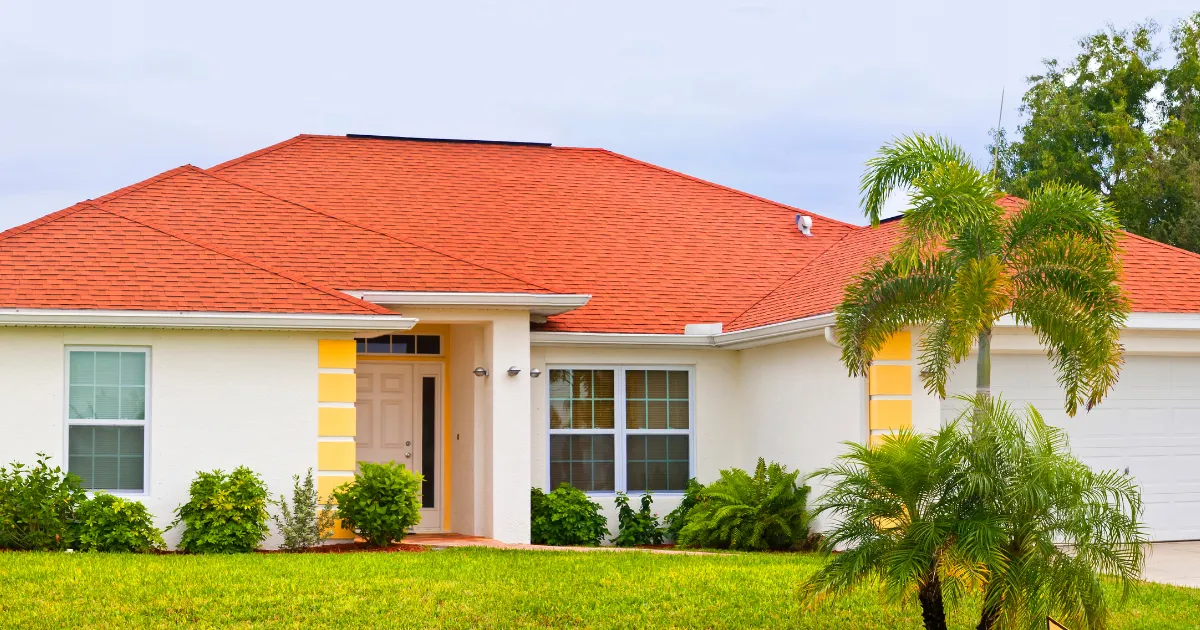
To sell an inherited Sarasota house, heirs usually need a Twelfth Circuit probate order or letters before anyone can sign the deed.
The Sarasota County Clerk's probate page still prints a $75,000 summary administration limit, but Fla. Stat. § 735.201 now sets it at $150,000 after exempt property. Heirs can rely on the statute and confirm the details with a Florida probate attorney.
This is general information, not legal advice. State rules vary.
Jump to a section
Has the court given anyone in your family authority to sell the house yet?
Free. No obligation. You choose the closing date.
If you plan to sell an inherited house in Sarasota, the first number to check is the one on the county's own website. The Sarasota County Clerk's probate page still says "Summary administration may be filed when the entire estate's value does not exceed $75,000 or when the decedent has been deceased for more than 2 years." The statute behind that path now reads $150,000 (Florida Legislature, November 2026).
Fla. Stat. § 735.201(2), last amended by chapter 2026-57, sets that limit at $150,000. It measures the estate "less the value of property exempt from the claims of creditors," so exempt property comes off first. Where the Clerk's page and the statute differ, heirs can rely on the statute and confirm the details with a Florida probate attorney.
This guide follows the Twelfth Circuit probate steps for a long-held house in Newtown, Laurel Park, Alta Vista, or anywhere else in the city. There's no rush to decide anything, and nothing here is legal advice. Our statewide guide to selling an inherited house in Florida covers the wider rules.
Where does the original will go first?
The original will goes to the Sarasota County Clerk within 10 days after the person holding it learns of the death. The Clerk charges nothing to take it.
Florida puts that duty on the will's custodian, whoever has the signed paper (Fla. Stat. § 732.901). The Clerk's wills page says it can be filed at either the Sarasota or the Venice office. The custodian gives the date of death or the decedent's Social Security number. No attorney is needed for this step, though the Clerk notes one can say whether probate will be necessary.
A will may already be on file
Some parents deposit a will for safekeeping years before they die. The Clerk's page explains how to search its ClerkNet portal for the case type "Wills for Safekeeping." For a family spread across several states, that search can settle the first question without a trip to Sarasota.
The statute also has a back-up. A court can order a custodian to produce a will. If the custodian had no just or reasonable cause for the delay, the court charges costs, damages, and a reasonable attorney's fee against them.
Does the house need probate at all?
A house titled in the late owner's name alone usually needs a court order before anyone can deed it to a buyer. A house held as tenants by the entirety, or in joint tenancy with right of survivorship, is treated differently.
Florida's probate code says real property held either of those ways is not "protected homestead" for probate purposes (Fla. Stat. § 731.201(33)). Whether such a house skips probate depends on who survived and how the recorded deed reads. A Florida probate attorney can check the deed and say which case, if any, fits.
The smallest filing cannot reach a house
The Clerk lists a third proceeding, disposition of personal property without administration. It releases assets to the person who paid final expenses, such as the funeral bill. The Clerk's page says it cannot exceed $6,000 or the funeral bill, and it cannot "Include real estate." The statute behind it, Fla. Stat. § 735.301, speaks only of personal property.
Which Sarasota County probate path fits the house?
Summary administration usually fits when the estate passes the $150,000 test or the death was more than 2 years ago. Formal administration fits when the estate needs a personal representative to act for it.
When the house was the parent's homestead, a separate petition can ask the court to determine its protected homestead status. The personal representative or any interested person may file it, per the committee notes to Florida Probate Rule 5.405 (Supreme Court of Florida, No. SC2025-0266, August 2025).
Reading the $150,000 test
The statute subtracts property exempt from creditors before it applies the limit. The Florida Constitution, Article X, Section 4, shields a homestead from forced sale and carries that shield to the surviving spouse or heirs. A protected homestead may therefore land on the exempt side of the subtraction. A Florida probate attorney can say how that works for one parent's estate.
The second route ignores value: a death more than 2 years ago qualifies. The Clerk adds that a copy of the funeral bill is required when the death was less than two years ago. A will that directs administration under chapter 733 rules out the summary path.
The attorney rule and the Clerk's fees
The Clerk's page says formal administration "must be filed by an attorney licensed to practice law in Florida unless the personal representative is the sole beneficiary." It also lists "Real estate transactions in Sarasota County" as an example of when an attorney may be required. The Clerk's fee schedule lists $345 for a summary administration of $1,000 or more and $400 for formal administration (Sarasota County Clerk, November 2026).
| Path | Who files | When it fits | Who signs the deed to a buyer |
|---|---|---|---|
| Summary administration | A petitioner; any will is proved and admitted with the petition (§ 735.206(1)) | Estate, less exempt property, not over $150,000, or a death more than 2 years ago; the will must not direct chapter 733 administration (§ 735.201) | The people the court's order distributes the house to (§ 735.206(4)) |
| Formal administration | A Florida-licensed attorney, unless the personal representative is the sole beneficiary (Sarasota Clerk) | The estate needs a personal representative appointed to act for it (Sarasota Clerk) | The personal representative, under a power of sale in the will or with court approval (§ 733.613) |
| Determination of protected homestead | The personal representative or any interested person (Rule 5.405 committee notes) | The house may have been the parent's protected homestead (Art. X, § 4) | The people the order names as entitled to the homestead, with each interest defined (Rule 5.405(d)) |
When does homestead law decide who inherits?
Homestead law decides when the parent left a surviving spouse or a minor child. In that case the Florida Constitution limits who can receive the house, whatever the will says.
With a spouse and no minor child, the house may be left to the spouse. With a minor child, it cannot be left by will at all (Fla. Stat. § 732.4015). A homestead not left as the law allows descends like other property without a will.
Under Fla. Stat. § 732.401, a surviving spouse with descendants then takes a life estate, and the descendants hold the remainder. The spouse may instead elect an undivided one-half interest as a tenant in common. The statute calls that election irrevocable and allows 6 months after the death to make it.
Why the representative steps back from a homestead
A personal representative takes control of the parent's property "except the protected homestead" (Fla. Stat. § 733.607). The order on a homestead petition fills that gap. Under Rule 5.405(d), it must name each person entitled to the protected homestead and define each interest.
Inside a city, the constitutional homestead reaches up to one-half acre of contiguous land; outside one, up to 160 acres. A house inside Sarasota city limits falls under the half-acre rule. A house with a Sarasota mailing address on unincorporated county land falls under the larger one, though the same Clerk handles both.
Some older houses in Newtown and Laurel Park also carry historic designation. Our guide to selling a historic house in Sarasota covers what that changes for a sale.
What gives someone the power to sell the house?
In a formal case, the personal representative signs, under a power of sale in the will or after the court authorizes or confirms the sale. In a summary case, the people the order distributes the house to sign the deed.
In a formal case
Florida gives a personal representative a long list of powers that need no court order. But the general power to buy or sell estate assets expressly excludes real property (Fla. Stat. § 733.612(5)). Houses follow their own section instead.
Under Fla. Stat. § 733.613, a will with a specific power to sell real property lets the representative sell without court approval. A general power to sell any estate asset works the same way. Without either, the representative may still sell when it serves the estate, but title passes only once the court authorizes or confirms the sale.
A buyer under a specific power or a court order takes title free of estate creditors' claims and beneficiaries' entitlements. Existing mortgages and other liens stay attached until they are paid.
In a summary case
Before the order, the petitioner must search for known or reasonably ascertainable creditors, serve them, and provide for payment (Fla. Stat. § 735.206). After it, a good-faith buyer for value from the named heirs takes the house free of the parent's creditors' claims. The buyer also takes it free of the rights of the surviving spouse and other beneficiaries.
- Within 10 daysThe custodian deposits the original will with the Clerk, at no fee (§ 732.901)
- Before filingThe deed shows whether the house passed to a survivor (§ 731.201(33))
- Opening the caseSummary under the $150,000 or 2-year test, or formal (§ 735.201)
- Within 6 monthsA surviving spouse's deadline to elect a one-half interest (§ 732.401)
- If it was a homesteadAn order names who is entitled to the house (Rule 5.405)
- Authority to sellA summary order, a power of sale, or court approval (§§ 735.206, 733.613)
- January 1 after transferThe house is assessed at just value (§ 193.155(3)(a))
Can you settle a Sarasota estate from another state?
Often, yes. A nonresident can serve as personal representative of a Florida estate when closely related to the parent, such as a child, grandchild, sibling, niece, or nephew (Fla. Stat. § 733.304).
Distance is common in Sarasota estates. U.S. Census Bureau QuickFacts reports that 29.2% of city residents are 65 or older (U.S. Census Bureau QuickFacts, read September 2026).
Where the case opens
Venue is the Florida county where the parent was domiciled. With no Florida domicile, it is any county where the parent's property sits (Fla. Stat. § 733.101). A parent who lived up north and wintered in Sarasota had no Florida domicile. The Florida case for that house is an ancillary administration (Fla. Stat. § 734.102). The Clerk lists "Probate filed in another county or state, with real property in Sarasota County" as a case where an attorney may be required.
Hearings and local help
The Twelfth Judicial Circuit's Probate Division lists separate Sarasota County and South County (Venice) probate calendars. Its posted Sarasota/Venice requirements name the hearings that must be held in person unless the parties agree otherwise. Those are guardianship and similar matters, and the page asks for telephonic or Zoom details on other notices of hearing.
For in-person help, the Clerk points to the Sarasota Self-Help Center & Law Library at 2002 Ringling Boulevard. It also lists the Sarasota County Bar Association and the Florida Bar Lawyer Referral Service.
Why does the buyer's tax bill start over?
The parent's homestead exemption and Save Our Homes cap do not travel with the house. Florida assesses it at just value on January 1 after a change of ownership (Fla. Stat. § 193.155(3)(a)).
"When property transfers, any exemptions and save-our-homes caps must be removed by law. ... Exemptions and caps belong to the seller, not the buyer."
Sarasota County Property Appraiser, "Why did my taxes increase?" page
The statute counts any transfer of legal or beneficial title as a change of ownership, unless an exception applies. A transfer to heirs can trigger the reset as well as a sale. The Property Appraiser warns new owners that a purchase "may have a dramatic effect on future taxes" (Sarasota County Property Appraiser, November 2026).
The same page says the buyer should receive an ad valorem tax disclosure at or before the contract, citing Fla. Stat. § 689.261. New owners apply for their own exemptions; to qualify for a year, they must own the house on January 1 and apply by March 1.
How can Propcash help heirs selling a Sarasota house?
Propcash can buy an inherited Sarasota house as-is, for cash, on the closing date the family picks.
As a direct cash homebuyer, we make one offer based on local market data, with our reasoning shown. We buy houses as-is: no repairs, no cleaning, no cleanout. Take what you want, leave the rest, and pick the closing date once the person with authority can sign. Our page on selling an inherited house as-is explains how that works.
An offer can sit beside a local agent's listing advice while the Twelfth Circuit case moves along. Our offers don't expire, there's no obligation, and no fees or commissions are charged to you. If a cash sale isn't your best move, we'll tell you. When the family is ready, you can get a no-obligation cash offer or read more on our Sarasota cash house buyer page.
Frequently Asked Questions
Does the Sarasota Clerk charge a fee to deposit a will?
No. The Sarasota County Clerk's wills page says there is no fee to file or deposit a will, and no attorney is needed to do it. The custodian has 10 days after learning of the death to deposit it (Fla. Stat. § 732.901).
What does the Clerk charge to open a probate case in Sarasota County?
The Sarasota County Clerk's fee schedule lists $345 for a summary administration of $1,000 or more and $400 for a formal administration. Attorney fees are separate from the Clerk's filing fee. A Florida probate attorney can estimate the total for a specific estate.
Can a small estate pass a Sarasota house without any probate case?
Not through the Clerk's smallest filing. Disposition of personal property without administration cannot exceed $6,000 or the funeral bill, and the Clerk's page says it cannot include real estate. A house titled in the parent's name alone usually needs summary or formal administration, unless the deed already passes it to a survivor.
What if a parent lived up north and only wintered in Sarasota?
Then the main estate usually opens in the home state, and the Sarasota house goes through an ancillary administration in Florida (Fla. Stat. § 734.102). The Sarasota County Clerk's fee schedule lists ancillary proceedings at $400, the same line as formal administration. The Clerk also names probate filed in another state with real property in Sarasota County as a case where an attorney may be required.
Do heirs have to empty a parent's house before a cash sale?
Not for a cash sale to Propcash, which buys houses as-is with no cleaning or cleanout. The family can take what it wants and leave the rest. Who decides what happens to belongings is a question for the will, the personal representative, or a Florida probate attorney.
Does a buyer keep the late owner's Save Our Homes cap?
No. The Sarasota County Property Appraiser says exemptions and caps belong to the seller, not the buyer, and are removed by law when a house transfers. Florida assesses the house at just value on January 1 after a change of ownership (Fla. Stat. § 193.155(3)(a)).
Reviewed by the Propcash Editorial Team under our editorial standards. Published by Propcash, a direct cash buyer of houses. This guide is general information. Laws, fees, and market figures change, so check the current rules for your state.