
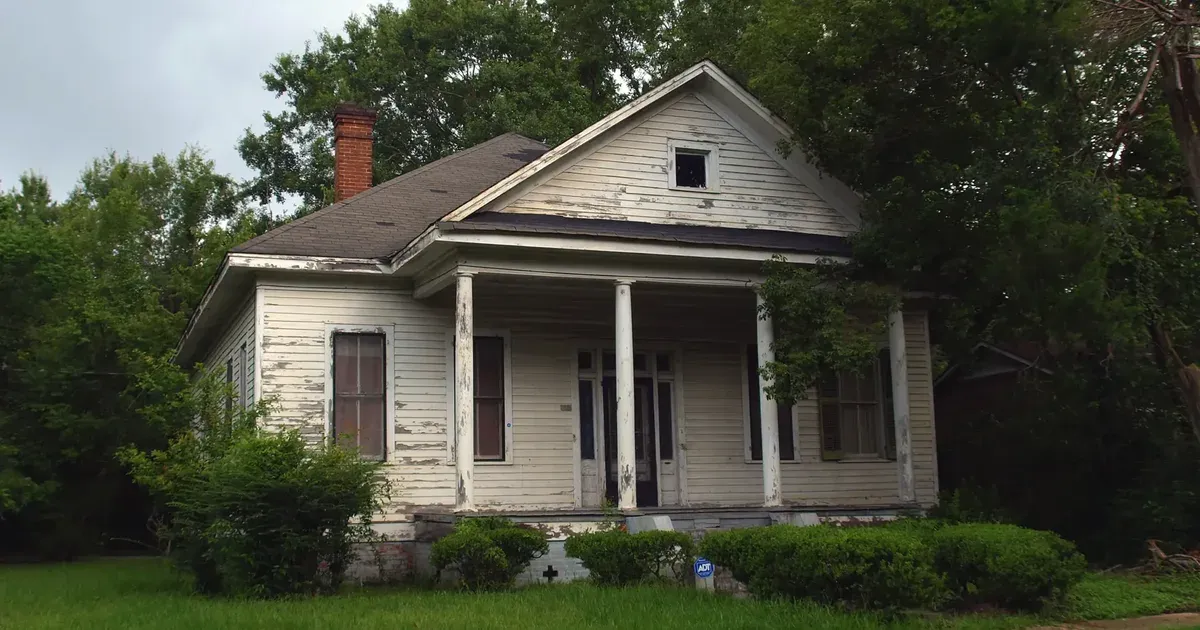
You can sell without Commission approval, but exterior work needs Historic Districts Commission review, and neglect can bring a repair order.
Under Traverse City Code 1462.06, the City may levy those repair costs as a special assessment against the property. A buyer who purchases as-is takes on future review as the new owner.
This is general information, not legal advice. State rules vary.
Jump to a section
Has the Historic Districts Commission contacted you about your house?
Free. No obligation. You choose the closing date.
Traverse City's Historic Districts Commission can find a house "threatened with demolition by neglect" and "Require the owner of the resource to repair all conditions contributing to demolition by neglect" (Traverse City Code 1462.06). If the owner waits too long, the costs "may be levied by the City of Traverse City as a special assessment against the property." Exterior work in a district also goes through Commission review (1462.05).
If you plan to sell a historic house in Traverse City, Michigan, those two rules shape every option. They matter most to an owner, often an heir, facing a worn porch, old windows, or a tired roof. This guide covers which houses are inside a district, what review involves, what you disclose, and how fixing, listing, and selling as-is compare.
Is my Traverse City house in a historic district?
Your house is in a local historic district if its address, or the lots and boundaries it falls within, appears in the roster in Traverse City Code 1462.07. That roster names three districts: the Central Neighborhood, the Boardman Neighborhood, and Downtown.
The three local districts
- Central Neighborhood Historic District: the area bounded by Division Street, the alley north of Fifth Street, the alley south of Eighth Street, Locust Street, Sixth Street, Union Street, and the Boardman River.
- Boardman Neighborhood Historic District: "All residential structures" in the area of Boardman Avenue to Railroad Avenue and State Street to Webster Street.
- Downtown Historic District: structures in part of the original plat, with listed addresses on East Front Street, East State Street, Cass Street, Park Street, and nearby streets.
The roster also lists each district's addresses by street number. Central, for example, includes listed addresses on Fifth, Sixth, Seventh, and Eighth Streets, plus a handful on Maple, Pine, Oak, Wadsworth, and Division.
How to check one address
The Commission's City page links a historic districts map and the full text of Chapter 1462. Its listed staff liaison is the Planning and Zoning Administrator, at (231) 922-4464. A call or email to the Planning Department can confirm an address near a boundary.
The Commission "Meets last Thursday of the Month at Noon," according to that page (City of Traverse City, November 2026). Meeting materials are posted in the City's meetings portal, linked from the same page.
Traverse City historic district rules for exterior work
In a Traverse City historic district, exterior work that needs a building permit also needs Historic Districts Commission review first. Code 1462.05(a) says a building permit application "for a building or structure over 200 square feet in gross floor area in a historic district" comes with a historical preservation permit application and plans.
What counts as work
The chapter defines work as "construction, addition, alteration, repair, moving, excavation, or demolition" (1462.02). A repair counts when it "changes the external appearance of a resource." The review list in 1462.03 covers new buildings, moving or demolition, and exterior alterations or repairs "for which a permit is required."
State law sets the same baseline. The Local Historic Districts Act requires a permit "before any work affecting the exterior appearance of a resource" in a district (MCL 399.205). Work cannot start until the commission issues a certificate of appropriateness or a notice to proceed.
How long review takes
- Filing: The City's application form goes to the Planning Department at least 10 days before the meeting, with ten copies of plans drawn to scale.
- Meeting: The Commission meets within 30 days after the Planning Director notifies it, unless the applicant agrees otherwise (1462.05(c)).
- Standards: The Commission uses the Secretary of the Interior's Standards for Rehabilitation.
- Deadline: No action within 60 calendar days of a complete application counts as approval, unless both sides agree in writing to extend (MCL 399.209; 1462.05(h)).
- Appeal: An applicant can appeal a decision to the State Historic Preservation Review Board within 60 days (1462.05(g)).
One more detail matters for older houses. The state Act bars a certificate of appropriateness unless the applicant certifies the house has, or will have, a fire alarm system or a smoke alarm meeting the state construction code.
- At least 10 days before a meetingApplication and ten copies of scaled plans go to the Planning Department
- Within 30 days of noticeThe Commission meets on the application (1462.05(c))
- DecisionCertificate of appropriateness, notice to proceed, or a written denial
- 60 calendar days after a complete applicationNo action counts as approval, unless extended in writing (MCL 399.209)
- Within 60 days of a decisionAppeal to the State Historic Preservation Review Board (1462.05(g))
What is demolition by neglect?
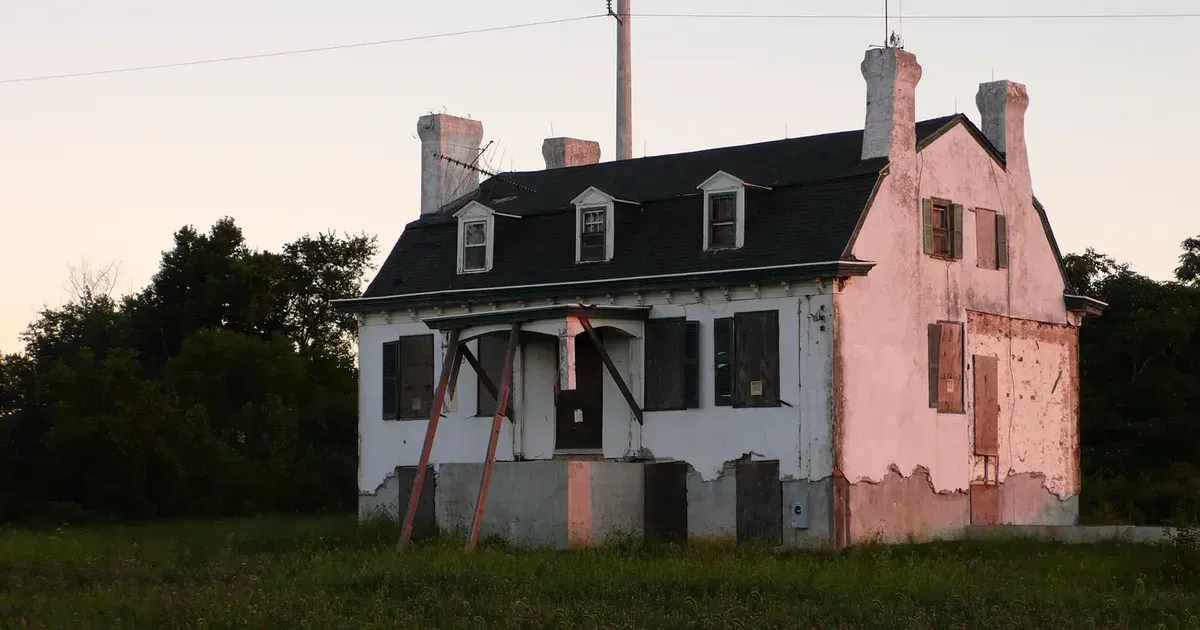
Demolition by neglect is the City code's term for letting a historic house decline until its exterior or structure suffers. Code 1462.02 defines it as "neglect in maintaining, repairing or securing a resource" that leads to deterioration of an exterior feature or a loss of structural integrity.
"Require the owner of the resource to repair all conditions contributing to demolition by neglect."
Traverse City Code 1462.06(1), City of Traverse City Code of Ordinances, Chapter 1462
What the Commission can do
Once it makes that finding, the Commission has two tools under 1462.06. It can require the owner to repair the conditions. If the owner does not act within a reasonable time, the Commission or its agents may make the repairs.
Entry for those repairs needs an order from the Circuit Court. The costs are charged to the owner and "may be levied by the City of Traverse City as a special assessment against the property." State law gives local historic district commissions the same power (MCL 399.205(11)).
Exterior work done without a permit
A second rule covers past work. Under 1462.05(j), the Commission may require an owner to restore the house or modify unapproved work so it qualifies. A violation of the chapter can also bring a civil fine of up to $5,000 (1462.05(l)).
Chapter 1462 defines an owner as anyone with "equitable or legal title," and on a land contract, the purchaser. After closing, the buyer becomes the owner the Commission deals with.
National Register listing versus the local district
National Register listing alone does not limit what a private owner does to a house; the City's local district does. The National Park Service says: "Listing in the National Register places no federal restrictions or requirements on a private property owner" (National Park Service, November 2026).
The Central Neighborhood carries both labels. Its National Register record (reference 79001154) is dated December 11, 1979. The federal record describes it as roughly bounded by Fifth, Locust, Union, Ninth, and Division Streets, which differs from the local roster's lines.
The Park Service adds that a listed owner may act "within the framework of local laws or ordinances." In Traverse City, that framework is Chapter 1462 for addresses on the local roster.
Why some buyers value a district house
Michigan's State Historic Preservation Tax Credit has an owner-occupied residential category. The State Historic Preservation Office says a house can qualify if it is in a local historic district and is individually listed or contributes to a listed district (State Historic Preservation Office, November 2026).
The process has three parts, and credits go first-come, first-served. The office strongly recommends approval before work begins. A buyer who plans to live in the house and restore it may count that credit in their plans, though eligibility is decided project by project.
Should you fix, list, or sell a historic house in Traverse City as-is?
Each path moves the Commission review, the repair bill, and the timing to a different person. Fixing keeps all three with you, listing as-is can share them through negotiation, and a direct as-is sale passes them to the buyer.
| Consideration | Fix, then list | List as-is | Sell as-is for cash |
|---|---|---|---|
| Who files for Commission review | You, before work starts | The buyer, for work after closing | The buyer, for work after closing |
| Who pays for exterior repairs | You, up front | Often negotiated after the buyer's inspection | The buyer, with the condition reflected in the offer |
| Materials and design | Reviewed against the Secretary of the Interior's Standards | The buyer's choice, subject to review | The buyer's choice, subject to review |
| Timing before you can sell | Review (a 60-day deadline unless extended) plus the work itself | Showings, the buyer's inspection, and financing | No financing contingency; you pick the closing date |
| A pending repair order | You complete it | Disclosed; the buyer weighs it | Disclosed; the buyer takes it on as the new owner |
When fixing first can make sense
Fixing can suit an owner with time, savings, and a contractor who knows historic materials. A listed house in good repair may draw buyers who want a finished house. The review clock and the work both come before the sign goes up.
When as-is can make sense
An as-is sale can suit an heir who lives far away or an owner who does not want to manage review. As-is means as-is: the buyer takes the house with its porch, windows, and roof as they stand. The buyer then decides what to restore and files for review.
If the house came to you through an estate, our guide to selling an inherited house in Traverse City covers probate and taxes. For exterior work that has grown past a weekend project, the major repairs guide lays out more choices.
What do you have to disclose to a buyer?
Michigan requires most sellers of a house with one to four units to give the buyer a disclosure statement before signing a binding purchase agreement (MCL 565.954). Two questions on the form touch historic district issues directly.
- Item 4: "Structural modifications, alterations, or repairs made without necessary permits or licensed contractors?"
- Item 10: "Any outstanding municipal assessments or fees?"
The form in MCL 565.957 also asks about pending litigation that could affect the property. A Commission order is not named on the form, but a court case or a levied special assessment may fall under these questions.
Heirs and the disclosure form
The duty has limits. MCL 565.953 exempts transfers "by a nonoccupant fiduciary in the course of the administration of a decedent's estate," among other exemptions. A seller is also not liable for errors outside their personal knowledge (MCL 565.955). Even so, telling a buyer about a known Commission order keeps the sale clean.
Our Michigan seller disclosure guide walks through the full form and the buyer's right to end the deal after a late disclosure.
How can Propcash help you sell a house in a Traverse City historic district?
Propcash is a direct cash homebuyer, and we buy houses as-is in Traverse City's historic districts. No repairs, no cleaning, and no showings. We'll make you one cash offer based on local market data and show you how we got to our number, and you pick the closing date.
A cash sale can close in as few as 7 days, with no fees or commissions charged to you. If listing after repairs looks like your better move, we'll tell you. Compare our offer with your other options on our Traverse City cash buyer page or get a cash offer with no obligation.
Frequently Asked Questions
Do I need Historic Districts Commission approval just to sell my Traverse City house?
No. Michigan's Local Historic Districts Act requires a permit before work that affects a resource's exterior appearance (MCL 399.205), and a sale is not work on the house. The district rules stay with the house, so the buyer needs review for the exterior work they choose to do.
Can the City make me repair a historic house I am about to sell?
It can if the Commission finds the house threatened with demolition by neglect. Traverse City Code 1462.06 lets the Commission require the owner to repair the conditions behind it. If the owner does not act within a reasonable time, the Commission can make the repairs with a Circuit Court order. The City may then levy the cost as a special assessment against the property.
What if a past owner replaced windows or siding without approval?
Under Traverse City Code 1462.05(j), the Commission may require the owner to restore the house or change the work so it qualifies for a certificate of appropriateness. The duty falls on the current owner, which after closing is the buyer. Michigan's seller disclosure form asks about alterations or repairs made without necessary permits, so known work belongs on it.
Is the Central Neighborhood on the National Register of Historic Places?
Yes. The National Park Service record for the Central Neighborhood Historic District (reference 79001154) is dated December 11, 1979. The Park Service says National Register listing places no federal restrictions on a private owner, so the review an owner faces comes from the City's local district under Chapter 1462.
How much does a Traverse City code violation in a historic district cost?
Traverse City Code 1462.05(l) makes a violation of the chapter a civil violation with a fine of not more than $5,000. A court may also order the violator to pay the cost to restore or replicate a resource that was unlawfully altered, repaired, or demolished. State law sets the same $5,000 ceiling (MCL 399.215).
Who do I call to check whether my address is in a local historic district?
The City's Planning and Zoning Administrator is the staff liaison to the Historic Districts Commission and can be reached at (231) 922-4464. The Commission's page also links a historic districts map, and Chapter 1462.07 lists the street addresses in each district. A call can settle an address near a boundary.
Data Sources: City of Traverse City Code of Ordinances, Chapter 1462 (City copy), plus the City's Historic Districts Commission page and permit application. Michigan Compiled Laws 399.205, 399.209, 399.215, and 565.953 to 565.957. The National Park Service and the Michigan State Historic Preservation Office. Propcash is a direct cash homebuyer, not a law firm. Owners should confirm district rules with the City of Traverse City Planning Department.
Reviewed by the Propcash Editorial Team under our editorial standards. Published by Propcash, a direct cash buyer of houses. This guide is general information. Laws, fees, and market figures change, so check the current rules for your state.