
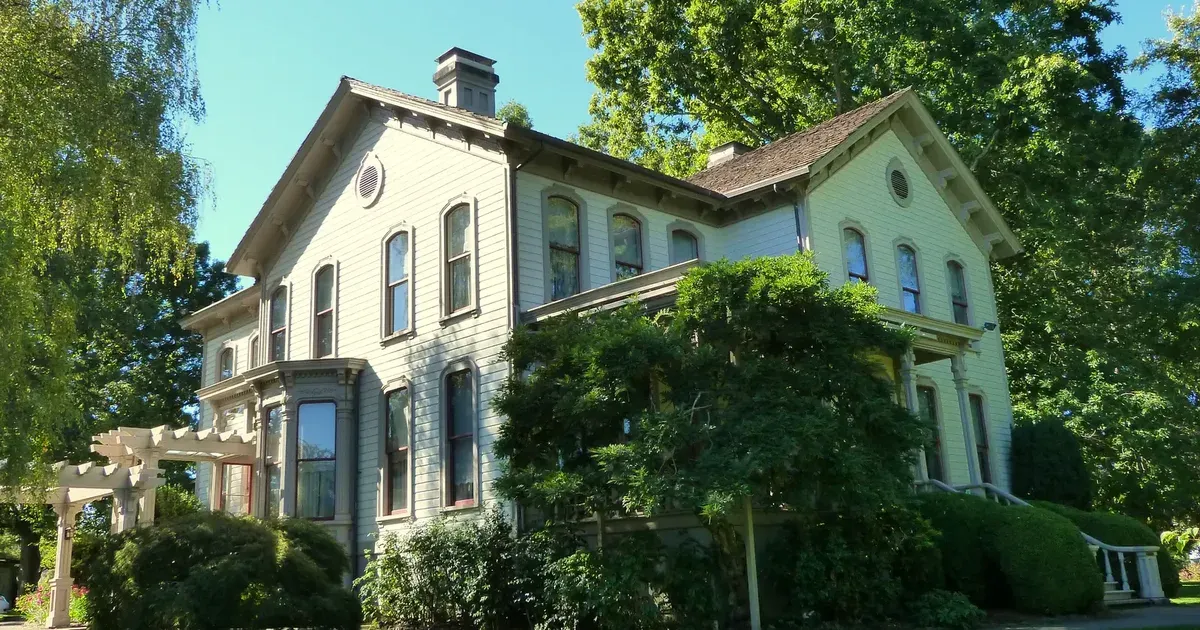
Someone needs authority first: a surviving joint owner, a trustee, a small estate order, or Letters of Authority from the owner's county probate court.
A Traverse City estate opens in Grand Traverse County Probate Court, or in Leelanau County if the owner lived on that side of the city. A child or grandchild who turns the house into a vacation rental risks losing the exception that keeps the capped taxable value.
This is general information, not legal advice. State rules vary.
Jump to a section
Do you have Letters of Authority or a court order for the house yet?
Free. No obligation. You choose the closing date.
If you plan to sell an inherited house in Traverse City, Michigan, or keep it, one tax rule deserves a look first. A house passed to the owner's child, grandchild, parent, or sibling keeps its capped taxable value only if "the residential real property is not used for any commercial purpose following the conveyance" (MCL 211.27a(6)(f)(ii)). Traverse City requires a vacation home rental to have its own City license. An heir who turns the house into a short-term rental risks losing that exception.
This guide covers that trap first. Then it walks through the court, the four ways a house passes after a death, who signs the deed, and what an older house may need. There's no rush to decide what to do with the house.
Can an inherited Traverse City house become a vacation rental without a tax reset?
It can, but the rental may cost a child or grandchild the family exception that keeps the old taxable value. That exception has a use condition, and renting the house to paying guests may not meet it.
How uncapping works
While one owner holds a Michigan house, its taxable value can rise each year by no more than 5% or the inflation rate, whichever is lower, plus additions (MCL 211.27a(2)). After a transfer of ownership, the next year's taxable value becomes the state equalized valuation (MCL 211.27a(3)). Traverse City's Assessing Department sets taxable value to assessed value the year after a transfer, and it assesses at 50% of fair market value. A house held for decades can see its tax bill rise sharply after that reset.
Who keeps the capped value
An inheritance counts as a transfer of ownership, with exceptions. A surviving spouse keeps the capped value (MCL 211.27a(6)(f)(i) and (7)(a)). A son, daughter, grandchild, parent, brother, or sister of the owner or the owner's spouse can keep it too, under one condition:
"...and the residential real property is not used for any commercial purpose following the conveyance."
MCL 211.27a(6)(f)(ii), Michigan General Property Tax Act
The same subsection lets the assessor or the Department of Treasury ask for proof within 30 days. A beneficiary who fails to comply with that request faces a $200 fine.
Where the vacation rental fits
Running a vacation home rental in Traverse City takes a City license, renewed every year. An heir who rents the house to weekly guests could fail the "commercial purpose" condition and face the tax reset. This guide relies on the wording of the statute, not on any assessor ruling. It can help to ask the City Assessor before the first booking.
A rental also needs paperwork of its own. The City requires a rental license before operating, and the application fee is $200. Our guide to selling a licensed vacation rental in Traverse City covers the license side.
- Surviving spouseKeeps the capped value, with no commercial-use condition
- Child, grandchild, parent, or siblingKeeps the capped value if the house is not used for any commercial purpose
- Licensed vacation rentalPaying guests may fail the statute's "not used for any commercial purpose" condition
- Assessor's requestProof due within 30 days; a $200 fine for failing to comply
- After a resetNext year's taxable value becomes the state equalized valuation
Which probate court handles a Traverse City estate?
The estate opens in the probate court of the county where the owner lived at death (MCL 700.3201(1)(a)). For an owner who lived on the Grand Traverse County side, that is Grand Traverse County Probate Court, at 280 Washington Street, Suite 223.
Traverse City also reaches into Leelanau County, whose county website lists the city among its local governments. An owner who lived on that side goes to Leelanau County Probate Court, at 8527 E. Government Center Drive, Suite 203, in Suttons Bay.
The house's address decides only one case. If the owner lived outside Michigan, venue is a county where the owner's property was located (MCL 700.3201(1)(b)).
Four ways a Traverse City house passes after a death
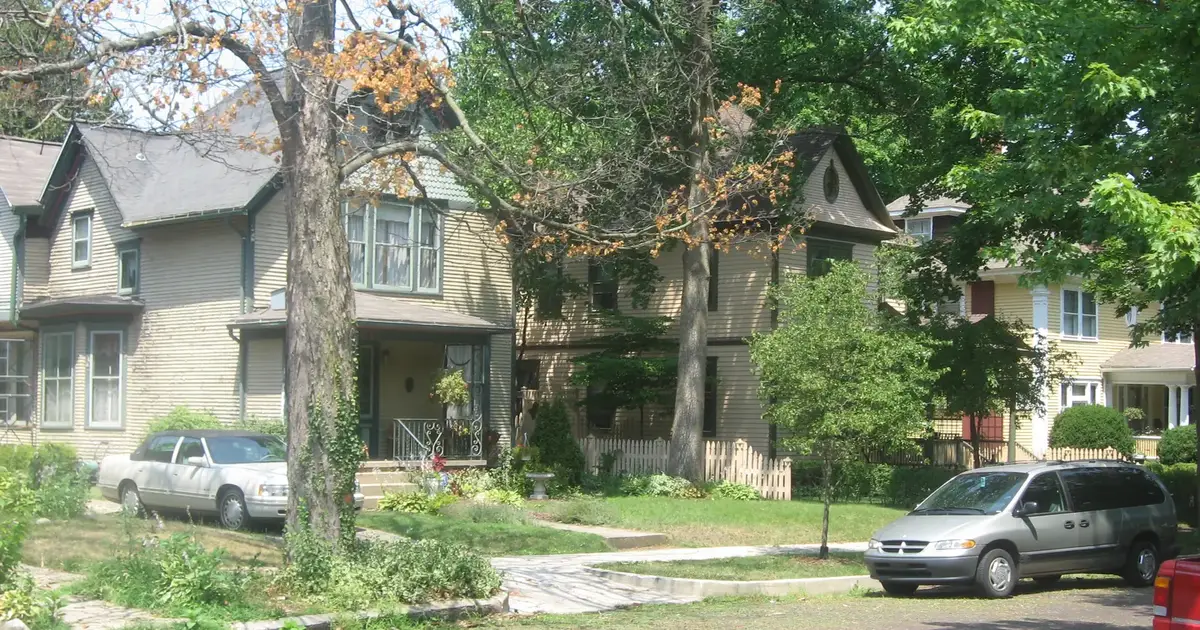
A Traverse City house passes in one of four ways: to a surviving joint owner, through a trust, by a small estate order, or through full probate. The way the deed and the estate were set up decides which one applies.
| Route | Who acts | Court | Grand Traverse County fee |
|---|---|---|---|
| Joint tenancy with right of survivorship | The surviving joint owner | None: passes automatically, without probate | No probate filing fee |
| Revocable trust | The trustee, following the trust document | None: does not go through probate | No probate filing fee |
| Small estate petition (PC 556) | The court assigns the property; no personal representative is appointed | Probate court of the owner's county | $25 plus an inventory fee |
| Full probate, informal (PC 558) or formal (PC 559) | The personal representative, under Letters of Authority | Probate court of the owner's county | $175, plus $12 per certified copy of the Letters |
| Affidavit (MCL 700.3983) | Not available when the estate includes real property | Does not apply to a house | Does not apply to a house |
Joint tenancy and trusts
Grand Traverse County Probate Court says a house owned with another person as joint tenants with right of survivorship passes automatically to the surviving owner. Property owned by a revocable trust does not go through probate either. The trust document tells the trustee what to do with it.
The 2026 small estate petition
For a 2026 death, the small estate route covers an estate worth $53,000 or less once funeral and burial costs are paid (MCL 700.3982(1); Michigan Legal Help). Mortgage debt on the house, up to $264,000, is subtracted from its value first. The statute sets base amounts, and the Department of Treasury adjusts them each year for the year of death (MCL 700.1210).
The county's small estate page still shows $50,000 and a $250,000 lien cap, the unadjusted amounts in the statute. The county notes that in this route the will is not carried out and no personal representative is appointed. Heirs who receive property this way stay responsible for the owner's unpaid debts for 63 days, up to the value received (MCL 700.3982(3)).
Why the affidavit is closed to a house
Michigan's 28-day affidavit requires a sworn statement that the estate does not include real property (MCL 700.3983(1)(a)). An inherited house rules it out, however small the estate. The county's own affidavit line covers personal property only.
Full probate
Opening a full estate in Grand Traverse County costs a $175 filing fee, plus $12 for each certified copy of the Letters of Authority. An inventory fee based on the estate's value comes due one year after the appointment or at closing, whichever comes first. Notices can run in the Traverse City Record Eagle or the Northern Express.
Who signs the deed when the estate sells?
The person the deed, the trust, or the court puts in charge signs. That is the surviving joint owner, the trustee, the heirs named in a small estate order, or the personal representative.
In probate, MCL 700.3715(1)(f) lets a personal representative sell estate land at a public or private sale, for cash or on credit. The will or an order in a formal proceeding can restrict that power. The certified Letters of Authority are the court document that shows who holds it.
The person named in the will has first claim to the job. After that, priority runs to a surviving spouse who inherits under the will, other devisees, the surviving spouse, and then other heirs (MCL 700.3203).
Does the estate fill out Michigan's seller disclosure statement?
Usually not when a personal representative who never lived in the house sells it. MCL 565.953(d) exempts transfers by a nonoccupant fiduciary in the course of administering a decedent's estate.
The same section also exempts transfers ordered by a probate court in administering an estate (MCL 565.953(a)). A personal representative who lived in the house, or heirs who sell in their own names after a small estate order, may not fit that wording.
What if the inherited house is old or behind on taxes?
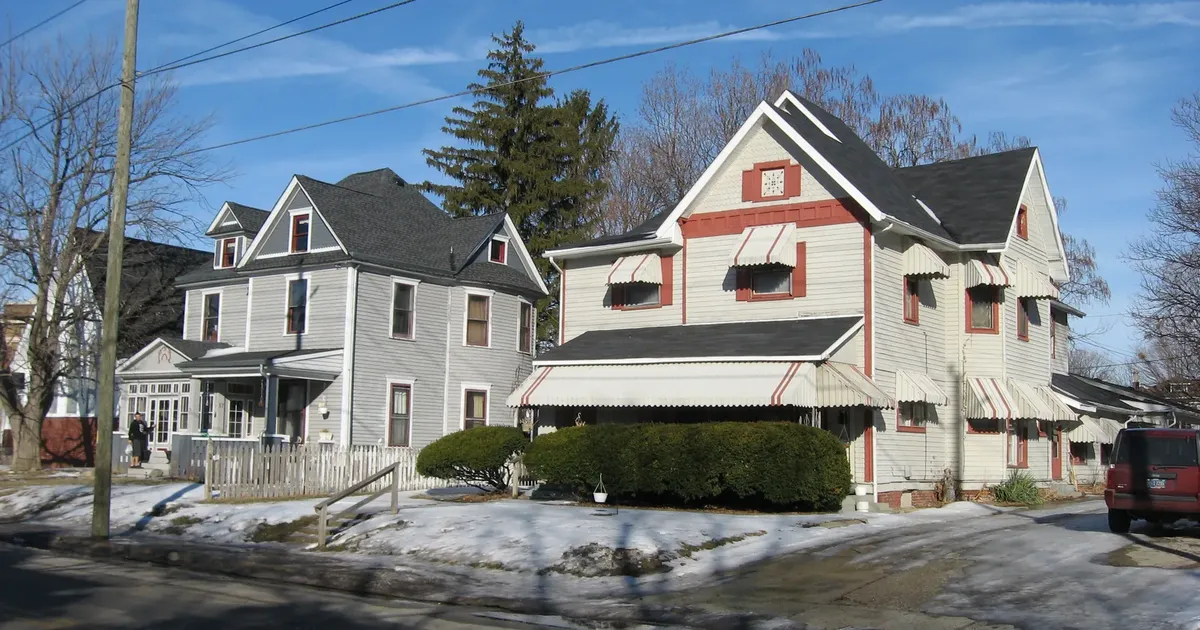
The estate can sell an older house as it stands or repair it first; that choice belongs to the family. Older houses are common in Traverse City, and taxes keep running while the family decides.
An older housing stock
The City's 2024 Master Plan reports that 36.1% of the city's houses were built before 1939 (City of Traverse City, August 2024). The plan notes that an older housing stock needs upkeep such as retrofitting plumbing lines, energy efficiency work, and accessibility changes. Its Historic Districts Commission manages the Central Neighborhood, Boardman Neighborhood, and Downtown Historic Districts. If the house sits in one of them, our guide to selling a house in a Traverse City historic district may help.
Property taxes while the estate is open
Taxes not paid to the City by March 1 pass to the Grand Traverse County Treasurer for a two-year collection process. The county adds a one-time 4% fee and 1% interest a month. In year two it adds $235 in forfeiture fees and raises interest to 1.5% a month, retroactive to the first day. The county describes this as 12% in year one and 18% in year two (Grand Traverse County Treasurer, November 2026). Our guide to Grand Traverse County property tax foreclosure walks through the rest of the calendar.
How can Propcash help with an inherited Traverse City house?
Propcash is a direct cash homebuyer, and we buy inherited houses as-is. No repairs, no cleaning, no cleanout: take what you want, leave the rest. You pick the closing date, and cash sales can close in as few as 7 days once the person with authority is ready to sign.
Our offers are based on local market data, and we'll show you how we got to our number. There's no rush to decide and no obligation. If a cash sale isn't your best move, we'll tell you. You can get a cash offer to compare with listing or keeping the house, or read more on our Traverse City cash home buyer page and our inherited house guide.
Frequently Asked Questions
Does a surviving spouse risk the tax reset by renting the house short term?
Not under the same condition. MCL 211.27a(7)(a) says a transfer from a decedent to a surviving spouse is not a transfer of ownership, and the spouse exception in 211.27a(6)(f)(i) carries no commercial-use condition. The use condition applies to a child, grandchild, parent, or sibling of the owner or the owner's spouse. A City vacation home rental license is still required to rent short term.
How much does it cost to open a Grand Traverse County probate case for a house?
Grand Traverse County Probate Court lists a $175 filing fee and $12 for each certified copy of the Letters of Authority. An inventory fee based on the estate's value comes later, due one year after the personal representative is appointed or when the estate closes, whichever comes first. The newspaper collects its own publication fee.
Is the small estate figure on the Grand Traverse County website current?
Not for a 2026 death. The county's small estate page still lists $50,000 and a $250,000 cap on lien deductions, the unadjusted amounts written into the statute. Michigan Legal Help puts the limit at $53,000 for a 2026 death, with up to $264,000 of mortgage debt subtracted from the house's value. The Department of Treasury adjusts these amounts each year under MCL 700.1210.
Are heirs responsible for the owner's debts after a small estate order?
For a limited time. Under MCL 700.3982(3), an heir who receives property through a small estate order is responsible for 63 days for any unpaid debt of the person who died, up to the value received. A surviving spouse who qualifies for allowances and the minor children are excepted.
What happens if the estate falls behind on property taxes for the house?
Taxes not paid to the City by March 1 pass to the Grand Traverse County Treasurer, which adds a one-time 4% fee and 1% interest a month. In the second year the county adds $235 in forfeiture fees and raises interest to 1.5% a month, retroactive to the first day. The county describes this as 12% in year one and 18% in year two.
Does the family have to empty the house before a cash sale?
Not for a cash sale to Propcash. We buy inherited houses as-is, with no repairs, no cleaning, and no cleanout, so the family can take what they want and leave the rest. A traditional listing often means clearing the house for showings, which takes time and money.
Data Sources: Michigan Compiled Laws (legislature.mi.gov), City of Traverse City vacation rental license page and 2024 Master Plan, Grand Traverse County Probate Court and Treasurer, Leelanau County, Michigan Legal Help. Propcash is a direct cash homebuyer, not a law firm. Heirs may want to consult a Michigan probate attorney for case-specific guidance.
Reviewed by the Propcash Editorial Team under our editorial standards. Published by Propcash, a direct cash buyer of houses. This guide is general information. Laws, fees, and market figures change, so check the current rules for your state.
