
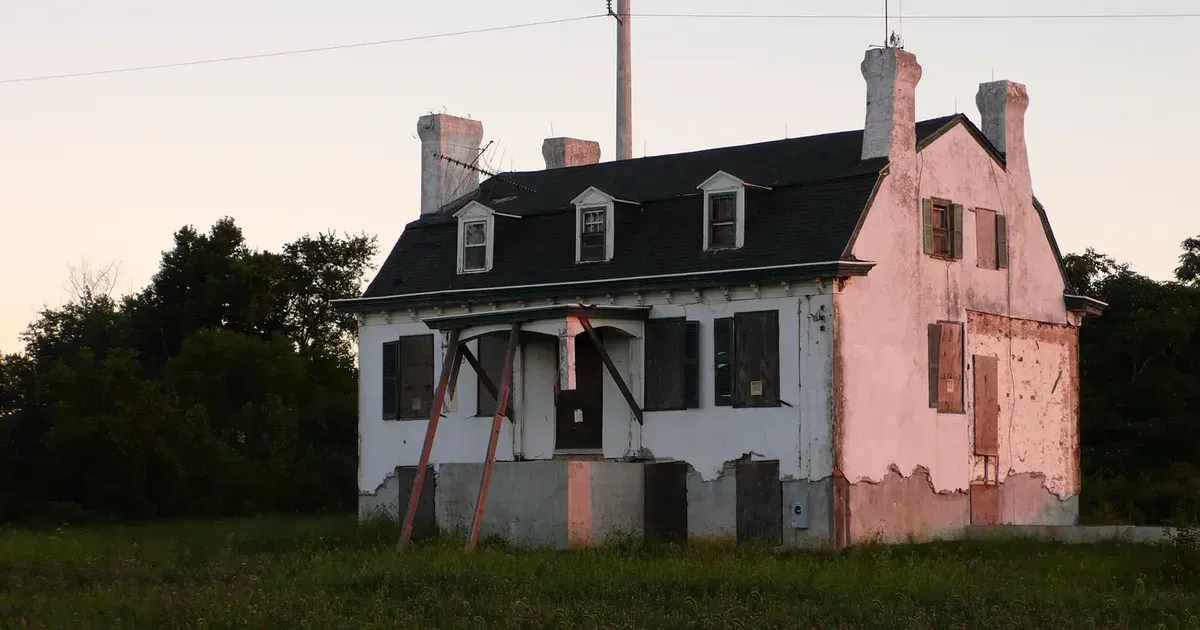
You can sell a vacant St. Joseph house as-is, even with a registration fee, boarded windows, or a dangerous building order.
Registration costs $200.00 every six months once a house sits vacant six months with code violations, and openings may stay boarded only 60 days without a $100.00 mothballing permit. A bona fide sale to an unrelated party releases a delinquent registration lien under Sec. 7-328(f).
This is general information, not legal advice. State rules vary.
Jump to a section
Has the City sent you a notice about your empty house?
Free. No obligation. You choose the closing date.
An empty house in St. Joseph, Missouri, answers to its own set of City rules. If you plan to sell a vacant house in St. Joseph, MO, three of them matter most. They are the vacant residential building registration, the 60-day limit on boarded openings, and the dangerous buildings process.
This guide lays out each rule from Chapter 7 of the City Code, then compares repairing, mothballing, and selling as-is.
Can you sell a vacant house in St. Joseph, MO as-is?
Yes. A vacant house in St. Joseph can be sold as-is, even with a registration fee, boarded windows, or a dangerous building order attached. Each City rule changes what you owe and what a buyer takes on, so it helps to know which ones apply before you sign.
The rules sit in Chapter 7 of the City Code. One even rewards a sale: a registration lien is released when the house sells to an unrelated buyer. Other City liens are typically paid from the seller's proceeds at closing.
Which City rules can reach an empty St. Joseph house?
Three City Code rules can reach an empty house in St. Joseph: vacant residential building registration (Sec. 7-328), the boarded-up vacant buildings rule (Sec. 7-327), and the dangerous buildings article (Sec. 7-351 onward). Ordinary code notices for weeds or trash can apply too.
| Rule | What triggers it | Fee or deadline | Code section |
|---|---|---|---|
| Vacant residential building registration | A house vacant at least six months that has violations of Chapter 7 | $200.00, renewed with another $200.00 every six months | Sec. 7-328 |
| Boarded-up openings | An opaque panel over a door, window, or vent on a building where no owner or authorized person lives or works | 60 days, unless a mothballing permit is valid or consistent repair work is underway | Sec. 7-327(d) |
| Mothballing permit | An owner who wants openings to stay boarded past 60 days | $100.00 application and inspection fee; valid one year | Sec. 7-327(e) |
| Dangerous building notice | One of ten listed defects, such as 33% damage to supporting members | A reasonable time, not more than 30 days, to start the work | Secs. 7-351 and 7-353 |
| Legal vacant dangerous building permit | An owner of an ordered building who wants it to stay vacant for now | $200.00 every six months, prorated with a $100.00 minimum | Sec. 7-366 |
| City repair or demolition cost | The City carries out a repair or demolition order | Special tax bill, payable over up to ten years, a lien until paid | Sec. 7-363 |
The table comes from the Chapter 7 PDF in the City's code library, with pages dated as late as September 1, 2020. Codes change, so confirm the current rule with the City's Property Maintenance Manager at 816-271-4620.
How does St. Joseph vacant building registration work?
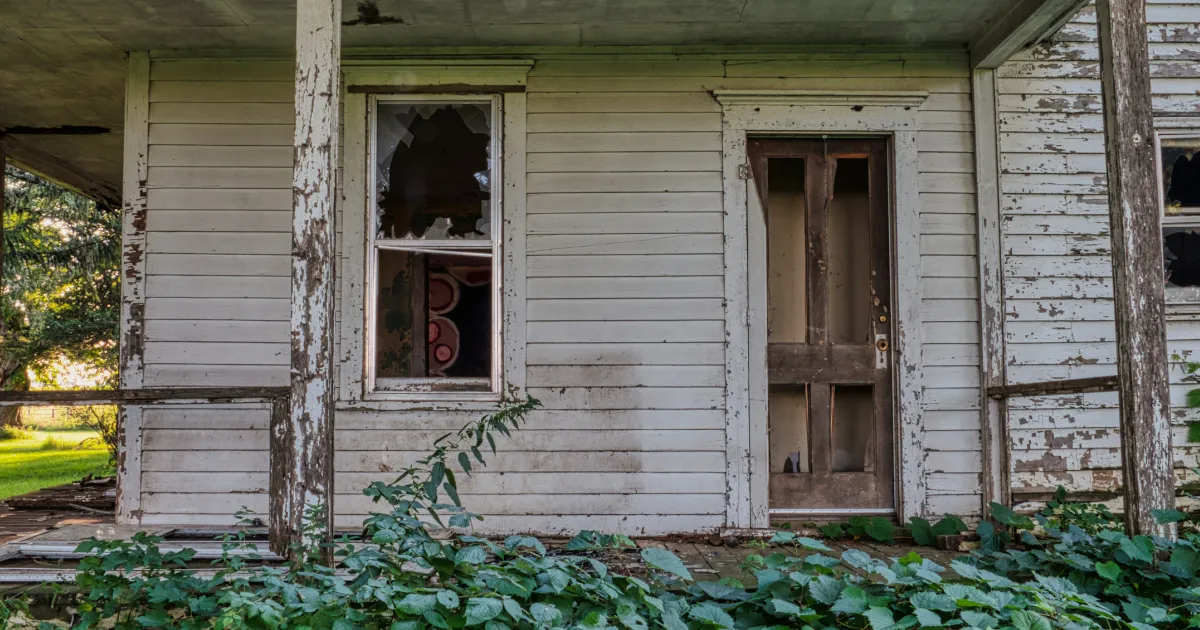
St. Joseph vacant building registration applies to a house that is vacant, has been vacant at least six months, and has violations of Chapter 7. The fee is $200.00, renewed with another $200.00 every six months, under Sec. 7-328.
Emptiness alone does not trigger it. The code pairs vacancy with violations, so a secured, well-kept empty house may never be levied.
How the fee gets levied
The director of planning and community development may investigate a house and decide whether the registration and fee apply. Within five business days of that report, the city clerk mails notice to the owner at the last known address on City and Buchanan County records.
Two ways to respond
An owner has 30 days after the decision to choose one of two routes:
- Appeal to the city manager or to municipal court.
- Fix the violations, then ask for a reinspection and reconsideration.
Without an appeal or a request for reconsideration, the fee starts to accrue at the beginning of the second calendar quarter after the decision.
When an unpaid fee becomes a lien
Under Sec. 7-328(f), registration fees delinquent for one year become a lien that can be foreclosed like delinquent real estate taxes.
A sale changes that:
"Upon bona fide sale of the property to an unrelated party said lien shall be considered released and the delinquent registration fee forgiven."
St. Joseph City Code Sec. 7-328(f), the City's vacant residential building registration rule
Note the word "unrelated." A transfer to a family member may not meet that test. Owners who ignore the rule can also face enforcement under Sec. 7-6, starting at a fine of not less than $100.00 for a first conviction.
How long can a St. Joseph house stay boarded up?
A boarded up house in St. Joseph may stay that way for no more than 60 days, unless it has a valid mothballing permit or the owner proves consistent and material repair work is underway. The rule is Sec. 7-327(d).
What counts as boarded up
The rule covers any building where neither the owner nor someone the owner authorizes lives or runs a business. It counts as boarded up when wood, metal, or other opaque material covers an exterior door, window, or vent.
The mothballing permit
A mothballing permit lets a building stay boarded for one year at a time. It costs a $100.00 application and inspection fee. Before it is issued, an inspection must find that the building:
- Shows no signs of continuing water leaks or significant unrepaired roof deterioration.
- Has no significant missing protective treatment on exterior wood.
- Has tuckpointing and masonry kept to the most recent ASTM standards.
- Has all roof drainage, including gutters and downspouts, in place.
- Holds no combustible materials beyond what planned work needs.
The permit has an outer limit. No permit is issued once street-facing openings have been boarded more than three years after any mothballing permit was issued, or five years for a building under the City's certificate of appropriateness rules.
A permit can be revoked if the building becomes a public health or safety risk. Every boarded building needs at least one "No Trespassing" sign, plus a signed letter letting the police department enforce trespassing there.
How the code says to board an opening
St. Joseph's building code amendments in Sec. 7-33 say a vacant structure must be secured against trespassers and animals, including birds. One left open to entry is deemed unsafe.
Boards must be weather-resistant plywood at least three-eighths inch thick, cut to fit. They attach to the outside with wood screws at least 1 1/2 inches long, placed 12 inches on center. The plywood must be a color that blends with the house, and no building permit is needed for this securing work.
What happens after a dangerous building notice?
A dangerous building notice in St. Joseph declares the house a public nuisance and orders it repaired, vacated, or demolished. Under Sec. 7-353, the notice allows a reasonable time, not more than 30 days, to start the work.
Sec. 7-351 lists ten defects that make a building dangerous. Among them:
- Walls or vertical members that lean or buckle past the code's plumb-line test.
- Damage of 33% or more to supporting members, or 50% to outside walls or covering.
- Fire, wind, or other damage that makes the building dangerous to life or safety.
- Decay or disrepair that leaves the building unfit for human habitation.
The notice and the hearing
The notice posted on the building says it is unlawful to remove it until it is complied with, and unlawful to enter without the City's written consent.
If the work does not begin, the chief building official holds a hearing on at least ten days' written notice. Any party may bring a lawyer, and an order needs specific findings of fact. Interested parties can appeal that decision to circuit court under RSMo Chapter 536, per Sec. 7-362.
Ignoring an order is a misdemeanor under Sec. 7-355, fined $100.00 to $500.00 per offense and per day it continues.
Who pays when the City does the work
When the City repairs or demolishes a building under an order, Sec. 7-363 turns the cost into a special tax bill against the house, collected like taxes. At the owner's request, it can be paid in installments over up to ten years. It is a personal debt of the owner and a lien on the house until paid.
Before a City demolition, the owner is asked to sign a consent that gives up rights to the contents (Sec. 7-365). Anything you want to keep is best taken before you sign.
An older house can face one more step. The City's Demolition Delay page says buildings 100 years or older need an appeal before demolition, under an ordinance the Council approved on June 14, 2021. Our guide to selling a house in a St. Joseph historic district covers that review.
Insurance money after a fire
When a fire or other casualty claim pays more than 50% of the policy's face value, Sec. 7-364 has the insurer send 25% of the payment to the City. That money goes toward any demolition tax bill, and the excess goes to the insured.
A permit to stay vacant
An owner of a building ordered repaired or demolished can apply for a legal vacant dangerous building permit under Sec. 7-366. It lasts up to six months, subject to renewal, and costs $200.00 every six months. Entering a building ordered vacated takes a right-of-entry form from the chief building official (Sec. 7-356).
How do code notices and citations follow an empty house?
Ordinary code notices can follow an empty house when no one is there to mow or haul trash. St. Joseph's Code Enforcement page lists weeds, trash and debris, junk or unlicensed vehicles, stagnant water, and other categories its inspectors enforce.
Under Sec. 7-319, a notice of violation gives a reasonable time to fix the condition, or to start repairs and keep making consistent progress.
From notice to citation
If the condition stays, the City can issue an administrative citation notice between 30 and 365 days after the notice of violation (Sec. 7-320). From there:
- You have ten days after service to apply for review by the Administrative Violation Review Board (Sec. 7-321).
- A request for review stays enforcement, except for imminent danger notices.
- Penalties are $100.00 for a first citation, then $200.00, $300.00, and $450.00 for repeats within 12 months (Sec. 7-324).
- Unpaid penalties can become a recorded lien on the owner's real or personal property (Sec. 7-325).
Selling with an open notice
St. Joseph adopted the 2018 International Property Maintenance Code (Sec. 7-316). Sec. 7-319(f) brings in that code's Section 107.5, titled "Transfer of ownership," without reprinting its text.
Before signing a contract with an open notice, it can help to ask Property Maintenance in writing what Section 107.5 asks of you and your buyer.
Repair, mothball, or sell as-is?
Owners of an empty St. Joseph house usually weigh three paths: repair and list, mothball and wait, or sell as-is. The right one depends on the repair bill and how long you can carry the house.
| Path | City items you handle | Timing |
|---|---|---|
| Repair, then list | Permits, inspections, and clearing open notices or orders | Registration fees can keep renewing every six months while violations remain |
| Mothball and hold | $100.00 permit, inspection standards, a "No Trespassing" sign, and a police letter | One year per permit; no new permit after three years of boarding, or five in a certificate of appropriateness area |
| Sell as-is | Share open notices and orders with the buyer; liens are typically paid at closing | A cash sale can close in as few as 7 days after the contract is signed |
Repairing opens the house to buyers who use a mortgage. For context, Redfin reports a median sale price of $185,871 in St. Joseph over the three months ending October 2026, down 2.2% from a year earlier (Redfin, October 2026). The median time on market was 28 days, up from 24 a year before.
Those figures describe houses people can live in, and repairs take cash and time. A cash buyer can take the house in its current condition, notices included. If the house came through an estate, only someone with authority can register, repair, or sell it. Our guide to selling an inherited house in St. Joseph covers that step, and there is no rush to decide what to keep.
Our page on selling a vacant house covers empty houses anywhere. Our page on selling a St. Joseph house fast for cash explains the process from first call to closing.
How can Propcash help with a vacant St. Joseph house?
Propcash is a direct cash homebuyer, and we sign the purchase contract as the buyer. We buy houses as-is, boarded windows and open notices included: no repairs, no cleaning, no cleanout. You pay no agent commissions and no fees, and you pick the closing date, as few as 7 days after the contract is signed.
We'll make you a cash offer based on local market data and show you how we got to our number, so you can compare it with repairs or another year of permits. If a cash sale isn't your best move, we'll tell you. You can get a cash offer on your St. Joseph house with no obligation.
Frequently Asked Questions
Does a sale to a relative clear a St. Joseph vacant registration lien?
Not necessarily. St. Joseph City Code Sec. 7-328(f) releases the registration lien and forgives the delinquent fee upon a bona fide sale to an unrelated party. A transfer within the family may not meet that test, so it can help to ask the City how it will treat the lien before the deed is signed.
Do I need a permit to board up windows on an empty St. Joseph house?
No building permit is needed to secure a vacant structure in St. Joseph. The City's building code amendments in Sec. 7-33 let the owner do that work without one, using weather-resistant plywood at least three-eighths inch thick cut to fit each opening. A mothballing permit is a separate matter, needed once openings stay boarded past 60 days without consistent repair work.
Can a buyer walk through a house the City has ordered vacated?
Only with the City's permission. St. Joseph City Code Sec. 7-356 bars anyone from entering a building ordered vacated without a right-of-entry form from the chief building official, and the visitor must carry it while inside. A valid building permit issued for that building also serves as a right-of-entry form.
Can the City's demolition bill be paid over time?
Yes, at the owner's request. St. Joseph City Code Sec. 7-363 turns the City's cost of repair or demolition into a special tax bill that can be paid in installments over not more than ten years. The bill is a lien on the house until paid, so it is typically paid from the seller's proceeds at closing when the house sells.
How do I appeal a dangerous building order in St. Joseph?
St. Joseph City Code Sec. 7-362 lets interested parties appeal the chief building official's determination to circuit court under RSMo Chapter 536. Before any order, the owner gets a hearing on at least ten days' written notice, with the right to a lawyer and to be heard. A Missouri attorney can explain the filing deadline that applies to a specific order.
Who do I call about a vacant house notice in St. Joseph?
The City's code enforcement division, run by the Property Maintenance Manager, handles code enforcement in St. Joseph, Missouri. It works from Room 405 of City Hall at 1100 Frederick Avenue, answers at 816-271-4620, and keeps hours from 8 a.m. to 5 p.m. on weekdays. The City switchboard is 816-271-5300.
St. Joseph City Code, Chapter 7 (Municode PDF, read November 16, 2026); City of St. Joseph Code Enforcement, Demolition Delay, and Administrative Violation Review Board pages (read November 16, 2026); Redfin, October 2026. Propcash is not a law firm. For advice on a specific notice or order, talk with a Missouri attorney.
Reviewed by the Propcash Editorial Team under our editorial standards. Published by Propcash, a direct cash buyer of houses. This guide is general information. Laws, fees, and market figures change, so check the current rules for your state.