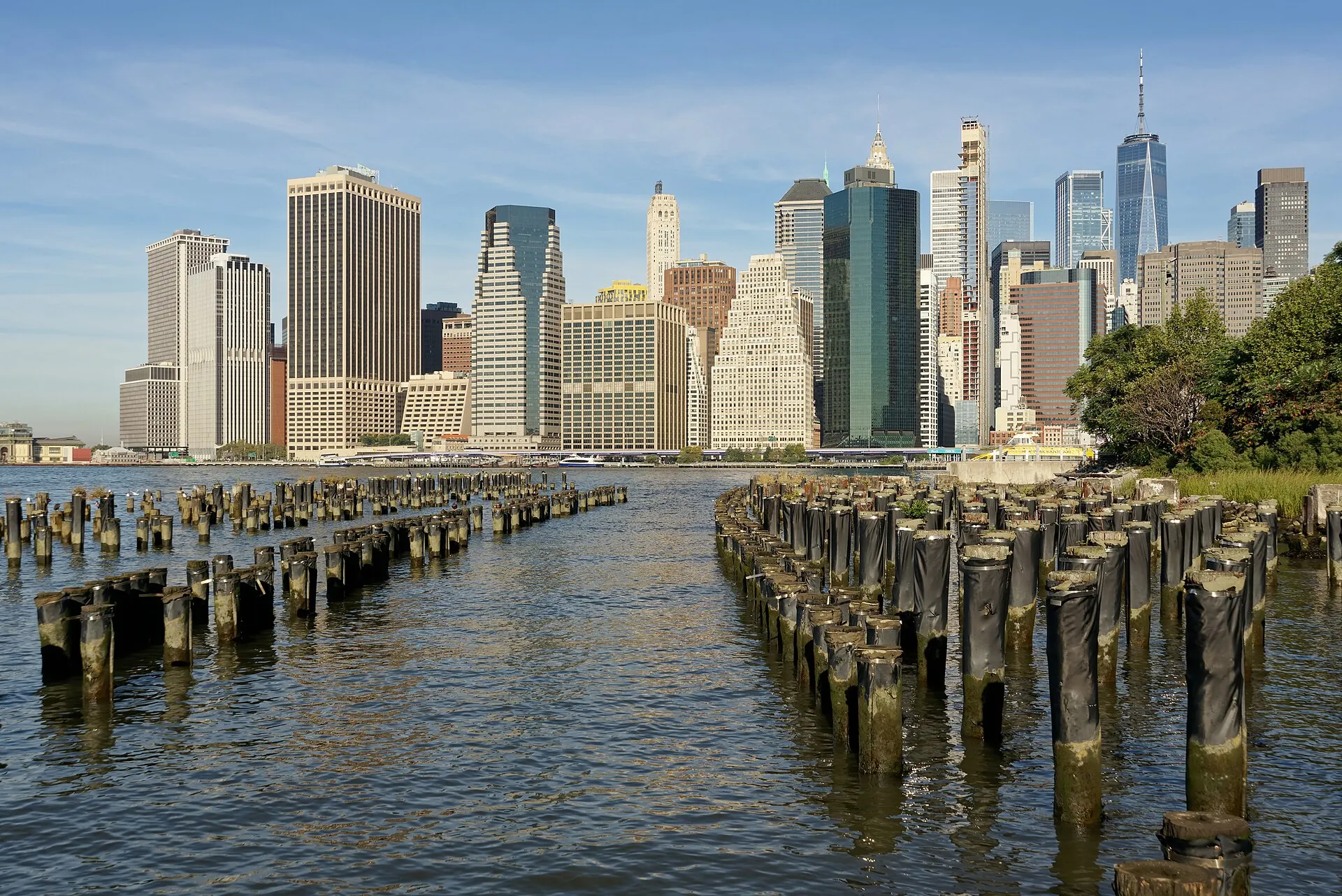
Sell Your House Fast in New York City. Get a Fair Cash Offer.
Propcash is a direct cash homebuyer making one fair cash offer, priced against sales near your address.
How do I sell my house fast in New York City?
Selling a house fast in New York City takes three steps: tell us about the house, get a cash offer priced against recent sales in your borough, and pick your closing date. Propcash is a direct cash homebuyer, so you work with the decision-maker throughout. New York closings run through attorneys, which surprises out-of-state owners.
Tell us about your New York City house
Share basic details: address, house type, condition, whether anyone is renting, and your timeline. Two minutes, zero obligation.
Get your cash offer
We price your house against recent five-borough sales and make you one fair cash offer, no obligation and no repairs asked for.
Review your offer and close
Review the offer and accept it, or walk away. Cash closings can happen in as few as 14 days, through a New York attorney.
Why New York City sellers choose Propcash's direct-buyer approach
A fair cash offer based on local market data puts you in control.
- You deal directly with the buyer
- A fair offer based on local market data
- Work directly with your point of contact
- We show you how we got to our number
- No obligation, walk away anytime
- Free for sellers, you pick your closing date
Our offer stands
No 24-hour expirations, no countdown clocks. If the market shifts we re-run the numbers rather than pressure you, and we follow up on your schedule.
We tell you if we're not the right buyer
If listing with an agent would clearly serve you better, we will say so and point you to someone local. We may receive compensation from agents we refer.
How Propcash stacks up against other ways to sell a New York City house
 That's us
Why do New York City homeowners sell their houses for cash?
Open city violations, an estate to settle, tenants upstairs in a two-family, and a repair bill bigger than the owner wants to fund are why New York City owners call Propcash.
Leaving New York
Retirement, a job in another state, or a family move usually arrives with a date attached, and a listed sale can run months through attorney review and a buyer's financing. A cash sale often closes in weeks. Relocation guide.
DOB or HPD violations
Open DOB and HPD violations block a certificate of occupancy and stall a financed sale. We can price an offer on a house carrying open code violations and take the remediation on after closing.
Inherited a house
Inherited a Bed-Stuy brownstone or a Queens two-family with belongings still inside? We help heirs sell inherited houses once an executor or administrator can convey title. Take what you want, leave the rest. Inheritance guide.
Repairs you cannot fund
A facade that needs pointing, a boiler at the end of its life, and a twice-patched roof add up faster than an owner wants to spend before a sale. We price houses that need major repairs as they stand.
Divorce settlement
When both sides want the house turned into a number and split, a listed sale adds months of showings neither wants. Our offer and the reasoning behind it go to both of you at once, often what a divorce sale needs. Divorce home selling guide.
Tired of being a landlord
Done funding turnovers, boiler calls, and paperwork on a two-family you have owned for decades? Sell with tenants in place, no eviction first. Here is how we work with tired landlords. Landlord selling guide.
What is the New York City housing market doing in 2026?
Prices citywide are close to flat and houses are taking a bit longer to sell. The figures below are what any offer on your house gets built from.
| New York City market metric | Latest figure | Source |
|---|---|---|
| Median sale price, citywide (last 3 months) | About $899,405, up 0.5% year over year | Redfin, August 2026 |
| Typical time to sell, citywide | About 58 days, up from 54 a year ago | Redfin, August 2026 |
| Houses sold in the latest reported month | 8,941 in the three months ending August 2026, up from 8,701 a year earlier | Redfin, August 2026 |
| Median sale price, Manhattan only | About $1,311,132, up 1.0% year over year | Redfin, Manhattan, August 2026 |
| Typical house value (ZHVI) | About $822,517, up about 4.2% year over year | Zillow ZHVI, August 2026 |
| City transfer tax on a 1-3 family house, paid at closing | 1% of the price at $500,000 or less, 1.425% above that | NYC Department of Finance, 2026 |
| State transfer tax, paid by the seller | $2 for each $500 of the sale price | NYS Department of Taxation and Finance, 2026 |
Can I get a cash offer on a house in any New York City neighborhood?
Yes. From an 1890s brownstone in Bed-Stuy to a 1960s split-level in Throgs Neck, we make offers in any condition across every neighborhood below.
The five boroughs are one market on paper and closer to twenty in practice, so every offer starts with your address.
House in Westchester, on Long Island, or across the river in New Jersey? You can get an offer there too. Selling upstate, you can sell a house fast in Buffalo across Erie County or get a cash offer on a Rochester house in Monroe County; our New York cash buyer page covers the rest of the state.
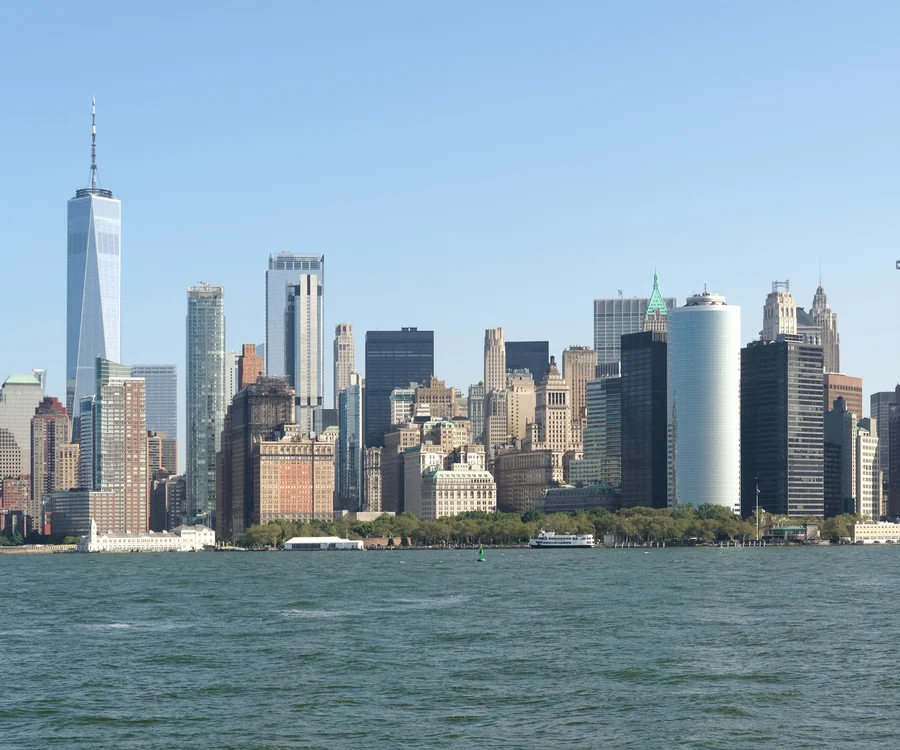
New York City houses, from Bed-Stuy brownstones to Tottenville capes
Every New York City neighborhood sells on a different clock, and the gap between a landmarked rowhouse block and a postwar cape decides what a fair offer looks like.
Brooklyn: Bed-Stuy, Flatbush, Canarsie, East New York, and Bay Ridge
Bed-Stuy holds one of the country's largest concentrations of 19th-century brownstones, many held by one family for generations, so sales here often start in an estate. Flatbush runs from the Victorians of Ditmas Park to denser prewar blocks further east; Canarsie and East New York are low-rise two-family blocks near Jamaica Bay, and Bay Ridge is limestone rowhouses above the Narrows.
Queens: Jamaica, Ridgewood, Woodhaven, and Jackson Heights
Queens holds most of the city's one- and two-family houses: Jamaica spreads from the LIRR and AirTrain hub into detached and semi-attached blocks, Ridgewood is yellow-brick two-families on the Brooklyn line, and Woodhaven is attached frame houses along Jamaica Avenue. Jackson Heights is mostly co-op apartments in its historic district, houses on the streets around it.
The Bronx: Wakefield, Throgs Neck, and the northern edge
Wakefield, at the top of the Bronx against the Westchester line, is built almost entirely of owner-occupied two- and three-family houses with the upstairs rented. Throgs Neck is a peninsula of detached one-family houses on the East River, where waterfront blocks carry flood-zone questions a lender asks about.
Staten Island: Tottenville and the South Shore
Tottenville, the city's southernmost and one of its most house-heavy neighborhoods, holds detached capes, colonials, and ranches on real lots. The South Shore carries the heaviest shoreline flood risk in the city, and the state disclosure form asks directly whether a house sits in a FEMA-mapped flood hazard area.
Manhattan: Harlem, Washington Heights, and Inwood
Manhattan prices like a separate market, well above the citywide figures in the market table above. Almost all of it is condo and co-op stock, so the houses sit uptown in Harlem, Washington Heights, and Inwood.
Sell your New York City house in any condition
Sell your New York City house exactly as it stands: no repairs, no cleaning, no cleanout. Take what you want and leave the rest.
Prewar wiring, a boiler on its last winter, open violations, and a basement the certificate of occupancy never covered are what a financed buyer's inspection flags.
- Open DOB and HPD violations
Open violations stop a certificate of occupancy from being issued. We price around them and clear them after closing.
- Prewar building systems
Knob-and-tube wiring, galvanized lines, oil boilers, and lead paint run through the city's pre-1938 houses, none of which has to be fixed first.
- Rowhouse and brownstone structure
Cracked facades, spalling brick, or a failing stoop: we take on the restoration after purchase.
- Tenants in place
A financed owner-occupant usually needs the house empty at closing, but we can buy a two- or three-family with leases in place, no eviction first.
- A certificate of occupancy that no longer fits
A finished basement, an attic conversion, or an extra unit the paperwork never covered: we buy the house as it is used now.
Illustrative repair costs a New York City seller may avoid by selling as-is
Guides for New York City sellers
Three guides that answer the questions New York City sellers ask most.


What New York City sellers are up against
A citywide median does not help an owner whose certificate of occupancy is wrong, whose water bill has become a lien, or whose name is not on the deed. Four things push five-borough sales toward cash.
The paperwork on the house has to agree with the house
A certificate of occupancy states a building's legal use, and the Department of Buildings will not issue or amend one while applications or violations sit open, though buildings put up before 1938 can often rely on a Letter of No Objection instead (NYC Department of Buildings, 2026).
The lien sale turns a water bill into a foreclosure risk
Unpaid property taxes, water, and sewer charges can put a house into the city lien sale, where an authorized buyer takes over the debt, with warning notices going out 90, 60, 30, and 10 days ahead (NYC Department of Finance, 2026); long-running arrears on a tax class one or two house can escalate into the city's Third Party Transfer in rem foreclosure program (NYC Department of Finance, 2026). A sale that closes first pays the arrears at the table; our guide to selling when you are behind on payments covers the options.
Your assessment lags the market, and then it catches up
New York City assesses a tax class one house at 6% of its estimated market value, and state law caps how fast that assessed value can climb, no more than 6% in one year and 20% over five years (NYC Department of Finance, 2026), with the class one rate for tax year 2026 set at 19.843% of taxable value (NYC Department of Finance, 2026). That cap is why a long-held house's bill often keeps climbing years after prices stop.
Behind on the mortgage? New York gives you months, not days
New York foreclosure is judicial and slow by design: a lender must send a 90-day pre-foreclosure notice in 14-point type, listing approved housing counselors, before filing (N.Y. RPAPL 1304, NYS Legislative Retrieval System, September 2026), and the court must then hold a settlement conference within 60 days. Our guide to selling a house in foreclosure covers what fits inside that window.
Are cash home buyers in New York City legit?
Legitimate cash home buyers operate in New York City, and so do bad actors: mostly small renovation operations in the outer-borough house belts, landlords who already own two-family houses nearby, and national direct buyers like Propcash. Searches like "we buy houses NYC," "sell my house fast NYC," and "sell house fast cash New York City" return a page of near-identical sites, so the sorting has to be done on facts, not branding.
How to vet a cash buyer in New York City
Proof of funds, a written offer, and no fee up front: a real buyer gives you all three unasked. Treat pressure to sign the day someone walks the house, or a request to deed it over early, as a red flag on its own. One legal check worth running: since July 1, 2025, a large corporate buyer classified as a covered entity cannot buy a one- or two-family house unless it sat publicly listed for at least 90 days, and must hand the seller a notarized form saying so (N.Y. Real Property Law 520-521, NYS Legislative Retrieval System, September 2026). Our guides to the 10 questions to ask any cash buyer, the red flags to watch for, and what to expect from a cash buyer apply to every buyer in the five boroughs, including us.
What New York City sellers ask us
How is Propcash different from New York City "we buy houses" companies?
Most "we buy houses" outfits hand you one take-it-or-leave-it number and hope nobody measures it. Propcash is a direct cash homebuyer: we price your New York City house against five-borough market data, show how we reached the figure, and can close quickly and confidently.
Are cash home buyers in New York City legit, and who buys houses for cash here?
Legitimate cash home buyers do operate in New York City alongside bad actors, so the check matters more than the label. The buyers working the five boroughs are mostly small renovation operations in the outer-borough house belts, landlords who already own two-family houses nearby, and national direct buyers like Propcash, which makes offers as a principal. Ask any of them for proof of funds and the name of the attorney who would close it.
Can I sell my house fast in New York City, NY without making repairs first?
Often, yes. A cash offer can be priced on the house exactly as it stands, so no repair, cleanout, or violation clearance has to happen first. That matters most in the city's prewar frame and brick houses, where one inspection can surface knob-and-tube wiring, an old boiler, and a facade that needs pointing. Take what you want and leave the rest.
Will you look at a house with open DOB or HPD violations?
Often, yes. Open Department of Buildings and Housing Preservation and Development violations are common on older New York City houses and are one reason a financed sale stalls, because the city will not issue a certificate of occupancy while there are open applications or open violations on the property (NYC Department of Buildings, 2026). A cash sale can be priced with the violations in place and the remediation handled after closing.
What do I actually pay in transfer tax when I sell a house in New York City?
Two taxes usually apply. New York State charges a transfer tax of $2 for each $500 of consideration, paid by the seller (NYS Department of Taxation and Finance, 2026), and New York City adds its Real Property Transfer Tax on a one- to three-family house: 1% of the price at $500,000 or less, 1.425% above that (NYC Department of Finance, 2026). The state mansion tax on sales of $1 million or more is a buyer charge.
Do I still have to fill out a disclosure if I sell my house as-is?
In most New York sales of a one- to four-family house the seller completes and signs a Property Condition Disclosure Statement and delivers it before the buyer signs a binding contract (N.Y. Real Property Law 462, NYS Legislative Retrieval System, September 2026). The statute says plainly that nothing in it stops the parties from agreeing to sell as is, and a seller is liable only for a willful failure to comply. The current form also asks whether the house sits in a FEMA-mapped floodplain.
What happens if I fall behind on my New York City property taxes?
Unpaid property taxes, water and sewer charges, and other property-related charges can put a house into the city lien sale, where New York City sells the debt to an authorized buyer who then has the right to collect. That is not a sale of the house, but it can be a first step toward foreclosure, and the Department of Finance mails warning notices 90, 60, 30, and 10 days ahead (NYC Department of Finance, 2026). Resident owners of a one-, two-, or three-family house can apply for a payment plan, and a sale that closes first pays the arrears at the table.
What happens if I fall behind on my mortgage in New York?
New York foreclosure is judicial, and it runs slowly on purpose. A lender must send a 90-day pre-foreclosure notice in at least 14-point type, with a list of government-approved housing counseling agencies, before it can file (N.Y. RPAPL 1304, NYS Legislative Retrieval System, September 2026), and the court then holds a mandatory settlement conference within 60 days of the filing of proof of service. A sale that closes before judgment can pay the loan off, so an attorney is worth calling early.
My house has no certificate of occupancy. Can I still sell it?
Often, yes, and it is common in the outer boroughs. A certificate of occupancy states a building's legal use, and buildings put up or altered before 1938 frequently never needed one, in which case the Department of Buildings can issue a Letter of No Objection instead (NYC Department of Buildings, 2026). The harder version is a finished basement or a third unit the certificate does not cover, because a lender reacts to that. A cash buyer can price the house as it is used today.
Can I sell a New York City house with tenants in place?
Often, yes. A financed owner-occupant usually needs the house delivered empty at closing, which is why occupied two- and three-family houses sit longer. Existing leases can transfer with the house in a cash sale, so no eviction is needed first. Send us the lease terms and we will price around them.
How much will Propcash offer for my New York City house?
Our offer depends on borough, block, condition, and current values. The citywide median sale price ran about $899,405 over the three months ending August 2026, up 0.5% year over year, at 58 days on market (Redfin, July 2026), and a Tottenville cape and a Bed-Stuy brownstone price nothing alike. We price against recent sales near your address and show you how we got to our number, with no obligation to accept.
Are there any fees, and which New York City neighborhoods can get an offer?
No fees: no agent commissions, no closing costs charged to you, no inspection fees, no cleanout charges, though the state and city transfer taxes above still apply. You can get a cash offer on a house in any of these New York City neighborhoods: Bed-Stuy, Flatbush, Canarsie, East New York, and Bay Ridge in Brooklyn; Jamaica, Ridgewood, Woodhaven, and Jackson Heights in Queens; Wakefield and Throgs Neck in the Bronx; Tottenville on Staten Island; and Harlem, Washington Heights, and Inwood in Manhattan.
Questions? Call (615) 552-4296 or text us. We respond in minutes.
Ready to Get Your New York City Cash Offer?
Share your house details and get a fair cash offer priced against recent sales in your borough. Takes 2 minutes, no obligation.