
Skip the listing. Sell your Philadelphia house fast for cash.
Propcash is a direct cash homebuyer that makes cash offers on Philadelphia houses as-is in your area. Skip the repairs, skip the agents, and close on your timeline.
How do I sell my house fast in Philadelphia?
Selling a house fast in Philadelphia takes three steps: send us the property details, get a cash offer priced against Philadelphia County sales data, and pick your closing date. Propcash is a direct cash homebuyer, so you work with the decision-maker the whole way, and the house stays exactly as it stands.
Tell us about your Philadelphia property
Share basic details: address, condition, and your timeline. Takes 2 minutes, zero obligation. A Fishtown trinity and a Northeast twin price nothing alike.
Get your cash offer
We price your Philadelphia house against recent Philadelphia County sales and show you how we got to the number, with no obligation.
Review your offer & close
Review the offer and accept it if it works for you, or walk away. Cash closings can happen in as few as 7 days through a Pennsylvania title company.
Why Philadelphia sellers choose Propcash's direct-buyer approach
A fair cash offer based on local market data puts you in control.
- You deal directly with the buyer
- A fair offer based on local market data
- Work directly with your point of contact
- Full transparency
- No obligation, walk away anytime
- We show you how we got to our number
Our offer stands
No 24-hour expirations, no countdown clocks. If the market shifts we re-run the numbers rather than pressure you, and we follow up on your schedule.
We tell you if we're not the right buyer
If listing with an agent would clearly serve you better, we will say so and point you to someone local. We may receive compensation from agents we refer.
How Propcash stacks up against other ways to sell a Philadelphia house
 That's us
If you have time and the house shows well, listing with an agent may net you more. If you want it done without repairs or showings, that is where we come in. We tell you straight either way.
Why do Philadelphia homeowners sell their houses for cash?
Open L&I cases, estates, vacant rowhomes, and worn-out rentals are why Philadelphia owners most often call Propcash.
Open L&I violations
A Violation Notice keeps accruing fees until the work is finished, which is what ends most financed settlements in the older wards. An offer can be priced on a house with open code violations still on the record.
Rowhome systems at end of life
Knob-and-tube remnants, cast-iron waste stacks, and original boilers run through Philadelphia's pre-war stock, and modernizing costs more than most owners want to fund. Sell as-is and let the work happen after settlement. Rowhome problems guide.
Behind on the mortgage or the taxes
Pennsylvania's Act 91 notice arrives once a loan is 60 days delinquent, and the default can be cured up to an hour before the sheriff's sale. Selling inside that window is often the calmer option. Here is how we work with owners facing foreclosure.
Inherited property
Inherited a Kensington or Mayfair row held by the family for decades? We help heirs sell inherited houses once the Register of Wills issues letters and a personal representative can convey title. Take what you want, leave the rest. Inheritance guide.
A vacant rowhome you are carrying
Empty Philadelphia houses collect water bills, code cases, and winter pipe damage, and after a tax sheriff's sale a vacant property has no redemption window. Here is how a cash sale works on a vacant house.
Tired of being a landlord
Done funding turnovers on a West Philadelphia twin? You can sell with tenants in place, no eviction first, because existing leases transfer with the house. Here is how we work with tired landlords. Landlord exit guide.
What is the Philadelphia housing market doing in 2026?
See our Philadelphia housing market 2026 report and our cash offer versus traditional sale comparison.
| Philadelphia market metric | Latest figure | Source |
|---|---|---|
| Median sale price | About $294,805, up 5.7% year over year | Redfin, August 2026 |
| Typical time to sell | About 50 days, up from 46 a year ago | Redfin, August 2026 |
| Houses sold in the latest reported month | 3,962 in the three months ending August 2026, down from 4,006 a year earlier | Redfin, August 2026 |
| Typical house value (ZHVI) | About $233,728, roughly flat year over year | Zillow ZHVI, August 2026 |
| Realty transfer tax on a city sale | 4.578% of the price: 3.578% City plus 1% Commonwealth | City of Philadelphia Department of Revenue, 2026 |
| Redemption window after a tax sheriff's sale | Nine months from acknowledgment of the deed, and none for vacant property | Municipal Claims and Tax Liens Act, section 32 |
Can I get a cash offer on a house in any Philadelphia neighborhood?
Yes. You can get a cash offer on a house in any Philadelphia neighborhood, from a Point Breeze porchfront to a Chestnut Hill stone twin.
Philadelphia is one county on paper and about ten markets in practice, so the offer follows the address.
House anywhere in Philadelphia, Delaware, Montgomery, or Bucks County? You can get an offer there too. Selling somewhere else in the state? Out west you can sell a house fast in Pittsburgh, and up the Northeast Extension you can get a cash offer in Allentown and the Lehigh Valley. Our Pennsylvania cash buyer page covers the rest of the state.
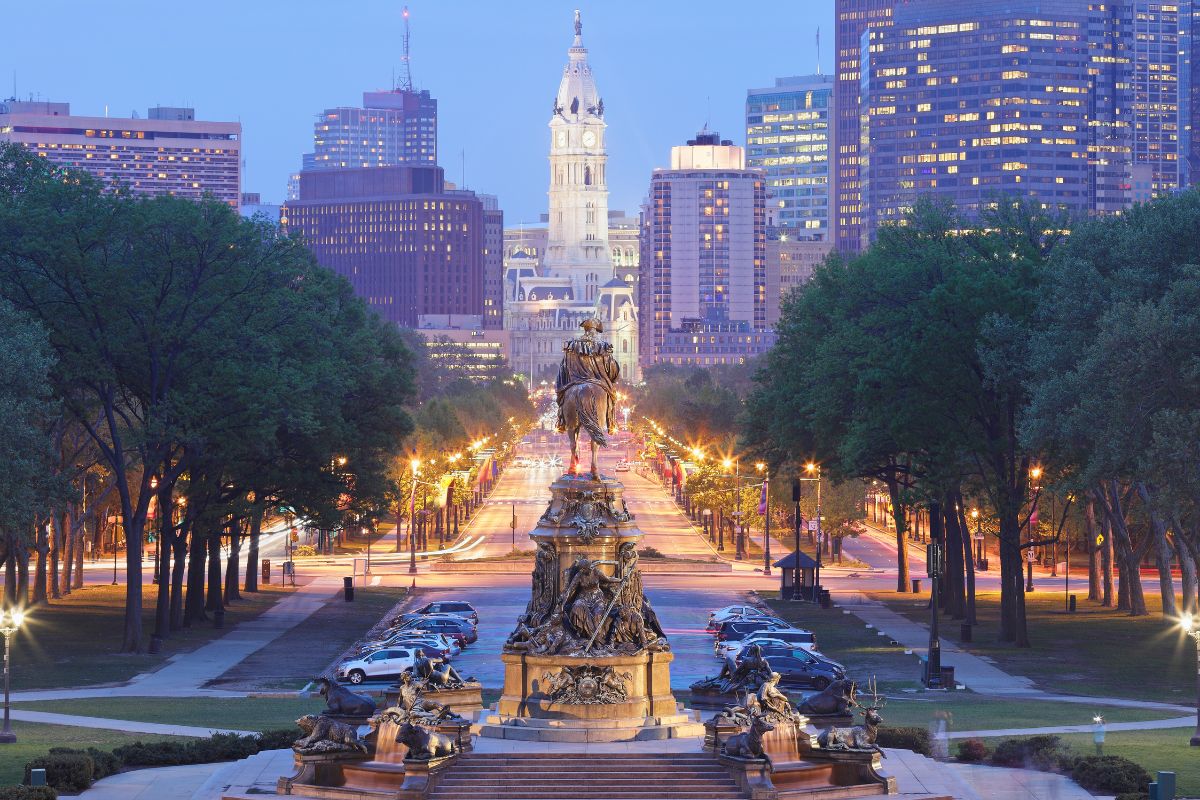
Philadelphia rowhome neighborhoods, from Fishtown to Mayfair
Every Philadelphia neighborhood sells on a different clock, and the gap between a 19th-century mill-district row and a postwar Far Northeast twin decides what a fair offer looks like. All of it sits in one Philadelphia County.
Fishtown, Kensington, and the river wards
Fishtown (19125) and Kensington (19134) run north from Center City along the Delaware, built out as dense brick rowhouse blocks around textile mills and shipyards in the 1800s. Many still carry original joists, knob-and-tube remnants, and party walls shared with two neighbors, so a finding on one house often involves the one next door.
South Philly and Point Breeze
South Philadelphia below Washington Avenue, including South Philly (19148) and Point Breeze (19146), is the tightest rowhouse grid in the city: narrow lots, shared walls, flat roofs, and basements that predate modern drainage. Roof, sewer lateral, and party-wall findings stall financed settlements here, because a lender reacts to them before a buyer does.
Germantown, Mount Airy, and Chestnut Hill
Northwest Philadelphia along Germantown Avenue holds the city's largest older houses: Germantown (19144) stone twins and Victorians, Mount Airy (19119), and Chestnut Hill (19118). Square footage that reads well in a listing means more roof, more masonry, and more systems to bring current.
West Philadelphia and University City
University City (19104) and the West Philadelphia blocks around it (19139 and 19143) are the city's densest rental submarket, full of Victorian twins and porchfront rows owned one at a time, often by out-of-state landlords. A financed owner-occupant usually needs the house empty at settlement, which is why occupied houses sit.
Roxborough, Manayunk, and the Schuylkill hillsides
Roxborough (19128) and Manayunk (19127) climb the hillside above the Schuylkill, so the stock sits on slopes with retaining walls, stepped entries, and drainage that has to be managed. Water in a hillside basement is the routine inspection finding here.
Frankford, Mayfair, and the Northeast
Frankford (19124) sits along Frankford Avenue under the Market-Frankford line, Mayfair (19149) covers the row blocks east of Roosevelt Boulevard, and the Far Northeast (19115) holds the city's largest lots, with twins and detached houses instead of rows. Systems here are mid-century: original boilers, oil-to-gas conversions, and aluminum-era wiring.
Sell your Philadelphia house as-is, violations and all
You can sell your Philadelphia house exactly as it stands: no repairs, no cleaning, no cleanout. Take what you want and leave the rest.
Aging rowhome systems, an open L&I case, and a twice-patched flat roof are what a financed buyer's inspection flags.
- Open L&I violations
A Violation Notice and Order to Correct stays open until the work is done and the fees are paid (City of Philadelphia Department of Licenses and Inspections).
- Aging rowhome plumbing and sewer laterals
Galvanized supply lines, cast-iron waste stacks, and a private sewer lateral under the sidewalk are standard here, and none of it has to be replaced first.
- Party-wall and structural settling
Rowhouses share walls on both sides, so bowing, stepped cracking, and roof-line movement are common findings in Kensington and Point Breeze.
- Flat roofs, ice dams, and water damage
Philadelphia rows carry flat roofs that freeze, pond, and leak into the top floor, and a leak history rarely survives a lender's appraisal.
- A vacant house you are still carrying
Empty Philadelphia houses draw code cases, water bills, and winter pipe damage, and Propcash can price an offer on one closed up for years.
Illustrative repair costs Philadelphia sellers can avoid by selling as-is to Propcash
Free guides for Philadelphia homeowners
L&I violations, rowhome repairs, tangled titles, and the 2026 market.

Sell a House With L&I Violations in Philadelphia
Read the guide
Tangled Titles in Philadelphia
Read the guide
Philadelphia Housing Market 2026
Read the guide
Philadelphia Rowhome Problems: When to Sell As-Is
Read the guide
Philadelphia Closing Costs for Sellers
Read the guide
How to Stop Foreclosure in Pennsylvania
Read the guideWhat Philadelphia sellers are up against
A rising citywide median does not help an owner with an open code case, a tax bill in collections, or a deed still in a parent's name. Six things push most Philadelphia sales toward cash.
An open L&I violation follows the house, and the fees keep running
When the Department of Licenses and Inspections issues a Violation Notice and Order to Correct, the case stays open until the violation is corrected and the fees are paid in full, with fees accruing the whole time it sits (City of Philadelphia Department of Licenses and Inspections, 2026). Appeal windows run 30 days, or six for unsafe conditions.
Philadelphia's transfer tax is the highest closing line in the city
A Philadelphia sale carries a 4.578% realty transfer tax shown in the market table above, and while the City notes the split between buyer and seller is customary rather than required, the Commonwealth holds both jointly and severally liable for its share (Pennsylvania Department of Revenue, 2026). Our Pennsylvania transfer tax guide shows how that split lands.
A long-held house can qualify for a tax cap, and a renovated one can carry an abatement
Philadelphia's Longtime Owner Occupants Program caps the tax bill for owners of 10-plus years whose assessment jumped 50% in a year or 75% over five, applications due September 30, 2026 (City of Philadelphia, 2026). A separate 10-year abatement covers improvements to an existing house (City of Philadelphia, 2026), and both change the hold-versus-sell math on the same block.
Behind on the mortgage? Pennsylvania sends two notices before a sheriff's sale
A residential mortgage lender must send written notice of intention to foreclose at least 30 days before accelerating the loan (Loan Interest and Protection Law, section 403), and a separate Act 91 notice goes out once a borrower is 60 days delinquent (Housing Finance Agency Law, section 403-C). A sale that settles first can pay the loan off before either deadline lands.
After a tax sheriff's sale, a vacant house has no redemption window at all
Philadelphia collects delinquent taxes under the Municipal Claims and Tax Liens Act, with the redemption window the market table above lists, and that window closes entirely for vacant property, defined as anything not continuously occupied by the same individual or family for at least 90 days before the sale (Municipal Claims and Tax Liens Act, section 32).
Inherited a rowhome? The estate opens with the Register of Wills
Pennsylvania letters testamentary or of administration are granted only by the register of the county where the decedent last lived, which for a Philadelphia decedent means the Philadelphia Register of Wills (20 Pa.C.S. 3151), and once appointed a personal representative may sell real property that was not specifically devised (20 Pa.C.S. 3351). Where the deed never left a relative's name, our Philadelphia tangled titles guide explains what has to clear first.
Are cash home buyers in Philadelphia legit?
Legitimate cash home buyers do operate in Philadelphia, and so do bad actors. Who buys houses for cash here? Mostly small renovation operations working the river wards and South Philly, landlords around University City and the Northeast, and national direct buyers like Propcash. A search for "we buy houses Philadelphia" or "cash for houses Philadelphia" returns near-identical sites, so sort on facts rather than branding.
How to vet a cash buyer in Philadelphia
Ask for documented proof of funds, and get the offer in writing rather than a verbal number. A buyer who will not name the settlement company or who pushes you to deed the house over ahead of closing is a red flag, and so is same-day signing pressure. Find out upfront who covers the 4.578% transfer tax. Our guides to 10 questions to ask any cash buyer, red flags to watch for, and what to expect from a cash buyer apply to every buyer working Philadelphia County, us included.
What Philadelphia sellers ask us
How is Propcash different from Philadelphia "we buy houses" companies?
Most "we buy houses" outfits hand you one take-it-or-leave-it number and hope nobody measures it. Propcash is a direct cash homebuyer: we price your Philadelphia house against Philadelphia County market data, show how we reached the figure, and can close quickly and confidently.
Are cash home buyers in Philadelphia legit, and who buys houses for cash here?
Legitimate cash home buyers do operate in Philadelphia alongside bad actors, so the check matters more than the label. The buyers working Philadelphia County are mostly small renovation operations in the river wards and South Philly, landlords around University City and the Northeast, and national direct buyers like Propcash, which makes offers as a principal. Ask for proof of funds and a written offer before you sign.
Can I get a cash offer on a Philadelphia house with open L&I violations?
Often, yes. A Violation Notice and Order to Correct stays open until the violation is corrected and the fees are paid, and fees accrue while the case sits (City of Philadelphia Department of Licenses and Inspections, 2026). That open case is what usually ends a financed settlement. A cash offer can be priced on the house with the violation still on the record.
What happens if I fall behind on my Philadelphia mortgage?
Before a lender can accelerate your loan or file suit, it must send written notice at least 30 days ahead of time (Loan Interest and Protection Law, section 403). Once you hit 60 days delinquent, a separate Act 91 notice follows, allowing 30 days plus three for mailing to sit down with a consumer credit counseling agency (Housing Finance Agency Law, section 403-C). You can still cure the default up to an hour before the sheriff's sale opens, and calling an attorney early is worth it.
Do I still have to fill out a Pennsylvania disclosure form if I sell as-is?
Pennsylvania law puts a disclosure duty on most residential sellers: a written statement of known material defects has to reach the buyer before they sign, under the Real Estate Seller Disclosure Law (68 Pa.C.S. 7303). Nothing requires you to dig for problems you do not already know about, but the law bars hiding ones you do know (68 Pa.C.S. 7308). Selling as-is still means filling out the form, just with different answers.
How much is the transfer tax when I sell a house in Philadelphia?
Philadelphia sales carry a 4.578% realty transfer tax, the 3.578% City rate plus the 1% Commonwealth rate, calculated on the price or assessed value plus assumed debt (City of Philadelphia Department of Revenue, 2026). The city notes the tax is usually split evenly between buyer and seller, though that split is not a legal requirement and the City can collect the whole amount from either party. Who pays which half is negotiable, so ask before you sign.
I inherited a Philadelphia house. What has to happen before I can sell it?
Whichever county the decedent last called home is where the Register of Wills grants letters testamentary or of administration, and for Philadelphia that is the Philadelphia Register of Wills (20 Pa.C.S. 3151). The small-estate shortcut only reaches $50,000 of personal property and leaves real estate out, so a house still needs a full appointment. Once that happens, the personal representative can sell real property the will did not specifically leave to someone (20 Pa.C.S. 3351), with no deadline forcing the decision.
Can I still redeem my house after a Philadelphia sheriff's sale for taxes?
Usually yes, but the window is short and it does not exist for every property. Outside a city or county of the second class, an owner generally has nine months from acknowledgment of the sheriff's deed to redeem by paying the sale amount, costs, taxes, and interest (Municipal Claims and Tax Liens Act, section 32). There is no redemption at all for vacant property. Talk to an attorney before the sale date rather than after it.
Will you look at a West Philadelphia rental with tenants in place?
Often, yes. The blocks around University City are heavily rented, and a financed owner-occupant usually needs the house delivered empty at settlement, which is why occupied houses sit. Existing leases can transfer with the house in a cash sale, so no eviction is needed first. Send us the lease terms and we will price around them.
How fast can a Philadelphia cash sale close?
Cash sales can close in as few as 7 days, and most Philadelphia settlements land in the 10 to 14 day range once title is clear. Older rowhome titles sometimes turn up an unreleased mortgage, an old municipal lien, or an heir who was never on the deed, and clearing that sets the calendar. If you need longer to pack and move, you pick the date.
Are there any fees, and which Philadelphia neighborhoods can get an offer?
No fees: no agent commissions, no closing costs charged to you, no inspection fees, no cleanout charges, though Philadelphia's 4.578% realty transfer tax still applies to the sale itself. You can get a cash offer on a house in any Philadelphia neighborhood, including Center City (19102), Point Breeze (19146), South Philly (19148), Fishtown (19125), Kensington (19134), Roxborough (19128), University City (19104), Germantown (19144), Chestnut Hill (19118), Frankford (19124), Mayfair (19149), and the Far Northeast (19115). Call or text (615) 552-4296, or email info@propcash.co.
Questions? Call (615) 552-4296 or text us, we respond in minutes.
Ready to Get Your Philadelphia Cash Offer?
Share your property details and get a fair cash offer priced against Philadelphia County market data. Takes 2 minutes, no obligation.